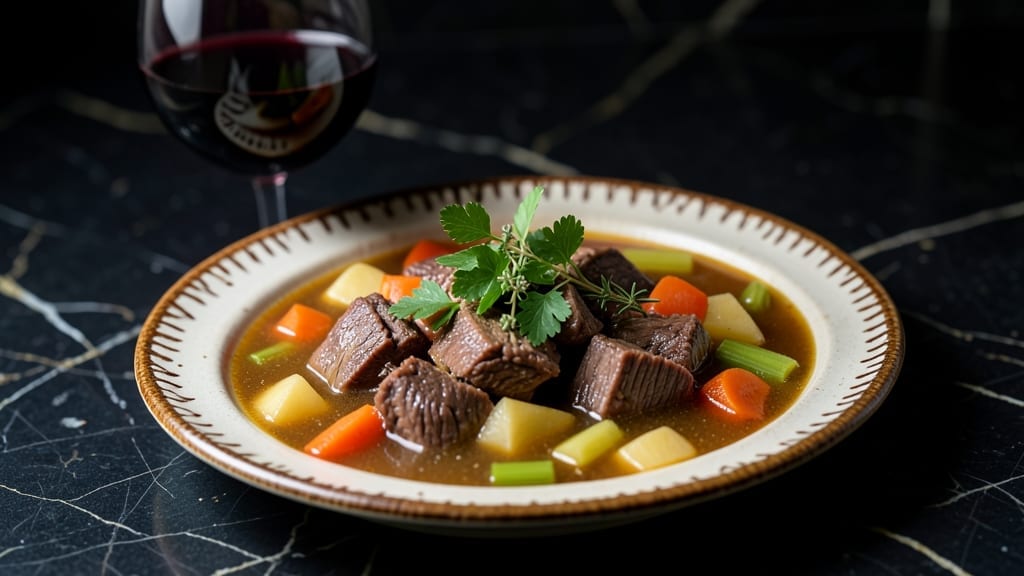
This beef brisket vegetable soup delivers the kind of hearty comfort that warms both body and soul during colder months. The secret lies in slow-cooking tough brisket until it becomes fork-tender, then building layers of flavor with aromatic vegetables and savory spices over hours.
I developed this recipe during a particularly chilly winter when I needed something substantial enough to satisfy a hungry family after a long day.
What sets this soup apart is the balance of rich, meaty depth from the brisket and bright, fresh vegetables that keep the dish from becoming too heavy.
The slow cooking process transforms the brisket into melt-in-your-mouth pieces while allowing the broth to develop a complex, aromatic quality that’s impossible to achieve quickly. With just pantry staples and a few hours of hands-off time, you’ll have a restaurant-quality meal that tastes even better the next day.
The result is a steaming bowl of soup with tender brisket chunks floating in a velvety broth, surrounded by perfectly cooked vegetables that maintain their texture. Each spoonful delivers a perfect harmony of savory meat, sweet carrots, earthy onions, and herbs that elevate the simple ingredients into something extraordinary.
This is the kind of soup that disappears quickly and leaves everyone asking for seconds.
Perfect for feeding a crowd or meal prepping for the week, this recipe scales beautifully while maintaining its depth of flavor. The slow-cooked approach makes it ideal for busy days when you want a comforting meal without spending all day in the kitchen.
Let’s get started on creating this foolproof family favorite.
Ingredients for beef brisket vegetable soup
Just a few pounds of brisket and seasonal vegetables create this soul-warming soup.
| Ingredient | Amount | Notes |
|---|---|---|
| Chuck Roast Brisket 🥩 | 3 lb | Fat trimmed, cubed 1-inch pieces |
| Carrots 🥕 | 3 lb | Whole, peeled, cut into chunks |
| Yellow Onions 🧅 | 3 whole | Medium, sliced into wedges |
| Celery Sticks 🌿 | 1 lb | Chopped into 1-inch pieces |
| Garlic Cloves 🧄 | 8 cloves | Peeled, smashed for depth |
| Dried Thyme Leaves 🌿 | 2 tbsp | Fresh thyme at 1/2 the amount |
| Dried Rosemary 🌿 | 1 tbsp | Fresh rosemary at 1/3 the amount |
| Beef Broth 💧 | 8 cups | Low-sodium preferred |
| Tomato Paste 🍅 | ½ cup | Unsweetened, for depth |
| Salt 🧂 | 2 tbsp | Kosher or sea salt |
| Black Peppercorns 🌶️ | 1 tbsp | Freshly ground preferred |
| Olive Oil 🫒 | ¼ cup | Extra-virgin for richness |
| Bay Leaves 🌿 | 4 whole | Dried, removed before serving |
| Cornstarch 🌾 | 2 tbsp | For thickening, mixed with water |
[recipe_ingredient_scaler]
The brisket is everything here. Chuck roast gives you that perfect balance of fat and muscle—sirloin stays too firm, while round steak gets mushy. Buy it whole and have your butcher cube it for you, or do it yourself with a sharp knife. I always grab mine from Whole Foods when I can—look for good marbling, not too much white fat. If you’re on a budget, Costco has great pre-cubed chunks that work perfectly. The key is to trim it down to about 1/4-inch fat cap before cooking. Don’t skip this step—it’s what keeps the meat juicy during slow cooking.
Vegetables are where the brightness comes from. Baby carrots work great if you’re short on time, but whole carrots hold up better to the long cook. No celery? Use fennel stalks for a subtle anise flavor. Fresh herbs are ideal, but dried thyme and rosemary at one-third the amount work in a pinch. The tomato paste is non-negotiable for depth—San Marzano is my go-to, but any good quality paste will do. Want to stretch this further? Add potatoes or sweet potatoes for extra heartiness. Just make sure to cut them into even chunks so they cook through.
This soup tastes even better the next day as the flavors meld. Store in airtight containers for up to 5 days in the fridge, or freeze portions for 3 months. I always make extra because it reheats beautifully—just add a splash of water if it gets too thick. The cornstarch slurry is your secret weapon for that perfect silky texture. Make it ahead and keep it ready for those chilly nights when you want something comforting without the fuss. The bay leaves can stay in during cooking but remove them before serving—they’re not for eating!
Why You’ll Love This Recipe
- One-Pot, One-Step Wonder: That Dutch oven does all the work—sear the brisket, caramelize the onions, and simmer the garlic and herbs all in one pot. No switching pans, no scrubbing multiple dishes, just the deep, savory aroma filling your kitchen while you stir occasionally. Honestly, the only cleanup is wiping down the pot and tossing the bay leaves.
- Fond-Laden Flavor Bomb: The secret? Those browned bits on the bottom of the pot—we call them fond—and they’re packed with umami goodness from the chuck roast brisket. Add the tomato paste and beef broth, and suddenly, your soup isn’t just flavorful—it’s ridiculously good. The garlic cloves, smashed just right, and the rosemary and thyme? Chef’s kiss.
- Feed a Crowd, Freeze the Rest: This recipe makes enough for a family dinner and leftovers—perfect for game day, potlucks, or when you’re too tired to cook tomorrow. The brisket gets even better the next day, and the veggies? Tender and sweet. Store it for up to 5 days, or freeze portions for months. Budget-friendly and foolproof.
- Weeknight Magic: Two hours of simmering while you’re doing something else—watching TV, grading papers, or just chilling. The brisket falls apart on its own, the vegetables absorb all the flavor, and you end up with a soup that tastes like it took all day. (Yes, even on a Tuesday night.) Plus, the cornstarch thickens it just enough to make it exactly what you need.
Step-by-step instructions for beef brisket vegetable soup
Here’s how to build a rich, comforting brisket soup where every bite delivers deep flavor and tender vegetables.
Sear the Brisket for Maximum Flavor
Heat a large Dutch oven over medium-high heat until hot. Add the ¼ cup Olive Oil and swirl to coat the bottom evenly. Working in batches if needed, add the 3 lb chuck roast brisket (cubed into 1-inch pieces) and sear undisturbed for 3-4 minutes until deeply browned on all sides. This step creates the rich, caramelized foundation for your soup.
As you sear, resist the urge to crowd the pan—this ensures proper browning. Once all brisket pieces are golden brown, transfer them to a plate and set aside. You’ll notice the kitchen fills with that incredible meaty aroma; this is your first taste of the soup’s depth.
Build the Vegetable and Herb Base
In the same Dutch oven, add 3 yellow onions (sliced into wedges), 1 lb celery sticks (chopped into 1-inch pieces), and 3 lb carrots (cut into chunks). Cook for 5-6 minutes until the vegetables begin to soften and the onions turn translucent. Here’s where the sweetness of the carrots and onions will start to develop.
Add the 8 cloves garlic (peeled and smashed) along with the 2 tbsp dried thyme leaves and 1 tbsp dried rosemary. Stir for 1 minute until fragrant—this releases their essential oils and infuses the vegetables with aromatic depth. The kitchen should smell like a cozy autumn afternoon.
Develop the Rich Broth Base
Pour in the 8 cups beef broth and scrape up any browned bits from the bottom of the pot. These bits, called fond, are packed with flavor that will dissolve into your soup. Add the ½ cup tomato paste and stir to combine. Bring the mixture to a gentle boil, then reduce heat to maintain a simmer and return the seared brisket to the pot.
Add the 4 bay leaves and stir in the 2 tbsp salt and 1 tbsp black peppercorns. Here’s the thing—this is where the magic happens. Let the soup simmer uncovered for 2 hours. You’ll notice the brisket will rise to the surface occasionally; this is normal. The longer it simmers, the more tender the meat becomes and the more flavor infuses into the broth.
Thicken and Finish the Soup
After 2 hours, remove the 4 bay leaves (they’ll be bitter if left in too long). In a small bowl, whisk together the 2 tbsp cornstarch with ¼ cup water until smooth. Slowly ladle this mixture into the simmering soup while stirring constantly. The soup will begin to thicken immediately—this creates that perfect, hearty consistency we want.
Simmer for an additional 10-15 minutes until the brisket is fork-tender and the vegetables are completely cooked. Taste and adjust seasoning if needed. The soup should be rich, flavorful, and comforting—just like a warm hug in bowl form. Serve immediately with crusty bread to soak up every last drop of that delicious broth.
Pro Tips For Making Beef Brisket Vegetable Soup
- Sear in Batches: I used to rush this step and end up with pale, sad brisket—don’t do that. Work in batches of 1-inch cubes, letting each piece brown undisturbed for 3-4 minutes. The Dutch oven should be screaming hot, and the oil should shimmer like a summer day. Crowding the pan steals heat, and that’s how you get flavorless meat. Trust me, the extra 5 minutes now saves you from bland soup later.
- Smash That Garlic: Those 8 cloves of garlic aren’t just there to sit pretty—they need to bruise. Peel them first, then smash them with the flat side of your knife or a heavy pan. This releases their oils and flavor into the vegetables while they soften. I learned this the hard way after making soup that tasted like it was missing something. Now? Every bite sings.
- Scrape the Fond: After searing the brisket, don’t just dump in the veggies—grab that wooden spoon and scrape up every last browned bit clinging to the bottom. That’s your fond, the flavor bomb of the soup. I used to skip this, and the broth always tasted flat. Now I make it a point to deglaze with the broth right away, turning those bits into liquid gold.
- Simmer Low and Slow: Two hours of simmering isn’t just a suggestion—it’s the non-negotiable part. I know, I know, you’ve got things to do, but rushing this turns tough brisket into chewy disappointment. Keep the heat at a gentle simmer, and let the meat break down naturally. The longer it cooks, the richer the broth gets, and that’s when you know you’ve done it right.
Serving suggestions for leftovers
Bread Pairings
This soup pairs perfectly with a crusty baguette or sourdough loaf—their chewy texture contrasts beautifully with the tender brisket and velvety broth. Toast the bread lightly and dip it in the soup for an extra indulgent bite.
I always keep a loaf of Schar baguettes on hand—they hold up well to the moist soup without getting soggy. 🥖
Garnish Elevations
Finish each bowl with a swirl of extra-virgin olive oil and a sprinkle of fresh parsley for brightness. A dash of hot sauce or flaky sea salt like Maldon adds a sophisticated touch.
I also love adding a dollop of crème fraîche or Greek yogurt for creaminess that balances the rich broth.
Side Dish Complements
A simple green salad with a tangy vinaigrette cuts through the soup’s richness. Try arugula, cherry tomatoes, and shaved Parmesan for a peppery contrast. For heartier sides, roasted potatoes or buttery dinner rolls soak up every last drop of flavor—just make sure they’re warm when served.
Cheese Additions
Top bowls with shaved Gruyère or aged cheddar for a melty, savory finish. The cheese melts slightly into the warm broth, creating pockets of rich flavor. I also enjoy adding crumbled blue cheese for a bold, tangy twist—just a small amount goes a long way! 🧀
Herb-Infused Broth
Before serving, stir in a pinch of fresh thyme or rosemary for an extra aromatic kick. The herbs enhance the soup’s depth without overpowering it. I often snip a few sprigs of fresh herbs just before ladling the soup into bowls for that restaurant-quality touch.
Nutrition facts
Frequently asked questions
Why does this soup taste better the next day?
The flavors deepen overnight as the brisket continues to break down and the broth absorbs all the aromatic notes from the vegetables and herbs. The 2-hour simmer releases collagen from the meat, creating a richer, more velvety texture that develops fully during resting time. This is why soups often improve after a night’s pause!
Can I use a different cut of beef instead of chuck roast?
Chuck roast is ideal because its marbling keeps it tender during long cooking, but you can substitute with short ribs or beef stew meat. Avoid lean cuts like sirloin—they’ll dry out. If using a different cut, add 1 extra hour of simmering time to ensure tenderness.
What if my soup is too thin after thickening?
Simply reduce it further on low heat for 10-15 minutes while stirring occasionally. If needed, make a second cornstarch slurry with 1 tbsp cornstarch + 2 tbsp water and add it gradually. Avoid boiling vigorously, or the soup may curdle. A splash of beef broth can also help adjust consistency.
How do I prevent the vegetables from becoming mushy?
Cut vegetables into even-sized chunks so they cook uniformly. Add harder vegetables like carrots and celery first, then softer ones like potatoes later if using. Avoid over-simmering—remove them 5 minutes before the brisket is done for perfect texture. The 2-hour simmer is key for meat but can toughen veggies if extended.
Can I make this soup ahead and reheat?
Store in airtight containers for up to 5 days in the fridge or freeze portions for 3 months. Reheat gently on the stove over medium-low heat until steaming. Add 1-2 tbsp water if it thickens too much. The flavors actually improve after reheating, making it perfect for meal prep!

Trained in classic French technique but raised on slow-cooked ribs and spicy rubs, she blends culinary skill with smoke and soul.
- Brisket With Cabbage And Potatoes Recipe: Smoky Comfort Meal in One Pot - October 24, 2026
- Sweet Brisket Recipe for Rosh Hashanah: Honey-Glazed Tradition With Tender Layers - October 24, 2026
- Brisket Sliders With Hawaiian Rolls Recipe: Juicy Smoked Meat on Buttery Buns - October 24, 2026