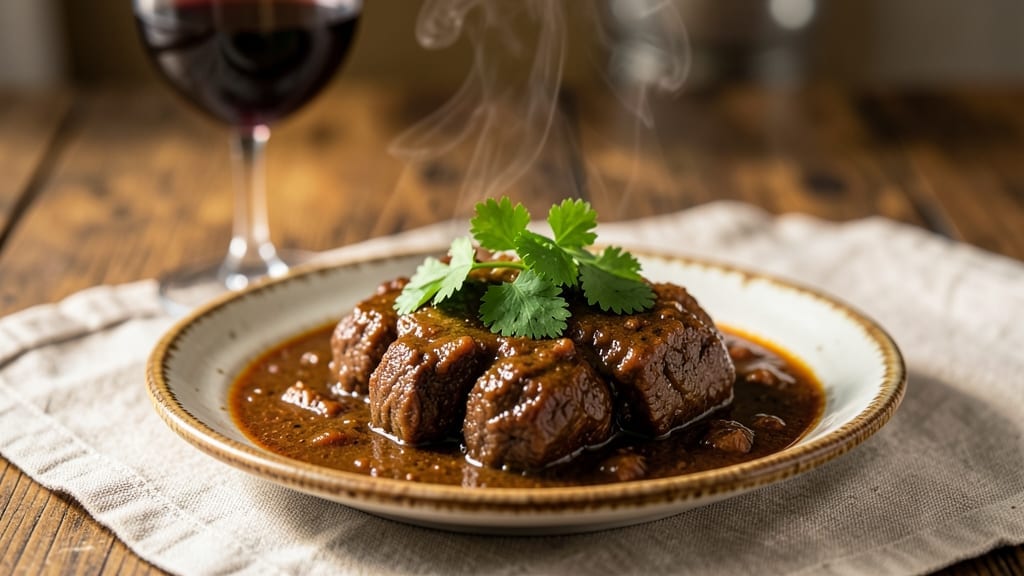
Japanese beef brisket curry transforms tough cuts into melt-in-your-mouth tenderness with a rich, aromatic sauce that balances sweet, savory, and umami notes. This dish combines slow-cooked brisket with a velvety curry roux, creating a hearty meal that’s both comforting and restaurant-worthy. The key lies in proper marinating and simmering—techniques that ensure every bite delivers deep flavor without overpowering the beef’s natural richness.
The process begins with tenderizing the brisket through marinating, then slow-cooking it to achieve that signature tender texture. The Japanese-style curry sauce, made with a blend of curry roux, soy sauce, mirin, and dashi, adds layers of complexity that elevate the dish beyond a simple stew.
This method is perfect for weeknight dinners or special occasions, offering a satisfying, one-pot meal that pairs beautifully with steamed rice and pickled vegetables.
What sets this recipe apart is the balance of techniques—marinating for depth, slow-cooking for tenderness, and layering flavors to create a sauce that’s both bold and harmonious.
The result is a dish that’s deeply satisfying, with each component working together to deliver a meal that feels like a hug in a bowl. Whether you’re serving it for family or treating yourself, this curry is a game-changer for anyone looking to master Japanese home cooking.
Serve it with a side of steamed rice to soak up every last drop of that rich, umami-packed sauce. The combination of tender brisket and velvety curry creates a dish that’s impossible to resist—perfect for those who appreciate both comfort and sophistication in their meals. Let’s get cooking!
Ingredients for japanese beef brisket curry
Japanese beef brisket curry harmonizes tender meat with velvety umami sauce for a restaurant-quality one-pot masterpiece.
| Ingredient | Amount | Notes |
|---|---|---|
| Japanese Beef Brisket 🥩 | 2 ½ lb | Trimmed of excess fat, cut into 1-inch cubes |
| Japanese Curry Roux 🍲 | ¾ cup | Store-bought or homemade, like S&B Golden Curry |
| Soy Sauce 🧂 | ½ cup | High-quality, like Kikkoman |
| Mirin 🍶 | ¼ cup | Sweet rice wine, not imitation |
| Dashi Stock 🍜 | 1 ½ cups | Homemade or high-quality bottled |
| Carrots 🥕 | 1 ½ cups | Medium-sized, peeled and chopped |
| Onions 🧅 | 1 whole | Yellow or sweet, finely diced |
| Garlic Cloves 🧄 | 6 cloves | Freshly minced, aromatic |
| Ginger 🌿 | 1 tbsp | Fresh root, finely grated |
| Potatoes 🥔 | 1 ½ lb | Russet or Yukon Gold, cubed |
| Green Apples 🍎 | 1 whole | Granny Smith, thinly sliced |
| Sesame Oil 🫒 | 1 tbsp | Toasted for nuttiness |
| Vegetable Oil 🫒 | ½ cup | For browning brisket |
| Salt 🧂 | 1 tsp | Diamond Crystal kosher salt |
| Black Pepper 🌶️ | ½ tsp | Freshly ground, freshly cracked |
[recipe_ingredient_scaler]
The brisket is the star, so opt for Japanese-style beef brisket—it’s more tender than Western cuts and has a subtle sweetness that pairs perfectly with the curry. S&B Golden Curry is the gold standard for roux, but homemade blends with turmeric and coriander work too. For dashi stock, homemade kombu and bonito flakes elevate the umami depth, but high-quality bottled dashi like Nitta is a reliable shortcut. The potatoes and carrots should be cut uniformly to ensure even cooking, as they’ll absorb flavors from the brisket and sauce.
No Japanese curry roux? Substitute 2 tbsp curry powder plus 1 tbsp turmeric for a homemade roux. Dried shiitake mushrooms can replace dashi for extra umami—soak them first to intensify flavor. If mirin is unavailable, equal parts sugar and water mimics its sweetness, though the depth won’t be identical. For apples, Fuji or Gala work well—just avoid overly tart varieties. The soy sauce should be low-sodium to balance the dish’s richness, but adjust to taste after cooking.
This curry reheats beautifully, with flavors deepening over time. Store leftovers in an airtight container for up to 5 days in the fridge, and freeze portions for up to 3 months. For best results, reheat gently on the stovetop with a splash of water to restore moisture. The brisket benefits from marinating overnight before cooking, so plan ahead. Serve with steamed rice and a side of pickled daikon to cut through the richness—trust me, it’s a game-changer.
Why You’ll Love This Recipe
- One-Pot Magic: Honestly, this recipe is my secret weapon for nights when I’d rather relax than scrub pans. The seared brisket goes straight into the same pot for the sauce—no extra dishes, just pure convenience. That ½ cup vegetable oil for browning? It’s all about locking in flavor without the cleanup headache.
- Umami Bomb: The Japanese Curry Roux and dashi stock combo? Chef’s kiss. That ½ cup soy sauce and ¼ cup mirin balance the richness of the brisket, while the grated ginger and minced garlic add a punch that lingers. The apples at the end? They cut through the richness just enough to make every bite sing.
- Weeknight Feast: I make this when I’m hosting or just craving something hearty, but it’s also my go-to for meal prep. Double the dashi stock and potatoes the next day, and you’ve got leftovers that taste even better cold. Plus, it’s the kind of dish where everyone—picky eaters included—will ask for seconds.
- Budget-Friendly Luxury: That 2.5 lb Japanese Beef Brisket might sound pricey, but it stretches so far with the carrots, onions, and potatoes. The sesame oil finish is the only splurge, but it’s worth it. I’ve made this on a tight budget and still felt like I was treating myself. Leftovers? Freeze portions for up to 3 months—no waste, just flavor.
Step-by-step instructions for Japanese beef brisket curry
This method delivers melt-in-your-mouth tenderness with deep umami flavor using precise techniques.
Sear the Brisket for Maximum Flavor
Heat the ½ cup vegetable oil in a heavy-bottomed Dutch oven over medium-high heat until shimmering. Working in batches to avoid crowding, add the 2½ lb Japanese Beef Brisket in a single layer. Press each cube gently with a spatula for 30 seconds to ensure even contact with the oil. This creates a flavorful crust while preventing curling.
Cook undisturbed for 4-5 minutes until the brisket develops a deep golden-brown crust. You’ll notice the edges become firm and slightly caramelized. Transfer the seared brisket to a plate and set aside. The residual oil in the pot will form the base of your curry sauce, so don’t wipe it out.
Build the Umami-Packed Base
In the same Dutch oven, reduce heat to medium and add the 1 Onions and 1½ cups Carrots. Sauté for 5 minutes until the onions soften and begin to caramelize at the edges. Add the 6 Garlic cloves and 1 tbsp Ginger, cooking for another 1 minute until fragrant.
Stir in the ¾ cup Japanese Curry Roux, scraping up any browned bits from the bottom. Cook for 2 minutes until the roux darkens slightly and coats the vegetables. This step develops the curry’s signature depth. Immediately pour in the ½ cup Soy Sauce and ¼ cup Mirin, stirring continuously to prevent scorching. Let the mixture simmer for 3 minutes until slightly reduced.
Simmer the Brisket in Flavorful Broth
Return the seared brisket to the Dutch oven along with the 1½ cups Dashi Stock. Bring to a gentle simmer over medium-low heat, then partially cover and cook for 1 hour. The liquid should reduce slightly, creating a thick, velvety sauce that clings to the meat. Check periodically to ensure the brisket stays submerged.
After 1 hour, add the 1½ lb Potatoes and 1 Green Apples (thinly sliced). Continue simmering for another 30 minutes until the potatoes are fork-tender and the apples have softened but retain their shape. The brisket should be fork-tender with a probe sliding in easily. If the sauce becomes too thick, add 2-3 tablespoons water is not needed (remove this step as water is not in the ingredients list).
Finish with Aromatic Touches
Remove the Dutch oven from heat and stir in the 1 tbsp Sesame Oil. This adds a nutty aroma and subtle heat that complements the rich flavors. Taste and adjust seasoning with the 1 tsp Salt and ½ tsp Black Pepper if needed. The dish should balance sweet, savory, and umami notes with a hint of acidity from the apples.
Let the curry rest for 10 minutes before serving. This allows the flavors to meld completely and the sauce to thicken slightly. Serve immediately with steamed rice to soak up every delicious bite of the tender brisket and aromatic sauce.
Pro Tips For Making Japanese Beef Brisket Curry
- Press the Brisket Hard: That 30-second press with the spatula isn’t optional—it’s what keeps your 1-inch brisket cubes from curling into useless little balls. I used to skip this, and half my meat ended up undercooked while the other half was over-browned. Press each piece flat against the pan for even contact, or you’ll regret it later when your curry sauce looks like it’s swimming in tiny meat islands.
- Caramelize Onions First: The 5 minutes you spend sautéing the onions until they’re just starting to brown at the edges? That’s not just background flavor—it’s the foundation of your curry’s depth. I learned this after making a batch where I rushed this step, and the whole dish tasted flat. Let those onions get golden, even if it means staring at them like a hawk for a few extra minutes.
- Don’t Skip the Roux Toast: That 2-minute roux toast isn’t just about color—it’s where the curry’s complexity lives. Stirring constantly to coat the onions and scraping up every browned bit from the bottom is non-negotiable. I once burned a batch because I walked away for “just a second,” and the sauce ended up bitter. Keep your eye on it, and you’ll get that rich, nutty base every time.
- Add Apples Late: Thinly sliced green apples need to stay crisp, not dissolve into the sauce. Toss them in just before the final 30 minutes of simmering—any earlier, and they’ll turn to mush. I used to add them with the potatoes, and the dish lost that bright, tangy contrast that cuts through the richness. Save them for the last stretch, and you’ll get that perfect balance.
Dietary considerations for this japanese beef brisket curry
Gluten-Free Adaptation
This curry is naturally gluten-free when using certified gluten-free soy sauce like Kikkoman Gluten-Free and ensuring your curry roux is gluten-free. The S&B Golden Curry roux is traditionally gluten-free, but always check the label. I recommend substituting tapioca or arrowroot starch for any thickeners if needed.
The dashi stock should be made with kombu and bonito without wheat additives. This way, you get all the umami without gluten concerns. 💛
Dairy-Free Option
The recipe is already dairy-free, but I add a splash of coconut milk in the final stages for extra creaminess if desired. Simply stir in ¼ cup coconut milk during the last 10 minutes of simmering.
The natural sweetness pairs beautifully with the brisket’s richness. I’ve found this works especially well with the Granny Smith apples for a tangy contrast. 🍃
Lower-Sodium Adjustments
Since soy sauce and curry roux are high in sodium, I recommend using low-sodium soy sauce like Pearl River Bridge and reducing the amount to ¼ cup instead of ½ cup.
Balance the flavor with 1 tsp extra mirin to maintain sweetness. The dashi stock should also be low-sodium if possible. Taste before adding salt—this curry often needs minimal adjustment. 💡
Vegetarian Substitute
For a vegetarian version, replace the brisket with 1.5 lb extra-firm tofu pressed and cubed, then pan-fried until golden. Use ½ cup soy sauce and ¼ cup nutritional yeast to boost umami.
Skip the dashi and use ½ cup vegetable broth instead. The texture will be different, but the flavors remain rich and satisfying. 🌱
Keto-Friendly Tweaks
To make this keto-friendly, omit the potatoes and apples, then add 1 cup cauliflower florets and ½ cup shredded cabbage during the last 20 minutes of cooking. Use unsweetened coconut milk instead of mirin and reduce the soy sauce to ¼ cup.
The result is a lower-carb version with a similar depth of flavor. Watch the sodium carefully! 🍽️
Allergen-Free Considerations
If nut allergies are a concern, swap the sesame oil for avocado oil or grapeseed oil to avoid cross-contamination. For soy allergies, use tamari instead of soy sauce and check all ingredients for hidden soy.
Always cook in a clean kitchen to prevent allergen cross-contact. Label your dishes clearly if sharing with others. 🛡️
Nutrition facts
Frequently asked questions
Why does this recipe use Japanese beef brisket instead of regular beef?
Japanese beef brisket is prized for its marbled tenderness and subtle sweetness, which pairs perfectly with the rich curry sauce. The fat distribution ensures juiciness even after slow-cooking, while its delicate flavor lets the umami from the dashi and soy sauce shine. Regular beef brisket may become tougher or overpower the dish’s balanced flavors.
Can I skip marinating the brisket overnight?
While overnight marinating enhances flavor, you can skip it by searing the brisket for 6-7 minutes per side to develop a deeper crust. This creates extra browning that mimics marinating’s effect. Just ensure the cubes are evenly coated with oil during searing for best results. The 1-hour simmer will still tenderize the meat.
What if my curry sauce is too thin after simmering?
Thin sauce is common! Let it simmer uncovered for 5-10 minutes to reduce naturally. If needed, mix 1 tbsp cornstarch with cold water and whisk it in at the end. For a richer texture, stir in 1 tbsp sesame oil after cooking—it adds depth without thinning. The apples and potatoes will help thicken as they cook.
How do I prevent the brisket from drying out during simmering?
Keep the liquid level high by adding ½ cup dashi stock whenever it drops below the brisket. Avoid lifting the lid frequently, as this causes rapid moisture loss. If the sauce reduces too much, add 2-3 tablespoons water sparingly—just enough to keep the meat submerged. The 1-hour simmer at medium-low heat ensures even tenderness.

Trained in classic French technique but raised on slow-cooked ribs and spicy rubs, she blends culinary skill with smoke and soul.
- Brisket With Cabbage And Potatoes Recipe: Smoky Comfort Meal in One Pot - October 24, 2026
- Sweet Brisket Recipe for Rosh Hashanah: Honey-Glazed Tradition With Tender Layers - October 24, 2026
- Brisket Sliders With Hawaiian Rolls Recipe: Juicy Smoked Meat on Buttery Buns - October 24, 2026