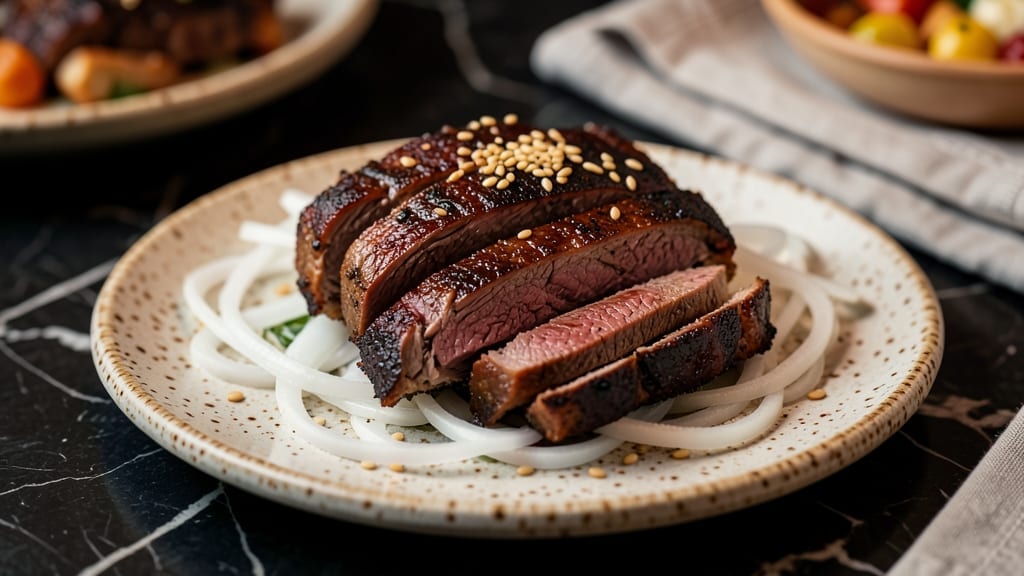
Transforming tough cuts into tender beef brisket with daikon delivers a dish that marries rich, slow-cooked beef with the crisp, refreshing crunch of Asian-inspired vegetables.
The key lies in a precise cooking method—low and slow until the meat practically melts in your mouth, then finishing with a quick sear to lock in juices while the daikon adds a bright, textural contrast.
I developed this recipe after years of perfecting brisket techniques, and the daikon was the game-changer that elevated it from classic comfort food to something truly special.
This method requires patience but rewards you with restaurant-quality results at home. The brisket cooks for hours until fork-tender, while the daikon can be prepared in multiple ways—pickled for tangy crunch, stir-fried for caramelized edges, or even served raw for freshness.
The beauty of this dish is its versatility: serve it as a main course with steamed rice, slice it for sandwiches, or shred it for tacos. Every bite balances deep, smoky beef flavors with the crisp, refreshing bite of daikon.
The secret to success lies in the slow cooking process and proper resting time—both critical for achieving that tender texture without drying out the meat. Meanwhile, the daikon adds a layer of complexity that cuts through the richness of the brisket, creating a harmonious blend of flavors and textures.
Whether you’re hosting a dinner party or simply craving a hearty meal, this recipe delivers a showstopping dish that’s sure to impress.
Ready to master this technique? The instructions will guide you through every step—from trimming the brisket and setting up your slow cooker to preparing the daikon and plating the final dish. Let’s get started on creating a meal that’s as satisfying as it is delicious.
Ingredients for beef brisket with daikon
Slow-cooked beef brisket meets daikon’s crisp crunch in this tender, restaurant-quality recipe.
| Ingredient | Amount | Notes |
|---|---|---|
| Beef Brisket 🥩 | 3 lb | Flat cut, trimmed of excess fat |
| Daikon Radish 🥬 | 1 large | Peeled, sliced into matchsticks |
| Soy Sauce 🍜 | ½ cup | Low-sodium preferred |
| Brown Sugar 🍚 | ¼ cup | Packed, for marinade sweetness |
| Garlic Cloves 🧄 | 6 cloves | Minced, aromatic base |
| Ginger Root 🌿 | 2 tbsp | Fresh, grated finely |
| Sesame Oil 🫒 | 1 tbsp | Toasted flavor profile |
| Rice Vinegar 🍶 | 2 tbsp | Brightens marinade |
| Onion 🧅 | 1 whole | Yellow, diced finely |
| Cornstarch 🌾 | 2 tbsp | Slurry for tenderizing |
| Water 💧 | ½ cup | For cornstarch slurry |
| Salt 🧂 | 1 tsp | Kosher or sea salt |
| Black Pepper 🌶️ | ½ tsp | Freshly cracked |
| Vegetable Oil 🫒 | ¼ cup | High smoke point |
| Steamed Rice 🍚 | 4 cups | For serving |
[recipe_ingredient_scaler]
The beef brisket is the star here—look for a flat cut around 3 pounds, well-marbled for juiciness. Costco or butcher shops often have great selections, but any grocery store with a meat counter will work. Trim excess fat before cooking to avoid greasy results. The daikon? Buy organic if possible—it’s less likely to have dirt in the cracks between its thick roots. Peel it with a vegetable peeler for clean slices. I always grab a few extra radishes to snack on while the brisket cooks—it’s a great way to use them up before they get woody.
No daikon? Jicama or regular radishes work in a pinch—just slice them thinner for that same crunch. Short on soy sauce? Substitute coconut aminos for a lighter taste. Want to skip the cornstarch slurry? Baste the brisket with marinade every hour instead—it’ll still turn out tender, just might take a little longer. The ginger? Fresh is ideal, but if you only have powdered, use half the amount and add it at the end. And if your rice vinegar is cloudy or smells off, toss it—fresh is key for that bright tang.
This brisket tastes even better the next day—rest it 15 minutes after cooking to retain juices, then refrigerate. The daikon keeps 5-7 days in the fridge if wrapped tightly in a paper towel. For leftovers, slice thinly and pan-fry for a quick meal. I portion mine into containers so lunches are sorted for the week. The cornstarch slurry? Make it just before using—it loses effectiveness when sitting. And if you’re freezing portions, wrap tightly in foil to prevent freezer burn.
Why You’ll Love This Recipe
- No-Fuss Feast: Honestly, this dish is my secret weapon for when I’ve got 10 minutes to prep but still want to impress. The marinade—just whisk the soy sauce, brown sugar, garlic, ginger, sesame oil, and rice vinegar—does all the heavy lifting while you prep the daikon. No fancy techniques, just a bag, a fridge, and a little patience.
- Sweet-Savory Magic: That balance of brown sugar and soy sauce? It’s like a flavor hug. The garlic and ginger in the marinade caramelize into the meat while cooking, and the crispy daikon adds a peppery crunch that cuts through the richness. Trust me, the first bite will make you pause and think, “Yes, exactly.”
- Leftovers That Shine: This recipe is made for leftovers. The brisket gets even more tender after a day, and the daikon stays crisp if you store it right. I’ll pack it up for lunches, freeze portions for busy nights, or turn it into fried rice the next week. Zero waste, zero stress.
- Budget-Friendly Luxury: You’re getting melt-in-your-mouth beef brisket (which is cheaper than steak) paired with daikon, which is basically a vegetable superstar. The cornstarch slurry keeps costs down while making the meat fall-apart tender. It’s the kind of dish that feels indulgent but won’t break the bank.
Step-by-step instructions for beef brisket with daikon
Here’s how to transform tough brisket into melt-in-your-mouth perfection with crisp daikon and savory marinade.
Prepare the Brisket Marinade and Tenderize
In a large bowl, combine the ½ cup soy sauce, ¼ cup brown sugar, 6 cloves minced garlic, 2 tbsp grated ginger root, 1 tbsp sesame oil, and 2 tbsp rice vinegar. Mix well until the brown sugar dissolves completely. This marinade does double duty as both flavor enhancer and tenderizer.
In a separate small bowl, whisk together the 2 tbsp cornstarch with the ½ cup water to create a smooth slurry. This cornstarch mixture will work magic on the brisket’s texture. Pat the 3 lb beef brisket dry with paper towels – removing moisture ensures better marinade penetration and crispier edges later.
Spread half of the marinade evenly over the brisket, pressing it into the meat with your fingers. Place the brisket in a resealable plastic bag, pour in the cornstarch slurry, then add the remaining marinade. Seal the bag tightly, massaging it to distribute the marinade completely. Refrigerate for at least 4 hours or up to 24 hours for maximum tenderness.
Slow-Cook the Brisket Until Fork-Tender
Preheat your oven to 300°F. Remove the brisket from the marinade (reserve the marinade for later) and place it fat-side up in a Dutch oven. Pour the reserved marinade into the Dutch oven, then add ½ cup water to create steam that keeps the meat moist during cooking.
Cover the Dutch oven tightly with a lid and place it in the preheated oven. Cook for 3 hours without disturbing it. Here’s the thing – patience is key. The brisket needs time to break down collagen into gelatin, which transforms tough meat into tender slices. After 3 hours, check the internal temperature using a meat thermometer – it should read 170°F.
If the brisket hasn’t reached 170°F after 3 hours, continue cooking for another 30-60 minutes until it does. The meat should be fork-tender but not falling apart. Remove the brisket from the oven and let it rest for 30 minutes before slicing – this resting period allows juices to redistribute throughout the meat.
Prepare the Daikon and Cook the Sauce
While the brisket rests, prepare the daikon radish by peeling it and slicing it into ¼-inch thick matchsticks. You should have about 4 cups of daikon matchsticks. Heat ¼ cup vegetable oil in a large skillet over medium-high heat until shimmering. Add the daikon in a single layer and cook for 4-5 minutes until golden brown and slightly crispy.
Remove the daikon from the skillet and set it aside. In the same skillet, add the 1 diced onion and cook for 3-4 minutes until softened. Pour in the reserved marinade from the brisket and bring to a simmer. Let it reduce for 5-7 minutes until slightly thickened. Season with 1 tsp salt and ½ tsp black pepper.
Slice the Brisket and Assemble the Dish
Slice the rested brisket against the grain into ¼-inch thick slices. The grain runs lengthwise, so you’ll want to cut perpendicular to this direction. Arrange 1 cup steamed rice on each of four plates, creating a base for your brisket and daikon.
Place ½ of the sliced brisket over the rice on each plate, then spoon the daikon matchsticks and onion mixture around the brisket. Drizzle each serving with some of the reduced marinade sauce. The combination of tender brisket, crisp daikon, and savory sauce creates a perfect balance of textures and flavors.
Serve immediately while the daikon is still crisp and the brisket is warm. Each bite should deliver that melt-in-your-mouth tenderness promised, with the satisfying crunch of daikon adding contrast. The sauce ties everything together with its perfect balance of sweet, salty, and umami flavors.
Pro Tips For Making Beef Brisket With Daikon
- Massage That Marinade: Don’t just pour the marinade over the brisket—get your hands dirty and press it into every crevice. The cornstarch slurry needs to work its magic deep in the meat, and skipping this step means you’ll end up with uneven tenderness. I learned this after slicing into a brisket that was tough on one side and perfect on the other—don’t be that person.
- Check That Temperature: The brisket will hit 170°F at 3 hours, but if it’s running hotter, pull it out early. Overcooking turns it dry, and no one wants sad, stringy meat. Use that thermometer—this isn’t the time to guess. (Yes, even if you’re impatient like me.)
- Daikon in One Layer: Crowd the daikon in the pan, and you’ll steam it instead of crisp it. Spread those matchsticks out like you’re laying down confetti—just one layer, no overlaps. Medium-high heat is your friend here; if you’re frying in a pool of oil, you’re doing it wrong.
- Rest the Brisket Properly: That 30-minute rest isn’t optional—it’s the difference between juicy slices and a dry mess. Tent it loosely with foil and let it sit while you prep the daikon. Trust me, your future self will curse you if you skip this. (Your future self is me, and I’ve made this mistake.)
Dietary considerations for this recipe
Gluten-Free Adaptation
This recipe works beautifully for gluten-free diets since the primary gluten source is soy sauce. Swap it for Tamari—a gluten-free alternative with deeper flavor. I use San-J Tamari because it has a richer taste and similar umami punch.
The cornstarch slurry also remains gluten-free, so no adjustments are needed there. Just ensure your rice vinegar is certified gluten-free, as some brands may contain traces. 💛
Low-Sodium Options
The recipe already includes low-sodium soy sauce, but if you’re watching sodium levels closely, reduce it to ¼ cup and boost flavor with 1 tbsp coconut aminos instead. Add an extra ½ tsp salt at the end when cooking the sauce to compensate for any lost saltiness.
I’ve found this keeps the dish balanced without overpowering the other flavors.
Vegetarian Substitute
For a vegetarian version, replace the brisket with extra-firm tofu or seitan. Press the tofu for 30 minutes to remove excess moisture, then slice it into ¼-inch thick pieces before marinating. The cornstarch slurry works perfectly to tenderize the tofu.
Cook the tofu in the Dutch oven for 1.5 hours at 300°F, flipping halfway, until it’s fork-tender. The daikon and sauce pair just as well!
Dairy-Free Considerations
This recipe is naturally dairy-free, but if you’re serving it with sides like steamed rice, ensure they’re also free from hidden dairy. For extra richness, drizzle with sesame oil or tahini instead of butter.
The marinade and sauce already rely on soy, garlic, and ginger for depth, so no dairy substitutes are needed—just enjoy the bold, savory flavors as intended. ✨
Kid-Friendly Tweaks
Kids might find the sweet-savory marinade a little bold, so reduce the brown sugar to ¼ cup and add 1 tbsp honey to mellow the flavors. Skip the black pepper entirely and use ½ tsp garlic powder instead of fresh garlic for a milder taste.
The crispy daikon adds fun texture, so let them help slice it into fun shapes—it’s a great way to get them involved! 💪
Nutrition facts
Frequently asked questions
Why does the recipe call for marinating the brisket with cornstarch?
The cornstarch slurry creates a protective barrier that helps tenderize the meat while locking in moisture during slow cooking. This prevents the brisket from drying out and creates a slightly crispier exterior when cooked. The 2 tbsp cornstarch mixed with ½ cup water forms a paste that coats the meat evenly, working alongside the marinade for maximum tenderness.
Can I skip the resting period after cooking the brisket?
Skipping the 30-minute rest will make your brisket dry and difficult to slice. Resting allows juices to redistribute throughout the meat, ensuring every bite is moist and flavorful. This step is critical for achieving that melt-in-your-mouth texture you’re aiming for.
What if my daikon isn’t crispy enough after cooking?
If your daikon isn’t crispy, cook it in smaller batches for 2-3 minutes each to avoid steaming. Use a high smoke-point oil like vegetable oil and ensure your skillet is hot before adding the daikon. For extra crispiness, broil for 1-2 minutes at the end of cooking.
How do I know when the brisket is fully cooked?
Use a meat thermometer to check the internal temperature—it should reach 170°F for fork-tender perfection. The brisket will pull apart easily when tested with a fork, but it shouldn’t be falling apart. If it’s still tough after 3 hours, continue cooking in 30-minute increments until it reaches the right temperature.
Can I make this dish ahead of time?
The brisket actually tastes better the next day—just rest it 15 minutes after cooking, then refrigerate. The daikon keeps 5-7 days wrapped tightly in a paper towel. For leftovers, reheat gently in a skillet or microwave, adding a splash of water to keep it moist.

Trained in classic French technique but raised on slow-cooked ribs and spicy rubs, she blends culinary skill with smoke and soul.
- Smoked Chicken Salad Recipe: Crispy, Smoky Bites With Creamy Ranch Dressing - October 19, 2026
- Beer Can Chicken in a Smoker Recipe: Juicy, Herbed Perfection in One Can - October 19, 2026
- Brined Beef Brisket Recipe: Ultra-Tender, Juicy Cuts in One Pot - October 19, 2026