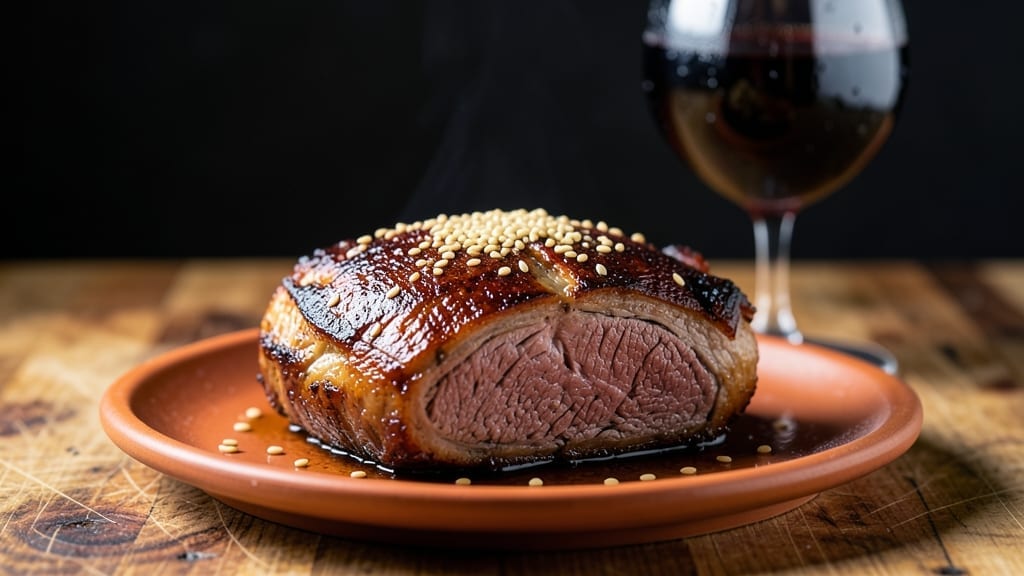
This beef chuck smoker recipe unlocks the secret to turning tough cuts into tender, smoky perfection—where low-and-slow precision builds bark while keeping the meat juicy inside. 🔥 I learned this technique from my grandfather’s backyard cookouts, where hickory smoke turned simple beef into a centerpiece.
This recipe starts with a dry rub of smoked paprika, brown sugar, and garlic powder—simple ingredients that build layers of flavor as the meat smokes for hours.
The reverse sear at the end ensures a crisp exterior without drying out the center, a lesson I perfected after years of trial and error. You’ll need about 6 hours of smoking time, but the process is hands-off once you set up the smoker.
By the time you pull that probe-tender beef from the smoker, you’ll have a dish that’s rich, smoky, and impossibly tender—each slice falling apart at the touch. The bark will be dark and crackly, hiding juices so flavorful they’ll make your taste buds sing.
This is the kind of meal that turns weeknight dinners into memorable feasts.
Serve with classic sides like roasted potatoes or a crisp coleslaw to balance the richness, or keep it simple with a fresh garden salad. The leftovers reheat beautifully, making this a perfect recipe for meal prep or hosting. Let’s get smoking!
Ingredients for beef chuck smoker
Six hours of hands-off smoking transforms tough beef into melt-in-your-mouth perfection with smoky bark.
| Ingredient | Amount | Notes |
|---|---|---|
| Beef Chuck Roast 🥩 | 5 lb | With good marbling, cubed 2-3 inches |
| Smoked Paprika 🌶️ | 2 tbsp | For dry rub, not sweet |
| Brown Sugar 🍚 | 2 tbsp | Packed, for caramelization |
| Garlic Powder 🧄 | 1 tbsp | Not garlic salt |
| Coarse Kosher Salt 🧂 | 1 tbsp | For dry rub balance |
| Black Pepper 🌶️ | 1 tsp | Freshly ground preferred |
| Hickory Wood Chips 🌳 | 1 lb | For consistent smoke flavor |
| Apple Cider Vinegar 🍎 | 2 tbsp | For tenderizing brine |
| Water 💧 | 2 cups | For brine solution |
| Butter 🧈 | ½ cup | Full-fat for reverse sear |
| Olive Oil 🫒 | 2 tbsp | For basting and searing |
| Onion 🧅 | 1 whole | Quartered, for smoker bed |
| Carrots 🥕 | 4 whole | For smoker bed moisture |
[recipe_ingredient_scaler]
The beef is everything here. Chuck roast with visible marbling (that white streaking) is non-negotiable—it stays juicy even after hours of smoking. Costco or ButcherBox are my go-tos for pre-cubed chunks, but if you’re buying whole, ask your butcher to cut 2-3 inch cubes. The meat should look like a steak but cheaper—dark red with white fat. Pro tip: Brine it overnight in apple cider vinegar and water to keep it moist. I always do this step, even though some folks skip it. Trust me, the difference is night and day.
No hickory wood chips? Pecan or cherry wood works in a pinch, though the flavor won’t be identical. Want to skip the vinegar brine? Wet the meat with olive oil and salt before rubbing—it’ll still get tender, just not as dramatically. Running low on brown sugar? Maple syrup at half the amount adds depth, but it’ll caramelize differently. The onions and carrots in the smoker? Baby carrots or frozen work fine—just don’t skip them. They release moisture and keep the meat from drying out. And if you’re using a pellet smoker, pre-soak the wood chips for 30 minutes—it’ll smoke longer and more evenly.
This reheats like a dream—honestly, it tastes even better the next day. Store leftovers in airtight containers and reheat in the oven at 300°F for 20 minutes to keep the bark intact. The dry rub keeps for up to 3 months in a jar, but I’d recommend making fresh for the best flavor. For the smoker, preheat for at least 1 hour before adding meat—this ensures consistent temperature. And if you’re short on time, use a smoker box for the wood chips instead of a water pan setup. Just don’t overcrowd the smoker—leave at least 2 inches between pieces for even smoke penetration.
Why You’ll Love This Recipe
- No-Fuss Smoking: Honestly, this recipe is the kind of unfussy magic that makes me want to smoke beef every week. The brine takes care of 90% of the work—just toss the chuck in the fridge overnight, and you’re golden. No fancy prep, no stress, just pure hands-off cooking.
- Smoky Bark, Creamy Center: That crispy edge from the reverse sear with the buttery, fall-apart tender meat? Chef’s kiss. The smoked paprika and brown sugar caramelize into a flavor bomb, while the apple cider vinegar brine keeps it from drying out. It’s the kind of dish that makes people ask for seconds without even realizing why.
- Budget-Friendly Powerhouse: Chuck roast is one of the most affordable cuts, and this recipe stretches it into a showstopper without breaking the bank. The dry rub ingredients? A few dollars’ worth of spices that’ll last forever. Plus, feeding a crowd for less than $10 per person? That’s my kind of meal.
Step-by-step instructions for smoked beef chuck roast
Here’s the proven method to transform tough chuck into melt-in-your-mouth tenderness with a perfect smoky bark.
🔥 Step 1: Create the Tenderizing Brine
In a large bowl, combine the 2 cups water and 2 tbsp apple cider vinegar. Stir until fully dissolved – this acidic mixture will break down tough muscle fibers in the beef. Place the 5 lb beef chuck roast in a resealable plastic bag and pour the brine solution over it. Seal the bag and refrigerate for 12-24 hours, turning the bag occasionally. Here’s the thing – this step makes all the difference for that fork-tender result you’re after.
After brining, remove the beef and pat it completely dry with paper towels. You want it bone dry for that perfect bark to form later. Real talk: Skipping this drying step is how you end up with steamed meat instead of smoked perfection.
👨🍳 Step 2: Build the Dry Rub and Prep the Smoker
In a small bowl, mix together the 2 tbsp smoked paprika, 2 tbsp brown sugar, 1 tbsp garlic powder, 1 tbsp coarse kosher salt, and 1 tsp black pepper. Rub this generously all over the beef, pressing the spices into the meat so they adhere well. Let it sit at room temperature for 30 minutes while you prepare your smoker.
Set up your smoker using the 1 lb hickory wood chips and preheat to 225°F. Arrange the 1 quartered onion and 4 carrots on the smoker grate below the beef. These veggies add moisture and flavor to the cooking environment. I always use a water pan too – it helps maintain consistent temperature and prevents the bark from drying out.
🔥 Step 3: Smoke the Roast Low and Slow
Place the rubbed beef chuck roast on the smoker grate, fat-side up. Close the lid and maintain the temperature at 225°F for 6-8 hours. This is where patience pays off – the collagen in the meat will slowly break down into gelatin, creating that irresistible tenderness. Don’t open the smoker during this time unless absolutely necessary, as each time you do, you lose heat and moisture.
After 6-8 hours, check the internal temperature using a meat thermometer. When it reaches 165°F, you’ll hit “the stall” – where the temperature stops rising as moisture evaporates. This is normal and exactly what we want to happen next. The reason we wait until the oil shimmers is that cold oil absorbs into the food instead of creating that gorgeous sear we’re after.
⏰ Step 4: Wrap and Finish the Cook
At the stall point, wrap the beef tightly in heavy-duty aluminum foil. This technique, called the “Texas crutch,” helps power through the stall while preserving that beautiful bark. Return it to the smoker and continue cooking until the internal temperature reaches 200-203°F, which should take another 3-5 hours. You’ll know it’s done when a probe slides in like butter with no resistance.
Remove the beef from the smoker and let it rest in the foil for 1 hour before slicing. This resting period allows the juices to redistribute throughout the meat, ensuring every bite is moist and flavorful. Real talk: Skipping this rest is how you end up with dry, stringy meat.
🍳 Step 5: Reverse Sear for Perfect Bark
While the beef rests, heat a heavy skillet over medium-high heat. Add the 2 tbsp olive oil and ½ cup butter, letting the butter foam and brown slightly. Remove the beef from the foil and sear each side for 2-3 minutes until you get that beautiful, dark mahogany bark. This step creates that perfect balance of tender meat with a flavorful crust.
Slice the beef against the grain into ¼-inch thick pieces and serve immediately. The result should be perfectly tender meat with a beautiful smoky bark that’s crispy on the outside but melts in your mouth. Each bite delivers that incredible smoky depth you’ve been waiting for.
Pro Tips For Making Beef Chuck Smoker
- Trim the Fat First: Before cubing your 5 lb beef chuck roast, trim off any thick fat caps—leave just a thin layer. Too much fat can shield the meat from smoke and the dry rub, leading to uneven flavor and bark. I learned this the hard way when my first batch tasted bland in the middle.
- Don’t Rush the Stall: When the internal temp hits 165°F, resist the urge to crank up the heat. The stall is your friend—it’s where the meat’s moisture evaporates and the collagen melts into gelatin. Wrapping it in foil at this point (the “Texas crutch”) is the only way to push through without drying it out. Trust the process, even if it takes longer than you expect.
- Use Packed Brown Sugar: Measure your 2 tbsp brown sugar by packing it firmly into the spoon—don’t scoop loosely. Packed sugar caramelizes better, giving you that deep, sticky bark instead of a dry, crumbly crust. This small detail makes a real difference in the final texture.
- Sear with Hot Butter: For the reverse sear, heat the skillet until the ½ cup butter foams and turns a rich golden brown before adding the beef. Cold butter won’t brown properly, and you’ll miss out on that nutty, caramelized depth that elevates the smoky flavor. High heat is non-negotiable here.
Wine and beer pairings for these flavors
Bold Reds for Smoky Depth
For this rich, smoky beef chuck, I reach for a bold Spanish Rioja—specifically a Tempranillo from Rioja Alta. The dark fruit notes and leather undertones complement the hickory smoke beautifully, while the tannins stand up to the meat’s intensity.
A 2018 Muga Crianza is my go-to, but any aged Rioja will work. The acidity cuts through the fat without overwhelming the smoky complexity. 🍷
Craft Lager for Clean Palate
A crisp Belgian-style witbier like Leffe Blonde or Hoegaarden cleanses your palate between bites of smoky beef. The citrus and coriander notes in these lagers provide a refreshing contrast to the deep, caramelized flavors of the dry rub.
I avoid heavy IPAs—they’ll clash with the smoky bark. A pint of witbier next to your plate is like a cool breeze after a long ride on my motorcycle. 🌬️
Malty Amber for Balance
For those who prefer beer, a German-style amber lager like Paulaner Salvator or Weihenstephaner Hefeweizen offers just the right balance. The malty sweetness pairs wonderfully with the brown sugar in the rub, while the subtle yeast character enhances the smoky depth.
Skip the hoppy IPAs—they’ll overpower the delicate bark. I always keep a cold one nearby when I’m smoking meat; it’s my ritual. 🍺
White Wine for Lighter Palates
If you prefer white wine, a dry Riesling from Germany or Alsace works surprisingly well. The mineral notes and slight sweetness complement the smoky flavors without competing.
I like a Dr. Loosen Blue Slate Riesling—it’s crisp enough to cut through the fat but fruity enough to match the caramelized bark. A chilled glass makes the meal feel even more special. 🍇
Smoke and Fruit Pairings
For the adventurous, try a Portuguese red blend like Quinta do Crasto with its dark fruit and earthy notes. The wine’s structure mirrors the beef’s tenderness, while the smoke and fruit create a harmonious dance on your palate.
I discovered this pairing during a trip to Portugal, and it became an instant favorite. 🌍
Nutrition facts
Frequently asked questions
Why does the beef need to brine before smoking?
The 12-24 hour vinegar brine tenderizes the tough beef chuck by breaking down muscle fibers, ensuring fork-tender results. Without it, you risk dry or chewy meat—especially important for tougher cuts like chuck. The acidity also enhances flavor absorption from the dry rub.
Can I skip the Texas crutch (aluminum foil wrap)?
Skipping the foil wrap means you’ll struggle through “the stall” (around 165°F) where moisture evaporates and progress stalls. Wrapping helps push through this phase while preserving the bark. If you skip it, expect longer cook times or drier meat.
How do I know when the reverse sear is done?
Look for a deep mahogany color on the beef’s surface—it should be glossy, not dry. The 2-3 minutes per side in the hot skillet with butter creates that perfect crust. Over-searing will burn the bark, so keep a close eye.
What if my smoker isn’t at 225°F?
Adjust the temperature to 225°F if possible—this is ideal for collagen breakdown. If you’re off by 10-15°F, just add 30-60 minutes to the cook time. Consistency matters more than exact temperature; just monitor with a thermometer.

Trained in classic French technique but raised on slow-cooked ribs and spicy rubs, she blends culinary skill with smoke and soul.
- Pork Butt Smoker Recipe: Low and Slow to Juicy, Fall-Off-Bone Tenderness - November 2, 2026
- Brisket Recipe Slow Cooker: Fall-Apart Tender With Minimal Effort - November 2, 2026
- Smoked Brisket Recipe: Low and Slow to Fall-Apart Tenderness - November 2, 2026