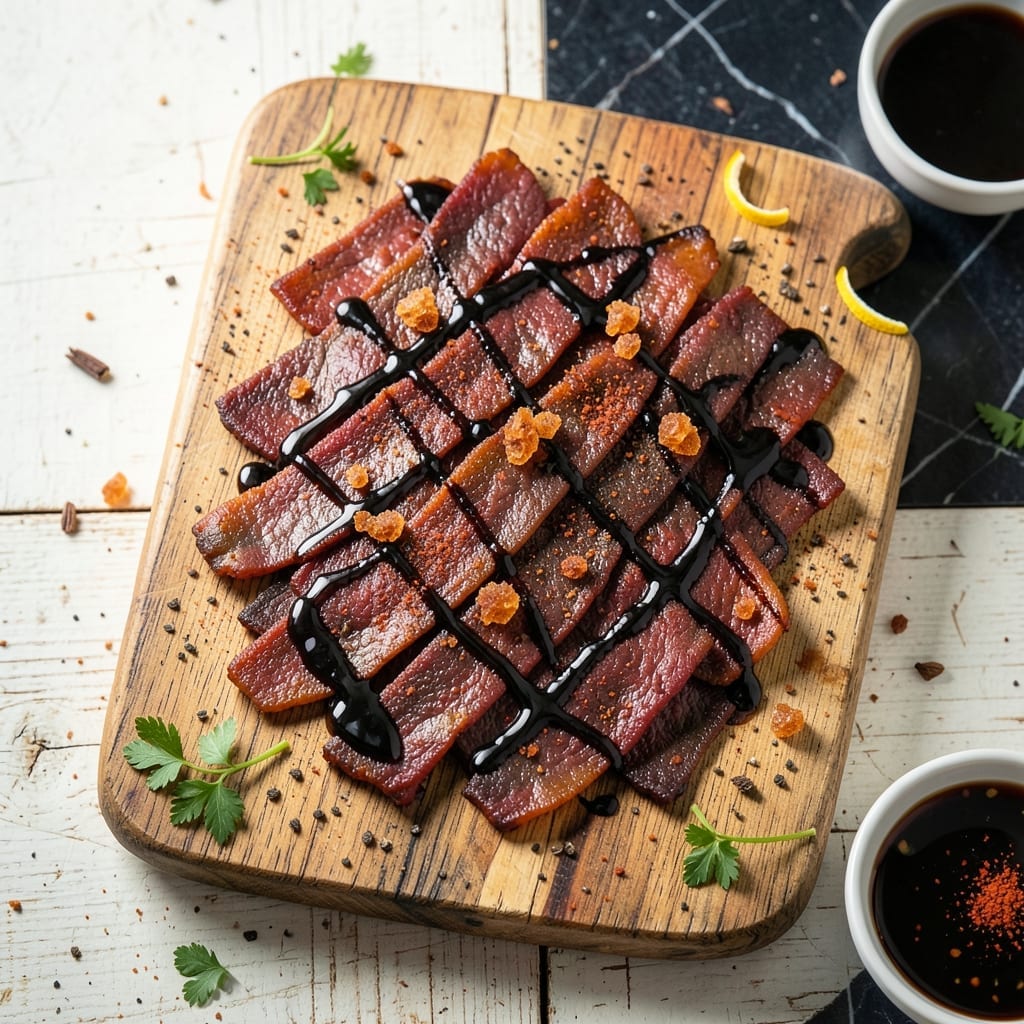
This dehydrator method transforms lean beef into chewy, savory jerky with deep, concentrated flavor in every bite. No preservatives, just pure meat and bold seasonings.
With precise slicing and a flavorful marinade, you’ll achieve professional results. The dehydrator ensures consistent drying for the perfect texture every time.
Ingredients for Beef Jerky Recipe Dehydrator
Lean beef and bold seasonings create these concentrated, savory bites with professional results every time.
| Ingredient | Amount | Notes |
|---|---|---|
| Lean Beef Top Round 🥩 | 2 lb | Trimmed of visible fat, sliced against grain |
| Soy Sauce 🫒 | ½ cup | Low-sodium preferred for controlled seasoning |
| Worcestershire Sauce 🫒 | 2 tbsp | Anchovy-free if preferred |
| Brown Sugar 🍚 | ¼ cup | Light or dark variety |
| Black Pepper 🌶️ | 2 tsp | Coarsely ground for texture |
| Smoked Paprika 🌶️ | 1 tsp | Sweet or hot variety |
| Garlic Powder 🧄 | 1 tsp | Not garlic salt |
| Onion Powder 🧅 | 1 tsp | Fresh ground preferred |
| Cayenne Pepper 🔥 | ½ tsp | Adjust for heat preference |
| Liquid Smoke 💨 | 1 tsp | Optional for enhanced smokiness |
| Apple Cider Vinegar 🍏 | 1 tbsp | Balances marinade sweetness |
| Kosher Salt 🧂 | 1 tsp | Diamond Crystal preferred |
[recipe_ingredient_scaler]
The beef cut is critical for optimal texture. Top round or london broil offer the ideal lean-to-fat ratio for jerky. Source from a reputable butcher or the meat counter at Whole Foods for consistent quality. Partially freeze the meat for 30 minutes before slicing—this firms the flesh for cleaner, more uniform cuts against the grain.
For dietary adaptations, coconut aminos replaces soy sauce without sacrificing depth. Maple syrup or honey can substitute for brown sugar at a 1:1 ratio. If avoiding smoked flavors, increase the paprika and add a pinch of chipotle powder. The vinegar is non-negotiable for food safety—never omit it. Freshly ground black pepper provides superior texture over pre-ground.
Marinate the beef for 12-24 hours for maximum flavor penetration. The dehydrator method ensures consistent results, but an oven set to its lowest temperature works in a pinch. Store finished jerky in airtight containers with a silica packet for up to 2 months at room temperature or 6 months in the freezer.
Why You’ll Love This Recipe
- Set and Forget: I slice the beef, mix the marinade, and let the dehydrator do all the work—no babysitting required.
- Sweet & Savory Balance: The brown sugar caramelizes while the soy and Worcestershire add a deep, umami punch that’s honestly addictive.
- Trail or Tailgate: I pack this for hiking trips or serve it at parties—everyone from my picky nephew to my foodie friend asks for more.
- Stretches the Budget: A single pound of top round turns into enough jerky to last weeks, and it’s way cheaper than store-bought.
Step-by-Step Instructions for Beef Jerky Dehydrator
Master the dehydration process with precision and patience for consistent results.
Step 1: Prepare and Slice the Lean Beef Top Round
Begin by partially freezing the 2 lb Lean Beef Top Round for 30-45 minutes to firm it up, making slicing easier. Trim away any visible fat or connective tissue, as fat doesn’t dehydrate well and can cause spoilage.
Using a sharp knife, slice the beef against the grain into ¼-inch thick strips. Slicing against the grain ensures the jerky will be tender and easier to chew. For uniformity, keep the strips as even in thickness as possible—this guarantees even drying in the dehydrator.
Step 2: Create and Apply the Marinade
In a large bowl, whisk together the 0.5 cup Soy Sauce, 2 tbsp Worcestershire Sauce, 0.25 cup Brown Sugar, 1 tbsp Apple Cider Vinegar, and 1 tsp Liquid Smoke until the brown sugar is fully dissolved. This balance of salty, sweet, and tangy forms the flavor foundation.
Add the 2 tsp Black Pepper, 1 tsp Smoked Paprika, 1 tsp Garlic Powder, 1 tsp Onion Powder, 0.5 tsp Cayenne Pepper, and 1 tsp Kosher Salt. Stir thoroughly to combine. Submerge the beef strips in the marinade, ensuring each piece is fully coated. Cover and refrigerate for 8-12 hours, or overnight for maximum flavor penetration.
Step 3: Drain and Pat Dry the Marinated Beef
Remove the beef strips from the marinade and drain them in a colander. Discard the used marinade—it’s unsafe to reuse due to raw meat contact. Pat each strip dry with paper towels to remove excess moisture. This step is critical; the drier the surface, the faster and more evenly the jerky will dehydrate.
Arrange the strips on a clean surface or parchment paper while you prepare the dehydrator. If the strips feel too wet, give them another gentle pat. Proper drying at this stage prevents uneven texture and promotes a consistent chew.
Step 4: Dehydrate at the Correct Temperature
Preheat your dehydrator to 160°F. Arrange the beef strips on the dehydrator trays, ensuring they don’t overlap and have adequate space for air circulation. Place the trays in the dehydrator, starting with the tray closest to the heat source if your model has uneven heat distribution.
Dehydrate for 4-6 hours, checking periodically after 3 hours. The jerky is done when it’s dry to the touch, slightly leathery, and bends without breaking. For safety, the internal temperature should reach 160°F to ensure harmful bacteria are destroyed. Rotate the trays halfway through if your dehydrator has hot spots.
Step 5: Cool and Store the Finished Jerky
Once dehydrated, remove the jerky from the trays and let it cool completely on a wire rack. This cooling step allows any residual moisture to evaporate, preventing condensation and potential mold growth during storage.
Store the cooled jerky in an airtight container in the refrigerator for up to 2 weeks, or freeze for up to 3 months for longer shelf life. For best texture, let the jerky come to room temperature before serving. Each piece should be chewy, flavorful, and uniformly dried.
Pro Tips For Making Beef Jerky Recipe Dehydrator
- Freeze First: Partially freeze the top round for 30-60 minutes before slicing—it firms up the meat so you can cut paper-thin strips against the grain without it falling apart.
- Pat Dry Thoroughly: After marinating, blot the beef strips with paper towels to remove excess moisture; wet meat steams instead of drying, and you’ll end up with chewy jerky instead of that firm, leathery texture.
- Use 160°F Minimum: I learned this the hard way—anything below 160°F in the dehydrator risks undercooked meat, and above 175°F can make the outside too dry before the inside is safe; 160°F for 4-6 hours is the sweet spot.
- Skip the Fat: Trim every visible bit of fat from the top round; fat doesn’t dehydrate and will go rancid, ruining your batch—yes, even that tiny marbling you think won’t matter.
Storing and Reheating This Dish
Room Temperature Storage
For short-term storage, keep your jerky in an airtight container or resealable bag at room temperature. I use mason jars with silica gel packets to absorb any residual moisture. This method keeps the jerky fresh for up to 2 weeks in a cool, dry pantry. 💡
Refrigerator Storage
To extend shelf life, store your jerky in the fridge in a sealed container. It will stay fresh for 1-2 months this way. I prefer vacuum-sealed bags for maximum freshness, as they prevent air from degrading the texture and flavor.
Freezer Storage
For long-term storage, freeze your jerky in vacuum-sealed bags or airtight containers. It will maintain quality for up to 6 months. Portion it into smaller batches so you can thaw only what you need. ❄️
Rehydrating for Use
If your jerky becomes too dry, you can briefly soak it in warm water or broth for 5-10 minutes. This softens it slightly for recipes like stews or stir-fries. Pat it dry before using to restore some of its original chewiness.
Reviving Texture
If your jerky loses its chewiness after storage, place it in a preheated oven at 200°F for 5-10 minutes. This step helps to re-crisp the exterior while keeping the inside tender and flavorful.
Nutrition Facts
Frequently Asked Questions
What’s the best cut of beef for this?
Use lean cuts like top round or london broil for best results. These have minimal fat, which prevents spoilage during dehydration. Avoid fatty cuts like ribeye.
How thin should I slice the meat?
Aim for ¼-inch thick strips, sliced against the grain. Thinner slices dry faster but may become brittle. Consistency in thickness ensures even drying.
Can I skip the marinating step?
No, marinating is essential for flavor and safety. The vinegar and salt in the marinade help inhibit bacterial growth. Marinate for at least 8 hours.
How do I know when it’s done?
Jerky is ready when it’s dry to the touch and bends without breaking. Ensure it reaches an internal temperature of 160°F for safety.

Trained in classic French technique but raised on slow-cooked ribs and spicy rubs, she blends culinary skill with smoke and soul.
- Recipe for Boneless Pork Chops in Cast Iron Skillet: Sear and Baste to Juicy Perfection - October 3, 2026
- Recipe for Boneless Cross Rib Roast: Slow-Roasted Beef with Herb Crust - October 3, 2026
- Hamburgers in Sauce Recipe Crock Pot: Slow-Cooked Savory Delight - October 3, 2026