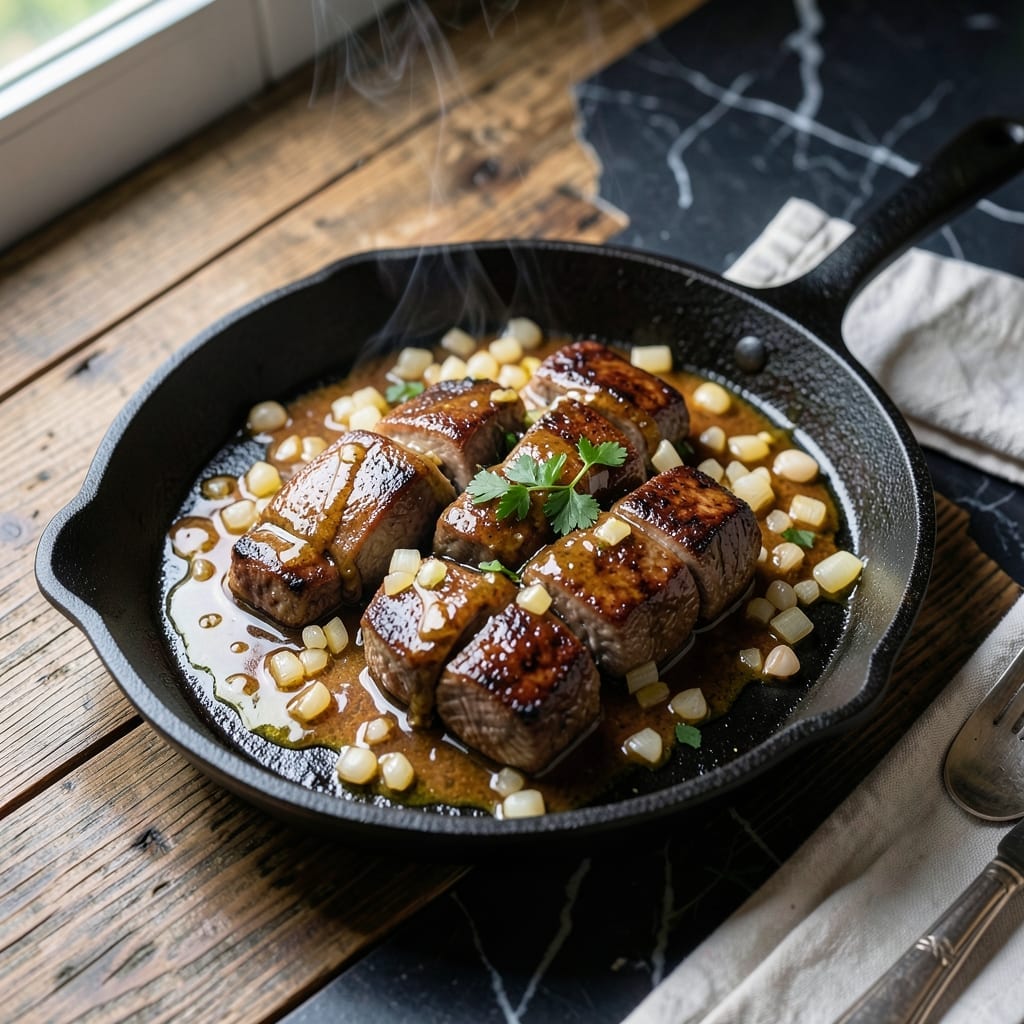
This sauce transforms ordinary dishes with its rich umami depth and velvety texture. I developed this recipe to capture the concentrated flavor of beef liver without overpowering the palate. The key lies in balancing the liver’s intensity with aromatic ingredients.
Simmering the liver with onions, garlic, and a touch of vinegar creates a smooth, spreadable paste that enhances meats, vegetables, and even bread. The process takes 30 minutes and requires no special equipment—just a saucepan and a blender.
Use it as a finishing touch for grilled steaks, a spread for sandwiches, or a bold addition to stews. The sauce keeps for one week in the refrigerator, allowing you to add depth to meals all week long.
This creation proves that offal can be both accessible and irresistibly flavorful. Here’s how to make it.
Ingredients for Beef Liver Sauce
Nine ingredients transform beef liver into a luxurious sauce with deep umami character.
| Ingredient | Amount | Notes |
|---|---|---|
| Beef Liver 🥩 | 1 lb | Trimmed of connective tissue |
| Yellow Onion 🧅 | 1 whole | Medium, finely diced |
| Garlic Cloves 🧄 | 6 cloves | Peeled and minced |
| Extra-Virgin Olive Oil 🫒 | 3 tbsp | Divided for cooking and finishing |
| Apple Cider Vinegar 🍏 | 2 tbsp | Balances richness with acidity |
| Dijon Mustard 🟡 | 1 tbsp | Adds depth and tang |
| Dried Thyme 🌿 | 1 tsp | Crushed for better release |
| Bay Leaf 🍃 | 1 whole | Removed before blending |
| Salt 🧂 | 1 tsp | Diamond Crystal kosher preferred |
| Black Pepper 🌶️ | ½ tsp | Freshly ground for best flavor |
[recipe_ingredient_scaler]
The beef liver is non-negotiable here—opt for fresh, vibrant red liver from a trusted butcher or Whole Foods. Avoid anything with a grayish tint or strong ammonia smell, which indicates age. The onion and garlic form the aromatic base, so use freshly minced for maximum potency. A high-quality olive oil ensures the sauce has a clean finish without bitterness.
No apple cider vinegar? Red wine vinegar or white vinegar will work, though the flavor profile will shift slightly. Out of Dijon? Whole-grain mustard at the same quantity provides texture and a milder bite. Dried thyme can be swapped for fresh at triple the amount, but remove stems before blending. If bay leaf isn’t on hand, a pinch of ground allspice adds a similar depth.
This sauce keeps for 1 week in an airtight container in the fridge. For longer storage, freeze in ice cube trays for up to 3 months. The flavor deepens after a day, so making it ahead is ideal. Always bring to room temperature before serving for the best texture.
Why You’ll Love This Recipe
- One Pot Wonder: I just toss the liver, onions, and garlic in a pan with olive oil—minimal cleanup, maximum flavor.
- Rich and Tangy: The apple cider vinegar cuts through the liver’s richness, balancing the garlic and onions perfectly.
- Weeknight Lifesaver: Honestly, it’s ready faster than takeout, and I can serve it over pasta or toast for a quick dinner.
- Budget Stretch: A little liver goes a long way, and it’s way cheaper than steak but just as satisfying.
Step-by-Step Instructions for Beef Liver Sauce
This method extracts maximum umami depth while maintaining a velvety texture in the finished sauce.
Step 1: Sear the Beef Liver for Base Flavor
Heat 1 tbsp Extra-Virgin Olive Oil in a heavy skillet over medium-high heat until shimmering. Pat the 1 lb Beef Liver dry and cut it into 1-inch pieces. Add to the pan in a single layer, being careful not to overcrowd.
Sear undisturbed for 2-3 minutes per side until deeply browned but still slightly pink inside. The liver should develop a rich, dark crust—this creates the foundational depth for your sauce. Transfer to a plate and set aside.
Step 2: Build the Aromatic Foundation
In the same skillet, add another 1 tbsp Extra-Virgin Olive Oil if needed. Add the 1 whole Yellow Onion (finely diced) and cook over medium heat for 5-6 minutes until translucent and beginning to caramelize.
Add the 6 cloves Garlic Cloves (minced) and cook for 1 minute until fragrant. Stir in the 1 tsp Dried Thyme (crushed) and 1 whole Bay Leaf. This aromatic base will infuse the sauce with complex, savory notes.
Step 3: Deglaze and Simmer
Pour in the 2 tbsp Apple Cider Vinegar and scrape up all the browned bits from the bottom of the pan. These fond particles contain concentrated flavor that will deepen your sauce. Add the 1 tbsp Dijon Mustard and stir to combine.
Return the seared beef liver to the skillet along with any accumulated juices. Add ½ cup water (or stock if available) and bring to a gentle simmer. Reduce heat to low and let it cook for 10-12 minutes until the liquid reduces by half and the liver is completely tender.
Step 4: Finish and Adjust Seasoning
Remove the 1 whole Bay Leaf and discard. Transfer the mixture to a blender or use an immersion blender to puree until smooth. With the blender running, drizzle in the remaining 1 tbsp Extra-Virgin Olive Oil to emulsify the sauce.
Season with the 1 tsp Salt and 0.5 tsp Black Pepper, then taste and adjust as needed. The finished sauce should be thick enough to coat the back of a spoon with a rich, velvety texture and deep umami flavor.
Step 5: Strain for Silky Consistency
For an ultra-smooth finish, strain the sauce through a fine-mesh sieve into a clean bowl, pressing on the solids to extract all the liquid. This removes any fibrous bits from the liver while preserving all the flavor.
Use immediately while warm, or let cool and store in an airtight container in the refrigerator for up to 5 days. The sauce will thicken as it cools but can be thinned with a splash of warm water when reheating.
Pro Tips For Making Beef Liver Sauce
- Soak the Liver: Cover beef liver in milk for 30 minutes before cooking—it pulls out the bitterness and mellows the flavor. I learned this the hard way after serving a metallic-tasting sauce to my in-laws.
- Sear It Fast: Use high heat and cook the liver for only 2-3 minutes per side to avoid a rubbery texture. After ruining a batch by slow-cooking, I now set a timer and pull it the second it’s browned.
- Deglaze with Vinegar: Pour in the apple cider vinegar right after removing the liver to lift all those browned bits—this is where the sauce gets its depth. Skip this and you’ll lose half the flavor.
- Strain the Sauce: Run the finished sauce through a fine-mesh strainer for a silky texture. My grandmother swore by this, and she was right: it removes any stray bits of onion or garlic that can overpower the dish.
Storing and Reheating This beef liver sauce
Refrigerator Storage
Let your sauce cool completely before transferring to an airtight container. I use glass jars with tight-sealing lids. Store at 40°F or below for up to 5 days, though I find the flavors peak around day three. ❄️
Freezer Storage
For longer storage, portion the sauce into ice cube trays and freeze until solid. Transfer cubes to a freezer bag, removing excess air. It keeps for 3 months without texture loss. Thaw overnight in the fridge before using.
Stovetop Reheating
Gently warm in a small saucepan over low heat with 1-2 tbsp water to restore creaminess. Stir frequently to prevent separation. Heating too quickly can cause the sauce to break or become grainy.
Microwave Reheating
Transfer a single portion to a microwave-safe bowl and cover with a damp paper towel. Heat at 50% power in 30-second intervals, stirring between each. This prevents hot spots and maintains the velvety texture.
Storage Tips
Always use clean utensils when removing sauce to prevent contamination. If you notice any off smells or mold during storage, discard immediately. The high fat content means it can spoil faster than other sauces.
Reviving Separated Sauce
If your sauce separates after storage, don’t worry. Simply whisk in 1 tsp warm water at a time until smooth. The emulsification will restore its creamy consistency and rich umami character.
Nutrition Facts
Frequently Asked Questions
Can I use chicken liver instead of beef?
Yes, but the flavor will be milder. Use the same amount and follow the recipe as written. Chicken liver cooks faster, so reduce simmering time to 8-10 minutes.
Why does my sauce taste bitter?
Bitterness often comes from overcooked liver or burnt fond. Next time, lower the heat and scrape the pan carefully when deglazing. A pinch of sugar can help balance bitterness in the finished sauce.
What’s the best way to serve this?
Try it drizzled over grilled steaks or roasted vegetables. It also makes an incredible spread for crusty bread or a bold addition to mashed potatoes.
How can I make it smoother?
For ultra-silky texture, strain through a fine-mesh sieve after blending. Press the solids gently to extract all liquid without forcing pulp through.

Trained in classic French technique but raised on slow-cooked ribs and spicy rubs, she blends culinary skill with smoke and soul.
- Meat Loaf Recipe With Beef And Pork: Homestyle Blend With Rich Gravy - October 3, 2026
- Hamburger Patty Recipe No Egg: Juicy Bind With Breadcrumbs and Milk - October 3, 2026
- Recipe for Oven Baked Halibut: Buttery White Fish with Zesty Lemon Topping - October 3, 2026