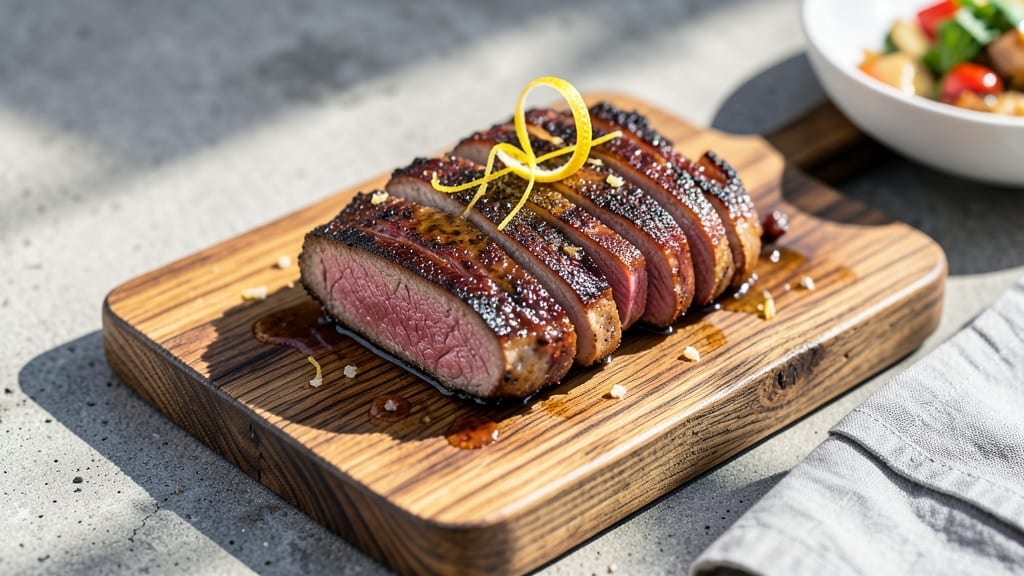
Mastering the best brisket spritz recipe transforms tough cuts into melt-in-your-mouth perfection with a crispy bark and tender interior. This smokehouse-style technique—where a carefully balanced spritz sauce is applied during cooking—has become my go-to method after years of testing.
The key lies in precise timing and a sauce that enhances rather than overwhelms the meat’s natural flavors.
The process begins with a dry rub that forms the foundation for that coveted bark, followed by a spritz application every 2 hours to maintain moisture and depth of flavor. I’ve refined this method to deliver restaurant-quality results at home, even for beginners.
The sauce itself is a simple yet powerful blend of apple cider vinegar, brown sugar, and spices, designed to penetrate the meat without overpowering it.
By the final hour, your brisket will boast a dark, crackling bark and juicy, fork-tender meat that falls apart with minimal effort. The spritz technique ensures every bite is infused with smoky, caramelized flavor while keeping the interior moist.
This isn’t just a recipe—it’s a method that elevates your brisket game to professional levels.
Serve with classic sides like tangy pickles, crusty bread, or a simple green salad to complement the rich, smoky flavors. The instructions ahead will guide you through every step, from prep to plating, ensuring your brisket turns out flawless every time.
Ingredients for best brisket spritz
Quality cuts and a balanced blend of sweet, smoky, and tangy elements create restaurant-style brisket perfection.
| Ingredient | Amount | Notes |
|---|---|---|
| Beef Brisket 🥩 | 4 lb | Packer cut, 1/2 inch thick |
| Yellow Onion 🧅 | 1 whole | Sliced into rings |
| Garlic Cloves 🧄 | 8 cloves | Minced for rub |
| Apple Cider Vinegar 🍎 | 1 cup | Unfiltered preferred |
| Light Brown Sugar 🍚 | ½ cup | Packed firmly |
| Smoked Paprika 🌶️ | 2 tbsp | High quality, not cayenne |
| Ground Black Pepper 🌶️ | 1 tbsp | Freshly cracked |
| Kosher Salt 🧂 | 1 tbsp | Coarse grain preferred |
| Ground Cumin 🌿 | 1 tsp | Toasted for depth |
| Mustard Powder 🍯 | 1 tsp | Yellow preferred |
| Chili Powder 🌶️ | 1 tsp | Mild variety |
| Wood Chips 🌳 | 2 cups | Hickory or oak |
| Beef Tallow or Shortening 🧈 | ¼ cup | For rub binder |
[recipe_ingredient_scaler]
The brisket cut is non-negotiable—packer trim delivers the best balance of fat and lean for that coveted bark and tender interior. Costco and Whole Foods carry excellent packer cuts, but butcher shops often have better selection. Look for a 1/2-inch thick packer cut with good marbling—this ensures moisture retention during the long cook. If you’re buying a whole brisket, trim it yourself to achieve even thickness. The apple cider vinegar should be unfiltered for maximum depth of flavor, and Penzeys or local orchard brands are ideal choices if you want to splurge.
No smoked paprika? Regular paprika plus a pinch of cayenne works in a pinch, though the flavor will be slightly different. Substituting brown sugar with turbinado adds a subtle crunch to the bark, but reduce to 3 tbsp if you prefer a less intense sweetness. For the wood chips, hickory is classic, but oak offers a slightly milder profile. If you can’t find fresh wood chips, soaked wood chunks work just as well. The rub’s beef tallow binds everything together—if you’re vegetarian, vegetable shortening is a neutral substitute, though it lacks the same depth of flavor.
Store your dry rub in an airtight container for up to 3 months—it’s perfect for future projects like pulled pork or ribs. The brisket itself can be prepped a day ahead and refrigerated, saving you time on cook day. Once cooked, brisket reheats beautifully—warm slices in a 350°F oven for 10-15 minutes with a splash of beef broth to restore moisture. For leftovers, portion and freeze in airtight containers for up to 3 months, thawing overnight in the fridge before reheating.
Why You’ll Love This Recipe
- No-Fuss Prep Day: Honestly, this isn’t one of those recipes where you spend hours chopping or stressing over technique. Just mix that onion, garlic, and beef tallow into a paste—no fancy knife skills required—and slather it on. The real magic happens in the oven and smoker, not in the prep work.
- Smoky-Sweet Perfection: Between the apple cider vinegar and brown sugar spritz creating that crispy bark and the hickory smoke locking in flavor, this brisket hits every note. It’s the kind of dish where the first bite makes you think, “Why didn’t I do this sooner?”
- Leftovers That Shine: I prep the rub a day ahead, and honestly, it’s even better the second time around. That same spritz mixture? Reduce it for a dipping sauce, and suddenly you’ve got a meal that works for tacos, sandwiches, or just straight-up slathering. Zero waste, maximum flavor.
- Budget-Friendly Feast: A 4-pound brisket feeds a crowd without breaking the bank, and that dry rub? You’ll use it for ribs or pulled pork later. It’s the kind of recipe where every ingredient pulls its weight—no premium cuts, no fancy tools, just pure, satisfying meat.
Step-by-step instructions for brisket spritz
Here’s the precise method for achieving that signature smokehouse bark and tender interior.
Prepare the Brisket Spritz and Seasoning
In a medium bowl, combine the 1 cup apple cider vinegar, ½ cup light brown sugar, 2 tablespoons smoked paprika, 1 tablespoon ground black pepper, 1 tablespoon kosher salt, 1 teaspoon ground cumin, 1 teaspoon mustard powder, and 1 teaspoon chili powder. Whisk vigorously until the sugar fully dissolves and the mixture becomes a thick, syrupy consistency. This is your brisket spritz—the liquid that will create that signature bark.
In a separate small bowl, mix the ¼ cup beef tallow or shortening with the 1 yellow onion (sliced into rings) and 8 cloves garlic (minced) until you have a paste-like consistency. This combination creates a flavorful binder for your dry rub. Press this mixture evenly over the entire surface of the 4 lb beef brisket, including the fat cap. The tallow helps the rub adhere while the onion and garlic infuse deep flavor.
Apply Spritz and Create the Bark
Place the seasoned brisket fat-side up on a wire rack set over a baking sheet. This elevation allows air to circulate underneath, promoting even bark formation. Preheat your oven to 450°F with the rack positioned in the upper third. Once preheated, brush the brisket generously with half of the prepared spritz mixture, working quickly to coat all surfaces evenly.
Return the brisket to the oven and roast for 20 minutes. You’ll notice the surface immediately darken and develop a glossy sheen—this is the beginning of that coveted bark. Remove the brisket and brush with the remaining spritz, then return to the oven for another 15 minutes. The bark should now be deep mahogany with visible crackling. This high-heat barking step creates the perfect foundation for your smokehouse-style brisket.
Smoke with Wood Chips for Depth
While the brisket rests, prepare your smoker by adding the 2 cups wood chips (hickory or oak preferred) to the smoking chamber. Set the temperature to 225°F and allow it to stabilize before placing the brisket on the grill grates, fat-side up. The bark you created earlier will protect the meat while allowing the smoke to penetrate deeply.
Smoke the brisket for 6 hours, maintaining consistent temperature. You’ll notice the bark continue to darken and develop complex flavors from the wood smoke. After 6 hours, check the internal temperature—it should reach 165°F. At this point, you’ll hit “the stall,” where the temperature plateaus. This is normal and expected with brisket cooking. The bark you created earlier helps maintain moisture while allowing the smoke to work its magic.
Rest and Serve for Maximum Juiciness
Once the brisket reaches 203°F internally (about 2-3 hours after hitting the stall), remove it from the smoker and transfer to a cutting board. Tent loosely with aluminum foil and let it rest for at least 1 hour. This resting period is crucial—it allows the juices to redistribute throughout the meat, ensuring each slice remains tender and moist. The bark you created will remain crisp and flavorful while the interior stays perfectly juicy.
Slice the brisket against the grain into ¼-inch thick pieces. Serve immediately with the remaining spritz mixture reduced by half as a dipping sauce. The combination of the deep bark, tender meat, and flavorful spritz creates a brisket experience that rivals any smokehouse. Each bite delivers the perfect balance of smoky, sweet, and savory flavors.
Pro Tips For Making Best Brisket Spritz
- Whisk Until It Glues: That spritz won’t work right if it’s watery—whisk the apple cider vinegar and light brown sugar until it’s thick enough to coat the back of a spoon. I used to rush this step and end up with a sad, runny glaze that just dripped off the brisket. Take the extra 30 seconds and make it syrupy—your bark will thank you.
- Preheat the Rack: Don’t just preheat the oven—get that wire rack piping hot in the upper third. The brisket needs to hit 450°F surface heat immediately to set that bark properly. I learned this after my first attempt left me with a patchy, uneven crust. A quick test: if your hand can’t hold the rack for 3 seconds, it’s ready.
- Skip the Shortcut on Tallow: That beef tallow isn’t just filler—it’s what makes the rub stick. Don’t swap it for butter or oil, no matter how convenient. The fat renders into the meat as it cooks, locking in flavor. I tried shortening once (because I was lazy) and ended up with rub sliding off like snow. Toast the tallow with the garlic and onion rings first—it deepens the flavor instantly.
- Bark in Two Batches: The first 20 minutes at 450°F is critical, but don’t overcrowd the oven. If you’re cooking more than one brisket, do them one at a time. I crammed two in once and ended up with a soggy bottom and weak bark. The wire rack is your friend—keep it elevated and give that heat room to work. The second spritz after 15 minutes is where the magic happens, so don’t skip it.
Pro cooking tips for best brisket spritz
Precision Timing for Spritz Application
Timing is everything when using the spritz—apply it every 2 hours during the smoking phase for maximum flavor penetration. I recommend using a kitchen timer to stay consistent, especially during the 6-hour smoke at 225°F.
The first application after the barking step creates a sticky foundation, while subsequent spritzes keep the bark moist without making it soggy. Consistency is key to that perfect balance of bark and tenderness. 💡
Oven Barking for Depth
Don’t skip the oven barking step—it’s what transforms your brisket from ordinary to extraordinary. Roast at 450°F for 35 minutes total (20 + 15 minutes) to develop that deep, crackling bark. The high heat caramelizes the sugars in the spritz, creating a flavorful crust that protects the meat during smoking.
I always use a wire rack to ensure even air circulation underneath. This step is non-negotiable for authentic smokehouse results.
Smokehouse Temperature Control
Maintaining 225°F in your smoker is critical—fluctuations can lead to uneven cooking or a dry brisket. Use a reliable thermometer like Meater+ to monitor both the smoker and the brisket’s internal temperature. If your smoker runs hot, adjust the vents gradually—sudden changes can cause temperature swings.
I also recommend a water pan in the smoker to add humidity, which helps tenderize the meat while keeping the bark crisp. 🌡️
Resting for Maximum Juiciness
Resting is where the magic happens—skip it, and you’ll end up with dry slices. Tent your brisket loosely with foil and let it rest for at least 1 hour (up to 2 hours for thicker cuts).
This allows the juices to redistribute evenly, ensuring every bite is tender. I’ve learned the hard way that cutting too soon leads to a disappointing, dry experience. Patience here pays off with melt-in-your-mouth results.
Spritz Reduction for Dipping Sauce
Save the remaining spritz mixture to reduce it into a glossy dipping sauce. Simmer the leftover ½ cup spritz in a saucepan over medium-low heat for 5-7 minutes until thickened. Stir occasionally to prevent burning, and finish with a splash of beef broth to balance the sweetness.
This sauce adds an extra layer of flavor to your brisket, tying all the smoky, sweet, and tangy notes together. It’s the perfect finishing touch!
Nutrition facts
Frequently asked questions
How often should I apply the brisket spritz during smoking?
Apply the spritz every 2 hours during the 6-hour smoke at 225°F for best results. This keeps the bark moist and enhances flavor penetration without making it soggy. Use a kitchen timer to stay consistent—it’s the secret to that perfect balance of bark and tenderness.
Can I skip the oven barking step if I’m short on time?
Skipping the oven barking at 450°F for 35 minutes will noticeably affect your brisket’s texture. This step caramelizes the sugars in the spritz, creating that deep, crackling crust that protects the meat during smoking. Without it, your brisket will lack the signature smokehouse bark.
What’s the best way to store leftover brisket?
Portion your cooked brisket into airtight containers and refrigerate for up to 3 days. For longer storage, freeze for up to 3 months. Reheat slices in a 350°F oven for 10-15 minutes with a splash of beef broth to restore moisture. The bark stays crisp, and the meat remains tender.
Why does my brisket stall at 165°F?
The stall occurs when the meat’s surface moisture evaporates, temporarily halting temperature rise. This is normal and expected—it can last 1-3 hours. Patience is key; the bark you created earlier helps maintain moisture while the interior continues cooking. Don’t panic—it’s part of the process!
Can I use a grill instead of a smoker?
Yes! Set up indirect heat on your grill and maintain 225°F using a grill thermometer. Add wood chips to a smoker box or foil pouch for smoke. The key is consistency—keep the temperature stable and apply spritz every 2 hours just like with a smoker. Your grill can deliver smokehouse-quality results!

Trained in classic French technique but raised on slow-cooked ribs and spicy rubs, she blends culinary skill with smoke and soul.
- Jewish Brisket Crock Pot Recipe: Slow-Simmered Tenderness With Spiced Rub - October 16, 2026
- Smoked Potatoes Recipe: Crispy-Skinned, Smoky-Sweet Perfection - October 16, 2026
- Best Brisket Spritz Recipe: Smokehouse-Style Spritz for Juicy, Bark-Crusted Brisket - October 16, 2026