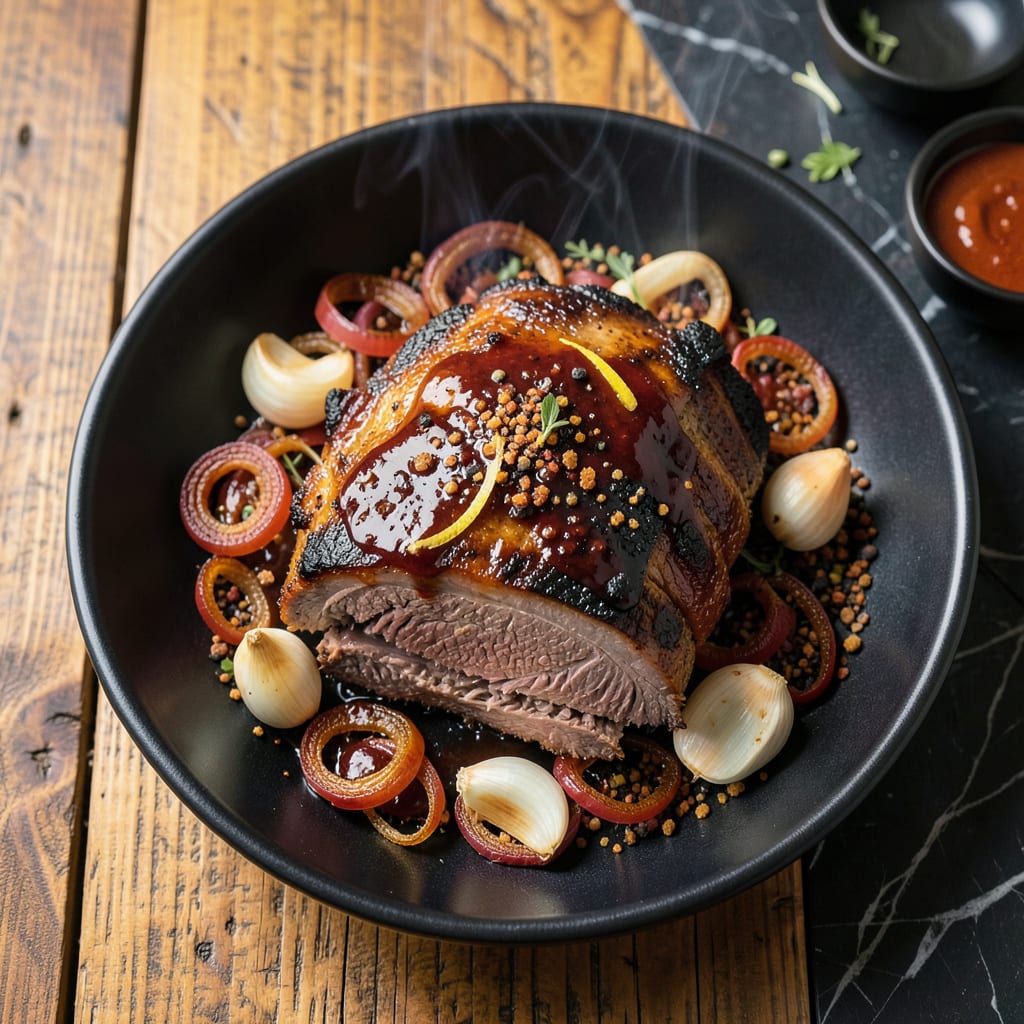
There’s nothing like the smell of a beef roast slow-cooking on the smoker to bring people together. This method transforms tough cuts into fall-apart tender meat with deep, smoky flavor.
I’ve spent years perfecting this technique, and the key is patience. Low heat and proper seasoning ensure every bite delivers that signature BBQ experience.
Ingredients for Beef Shoulder Roast Bbq
Transform tough cuts into fall-apart tender meat with these essential BBQ ingredients.
| Ingredient | Amount | Notes |
|---|---|---|
| Beef Shoulder Roast 🥩 | 3 lb | Bone-in preferred for flavor |
| Kosher Salt 🧂 | 2 tbsp | Diamond Crystal preferred |
| Coarse Black Pepper 🌶️ | 1 tbsp | Freshly ground for best results |
| Smoked Paprika 🌶️ | 1 tbsp | Sweet or hot variety |
| Garlic Powder 🧄 | 1 tbsp | Not garlic salt |
| Onion Powder 🧅 | 1 tbsp | Fresh ground preferred |
| Brown Sugar 🍚 | ½ cup | Light or dark variety |
| Apple Cider Vinegar 🍏 | ¼ cup | For tangy balance |
| Worcestershire Sauce 💧 | ¼ cup | Use anchovy-free if preferred |
| Hickory Wood Chips 🪵 | 2 cups | Soaked in water for 30 minutes |
| Yellow Mustard 🟡 | ¼ cup | For binder in rub |
| Olive Oil 🫒 | 2 tbsp | For searing meat |
| Beef Broth 🥩 | 1 cup | Low-sodium preferred |
[recipeingredientscaler]
The beef shoulder roast is non-negotiable here. Look for well-marbled cuts with the bone in—this ensures the meat stays moist during the long cook. Most butchers at Whole Foods or local meat markets will have what you need. The weight can vary, but aim for 3-4 pounds for even cooking. The fat cap should be thick enough to baste the meat as it smokes.
No smoked paprika? Regular paprika plus a pinch of liquid smoke works in a pinch. If you’re avoiding anchovies, coconut aminos can replace Worcestershire sauce. The brown sugar can be swapped for maple syrup (reduce liquid slightly). For the wood chips, apple or cherry wood adds a sweeter smoke profile if hickory isn’t available.
The roast can rest in the fridge overnight after seasoning. Leftovers keep for 4-5 days refrigerated or 3 months frozen. Reheat gently in a slow cooker with a splash of broth to maintain moisture. Always store wood chips in a sealed container to prevent them from absorbing odors.
Why You’ll Love This Recipe
- Set It and Forget: I rub the roast with salt, pepper, smoked paprika, and garlic powder, pop it in the oven, and walk away.
- Smoky Depth: The smoked paprika and garlic powder give it that deep, rich BBQ flavor without a smoker.
- Feeds My Crowd: One shoulder roast stretches to feed six hungry people, with leftovers for sandwiches tomorrow.
- Low-Cost Luxury: Beef shoulder is budget-friendly, but the slow roast makes it taste like a splurge.
Step-by-Step Instructions for Beef Shoulder Roast BBQ
Master these fundamental techniques to achieve competition-level barbecue with consistent results every time.
Step 1: Prepare the Dry Rub and Season the Beef
In a medium bowl, combine the 2 tbsp Kosher Salt, 1 tbsp Coarse Black Pepper, 1 tbsp Smoked Paprika, 1 tbsp Garlic Powder, 1 tbsp Onion Powder, and 0.5 cup Brown Sugar. Whisk thoroughly until the mixture is uniform with no visible streaks of individual spices.
Pat the 3 lb Beef Shoulder Roast completely dry with paper towels to ensure maximum rub adhesion. Apply a thin layer of the 0.25 cup Yellow Mustard all over the roast—this acts as a binder. Press the dry rub mixture aggressively into every surface of the beef, creating a thick, even crust. Let it rest at room temperature for 30-45 minutes while you prepare the smoker.
Step 2: Set Up the Smoker with Hickory Wood
Soak the 2 cups Hickory Wood Chips in water for 30 minutes to ensure slow, consistent smoke production. Drain the wood chips just before use and add them to your smoker’s wood chip box or directly onto hot coals if using a charcoal smoker.
Preheat your smoker to 225°F using indirect heat. Once the temperature stabilizes and you see thin blue smoke, you’re ready to begin cooking. Place a drip pan filled with water beneath the cooking grate to help maintain moisture and catch drippings.
Step 3: Smoke the Beef Shoulder Roast to Perfection
Place the seasoned beef shoulder roast directly on the smoker grate, fat-side up. Insert a meat thermometer into the thickest part of the roast, avoiding contact with bone or fat. Smoke undisturbed for 4-5 hours until the internal temperature reaches 165°F.
During this phase, resist the urge to check or baste the meat frequently. Maintain a consistent smoker temperature between 225-250°F. You should see the rub begin to form a dark, crusty bark as the collagen in the meat starts to break down.
Step 4: Wrap and Finish with Moisture
Once the roast hits 165°F, carefully transfer it to a large sheet of heavy-duty aluminum foil. Pour the 0.25 cup Apple Cider Vinegar, 0.25 cup Worcestershire Sauce, 2 tbsp Olive Oil, and 1 cup Beef Broth over the meat. Wrap tightly, creating a seal that will trap steam and continue the cooking process.
Return the wrapped roast to the smoker and continue cooking for another 2-3 hours until the internal temperature reaches 200-205°F. The meat should feel probe-tender, with the thermometer sliding in like butter with no resistance.
Step 5: Rest and Serve
Remove the roast from the smoker and let it rest, still wrapped, in a warm cooler or insulated container for 1 hour. This resting period allows the juices to redistribute throughout the meat and the collagen to fully render into gelatin, ensuring maximum tenderness.
Unwrap the roast and transfer to a cutting board. The beef should easily pull apart with forks or your fingers. Serve immediately, using the accumulated juices from the foil as a natural au jus for dipping or spooning over the meat.
Pro Tips For Making Beef Shoulder Roast Bbq
- Season Overnight: I learned this the hard way—coat the beef shoulder with kosher salt, black pepper, smoked paprika, and garlic powder at least 12 hours before cooking. The flavors penetrate deep, and the salt draws out moisture that reabsorbs for a juicier roast.
- Low and Slow: Keep your smoker or oven at 225°F and give it 8-10 hours for a 4-pound roast. After burning a few batches trying to rush it, I finally accepted that patience is the only way to get fall-apart tenderness.
- Skip the Cold Meat: Pull the roast out of the fridge 1-2 hours before cooking so it’s not ice-cold. My grandmother swore by this, and she was right: it cooks more evenly and takes the seasoning better.
- Rest Before Slicing: Once it hits 195°F internally, wrap it in foil and let it rest for 30 minutes. Sounds weird, but it works: the juices redistribute, and you won’t lose half of them on the cutting board.
Wine and Beer Pairings for These Flavors
Bold Red Wines
A full-bodied Cabernet Sauvignon stands up to the smoky richness of this dish. I love how the tannins cut through the fat—try Robert Mondavi Reserve from Napa Valley. The dark fruit notes complement the caramelized bark perfectly. 🍷
Malbec Magic
An Argentine Malbec like Catena Zapata offers a plush, fruit-forward profile that pairs beautifully with the beef’s deep flavors. The slightly jammy quality balances the rub’s spice without overpowering it.
Craft Beer Options
A robust porter or stout enhances the smoky depth of this creation. I recommend Founders KBS—its coffee and chocolate notes mirror the charred crust. The carbonation cleanses your palate between bites. 🍺
Lighter Beer Pairings
For something crisper, a bock beer like Ayinger Celebrator provides malty sweetness that complements the brown sugar in your rub. The medium body won’t compete with the meat’s richness.
White Wine Surprise
If you prefer white, a bold oaked Chardonnay works surprisingly well. The buttery texture from Rombauer stands up to the beef, while the vanilla notes echo the smoke. Serve slightly chilled.
Nutrition Facts

Trained in classic French technique but raised on slow-cooked ribs and spicy rubs, she blends culinary skill with smoke and soul.
- Recipe for Boneless Pork Chops in Cast Iron Skillet: Sear and Baste to Juicy Perfection - October 3, 2026
- Recipe for Boneless Cross Rib Roast: Slow-Roasted Beef with Herb Crust - October 3, 2026
- Hamburgers in Sauce Recipe Crock Pot: Slow-Cooked Savory Delight - October 3, 2026