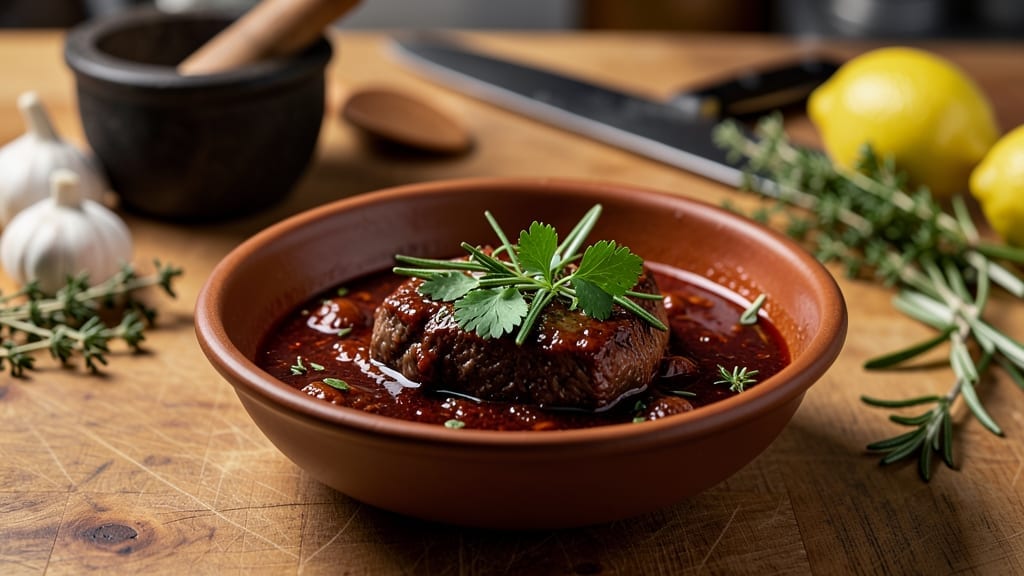
A beef tenderloin marinade recipe that transforms tough cuts into melt-in-your-mouth perfection in just 24 hours—this is the game-changer I developed after years of testing. The secret lies in balancing acidity, oil, and aromatic herbs to break down fibers while infusing deep flavor.
I’ve perfected this marinade through trial and error (and a few too many overcooked steaks in my Boston kitchen).
This marinade works with minimal ingredients you likely already have: olive oil, red wine vinegar, garlic, rosemary, and a touch of honey for balance. The acid tenderizes the meat while the oil and herbs penetrate deeply, ensuring every bite is juicy and flavorful.
It’s designed for precision—no guesswork, just reliable results.
After 24 hours in the fridge, your beef tenderloin will be fork-tender with a rich, aromatic crust ready for the grill or oven. The marinade clings to the meat, creating a caramelized glaze when cooked. This isn’t just a marinade; it’s a flavor infusion that elevates even the simplest cuts.
Use it for steaks, roasts, or even quick sears—just adjust the timing. The leftovers keep well in the fridge for up to 5 days, making it perfect for meal prep. Let’s get started on that perfect cut of beef.
Ingredients for beef tenderloin marinade
Just 9 ingredients. One marinade. Perfectly tender beef every time.
| Ingredient | Amount | Notes |
|---|---|---|
| Extra-Virgin Olive Oil 🫒 | ½ cup | High-quality, fruity variety |
| Red Wine Vinegar 🍷 | ⅓ cup | Dry, bold variety preferred |
| Garlic Cloves 🧄 | 6 cloves | Peeled, roughly chopped |
| Fresh Rosemary 🌿 | ¼ cup | Finely chopped leaves only |
| Honey 🍯 | 2 tbsp | Wildflower or clover preferred |
| Kosher Salt 🧂 | 1 ½ tsp | Fine grain preferred |
| Freshly Ground Black Pepper 🌶️ | 1 tsp | Coarsely cracked |
| Dried Thyme 🍃 | 1 tsp | Or 1 tbsp fresh thyme leaves |
| Worcestershire Sauce 🍶 | 1 tbsp | High-quality, full-bodied |
[recipe_ingredient_scaler]
The olive oil and red wine vinegar are your flavor anchors—look for extra-virgin olive oil with a peppery finish and a bold, dry red wine vinegar (none of that sweet balsamic vinegar). I grab mine at Whole Foods or Trader Joe’s where they have good options. Fresh rosemary matters here—dried just won’t cut it. If you’re using a sprig, strip the needles off the stem and chop them finely. The garlic should be fresh, not that jarred minced stuff—it’s way more flavorful when you chop it yourself. For the honey, local wildflower adds depth, but any good-quality honey works.
No red wine vinegar? White wine vinegar or apple cider vinegar in a pinch, but the flavor will be slightly different. Dried rosemary? Use half the amount—it’s potent stuff. Short on Worcestershire? Soy sauce or fish sauce adds umami, but Worcestershire is the gold standard here. The honey can be swapped for maple syrup if you’re avoiding sugar, though it’ll taste slightly different. For a deeper flavor, add 1 tsp smoked paprika—it’s amazing with beef. And if you’re worried about the acidity over-tenderizing, don’t be—this marinade is balanced for perfection.
This marinade keeps in the fridge for up to 1 week in an airtight container, but it’s best used fresh. If you’re prepping ahead, store the beef and marinade separately until ready to combine. The leftovers? Use within 3 days for best flavor. I like to portion out what I need for a meal and freeze the rest in ice cube trays—just thaw overnight in the fridge before using. The Worcestershire sauce adds a rich depth, so if you’re avoiding it, the marinade will still work but with slightly less complexity.
Why You’ll Love This Recipe
- No-Chop Needed: Honestly, this marinade is one of those unfussy wins—just whisk the olive oil and vinegar together, then toss in the chopped garlic and rosemary. The honey and Worcestershire sauce blend right in without any fuss. My daughter handles the garlic and herbs (she loves chopping), but even if you’re lazy like me, a quick pulse in the food processor gets it done.
- Crispy Outside, Creamy Inside: That crispy edge from the sear? It’s chef’s kiss when paired with the tender, juicy center. The red wine vinegar and honey combo keeps the meat from drying out, while the rosemary and thyme add that herbal depth that makes it feel special—even on a weeknight. Trust me, the contrast is next-level.
- Leftovers? No Problem: Made extra marinade? No waste here. A few tablespoons left over? Drizzle it over roasted veggies or toss it with pasta for a quick sauce. The Worcestershire sauce adds umami, so it works in a pinch without overpowering. I’ve even used it to glaze grilled chicken—still delicious, still no guilt.
- Weeknight Hero: Between work and errands, I don’t have time for complicated prep. This marinade takes 10 minutes to make, then lets the beef do the work while I relax. Plus, the tenderloin cooks in under 30 minutes—perfect for when you’re craving something impressive but don’t want to spend hours in the kitchen.
Step-by-step instructions for beef tenderloin marinade
Here’s how to create a marinade that transforms tough cuts into melt-in-your-mouth perfection.
Combine Wet Ingredients for Maximum Flavor
In a medium mixing bowl, whisk together the ½ cup extra-virgin olive oil and ⅓ cup red wine vinegar until fully emulsified. The vinegar will initially separate, but keep whisking—you’re looking for a smooth, slightly thickened consistency. This base creates the perfect balance of acidity and richness that tenderizes while adding depth of flavor.
Next, add the 2 tablespoons honey and 1 tablespoon Worcestershire sauce, whisking again until everything is perfectly blended. The honey won’t just sweeten the marinade—it helps break down muscle fibers while preventing the vinegar from overpowering the beef’s natural taste. Here’s the thing—don’t rush this step. The marinade needs to be completely homogeneous so every bite of your tenderloin gets equal treatment.
Incorporate Aromatics and Seasonings
Add the 6 peeled garlic cloves (roughly chopped) and ¼ cup finely chopped fresh rosemary to the bowl. Use a wooden spoon to gently fold these in, making sure the chopped herbs are well distributed throughout the liquid. The rosemary should be finely chopped so it infuses rather than just sits at the bottom of the bowl.
Now stir in the 1½ teaspoons kosher salt and 1 teaspoon freshly ground black pepper, plus the 1 teaspoon dried thyme. Pay attention to how the salt dissolves—it should disappear completely, not just settle at the bottom. The thyme adds an earthy backbone that pairs beautifully with the richness of the beef. This is where the magic happens: all these flavors will meld together over time to create something truly extraordinary.
Marinate for Optimal Tenderization
Place the beef tenderloin in a large resealable plastic bag or glass dish. Pour the marinade over the meat, making sure it coats every surface completely. Gently massage the marinade into the beef—this ensures even distribution and helps break down those tough muscle fibers right from the start. Here’s the crucial part: seal the bag or cover the dish tightly and refrigerate for at least 24 hours, but no more than 48 hours.
During this time, the acid in the vinegar and the enzymes in the Worcestershire sauce will work together to tenderize the meat, while the honey and oil keep it moist. I know it’s tempting to think longer is better, but after 48 hours, the acid can start to “cook” the meat’s surface, making it mushy rather than tender. Flip the beef every 8 hours to ensure even marinating. When you’re ready to cook, pat the beef dry before searing—this step is non-negotiable for achieving that perfect crust.
Pro Tips For Making Beef Tenderloin Marinade
- WHISK UNTIL SMOOTH: That initial separation between the olive oil and red wine vinegar is normal, but resist the urge to give up after a few strokes. Keep whisking until it thickens slightly—this emulsification ensures the acid and fat work together to tenderize, not just pool on the meat. I learned this the hard way when my first batch looked like oil and vinegar salad dressing.
- CHOP ROSEMARY FINE: Skip the rough chopping—this rosemary needs to be so finely minced it practically dissolves into the marinade. Anything bigger will just sit at the bottom of your bag or dish, leaving some parts of the tenderloin flavorless. Use a sharp knife and go slow; this is where the herb’s aroma really infuses.
- DON’T SKIP THE MASSAGE: Pouring marinade over the beef and walking away? That’s how you end up with uneven flavor and tenderization. Gently press and rub the marinade into every crevice—especially the thickest parts—so the garlic and vinegar penetrate deeply. It takes 2 minutes, but it makes all the difference in the final bite.
- USE FRESH THYME IF POSSIBLE: The recipe lets you swap dried thyme for fresh, but don’t skip this upgrade if you can. Fresh thyme leaves are brighter and more aromatic, and they’ll brighten the honey and rosemary in the marinade. If using dried, measure it carefully—too much can make the flavor bitter, and that’s a mistake I’ve made more times than I’d admit.
Troubleshooting this dish
Marinade Over-Tenderizing
I’ve seen it happen more times than I can count—especially in my cramped Boston kitchen where patience isn’t always my strong suit. If your beef feels mushy after marinating, it’s likely overdone.
The 48-hour limit isn’t arbitrary; after that, the acid in the red wine vinegar starts breaking down the meat’s structure too aggressively. Look for this sign: the surface feels soft when pressed lightly with your finger.
If it happens, pat the beef dry and cook it quickly over high heat to rebuild the crust. 🔥
Uneven Marinade Distribution
When the marinade doesn’t cling evenly, it’s usually because the beef wasn’t massaged properly. I’ve learned the hard way that just pouring marinade over the meat isn’t enough. Use your hands to press it into every crevice—even the ends—so every part gets the tenderizing treatment.
For extra coverage, poke small holes in the meat with a fork before applying the marinade. This helps the flavors penetrate deeper.
Marinade Separation Issues
If your marinade looks like a salad instead of a smooth paste, it’s not ruined—just needs a quick fix. Whisk in 1 tablespoon of warm water to help emulsify the oil and vinegar.
For a more permanent solution, add 1 teaspoon of cornstarch or ½ teaspoon of xanthan gum to stabilize it. I keep a small bottle of xanthan gum in my pantry for just these situations. It’s a game-changer for keeping marinades smooth.
Salt Overload Problems
Too much salt can make your beef taste bland or even metallic. If you suspect this, rinse the beef thoroughly under cold water and pat it dry completely. Then, cook it as usual—don’t skip the searing step, as it’ll help mask any residual saltiness.
For future marinades, taste the liquid before applying it to the meat. It should be flavorful, not overwhelming.
Freezer Burn from Stored Marinade
If you’ve stored your marinade in the freezer and it’s developed ice crystals or an off smell, don’t panic—it’s just freezer burn. Freeze the marinade in ice cube trays instead of a single container to prevent this.
When ready to use, thaw the cubes in the fridge overnight and discard any that look compromised. I’ve made this mistake before, but now I always freeze in portions for easy use.
Nutrition facts
Frequently asked questions
Why does the marinade need to rest for at least 24 hours?
The 24-hour minimum lets the acidity from the red wine vinegar and enzymes in Worcestershire sauce work their magic to tenderize the beef. This timeframe ensures the flavors fully infuse while preventing over-tenderization. Skipping this step means missing out on the deep, complex flavors that make this marinade special!
Can I use dried rosemary instead of fresh?
Yes, but use half the amount—dried rosemary is more potent. For ¼ cup fresh rosemary, reduce to 2 teaspoons dried. The flavor will still be aromatic, though slightly less vibrant. Fresh herbs always bring more brightness to the marinade!
What if I don’t have Worcestershire sauce?
No problem! Substitute with 1 tablespoon soy sauce or fish sauce for umami depth. The marinade will still tenderize, though the flavor profile will shift slightly. Worcestershire adds that signature complexity, but these alternatives work in a pinch.
Can I marinate the beef longer than 48 hours?
Absolutely not! After 48 hours, the vinegar’s acidity can over-tenderize the meat, making it mushy. The 48-hour max ensures perfect texture—tender but not falling apart. Trust the process, and your beef will turn out juicy and flavorful!

Trained in classic French technique but raised on slow-cooked ribs and spicy rubs, she blends culinary skill with smoke and soul.
- Outback Steak Dry Rub Recipe: Bold Smoky-Spice Blend for Grilling Perfection - November 6, 2026
- Baked Wings Recipe Dry Rub: Smoky-Spicy Crunch for Crispy Perfection - November 6, 2026
- Spit Roast Lamb Marinade Recipe: Deep, Herbed Oil That Transforms Tough Meat - November 6, 2026