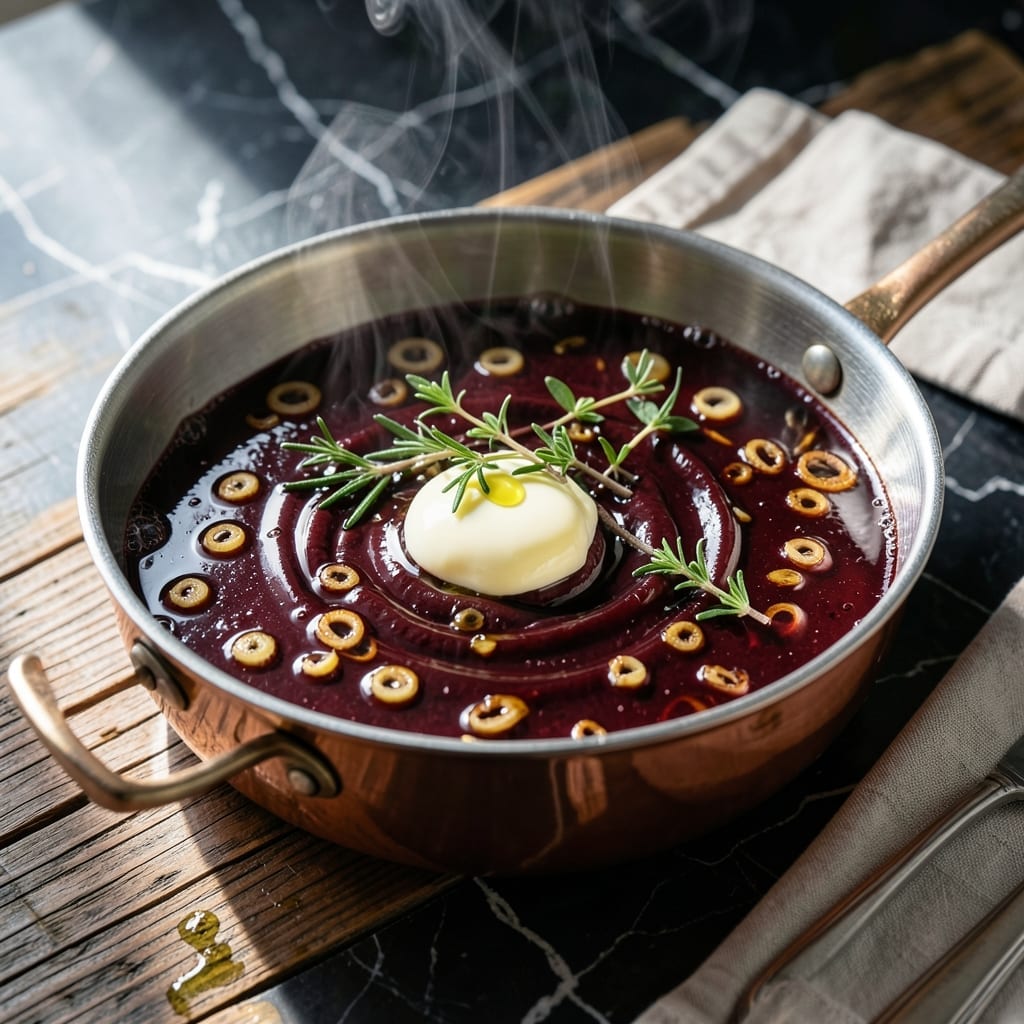
A rich red wine reduction transforms tender beef tenderloin into a restaurant-quality masterpiece. This sauce delivers deep, complex flavors with minimal effort.
Simmered with shallots, beef stock, and herbs, it reduces to a velvety glaze that complements the natural richness of the meat. Ready in 20 minutes, it’s the perfect finishing touch.
Ingredients for Beef Tenderloin Sauce
Nine ingredients transform into a restaurant-quality sauce for tender beef.
| Ingredient | Amount | Notes |
|---|---|---|
| Dry Red Wine 🍷 | 2 cups | Bold variety like Cabernet Sauvignon |
| Shallots 🧅 | 2 whole | Finely minced for even distribution |
| Beef Stock 🥩 | 1 ½ cups | Low-sodium preferred for control |
| Unsalted Butter 🧈 | 4 tbsp | Cold, cubed for finishing |
| Fresh Thyme Sprigs 🌿 | 3 whole | Stems removed, leaves only |
| Fresh Rosemary Sprig 🌿 | 1 whole | Lightly crushed to release oils |
| Garlic Cloves 🧄 | 2 cloves | Smashed for subtle flavor |
| Black Peppercorns 🌶️ | 1 tsp | Lightly crushed for texture |
| Diamond Crystal Kosher Salt 🧂 | ½ tsp | Adjust to taste at finish |
[recipe_ingredient_scaler]
The wine is critical here. Cabernet Sauvignon or Merlot delivers the depth this reduction needs—avoid anything too sweet. For the stock, homemade beef stock is ideal, but Better Than Bouillon base works in a pinch (just reduce the salt). Fresh herbs are non-negotiable; Whole Foods or a well-stocked grocery store will have both thyme and rosemary. The butter must be unsalted so you can control the seasoning precisely.
No red wine? Substitute with 1.5 cups beef stock plus 0.5 cup balsamic vinegar—the acidity mimics wine’s structure. Fresh herbs can’t be replaced by dried here (they’ll leave gritty texture), but frozen herb cubes at Trader Joe’s work surprisingly well. For a deeper umami, add 1 tsp fish-free Worcestershire sauce at the start. Skip the pre-minced garlic; fresh cloves add better aroma.
The sauce keeps 4-5 days refrigerated in an airtight container. Reheat gently—high heat can cause separation. For longer storage, freeze for up to 3 months. The flavors intensify overnight, so making it a day ahead is actually ideal. Always bring to room temperature before serving over beef.
Why You’ll Love This Recipe
- One Pot Wonder: I just love that it all comes together in a single saucepan—no fancy equipment, just a wooden spoon and 15 minutes of stirring.
- Rich and Deep: The red wine and shallots reduce into this velvety, umami-packed sauce that makes every bite of tenderloin taste like a steakhouse special.
- Dinner Party Hero: I’ve served this at holiday dinners and weeknight suppers alike—it feels fancy but never fussy.
- Leftovers? Even Better: Honestly, the flavors deepen overnight, so I always make extra to drizzle over roast beef sandwiches the next day.
Step-by-Step Instructions for Rich Red Wine Reduction
Master this technique and you’ll create a velvety sauce worthy of the finest steakhouses.
Step 1: Sauté Aromatics in Rendered Fat
Begin by finely mincing the 2 whole Shallots. In a heavy-bottomed saucepan, melt 1 tbsp of the 4 tbsp Unsalted Butter over medium heat. Add the minced shallots and cook for 3-4 minutes until translucent and just beginning to caramelize around the edges.
Add the 2 cloves Garlic Cloves (smashed), 3 whole Fresh Thyme Sprigs (leaves only), and 1 whole Fresh Rosemary Sprig (lightly crushed). Sauté for 1 minute until fragrant, being careful not to let the garlic brown—this would introduce bitterness into your sauce.
This base of aromatics builds the flavor foundation. The shallots should turn glassy and sweet, not dark or crispy.
Step 2: Reduce the Red Wine Concentrate
Pour in all 2 cups Dry Red Wine and the 1 tsp Black Peppercorns (lightly crushed). Increase heat to medium-high and bring to a boil. Reduce heat to maintain a vigorous simmer.
Cook for 15-20 minutes until the liquid reduces by about three-quarters. You’ll know it’s ready when the mixture has a syrupy consistency and coats the back of a spoon. The alcohol will have cooked off, leaving behind concentrated fruit notes and a deep, rich color.
Watch carefully during reduction—wine can go from perfect to burnt quickly. Stir occasionally to prevent hot spots from forming.
Step 3: Build Depth with Beef Stock
Add all 1.5 cups Beef Stock and bring back to a simmer. Continue cooking for another 10-15 minutes until the mixture reduces by half. The sauce should now have a velvety texture that’s thick enough to nappe (coat the back of a spoon).
As it reduces, the flavors will intensify. You should see small bubbles breaking the surface gently, not a rolling boil. The sauce will take on a glossy sheen as the natural gelatin in the stock begins to thicken it.
This step transforms the sharp wine reduction into a complex, rounded sauce base. The beef stock adds meaty depth that pairs perfectly with tender beef.
Step 4: Finish with Butter and Seasoning
Remove the saucepan from heat. Discard the thyme stems, rosemary sprig, and peppercorns. Reduce heat to low and return the pan to the burner.
Whisk in the remaining 3 tbsp Unsalted Butter, one cube at a time, allowing each to fully melt and emulsify before adding the next. This creates a silky, glossy finish. The sauce should thicken slightly as the butter incorporates.
Season with 0.5 tsp Diamond Crystal Kosher Salt, then taste and adjust. The sauce should have a balanced richness with the wine’s acidity still present but mellowed by the butter. Serve immediately over beef tenderloin for optimal flavor and texture.
Pro Tips For Making Beef Tenderloin Sauce
- Reduce the Wine First: Simmer the dry red wine by half before adding beef stock—I learned this the hard way after my first sauce tasted like a boozy mess.
- Mince Shallots Fine: Finely minced shallots dissolve into the sauce better than chunks, and they won’t leave a harsh bite in the final dish.
- Skip the Boil: Keep the sauce at a gentle simmer, not a rolling boil, or the butter will separate and leave you with a greasy, broken mess.
- Finish with Cold Butter: Swirl in 1-2 tablespoons of cold unsalted butter at the end for a glossy, velvety finish—sounds weird, but it works.
Creative Variations of beef tenderloin sauce
Port Wine Twist
Swap the Cabernet Sauvignon for 2 cups ruby port wine to create a sweeter, fruit-forward variation. I love this with holiday meals—it adds a festive touch. Reduce as usual, then finish with a splash of orange liqueur for brightness.
Mushroom Umami Boost
Sauté 8 oz finely chopped cremini mushrooms with your shallots for an earthy depth. The mushrooms release moisture first, so cook until it evaporates and they begin to brown. This is my go-to for adding meaty richness without extra protein.
Blue Cheese Cream
After finishing with butter, remove from heat and stir in ¼ cup crumbled blue cheese until melted. The tangy funk pairs beautifully with beef’s richness. I discovered this trick at a local BBQ competition—it’s a crowd pleaser.
Herb Infusion
For a more aromatic profile, add 2 sprigs fresh tarragon along with thyme and rosemary. Tarragon’s anise-like notes complement the wine beautifully. Remove all herb stems before finishing with butter.
I forage wild tarragon along coastal rides—its flavor is more intense than store-bought. 🌿
Brandy Flambé
Carefully flame with ¼ cup brandy after reducing the wine by half. Tilt the pan to ignite (stand back!). The flames burn off alcohol while caramelizing sugars. This French technique adds drama and depth to the sauce.
Nutrition Facts
Frequently Asked Questions
Can I use a different type of wine?
Yes, but stick to dry reds like Merlot or Pinot Noir. Avoid sweet wines as they’ll overpower the sauce. A bold Cabernet Sauvignon gives the best depth for this reduction.
How do I fix a sauce that’s too thin?
Simmer longer to reduce further, or mix 1 tsp cornstarch with 1 tbsp cold water and stir in. The sauce will thicken as it cools slightly.
Can this sauce be made ahead?
It keeps 4-5 days refrigerated in an airtight container. Reheat gently on low to maintain the silky texture.
What if my sauce separates?
Whisk in 1 tbsp cold water or a small cube of butter off heat. This helps re-emulsify the sauce. Avoid high heat.

Trained in classic French technique but raised on slow-cooked ribs and spicy rubs, she blends culinary skill with smoke and soul.
- Recipe for Boneless Pork Chops in Cast Iron Skillet: Sear and Baste to Juicy Perfection - October 3, 2026
- Recipe for Boneless Cross Rib Roast: Slow-Roasted Beef with Herb Crust - October 3, 2026
- Hamburgers in Sauce Recipe Crock Pot: Slow-Cooked Savory Delight - October 3, 2026