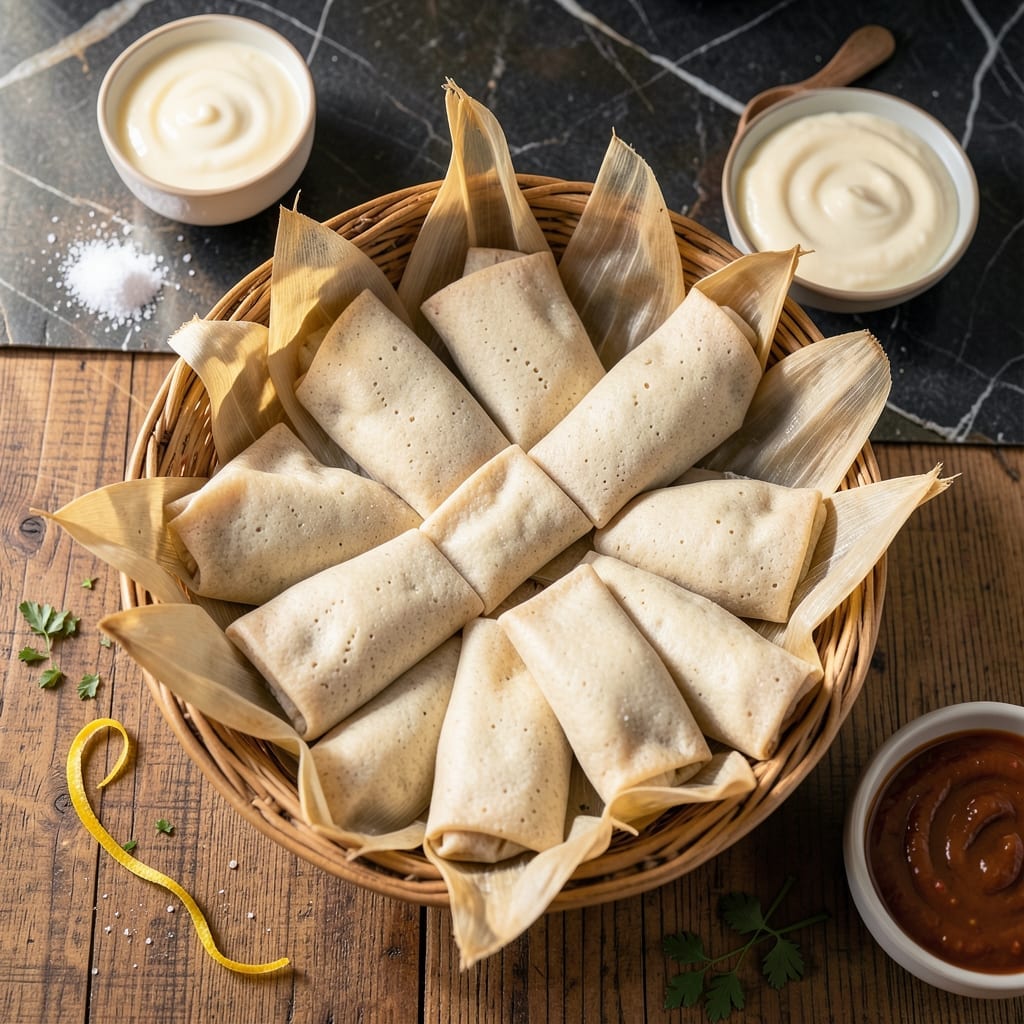
There’s an art to crafting perfectly steamed tamales with tender masa and rich fillings. This method delivers authentic results through careful preparation and traditional techniques.
I’ve refined this process over years, ensuring the dough achieves the right consistency and the fillings complement the corn flavor. The steaming step is what transforms simple ingredients into a beloved dish.
Ingredients for Masa Tamales
Traditional masa harina and rich fillings create authentic tamales with careful preparation and technique.
| Ingredient | Amount | Notes |
|---|---|---|
| Masa Harina 🌽 | 4 cups | Corn flour for tamales, Maseca brand preferred |
| Vegetable Shortening 🧈 | 1 ½ cups | Or lard substitute for vegetarian |
| Warm Water 💧 | 3 cups | Divided for dough consistency |
| Salt 🧂 | 2 tsp | Diamond Crystal kosher salt |
| Baking Powder 🧂 | 2 tsp | For light, airy texture |
| Dried Corn Husks 🌽 | 1 package | Soaked in warm water |
| Black Beans 🫘 | 2 cups | Cooked, for filling option |
| Queso Fresco 🧀 | 8 oz | Crumbled, for filling option |
| Poblano Peppers 🌶️ | 2 whole | Roasted, peeled, diced |
| Onion 🧅 | 1 whole | Medium, finely chopped |
| Garlic Cloves 🧄 | 3 cloves | Minced for filling |
| Ground Cumin 🌿 | 1 tsp | Toasted for depth |
| Tomato Sauce 🍅 | 1 cup | For red chile filling |
| Vegetable Broth 🥣 | ½ cup | Low-sodium preferred |
| Oregano 🍃 | 1 tsp | Dried Mexican oregano |
[recipe_ingredient_scaler]
The masa harina must be fresh for optimal results—Maseca is the gold standard and widely available at Latin markets or the international aisle. Dried corn husks should be pliable after soaking; if they crack, they weren’t soaked long enough. Vegetable shortening (like Crisco) gives the classic texture, but refined coconut oil works for a cleaner label. Avoid stale masa harina, as it loses its ability to hydrate properly.
For fillings, queso fresco adds the traditional tang, but feta makes a fine substitute if that’s what you have. No poblano peppers? Anaheim peppers at half the quantity work, though they’re milder. The black beans can be swapped for pinto beans or even a cheese-only filling for simplicity. If you skip the cumin, add an extra pinch of oregano to maintain depth in the filling.
Unused corn husks can be stored in a sealed bag for 6 months. Prepared masa dough holds in the fridge for 24 hours, but it’s best used immediately. Steamed tamales freeze beautifully for up to 3 months—reheat in a steamer or microwave wrapped in a damp towel.
Why You’ll Love This Recipe
- Mix and Go: I just stir masa harina, shortening, warm water, and a pinch of salt—no fancy steps, no stress.
- Warm Comfort: That rich, slightly sweet corn flavor from the masa harina hits different every time.
- Holiday Hero: Between us, I make a double batch for Christmas and freeze half for lazy weekends.
Step-by-Step Instructions for Steamed Corn Dough With Savory Fillings
Master these techniques for tamales with perfect texture and balanced savory flavors every time.
Step 1: Prepare the Dough Base
In a large mixing bowl, beat the 1.5 cups vegetable shortening with an electric mixer until creamy. Gradually add the 4 cups Masa Harina, 2 tsp salt, and 2 tsp baking powder, mixing until fully incorporated and crumbly.
Slowly pour in 2 cups of the 3 cups warm water, mixing continuously until the dough comes together. It should resemble thick cookie dough. Test the consistency by pressing a small amount between your fingers—if it holds its shape, it’s ready. If it crumbles, add the remaining 1 cup warm water gradually until it reaches the proper texture.
Step 2: Soak and Prepare the Corn Husks
While the dough rests, prepare the 1 package dried corn husks. Place them in a large bowl and cover completely with hot water. Weigh them down with a plate to ensure they’re fully submerged. Soak for at least 1 hour until pliable and soft.
After soaking, drain the husks and pat them dry with a clean towel. Select the largest, most intact husks for rolling—discard any that are torn or too small. This preparation ensures they won’t crack during steaming and will hold the filling securely.
Step 3: Prepare the Savory Filling
For the black bean filling, sauté the 1 whole onion (finely chopped) in a skillet until translucent. Add the 3 cloves garlic cloves (minced), 1 tsp ground cumin, and 1 tsp oregano, cooking for 30 seconds until fragrant.
Stir in the 2 cups black beans, 1 cup tomato sauce, and 0.5 cup vegetable broth. Simmer for 5-7 minutes until the mixture thickens slightly. Remove from heat and let cool before using. Alternatively, for a simpler filling, mix the crumbled 8 oz queso fresco with roasted, peeled, and diced 2 whole poblano peppers.
Step 4: Assemble and Steam the Tamales
Lay a soaked corn husk flat with the wide end at the bottom. Spread about ¼ cup of the dough in the center, leaving a border at the top and bottom. Add 1-2 tablespoons of your chosen filling down the middle of the dough.
Fold the long sides of the husk inward to encase the dough and filling, then fold the bottom up. Leave the top open. Arrange the tamales upright in a steamer basket, open-end up. Steam over boiling water for 45-60 minutes until the dough pulls away from the husk and feels firm when pressed.
Step 5: Test for Doneness and Rest
To check for doneness, carefully remove one tamale and let it cool for 1 minute. The husk should peel away cleanly, and the dough should be firm yet tender. If it sticks or appears undercooked, return the tamales to the steamer for an additional 10-15 minutes.
Once done, let the tamales rest in the steamer with the lid off for 5 minutes to set. Serve warm, allowing each person to unwrap their own tamale. The dough should be moist but not sticky, with the filling perfectly encased. Any leftovers can be refrigerated and reheated by steaming for 10-15 minutes.
Pro Tips For Making Masa Tamales
- Beat the Shortening: Cream the vegetable shortening and baking powder together first—about 2 minutes with a mixer. I learned this the hard way after my tamales came out dense and flat.
- Use Warm Water: Always use warm (not hot) water when mixing the masa harina. Cold water makes the dough gummy, and I’ve ruined a batch by skipping this step.
- Test the Float: Drop a small ball of masa into a glass of water—if it floats, it’s ready. If it sinks, beat in more air or add a bit more water.
- Rest the Dough: Let the masa sit for 10-15 minutes after mixing. Sounds weird, but it works—the texture improves, and the tamales steam more evenly.
Regional Styles of masa tamales
Oaxacan Style
In Oaxaca, tamales are often wrapped in banana leaves instead of corn husks, giving them a distinct earthy aroma. The masa here is sometimes mixed with mole negro for a rich, complex flavor. I love how this method infuses every bite with smoky depth. 🌿
Michoacán Tradition
Michoacán is famous for its corunda tamales—triangular-shaped and tied with strips of corn husk. These are typically sweeter, made with fresh corn and a touch of sugar. The shape makes them perfect for stacking and steaming in large batches.
Yucatán Influence
The Yucatán region uses achiote paste to color their masa a vibrant orange. They often stuff tamales with hard-boiled eggs and olives, a nod to Mayan culinary traditions. This version is a feast for the eyes and palate.
Central Mexico
In Central Mexico, tamales are often larger and filled with mole poblano or rajas con crema. The masa is beaten with extra lard for a lighter texture. These are the tamales I grew up eating at family gatherings.
Northern Style
Northern Mexico favors simpler, heartier tamales, often filled with shredded beef or pork in red chile sauce. The masa is slightly denser to hold up to the robust fillings. Perfect for a cold day by the coast. 💛
Veracruz Variation
Veracruz tamales are unique for their sweet and savory balance, often filled with pineapple and pork. The masa is seasoned with cinnamon and cloves, reflecting the region’s love for bold, layered flavors.
Nutrition Facts
Frequently Asked Questions
What’s the best way to test dough consistency?
Press a small ball between your fingers. If it holds shape without cracking, it’s perfect. If it crumbles, add 1-2 tablespoons more warm water.
Can I use fresh corn instead of masa harina?
Yes, but it requires extra prep. Grind fresh corn with 1/4 cup water per cup of corn, then mix with other dough ingredients. The texture will be slightly different.
Why are my tamales sticking to the husks?
This happens if the dough is too wet or not steamed long enough. Ensure the husks are properly soaked and steam for the full 45-60 minutes.
How long should I soak the corn husks?
Soak them in hot water for at least 1 hour, weighted down to stay submerged. Overnight soaking works too for extra pliability.

Trained in classic French technique but raised on slow-cooked ribs and spicy rubs, she blends culinary skill with smoke and soul.
- Recipe for Boneless Pork Chops in Cast Iron Skillet: Sear and Baste to Juicy Perfection - October 3, 2026
- Recipe for Boneless Cross Rib Roast: Slow-Roasted Beef with Herb Crust - October 3, 2026
- Hamburgers in Sauce Recipe Crock Pot: Slow-Cooked Savory Delight - October 3, 2026