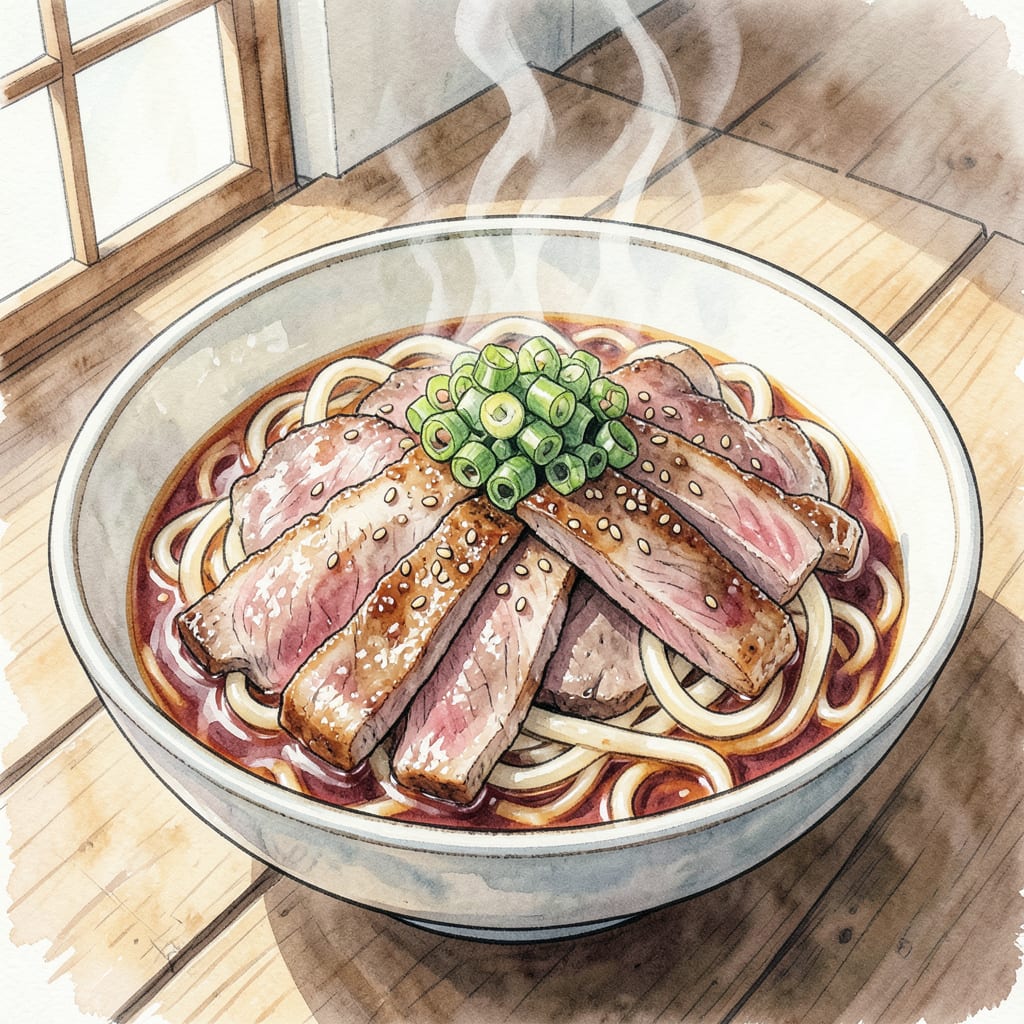
There’s something special about a steaming bowl of udon noodles that just feels like a warm hug. I’ve perfected this beef udon noodle recipe to deliver hearty comfort in every bite, combining tender beef, rich broth, and perfectly cooked noodles.
This recipe is all about layering flavors – we start with a savory beef broth, add tender slices of beef, and finish with perfectly cooked udon noodles. By following these simple steps, you’ll create a dish that’s both nourishing and satisfying, perfect for chilly evenings or whenever you need a comforting meal.
Ingredients for Beef Udon Noodle
Gather these quality ingredients to create a comforting beef udon noodle dish.
| Ingredient | Amount | Notes |
|---|---|---|
| Udon Noodles 🍜 | 12 oz | Thick, chewy variety |
| Beef (Ribeye or Sirloin) 🥩 | 1 lb | Sliced thin against grain |
| Beef Broth 🍲 | 4 cups | Low-sodium preferred |
| Soy Sauce 🧂 | ¼ cup | Use low-sodium if broth is salty |
| Mirin 🍶 | 2 tbsp | Sweet Japanese cooking wine |
| Sesame Oil 🫒 | 1 tbsp | For finishing, not cooking |
| Ginger 🧄 | 2 tbsp | Grated fresh, not jarred |
| Garlic Cloves 🧄 | 4 cloves | Minced, not crushed |
| Green Onions 🌿 | ½ cup | Thinly sliced, for garnish |
| Shichimi Togarashi 🌶️ | ¼ tsp | Optional, for serving |
| Black Pepper 🌶️ | ¼ tsp | Freshly ground, to taste |
| Salt 🧂 | ½ tsp | Kosher or sea salt, to taste |
[recipe_ingredient_scaler]
The beef matters here. Ribeye or sirloin works best—slice against the grain for tenderness. Most grocery stores have pre-sliced options, or you can ask your butcher. For the broth, low-sodium is best so you can control salt levels. I usually grab mine from Whole Foods or Trader Joe’s.
No mirin? Sake or dry white wine with a pinch of sugar gets you close. Fresh ginger is ideal, but jarred works in a pinch. For the udon, Sanuki or similar brands give that authentic chewy texture. If you can’t find udon, thick soba noodles are a decent substitute.
This reheats beautifully—honestly tastes better the next day. Keeps 3-4 days in the fridge, freezes for 2 months. Store broth separately from noodles to prevent sogginess. Reheat gently on the stove, adding a splash of water if needed to thin the broth.
Step-by-Step Instructions for Beef Udon Noodle
Here’s the method to create this hearty dish. Straightforward, tested, works every time.
Step 1: Prepare the Beef and Aromatics
Start by slicing the 1 lb Beef (Ribeye or Sirloin) into thin strips against the grain. I like to keep my beef in the freezer for about 15 minutes before slicing to make it firmer and easier to cut thinly. Once sliced, season the beef with 0.5 tsp Salt and 0.25 tsp Black Pepper. Make sure the beef is coated evenly.
Next, prepare the aromatics. Grate 2 tbsp Ginger using a microplane grater, making sure to get the fragrant juice. Mince 4 cloves Garlic Cloves finely. I prefer to use a garlic press for this to get the finest texture. Thinly slice 0.5 cup Green Onions and set them aside for garnish later.
Step 2: Cook the Udon Noodles
Bring a large pot of water to a rolling boil. Cook the 12 oz Udon Noodles according to the package instructions, typically around 8-10 minutes, until they are tender but still chewy. Drain the noodles and rinse them under cold water to stop the cooking process. Set the noodles aside.
While the noodles are cooking, heat 1 tbsp Sesame Oil in a large skillet or wok over medium-high heat. Add the sliced beef and cook until it’s browned and cooked through, about 3-4 minutes. Remove the beef from the skillet and set it aside.
Step 3: Make the Broth and Combine
In the same skillet, add the grated ginger and minced garlic. Sauté for about 1 minute until fragrant. Pour in 4 cups Beef Broth, 0.25 cup Soy Sauce, and 2 tbsp Mirin. Bring the mixture to a simmer. Let it cook for 5 minutes to allow the flavors to meld together.
Return the cooked beef to the skillet and stir to coat it with the broth mixture. Add the cooked udon noodles to the skillet, tossing everything together until the noodles are well coated with the savory broth. Cook for an additional 1-2 minutes until everything is heated through.
Step 4: Serve and Garnish
Divide the beef and udon noodle mixture among four bowls. Garnish with thinly sliced green onions and a sprinkle of 0.25 tsp Shichimi Togarashi if desired. Serve immediately while hot, enjoying the comforting warmth and rich flavors of this delightful dish.
Pro Cooking Tips for This Recipe
Beef Preparation Mastery
Slicing beef for udon requires precision. I recommend freezing the beef for 15-20 minutes to firm it up before slicing. Use a sharp knife and cut against the grain into ¼-inch thick slices. This ensures tender beef that cooks evenly. For the best flavor, use ribeye or sirloin as they hold up well to quick cooking.
Broth Building Techniques
A great udon broth starts with a rich foundation. I use 4 cups of beef broth as the base, enhanced with ¼ cup soy sauce and 2 tbsp mirin for depth. The key is slow simmering – let it cook for 5-7 minutes to meld the flavors together. For an extra layer of flavor, I add 2 tbsp grated ginger and 4 minced garlic cloves at the beginning.
Noodle Cooking Perfection
Cooking udon noodles just right makes all the difference. I bring a large pot of water to a rolling boil and cook the 12 oz udon noodles for 8-10 minutes, or according to package instructions. The key is to achieve that perfect chewy texture – not too soft, not too firm. After draining, I rinse them under cold water to stop the cooking process.
Component Cooking Timing
Timing is crucial when cooking udon. I start by cooking the noodles first, as they take the longest. While they’re cooking, I prepare the beef and aromatics. Once the noodles are done, I quickly cook the beef in 1 tbsp sesame oil over medium-high heat for 3-4 minutes. This ensures everything is ready at the same time.
Assembly and Presentation
The final assembly is where you bring everything together. I divide the cooked noodles among bowls, add the beef on top, and ladle the hot broth over everything. For garnish, I use thinly sliced green onions and a sprinkle of shichimi togarashi for added depth. Serving immediately while hot ensures the best experience.
Advanced Tips for Professionals
For restaurant-quality udon, consider these advanced techniques. First, use a dual-strain method for the broth: start with a clear broth, then add a secondary broth made from simmering beef bones for 6+ hours. For the beef, try velveting with cornstarch and egg white before cooking to achieve that silky texture. Finally, finish with a drizzle of high-quality sesame oil for that authentic flavor.

Trained in classic French technique but raised on slow-cooked ribs and spicy rubs, she blends culinary skill with smoke and soul.
- Recipe for Boneless Pork Chops in Cast Iron Skillet: Sear and Baste to Juicy Perfection - October 3, 2026
- Recipe for Boneless Cross Rib Roast: Slow-Roasted Beef with Herb Crust - October 3, 2026
- Hamburgers in Sauce Recipe Crock Pot: Slow-Cooked Savory Delight - October 3, 2026