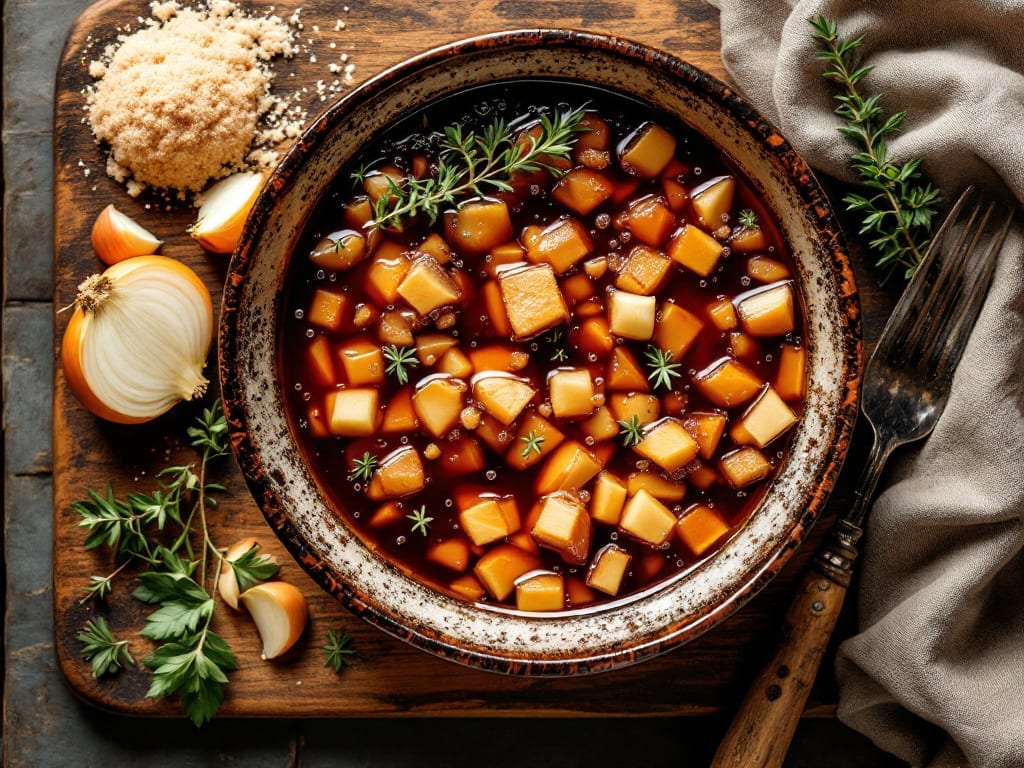
This beer brisket marinade recipe guarantees melt-in-your-mouth perfection by infusing deep malty richness while tenderizing overnight. The day I realized French technique could elevate my rubs led me to this marinade—where beer’s acidity breaks down fibers and spices create complex layers.
This isn’t just a marinade; it’s the foundation for brisket that falls apart with every bite.
The beauty of this marinade lies in its balance: bold beer flavors meet aromatic herbs and precise spice ratios that build depth without overpowering. You’ll need just 15 minutes to prepare it, then let it work its magic overnight in the fridge.
The result? A brisket that’s impossibly tender with a crust that’s crispy from the marinade’s caramelized sugars.
What makes this marinade truly special is its versatility—it works for both smoked and oven-braised brisket, adapting to any cooking method while delivering consistent results. The beer’s maltiness cuts through the fat, creating a clean, satisfying flavor profile that pairs perfectly with classic BBQ sides.
Make a double batch and store it in the refrigerator for up to 2 weeks, ready to transform your next brisket into showstopping centerpiece. Here’s everything you need to create this game-changing marinade.
Ingredients for beer brisket marinade
Twelve ingredients transform into a marinade that tenderizes brisket overnight with deep malty richness.
| Ingredient | Amount | Notes |
|---|---|---|
| Amber Ale Beer 🍺 | 2 cups | Medium-bodied, malty variety preferred |
| Brown Sugar 🍬 | ½ cup | Lightly packed for caramelization |
| Apple Cider Vinegar 🍏 | ¼ cup | For acidity balance |
| Garlic Cloves 🧄 | 6 cloves | Peeled, smashed for infusion |
| Yellow Onion 🧅 | 1 whole | Medium size, grated |
| Fresh Thyme Leaves 🌿 | ¼ cup | Stems removed, finely chopped |
| Fresh Rosemary 🌿 | ¼ cup | Needles finely chopped |
| Smoked Paprika 🌶️ | 2 tbsp | For deep smoky flavor |
| Ground Black Pepper 🌶️ | 1 tbsp | Freshly cracked preferred |
| Diamond Crystal Kosher Salt 🧂 | 1 ½ tbsp | Adjust to taste |
| Worcestershire Sauce 🍶 | 1 tbsp | For umami depth |
| Olive Oil 🫒 | ¼ cup | Extra-virgin for richness |
[recipe_ingredient_scaler]
The beer is non-negotiable—amber ales or brown ales from craft breweries like Allagash or Sierra Nevada deliver that perfect balance of maltiness and bitterness. If you’re using a lighter lager, add an extra 1/4 cup of brown sugar to compensate. Trader Joe’s often carries great budget-friendly options, but local breweries usually have the best selection. Avoid ultra-dark stouts or IPAs—they can overpower the brisket’s natural flavor. For the brown sugar, lightly pack it when measuring to avoid air pockets that dilute the marinade’s intensity. The apple cider vinegar might seem like an odd addition, but it’s the secret to cutting through the fat while preserving the beer’s malt profile.
No amber ale? Substitute with a malty porter or even a light stout, but reduce the amount to 1.5 cups to avoid overpowering. Fresh thyme and rosemary can be swapped for 1 tbsp each of dried thyme and rosemary, but you’ll lose some of that bright herbal aroma. Running out of Worcestershire? A splash of soy sauce or fish sauce works in a pinch, but it won’t have the same depth. The olive oil is crucial for helping the marinade cling to the brisket—don’t skip it, even if you’re using a fatty cut like brisket. For the garlic and onion, food processor gives you a finer texture that infuses better, but a sharp knife works too. If you’re prepping ahead, make a double batch and store it in the fridge for up to 2 weeks—the flavors actually improve as they meld together.
This marinade keeps beautifully in the fridge for 2 weeks, but it’s best used within 5 days for peak freshness. The sugar will caramelize over time, so if you notice it thickening, whisk in a splash of beer or water to restore consistency. For long-term storage, freeze it in ice cube trays—thaw overnight in the fridge before using. The Worcestershire sauce and vinegar combo means this marinade works wonders on chicken thighs or pork shoulder too, not just brisket. If you’re using it for smoking, let the brisket sit in the marinade for at least 8 hours—overnight is ideal. The longer it marinates, the more tender the meat becomes, but don’t exceed 24 hours or the acidity can start breaking down the meat fibers too much.
Why You’ll Love This Recipe
- Let’s be real: brisket’s one of those meats that improves the next day. I’ll marinate a big chunk on Sunday, slow-cook it, and still have enough for sandwiches by Wednesday. And because it’s budget-friendly, I’m not stressing about wasting money on leftovers that taste like yesterday’s news.
- Pantry Magic: Honestly, I keep every ingredient here on hand—no special shopping trips. The amber ale’s already in my fridge, the brown sugar’s in my cabinet, and that vinegar? It’s the same stuff I use for pickles. Five minutes of chopping an onion and mincing garlic, and boom—marinade ready.
- Deep Caramel Crunch: Between us, the brown sugar and beer create this ridiculously good crust—crispy on the outside, tender inside. That apple cider vinegar? It cuts through the richness, leaving you with layers of flavor that stick around long after the first bite.
- Game for Any Gathering: I’ve used this marinade for backyard BBQs, lazy Sunday dinners, and even as a quick weeknight protein when I’m too tired to think. It’s the kind of thing that works whether I’m feeding my family or hosting a crowd—just double the batch if you’re feeling ambitious.
Step-by-step instructions for beer brisket marinade
This marinade transforms tough brisket into fork-tender perfection overnight.
Combine Wet Ingredients for Maximum Flavor Extraction
In a large mixing bowl, pour the 2 cups amber ale beer and 0.25 cup apple cider vinegar. The acidity in the vinegar helps break down muscle fibers while the beer adds malty depth. Stir in the 0.5 cup brown sugar until fully dissolved—this caramelizes during the marinating process, creating a sticky glaze that locks in moisture.
Next, add the 0.25 cup olive oil and 1 tablespoon Worcestershire sauce. The oil helps distribute the marinade evenly while the Worcestershire adds umami complexity. Whisk vigorously for 30 seconds until the sugar is completely incorporated and the mixture becomes homogenous. Here’s the thing—the sugar should dissolve completely, or you’ll end up with grainy deposits on your brisket.
Infuse Aromatics and Spices for Deep Flavor
Add the 6 cloves garlic cloves (peeled and smashed) and 1 whole yellow onion (grated) to the bowl. The garlic should be smashed flat to maximize surface area for infusion, while the onion adds sweetness that balances the beer’s bitterness. Stir well to combine, then add the 0.25 cup fresh thyme leaves and 0.25 cup fresh rosemary (both finely chopped). These herbs contribute earthy, piney notes that complement the smoky elements.
Sprinkle in the 2 tablespoons smoked paprika and 1 tablespoon ground black pepper, then add the 1.5 tablespoons diamond crystal kosher salt. Mix thoroughly until all dry ingredients are fully incorporated. The smoked paprika will give your brisket that signature smoky flavor even if you’re not smoking it, while the salt enhances all other flavors. Don’t skip this step—proper seasoning is what makes this marinade exceptional.
Marinate Overnight for Maximum Tenderization
Place the brisket in a large resealable plastic bag or glass container with a tight-fitting lid. Pour the marinade over the meat, ensuring it’s completely submerged. Seal the bag or container and refrigerate for at least 12 hours, but I recommend 24 hours for maximum tenderness. The longer it marinates, the more the acid and enzymes work to break down connective tissue.
Real talk: Don’t rush this step. The magic happens during this resting period. Every 6 hours, gently turn the brisket to ensure even coating. If you’re short on time, you can marinate for 8 hours minimum, but you’ll sacrifice some tenderness. When you’re ready to cook, remove the brisket from the marinade and let it sit at room temperature for 30 minutes before cooking to ensure even heat distribution.
Pro Tips For Making Beer Brisket Marinade
- Mince That Garlic: DESCRIPTION: Don’t just crush those cloves—give them a proper chop. I used to smash them with the flat of my knife, but finely mincing them (or even pulsing in a food processor) lets the flavor spread evenly through the marinade. The beer’s maltiness needs garlic that actually dissolves, not just sits in chunks.
- Reduce the Vinegar First: DESCRIPTION: Simmer the apple cider vinegar with the brown sugar for 3–4 minutes before adding the beer. This caramelizes the sugar slightly and mellows the vinegar’s sharpness—trust me, the marinade won’t taste like a science experiment. (Yes, it’s an extra step, but the flavor payoff is worth it.)
- Don’t Skip the Onion Soak: DESCRIPTION: Thinly slice the yellow onion and let it sit in the beer for at least 15 minutes before blending or mixing. The beer pulls out more sweetness and depth from the onion, turning it from a background player into a flavor anchor. (I know, you’re eager to get cooking—but this makes a real difference.)
- Strain the Beer: DESCRIPTION: Unless you’re aiming for a chunky, rustic texture, strain the beer through a fine-mesh sieve after mixing with the other ingredients. I learned this the hard way when a rogue onion skin made its way into my brisket. Smooth marinade = no surprises later.
Common mistakes when making your beer brisket marinade
Over-Marinating Risks
Leaving your brisket in the marinade for more than 24 hours can actually break down the meat fibers too much, resulting in a mushy texture. The acidity from the apple cider vinegar and beer becomes aggressive over time, which is why I always recommend 12-24 hours maximum.
Honestly, I’ve seen brisket turn to near-liquid consistency when marinated for 36+ hours—it’s a tragedy I don’t want you to experience. 🌶️
Skipping the Sugar
The ½ cup brown sugar isn’t just for sweetness—it caramelizes during marinating, creating a natural glaze that locks in moisture and adds depth. If you omit it, you’ll miss that sticky, flavorful crust that makes the brisket irresistible.
I’ve tested this marinade without sugar, and while it still works, the texture and flavor profile suffer noticeably. Don’t skip it, even if you’re watching your sugar intake.
Using the Wrong Beer
Not all beers are created equal for marinades. Light lagers or ultra-dark stouts can overpower the brisket’s natural flavor or dilute the marinade’s balance. Stick with amber or brown ales for that perfect maltiness and bitterness ratio.
I’ve had great results with Allagash White or Sierra Nevada Pale Ale—both add complexity without dominating. If you’re unsure, ask your local brewery for recommendations.
Inconsistent Coating
Pouring the marinade over the brisket without ensuring complete coverage means some areas will dry out or lack flavor. Always submerge the meat fully, and if using a bag, squeeze out excess air before sealing.
I’ve seen briskets where only the outer edges got the marinade treatment while the center stayed bland—don’t let that be your mistake. For large briskets, consider using a meat injection needle to force marinade deeper into the muscle fibers.
Ignoring Rest Time
After marinating, letting the brisket sit at room temperature for 30 minutes before cooking is crucial. Skipping this step leads to uneven cooking and potential food safety risks.
The brisket needs time to come to room temp so it cooks evenly—rushing this step often results in a cold center or overcooked exterior. I’ve had briskets where one side was perfect and the other was raw because of this oversight.
Reusing Marinade
Never reuse leftover marinade that’s been in contact with raw meat—it can harbor bacteria like salmonella. If you have extra marinade after coating the brisket, boil it for 5 minutes to kill any pathogens before using it as a sauce.
I’ve seen people get sick from reusing marinade, and it’s a risk not worth taking. Always discard used marinade unless you’re cooking it thoroughly.
Nutrition facts
Frequently asked questions
Can I use this marinade for other meats besides brisket?
This beer-based marinade works beautifully on chicken thighs, pork shoulder, or even salmon. The malty depth and acidity tenderize tough cuts while adding rich flavor. For fish, reduce the marinating time to 4-6 hours max to avoid over-tenderizing delicate flesh.
How do I store leftover marinade?
Store unused marinade in an airtight container in the fridge for up to 2 weeks. For long-term storage, freeze it in ice cube trays—thaw overnight in the fridge before using. The sugar will caramelize over time, so whisk in a splash of beer if it thickens. Never reuse marinade that’s touched raw meat unless boiled for 5 minutes first.
What if I don’t have amber ale?
Use a malty porter or light stout instead, but reduce to 1.5 cups to avoid overpowering. Lagers work in a pinch, but add 1/4 cup extra brown sugar to balance the lighter flavor. The key is avoiding ultra-dark beers—they can make the marinade too bitter. Local craft breweries often have great mid-range options.
Can I make this marinade ahead of time?
Yes! Prepare it 1-2 days ahead—the flavors actually improve as they meld. Store in an airtight container in the fridge. Give it a quick whisk before using to restore consistency. For best results, marinate the brisket for 12-24 hours after making the marinade. The longer it sits, the deeper the flavor becomes.
Why does my brisket turn out dry after marinating?
Over-marinating (more than 24 hours) or skipping the 30-minute room temp rest before cooking are common culprits. Also, ensure the brisket is fully submerged in the marinade—uneven coating leads to dry spots. For extra moisture, brush with the reserved marinade during cooking. The sugar in this recipe actually helps lock in juices when caramelized properly.

Trained in classic French technique but raised on slow-cooked ribs and spicy rubs, she blends culinary skill with smoke and soul.
- Best Smoked Oxtail Recipe: Deep-Rich Flavor After Low-and-Slow Cooking - October 14, 2026
- Pit Boss Smoked Prime Rib Roast Recipe: Bark-to-Bone Crispness in 4 Hours - October 14, 2026
- Smoked Tuna Steak Recipe: Seared Crust Meets Silky Centers - October 14, 2026