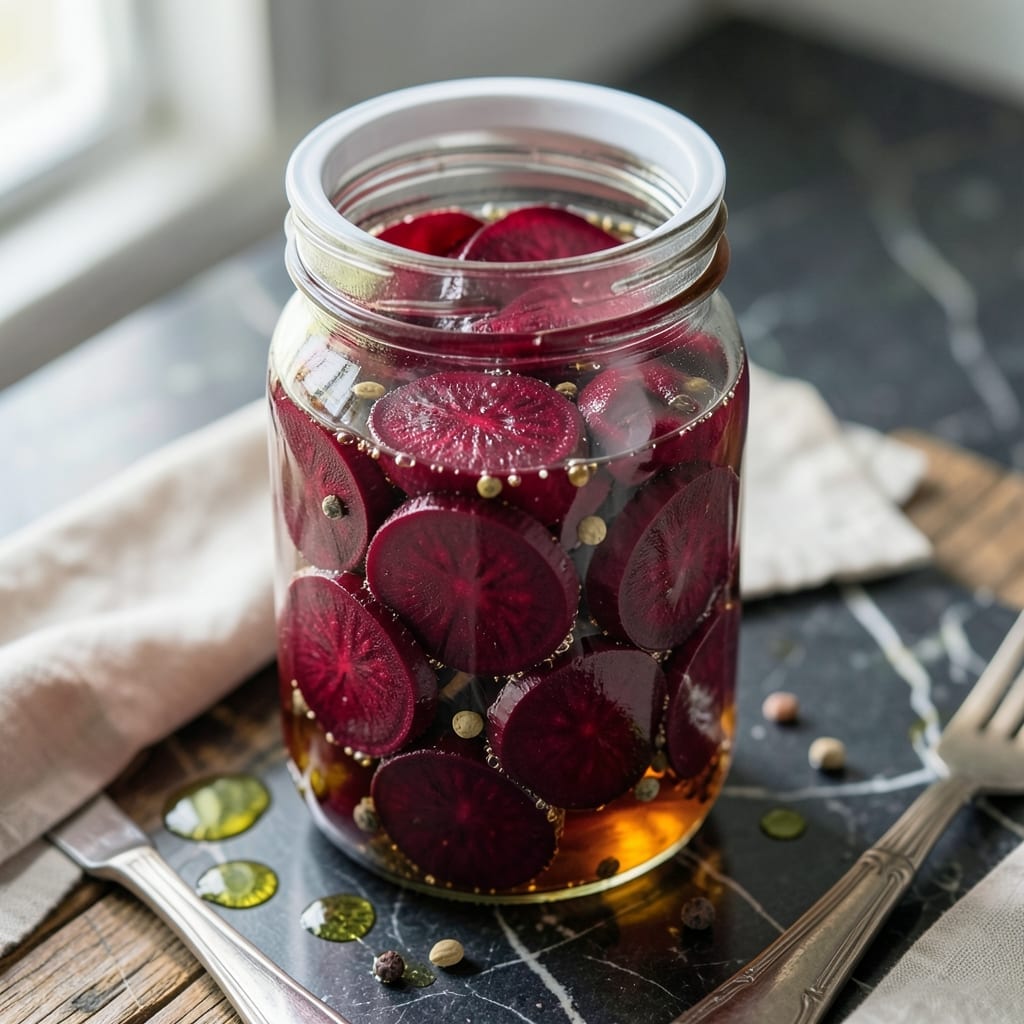
This proven method transforms fresh beets into vibrant, tangy pickles that stay crisp for months. The canning process locks in flavor and texture, creating shelf-stable jars ready for any meal.
With precise timing and temperatures, you’ll achieve consistent results every batch. These pickles deliver the perfect balance of sweetness and acidity, making them a versatile addition to your pantry.
Ingredients for Beet Pickle Recipe for Canning
Fresh beets and pantry spices turn into crisp, tangy jars. Simple and satisfying.
| Ingredient | Amount | Notes |
|---|---|---|
| Fresh Beets 🍠 | 2 ½ lb | Medium-sized, scrubbed clean |
| White Vinegar 💧 | 2 cups | 5% acidity for safety |
| Apple Cider Vinegar 🍏 | 1 cup | Adds depth to flavor |
| Granulated Sugar 🍚 | 1 cup | Adjust to taste preference |
| Water 💧 | 1 cup | Filtered if possible |
| Pickling Salt 🧂 | 1 tbsp | Non-iodized for clarity |
| Whole Black Peppercorns 🌶️ | 1 tbsp | Lightly crushed for texture |
| Mustard Seeds 🌿 | 1 tbsp | Yellow or brown variety |
| Whole Cloves 🌰 | 6 whole | Optional for spiced pickles |
| Bay Leaves 🍃 | 2 whole | Dried, for aroma |
| Cinnamon Stick 🌿 | 1 whole | Optional for warmth |
| Red Onion 🧅 | 1 whole | Thinly sliced for layers |
[recipe_ingredient_scaler]
The beets are the star here. Look for firm, medium-sized ones with smooth skins and no soft spots. Farmers markets often have the best selection in late summer and fall. I like to mix red and golden beets for a pretty jar (just can them separately to avoid color bleeding). If you can only find one color, no biggie—red beets give that classic deep hue.
No pickling salt? Kosher salt works in a pinch (just avoid iodized table salt). Want it sweeter? Add an extra quarter cup of sugar to the brine. If you’re out of mustard seeds, celery seeds give a different but still tasty flavor. The vinegar ratio is non-negotiable for safety though—don’t reduce it. For a fun twist, toss in a few thin apple slices with the beets.
These keep beautifully at room temperature for up to 12-18 months (as long as the seal holds). Once opened, refrigerate and use within 1 month. The flavor actually improves after a few weeks, so try to wait if you can. Perfect for holiday gifts—just tie a ribbon around the jar (worth the extra minute).
Why You’ll Love This Recipe
- Minimal Effort: I just boil the beets, slice, and let the vinegar-sugar brine do the rest—no fancy steps.
- Sweet-Tangy Balance: Honestly, that mix of apple cider vinegar and sugar gives them a bright, zingy flavor that’s impossible to resist.
- Pantry Staple: They keep for months, so I always have a jar ready for salads, sandwiches, or straight from the fridge.
- Budget Friendly: Fresh beets are cheap, and a little sugar and vinegar turn them into something special without breaking the bank.
Step-by-Step Instructions for Beet Pickles for Canning
Here’s how to turn fresh beets into crisp, tangy pickles that’ll keep for months.
Step 1: Prepare the Beets and Onion
Start by scrubbing the 2.5 lb Fresh Beets under cold water to remove any dirt. Trim off the greens and root ends, but leave the skin on for now—it helps the beets hold their shape during cooking. I like to use medium beets because they cook evenly and fit perfectly in jars.
Thinly slice the Red Onion into half-moons. The onion adds a nice sharpness that balances the sweetness of the beets. Keep the slices uniform so they pickle evenly alongside the beets.
Step 2: Cook the Beets Until Tender
Place the whole beets in a pot and cover with water. Bring to a boil, then reduce heat and simmer for 30-45 minutes until the beets are fork-tender. The cooking time depends on size, so start checking at 30 minutes by piercing with a fork.
Once tender, drain the beets and let them cool slightly. When they’re cool enough to handle, peel off the skins—they should slide off easily with your fingers or a paring knife. Slice the beets into ¼-inch thick rounds or quarters, depending on your preference.
Step 3: Make the Pickling Brine
In a medium saucepan, combine the 2 cups White Vinegar, 1 cup Apple Cider Vinegar, 1 cup Granulated Sugar, 1 cup Water, and 1 tbsp Pickling Salt. Bring this mixture to a boil over medium-high heat, stirring until the sugar and salt fully dissolve.
Once boiling, reduce the heat to low and add the 1 tbsp Whole Black Peppercorns, 1 tbsp Mustard Seeds, 6 whole Whole Cloves, 2 whole Bay Leaves, and 1 whole Cinnamon Stick. Let the brine simmer for 5 minutes to allow the spices to infuse their flavors. The kitchen will smell amazing at this point.
Step 4: Combine and Jar the Pickles
In clean, sterilized jars, layer the sliced beets and Red Onion slices. Pack them in tightly but leave about ½ inch of headspace at the top. This space is crucial for a proper seal during canning.
Ladle the hot brine over the beets and onions, making sure they’re completely submerged. Use a clean chopstick or plastic knife to remove any air bubbles trapped between the slices. Wipe the rims of the jars with a clean, damp cloth to ensure a good seal.
Step 5: Process for Safe Canning
Seal the jars with lids and rings, then place them in a water bath canner. Make sure the jars are covered by at least 1-2 inches of water. Bring the water to a rolling boil and process the jars for 30 minutes.
After processing, carefully remove the jars and place them on a towel-lined countertop. Let them cool undisturbed for 12-24 hours. You’ll hear the satisfying ping of the lids sealing as they cool. Once sealed, store the jars in a cool, dark place for at least 48 hours before opening to allow the flavors to fully develop.
Pro Tips For Making Beet Pickle Recipe For Canning
- Peel After Cooking: Boil beets whole with skins on, then peel once cooled—the skins slip right off and your hands stay clean. I learned this the hard way after ruining a white shirt with beet juice.
- Balance the Vinegars: Use a 1:1 ratio of white vinegar to apple cider vinegar for brightness with depth. Sounds weird, but it works: all white vinegar tastes harsh, and all cider can be too mellow.
- Sterilize Jars First: Submerge jars and lids in boiling water for 10 minutes before filling to prevent spoilage. After losing a whole batch to mold once, I never skip this.
- Rest Before Sealing: Let the pickles sit in the brine for 12-24 hours in the fridge before canning for better flavor. I was skeptical until I tried it—now I won’t can without this step.
Dietary Considerations for This Dish
Naturally Vegan
This creation is inherently plant-based, making it perfect for vegan diets. The 2.5 lb Fresh Beets and Red Onion provide fiber and nutrients without any animal products. I love that it aligns with my farmers market foraging habits. 🌱
Gluten-Free Friendly
All ingredients in this recipe are naturally gluten-free. The vinegars, Granulated Sugar, and spices contain no wheat or gluten derivatives. Always double-check your spice labels to be absolutely sure, though.
Low-Calorie Option
For a lighter version, reduce the 1 cup Granulated Sugar by half. The pickles will be more tart but still delicious. Each serving with full sugar is only about 50 calories, so it’s already a guilt-free treat.
Sodium Considerations
The 1 tbsp Pickling Salt is necessary for preservation and flavor. If you’re watching sodium, you can reduce it slightly, but don’t eliminate it entirely. The vinegar ratio must stay the same for safety.
Allergen-Free
This recipe is free from common allergens like dairy, eggs, nuts, and soy. The only potential concern is Mustard Seeds for those with mustard allergies. Simply omit them if needed.
Sugar Alternatives
Honey or maple syrup can replace Granulated Sugar for a natural twist. Use ¾ cup of either, as they’re sweeter. I’ve tried both with great results from my local butcher shops suppliers. 💛
Nutrition Facts
Frequently Asked Questions
Do I need special jars for canning?
Use standard mason jars with new lids for best results. Quart or pint sizes work well. Sterilize them in boiling water for 10 minutes before filling.
How long until the pickles are ready to eat?
Wait at least 48 hours for flavors to develop. For best taste, let them sit for 2-3 weeks in a cool, dark place.
Can I use a different type of vinegar?
Stick with 5% acidity vinegar for safety. White or apple cider work best. Avoid balsamic or wine vinegar as they may alter the flavor too much.
What if my jars don’t seal properly?
Check for nicks on the rim or improper lid placement. If still unsealed after 24 hours, refrigerate and use within 1 week.

Trained in classic French technique but raised on slow-cooked ribs and spicy rubs, she blends culinary skill with smoke and soul.
- Recipe for Boneless Pork Chops in Cast Iron Skillet: Sear and Baste to Juicy Perfection - October 3, 2026
- Recipe for Boneless Cross Rib Roast: Slow-Roasted Beef with Herb Crust - October 3, 2026
- Hamburgers in Sauce Recipe Crock Pot: Slow-Cooked Savory Delight - October 3, 2026