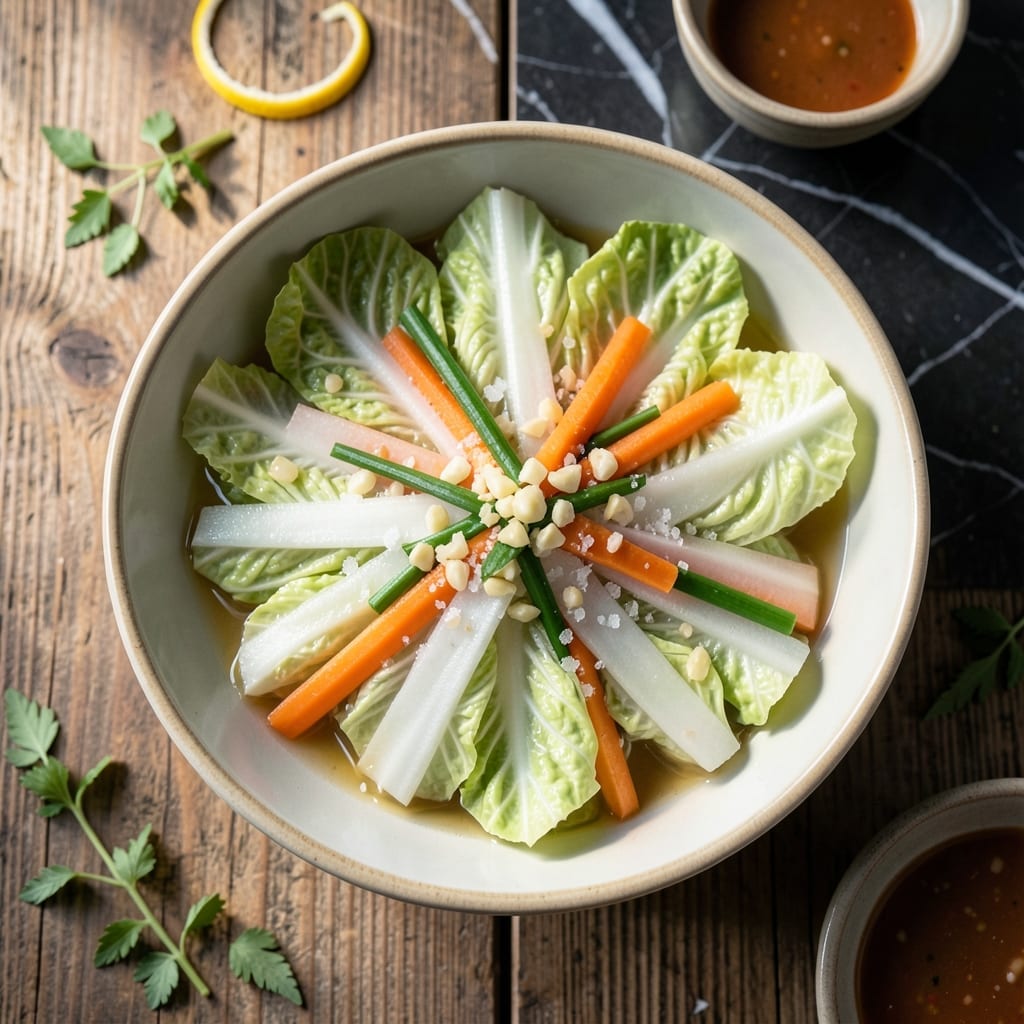
This traditional fermentation method transforms fresh cabbage into perfectly tangy, spicy kimchi with minimal effort.
Using simple ingredients and a precise technique, you’ll achieve restaurant-quality results right in your own kitchen. The process takes time but rewards patience.
Ingredients for Recipe to Make Kimchi
Fresh cabbage and bold spices create this fermented, tangy, spicy classic with minimal effort.
| Ingredient | Amount | Notes |
|---|---|---|
| Napa Cabbage 🥬 | 2 lb | Cored and quartered lengthwise |
| Kosher Salt 🧂 | ½ cup | Diamond Crystal preferred for texture |
| Daikon Radish 🥬 | 8 oz | Julienned into matchsticks |
| Carrots 🥕 | 2 whole | Julienned into matchsticks |
| Green Onions 🧅 | 6 whole | Cut into 2-inch pieces |
| Garlic Cloves 🧄 | 8 cloves | Minced for even distribution |
| Fresh Ginger 🌿 | 2 tbsp | Peeled and grated finely |
| Gochugaru 🌶️ | ¾ cup | Korean red pepper flakes, fine grade |
| Fish Sauce Substitute 💧 | 3 tbsp | Vegan fish sauce or soy sauce |
| Sugar 🍬 | ¼ cup | Granulated or organic cane sugar |
| Rice Flour 🌾 | 2 tbsp | For porridge consistency |
| Water 💧 | 1 cup | For rice flour porridge |
| Korean Red Pepper Powder 🌶️ | 2 tbsp | Optional for extra heat and color |
[recipe_ingredient_scaler]
The cabbage quality is non-negotiable. Napa cabbage with crisp, unblemished leaves ensures optimal texture post-fermentation. Asian markets typically stock the freshest heads, but well-stocked supermarkets like H-Mart or Whole Foods are reliable. For the gochugaru, seek authentic Korean brands—Sunchang or Kochukaru are professional-grade. The salt must be coarse; Diamond Crystal is ideal for even brining.
No gochugaru? Cayenne plus sweet paprika at a 1:3 ratio approximates the flavor, though the color will differ. For the fish sauce substitute, vegan fish sauce (like Three Crabs brand) or soy sauce works well. Daikon radish can be replaced with regular radishes if necessary. The sugar is essential for fermentation—do not omit or substitute with artificial sweeteners.
Fermented kimchi keeps in the refrigerator for 1 month (flavor peaks at 1-2 weeks). Store in airtight containers, pressing down to submerge vegetables in liquid. The fermentation process continues slowly in the fridge, so flavor intensifies over time. Always use clean utensils to prevent contamination.
Why You’ll Love This Recipe
- Minimal Chopping: I love that the veggies—daikon, carrots, green onions—are quick to prep, and the napa cabbage just needs quartering.
- Flavor Bomb: The kosher salt pull draws out the sweetness, and the fermented kick is ridiculously good.
- Fridge Staple: Honestly, it lasts weeks and turns simple rice or eggs into a flavor-packed meal.
- Budget Friendly: Napa cabbage and radish are cheap, and this batch makes enough to share or store for later.
Step-by-Step Instructions for Fermented Spicy Cabbage
This method ensures perfect texture and flavor development through controlled fermentation.
Step 1: Salt and Wilt the Napa Cabbage
Core and quarter the 2 lb Napa Cabbage lengthwise, keeping the core intact so leaves stay together. Sprinkle 0.5 cup Kosher Salt between each leaf, focusing on the thick white stems. Place in a large bowl, cover with 1 cup Water, and let sit at room temperature.
After 1-2 hours, flip the cabbage to ensure even salting. You’ll know it’s ready when the thickest stems bend easily without snapping. Rinse thoroughly under cold water 3 times to remove excess salt, then drain in a colander for 20 minutes.
Step 2: Prepare the Vegetable Base and Porridge
While the cabbage drains, julienne the 8 oz Daikon Radish and 2 whole Carrots into matchsticks. Cut the 6 whole Green Onions into 2-inch pieces. Combine these in a large mixing bowl with the minced 8 cloves Garlic Cloves and grated 2 tbsp Fresh Ginger.
In a small saucepan, whisk together the 2 tbsp Rice Flour and 1 cup Water. Cook over medium heat for 5-7 minutes until it thickens into a translucent porridge. Remove from heat and stir in the 0.25 cup Sugar until fully dissolved. Let cool to room temperature before adding to the vegetables.
Step 3: Create the Kimchi Paste and Combine
In a separate bowl, combine the 0.75 cup Gochugaru, 3 tbsp Fish Sauce Substitute, and 2 tbsp Korean Red Pepper Powder. This forms the flavor base of your paste. Pour the cooled rice flour porridge into the vegetable mixture, then add the gochugaru paste. Mix thoroughly with gloved hands to ensure even distribution.
The paste should coat the vegetables completely and have a vibrant red color. Taste and adjust seasoning if needed—this is your last chance to balance flavors before fermentation begins. The consistency should be thick but spreadable, like a wet paste.
Step 4: Pack and Initiate Fermentation
Wearing gloves, gently separate each cabbage leaf and spread the vegetable paste mixture between them, ensuring every surface is coated. Work from the outer leaves inward, using about ½ cup of paste per cabbage quarter. Fold the cabbage quarters in half and place them in a clean, airtight container, pressing down firmly to remove air pockets.
Leave 1 inch of headspace at the top of the container to accommodate expansion during fermentation. Seal the container but don’t lock it completely for the first 24 hours—this allows gases to escape. Store at room temperature, away from direct sunlight, for the initial fermentation stage.
Step 5: Complete Fermentation and Store
After 24 hours, press down on the cabbage to submerge it in the liquid that has developed. Seal the container completely. Continue fermenting at room temperature for 1-2 days, then transfer to the refrigerator. The kimchi is ready when it has a tangy, spicy flavor and the cabbage is slightly tender but still crisp.
For best results, let it ferment in the refrigerator for at least 1 week before eating. The flavors will continue to develop and intensify over time. Your creation will keep for up to 1 month in the refrigerator, becoming more sour as it ages. Always use clean utensils when removing portions to prevent contamination.
Pro Tips For Making Recipe To Make Kimchi
- Salt the Cabbage Twice: I learned this the hard way—salt the quartered cabbage between each leaf, then let it sit for 1-2 hours before rinsing. It draws out more water, making the kimchi crunchier and better at absorbing the paste.
- Use a Food Processor: Sounds obvious, but grating the daikon radish and carrots by hand is a nightmare. A quick pulse in the food processor gives you perfectly even matchsticks in seconds.
- Skip the Over-Salting: Resist the urge to oversalt the cabbage—it won’t ferment properly. Stick to about ½ cup kosher salt per large head of Napa cabbage, and rinse it thoroughly afterward.
- Wear Gloves: After burning my hands three times, I finally started wearing disposable gloves when mixing the kimchi paste. The chili and garlic will sting if you don’t.
Pro Cooking Tips for This Dish
Salt Distribution
Even salting is crucial for consistent fermentation. I use my hands to work 0.5 cup Kosher Salt deep between each cabbage leaf, especially the thick stems. Flip the cabbage after 1 hour to ensure all surfaces get equal treatment. 💡
Rinsing Technique
After salting, rinse the cabbage 3 times under cold running water. Gently separate the leaves to remove salt from every crevice. Drain in a colander for 20 minutes, then pat dry with paper towels to prevent watery kimchi.
Paste Consistency
The rice porridge must cool completely before mixing with vegetables. I test it by touching my wrist—it shouldn’t feel warm. The final paste should cling to the cabbage without sliding off. Add a splash of water if it’s too thick.
Fermentation Setup
Pack the kimchi tightly into containers, pressing down to eliminate air pockets. Leave 1 inch headspace to prevent overflow. I use glass mason jars with fermentation lids for easy burping during the first 24 hours. 🔥
Temperature Control
Room temperature fermentation (around 68-72°F) works best. If your kitchen is warmer, check after 18 hours. Cooler rooms may need 48 hours for the initial ferment. Trust your nose—the tangy aroma means it’s working.
Cleanliness Matters
Always use clean utensils when handling kimchi to prevent mold. I keep a dedicated set of tongs for my fermentation jars. If you see any fuzzy spots, discard that portion immediately and check the rest carefully.
Nutrition Facts
Frequently Asked Questions
How long does homemade kimchi last?
Properly stored in an airtight container in the fridge, it stays fresh for 1 month. Flavor peaks at 1-2 weeks and becomes tangier over time.
Can I make kimchi without gochugaru?
Yes, substitute with 1 part cayenne to 3 parts sweet paprika by volume. The color will differ, but the spice level can be adjusted to taste.
Why did my kimchi turn out mushy?
Over-salting or insufficient draining causes this. Ensure cabbage is rinsed 3 times and drained for 20 minutes before adding paste.
Is kimchi vegan?
This recipe uses vegan fish sauce or soy sauce, making it fully plant-based. Traditional versions often contain seafood, so check labels if needed.

Trained in classic French technique but raised on slow-cooked ribs and spicy rubs, she blends culinary skill with smoke and soul.
- Recipe for Boneless Pork Chops in Cast Iron Skillet: Sear and Baste to Juicy Perfection - October 3, 2026
- Recipe for Boneless Cross Rib Roast: Slow-Roasted Beef with Herb Crust - October 3, 2026
- Hamburgers in Sauce Recipe Crock Pot: Slow-Cooked Savory Delight - October 3, 2026