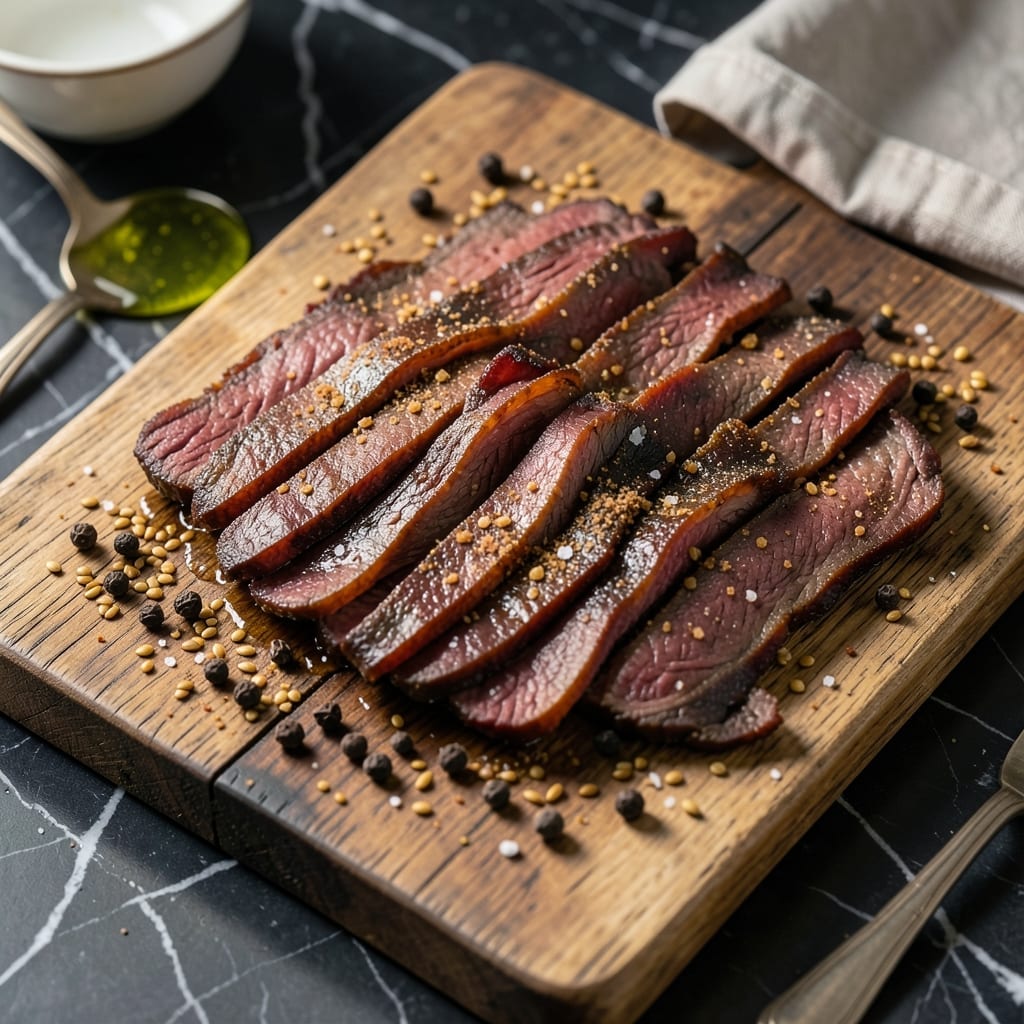
This traditional South African method produces perfect air-dried meat with robust, savory depth. I learned the importance of patience from my grandmother, who taught me that proper curing and drying are non-negotiable for authentic results.
The process combines a traditional spice blend with precise air-drying conditions. Vinegar in the marinade tenderizes while preserving, and the right balance of coriander, black pepper, and brown sugar creates that signature flavor profile.
What emerges is best-in-class biltong—lean, flavorful, and perfectly dried. The exterior develops a slightly tacky coating while the interior remains tender, never tough or brittle.
This technique works with various meats, though top round or sirloin delivers the most authentic texture. The waiting is the hardest part, but the results justify every minute.
Ingredients for Best Biltong Recipe South Africa
Traditional South African flavors shine with lean beef and a bold spice blend. Simple, authentic, unforgettable.
| Ingredient | Amount | Notes |
|---|---|---|
| Top Round Beef 🥩 | 2 lb | Lean, cut into 1-inch strips |
| Brown Vinegar 🍯 | 1 cup | Apple cider or malt vinegar |
| Coriander Seeds 🌿 | 2 tbsp | Toasted and coarsely ground |
| Black Peppercorns 🌶️ | 2 tbsp | Coarsely crushed |
| Brown Sugar 🍚 | ½ cup | Light or dark variety |
| Kosher Salt 🧂 | ½ cup | Diamond Crystal preferred |
| Bicarbonate of Soda 🧂 | 1 tsp | Helps tenderize the meat |
| Garlic Powder 🧄 | 1 tbsp | Freshly ground ideal |
| Onion Powder 🧅 | 1 tbsp | Adds depth to spice blend |
| Crushed Red Pepper Flakes 🔥 | 1 tsp | Adjust to heat preference |
| Ground Cumin 🌿 | 1 tsp | Optional for complexity |
| Water 💧 | ¼ cup | For marinade consistency |
[recipe_ingredient_scaler]
The meat is non-negotiable—top round or sirloin gives you that authentic texture. Look for lean cuts with minimal fat marbling; Whole Foods or a trusted local butcher are great sources. Ask them to slice it against the grain for the best results (about 1-inch thick). For the vinegar, apple cider vinegar works well, but if you can find good malt vinegar, grab it. It’s worth the extra effort.
No coriander seeds? Ground coriander at half the amount works in a pinch, but the seeds deliver the classic crunch and depth. Swap brown sugar for coconut sugar if you prefer. For the bicarbonate of soda, baking soda is the same thing—just make sure it’s fresh. If you’re out of garlic powder, freshly minced garlic at twice the amount adds a bright, bold punch.
Store uncooked, marinated meat in the fridge for up to 24 hours before drying. Once dried, biltong keeps in a cool, dry place for 2-3 weeks (if it lasts that long). For longer storage, freeze for up to 6 months. Always slice against the grain before serving for the best texture.
Why You’ll Love This Recipe
- Set and Forget: I mix the vinegar, coriander, and sugar the night before, then let the beef soak up all that flavor while I do my thing.
- Deep, Earthy Crunch: The coriander seeds and black peppercorns give it that signature South African bite I can’t get enough of.
- Snack Stash: I keep a batch in the pantry for road trips, braais, or when the kids need a protein boost between meals.
- Pound for Pound: Top round is lean and affordable, and a little goes a long way—honestly, one batch lasts us weeks.
Step-by-Step Instructions for Traditional Biltong
Here’s the method that delivers authentic South African flavor and perfect texture every time.
Step 1: Prepare the Spice Blend
Toast the 2 tbsp Coriander Seeds in a dry pan over medium heat for 1-2 minutes until fragrant, then coarsely grind them. Coarsely crush the 2 tbsp Black Peppercorns—you want visible flecks in the final product for that signature texture.
In a bowl, combine the ground coriander, crushed peppercorns, 0.5 cup Brown Sugar, 0.5 cup Kosher Salt, 1 tsp Bicarbonate of Soda, 1 tbsp Garlic Powder, 1 tbsp Onion Powder, 1 tsp Crushed Red Pepper Flakes, and 1 tsp Ground Cumin. The bicarbonate of soda is crucial—it tenderizes the meat while preserving its structure.
Step 2: Coat the Beef Thoroughly
Pat the 2 lb Top Round Beef strips completely dry with paper towels—any moisture will dilute the cure. Place the strips in a large bowl and sprinkle half the spice blend over them. Massage it in vigorously, ensuring every surface is coated. The meat should look evenly dusted with the spice mixture.
Add the remaining spice blend and repeat the process. Then pour in the 1 cup Brown Vinegar and 0.25 cup Water. Mix well so the liquid helps distribute the spices evenly. The vinegar not only adds flavor but also inhibits bacterial growth during the drying process.
Step 3: Marinate for Maximum Flavor Penetration
Cover the bowl and refrigerate for 12-24 hours, stirring the meat once or twice to ensure even marinating. I’ve found that 18 hours is the sweet spot—long enough for the flavors to penetrate deeply but not so long that the vinegar starts to “cook” the meat.
During this time, the salt will begin to draw moisture out of the beef, creating a brine that further seasons the meat. You’ll notice the strips darken slightly as they absorb the spices. Don’t skip this step—it’s what separates good biltong from the best.
Step 4: Air-Dry to Perfection
Remove the beef from the marinade and pat it dry again with paper towels. Arrange the strips on a wire rack set over a baking sheet, ensuring they don’t touch each other. This allows air to circulate around each piece for even drying.
Place the rack in a cool, dry, and well-ventilated area—ideally with a temperature between 50-70°F. Let the biltong air-dry for 3-5 days, depending on your preferred texture. For traditional biltong, you want the exterior to be dry and firm but the interior still slightly moist and tender. Check daily after the 3-day mark—it’s ready when the outside is hard but the inside gives slightly when pressed.
Pro Tips For Making Best Biltong Recipe South Africa
- Trim the Fat: Remove every visible speck of fat from the top round—biltong dries best when the meat is lean, and fat can turn rancid during curing.
- Toast the Spices: Lightly toast the coriander seeds and black peppercorns in a dry pan for 30 seconds before grinding—they’ll smell stronger and stick better to the meat.
- Marinate Overnight: I learned this the hard way—give the vinegar, sugar, and spice mix at least 12 hours with the beef so the flavors actually penetrate, not just sit on the surface.
- Hang Properly: Use a well-ventilated space and space the strips at least 2 inches apart—crowding slows drying and can lead to mold, which ruins the whole batch.
Storing and Reheating This Recipe
Room Temperature Storage
Once fully dried, store your biltong in a paper bag or brown paper at room temperature. This allows it to breathe while maintaining the perfect texture. I keep mine in the pantry, away from direct sunlight, for up to 1 week. 💡
Refrigerator Storage
For longer freshness, transfer the biltong to an airtight container and refrigerate. It’ll stay fresh for 2-3 weeks. I use glass containers with tight-fitting lids to lock out moisture and odors.
Freezing for Longevity
To store beyond 3 weeks, wrap the biltong tightly in plastic wrap and place it in a freezer-safe bag. Squeeze out all the air before sealing. It’ll keep for 6 months without losing flavor or texture.
Rehydrating Slices
If your biltong becomes too dry, lightly dampen a paper towel and wrap it around the slices for 10-15 minutes. This restores a bit of moisture without making it soggy. Honestly, this trick saved many a batch for me.
Serving After Storage
Slice your biltong against the grain just before serving for the best texture. If it’s been refrigerated, let it sit at room temperature for 30 minutes to enhance the flavor. This small step makes a big difference.
Avoiding Moisture
Never store biltong in a completely sealed container at room temperature—it needs airflow to prevent mold. If you notice any condensation inside the container, replace it with a fresh paper bag immediately. ❄️
Nutrition Facts
Frequently Asked Questions
What’s the best meat cut for authentic texture?
Use top round or sirloin—lean cuts with minimal fat. These give the traditional firm yet tender result. Ask your butcher to slice against the grain for easier chewing.
Why is bicarbonate of soda used in the marinade?
It tenderizes the meat without breaking it down. The alkali helps the cure penetrate evenly, preventing a tough exterior while keeping the interior moist.
How do I know when it’s fully dried?
The outside should be dry and firm, while the inside stays slightly moist. Test after 3 days—it’s ready when the exterior resists pressure but the center still gives a little.
Can I speed up the drying process?
Use a food dehydrator at 160°F for 6-8 hours, checking often. Avoid ovens—they can cook the meat instead of drying it properly.

Trained in classic French technique but raised on slow-cooked ribs and spicy rubs, she blends culinary skill with smoke and soul.
- Recipe for Boneless Pork Chops in Cast Iron Skillet: Sear and Baste to Juicy Perfection - October 3, 2026
- Recipe for Boneless Cross Rib Roast: Slow-Roasted Beef with Herb Crust - October 3, 2026
- Hamburgers in Sauce Recipe Crock Pot: Slow-Cooked Savory Delight - October 3, 2026