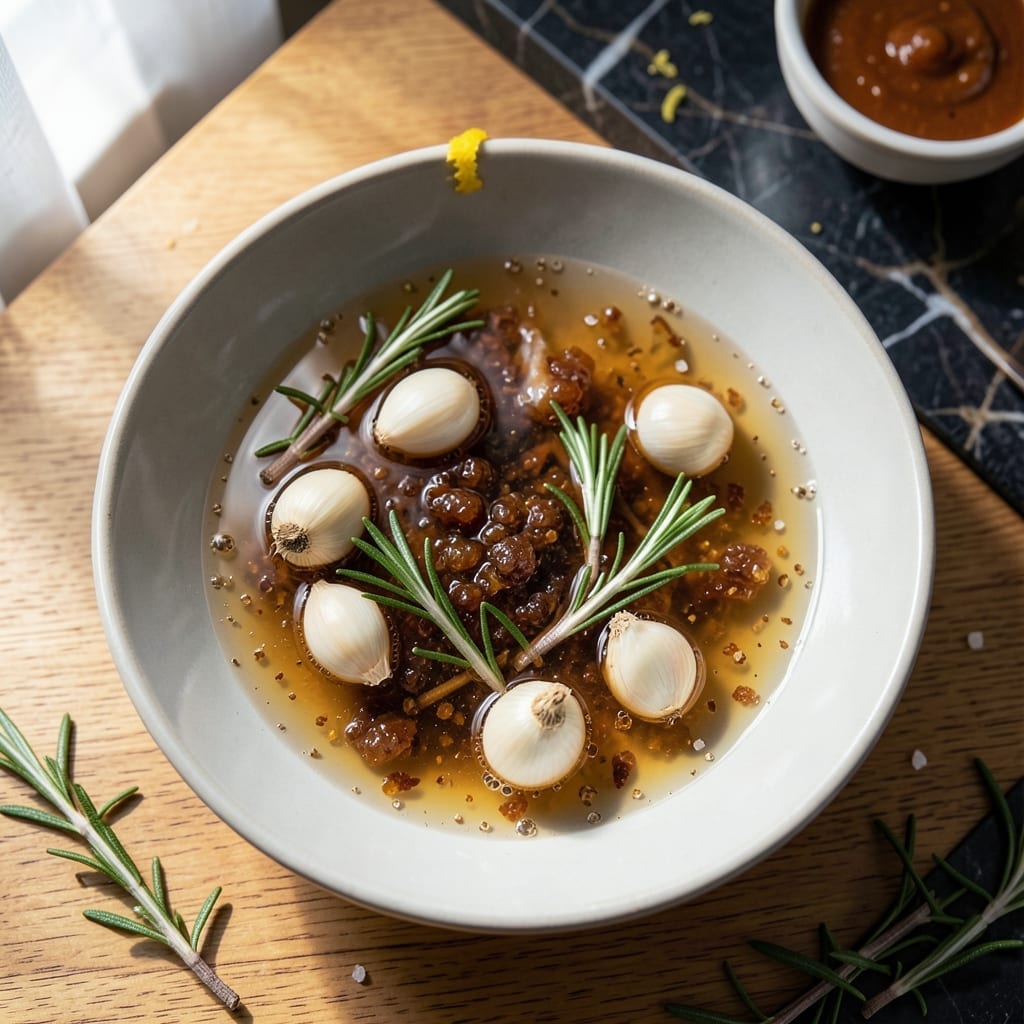
This brine recipe transforms ordinary chicken into juicy, flavor-packed perfection every time. The secret lies in the precise balance of salt, sugar, and aromatics that penetrate deep into the meat.
I developed this method after years of competition cooking, where consistency is everything. The brine works its magic in just 4-6 hours, ensuring your chicken stays moist through any cooking method—grilling, roasting, or frying.
What you get is meat that’s seasoned throughout, not just on the surface. The salt enhances natural flavors while the sugar promotes beautiful browning. Aromatics like garlic and herbs add complexity without overpowering.
The result is chicken that’s tender, flavorful, and impossible to dry out. This is the foundation for all my best poultry dishes.
Ingredients for Best Brine Recipe for Chicken
Ten simple elements create a brine that guarantees juicy, flavorful chicken every single time.
| Ingredient | Amount | Notes |
|---|---|---|
| Water 💧 | 4 cups | Cold, for brine base |
| Kosher Salt 🧂 | ½ cup | Diamond Crystal preferred |
| Granulated Sugar 🍚 | ¼ cup | Dissolves easily in brine |
| Brown Sugar 🟤 | ¼ cup | Adds depth and caramelization |
| Garlic Cloves 🧄 | 6 cloves | Smashed for maximum flavor |
| Fresh Rosemary 🌿 | 4 sprigs | Bruised to release oils |
| Fresh Thyme 🌿 | 4 sprigs | Stems included for infusion |
| Bay Leaves 🍃 | 2 whole | Dried, for earthy depth |
| Black Peppercorns 🌶️ | 1 tbsp | Lightly crushed for brine |
| Lemon Zest 🍋 | 1 tbsp | From 1 large lemon |
[recipe_ingredient_scaler]
The salt is non-negotiable here. Diamond Crystal kosher salt is my go-to—consistent texture, no additives, dissolves perfectly. I grab mine in the 5-pound box at Costco (cheaper than grocery stores and lasts forever). Sugar balance matters too: white for quick dissolving, brown for that molasses note. The water? Just make sure it’s cold enough to keep the chicken safe while brining.
Out of kosher salt? Table salt at half the amount works, but measure by weight for accuracy. No fresh herbs? Dried rosemary and thyme at one-third the quantity. Missing bay leaves? Skip them—the garlic and peppercorns carry enough flavor. The lemon zest brightens everything up, but a splash of lemon juice in a pinch does the trick too.
Brine keeps in the fridge for 24 hours before use—any longer and the aromatics get bitter. Discard after brining; never reuse (raw chicken bacteria risk). Prep the brine the night before, and you’ll have perfectly seasoned chicken ready for the next day’s cook.
Why You’ll Love This Recipe
- 5-Minute Mix: I just dump water, salts, sugars, and garlic in a pot—no chopping, no fuss.
- Sweet-Savory Depth: Brown sugar plus garlic turns everyday chicken into something crave-worthy.
- Meal Prep Hero: I brine a batch Sunday and roast or grill all week long.
- Stretch the Groceries: It turns a cheap chicken into a juicy centerpiece without extra cost.
Step-by-Step Instructions for Chicken Brine
Here’s the method I rely on for perfectly seasoned, juicy chicken every time.
Step 1: Dissolve the Salt and Sugars in Water
In a large pot or bowl, combine the 4 cups Water with 0.5 cup Kosher Salt, 0.25 cup Granulated Sugar, and 0.25 cup Brown Sugar. Stir vigorously until the salt and both sugars fully dissolve—this typically takes 2-3 minutes of consistent mixing.
I always use cold water to start, as it prevents the sugars from crystallizing prematurely. The granulated sugar dissolves first, followed by the brown sugar, which may take a bit longer due to its molasses content. You’ll know it’s ready when the liquid appears completely clear with no visible granules at the bottom.
Step 2: Infuse with Aromatics and Spices
Add the 6 cloves Garlic Cloves (smashed), 4 sprigs Fresh Rosemary (bruised), 4 sprigs Fresh Thyme, 2 whole Bay Leaves, 1 tbsp Black Peppercorns (lightly crushed), and 1 tbsp Lemon Zest to the brine solution. Stir to distribute the aromatics evenly.
Here’s the thing—the garlic should be smashed to release its oils, and the rosemary and thyme sprigs benefit from a gentle bruising with the flat side of your knife. The black peppercorns only need a light crushing to open them up. Let this mixture sit for 10 minutes to allow the flavors to begin mingling before adding the chicken.
Step 3: Submerge the Chicken Completely
Place your chicken pieces into the brine, ensuring they are fully submerged. For whole chickens, I use a brining bag or a large container with a lid. For smaller cuts like breasts or thighs, a deep bowl works well. If the chicken floats, weigh it down with a plate or a clean, heavy object.
This ensures every part of the meat absorbs the brine evenly. You’ll notice the chicken plumps up slightly as it absorbs the liquid—that’s the salt working its magic to break down muscle fibers and retain moisture. Cover and refrigerate for 4 to 12 hours, depending on the size of the pieces.
Step 4: Rinse and Pat Dry Before Cooking
Remove the chicken from the brine and give it a quick rinse under cold water. This removes any excess salt on the surface, which could otherwise make your dish too salty. Pat the chicken thoroughly dry with paper towels—this is crucial for achieving crispy skin if you’re roasting or grilling.
I always let the chicken rest on a wire rack in the refrigerator for 1 hour after brining and rinsing. This air-drying step enhances the skin’s ability to crisp up during cooking. The surface should feel dry to the touch, not damp, before it hits the heat.
Pro Tips For Making Best Brine Recipe For Chicken
- Dissolve the Salts: Heat half the water to a simmer, then add kosher salt, granulated sugar, and brown sugar—stir until fully dissolved before adding the rest of the cold water. I learned this the hard way after finding undissolved sugar clumps stuck to my chicken.
- Crush the Garlic: Lightly crush the garlic cloves with the side of your knife before adding them to the brine. It releases more flavor without turning the brine bitter, unlike minced garlic which can overpower the mix.
- Brine Overnight: Give the chicken at least 12 hours in the fridge—any less and the flavor won’t penetrate evenly. After rushing a few batches, I finally figured out patience pays off with juicier meat.
- Rinse After Soaking: Always rinse the chicken under cold water after brining and pat it dry. Sounds weird, but it works to remove excess salt on the surface while keeping the inside perfectly seasoned.
Best Sauces and Condiments for This Recipe
Herb-Infused Compound Butter
I whip up a batch of herb compound butter to slap on brined chicken right before serving. Mix ½ cup softened butter with 2 tbsp chopped fresh rosemary and 1 tbsp fresh thyme from my garden. It melts beautifully over hot chicken, creating an irresistible herb sauce. 🌿
Lemon-Garlic Aioli
This creamy aioli cuts through the richness perfectly. Combine 1 cup mayonnaise with 2 minced garlic cloves, 2 tbsp lemon juice, and 1 tsp lemon zest. I use Duke’s mayo for that Southern tang. It’s my go-to for sandwiches or drizzling over grilled chicken.
Spicy Honey Glaze
For a sweet-heat finish, simmer ¼ cup honey with 1 tbsp hot sauce (I prefer Texas Pete) and 1 tsp smoked paprika for 3-4 minutes. Brush it on during the last 5 minutes of cooking. The brine’s saltiness balances this glaze’s bold flavors beautifully. 🔥
Classic Pan Gravy
After roasting, use the drippings to make gravy. Sauté 2 tbsp flour in the pan, then whisk in 2 cups chicken broth. Simmer until thickened. The brine ensures your gravy has deep, layered flavor from the start.
I always strain mine through a fine-mesh sieve for that restaurant-quality smoothness.
Fresh Salsa Verde
This bright, herby sauce wakes up any brined chicken dish. Blend 1 cup parsley, ½ cup cilantro, 2 garlic cloves, ¼ cup olive oil, and 2 tbsp capers. It’s my secret weapon at local BBQ competitions.
Nutrition Facts
Frequently Asked Questions
How long should I brine chicken?
For bone-in pieces, brine for 8-12 hours. Boneless cuts need just 4-6 hours.
Can I reuse the brine?
Never reuse brine after raw chicken contact. Bacteria risk makes it unsafe, even if boiled.
Will brining make my chicken too salty?
No, if you use the correct ratio. This recipe’s balance ensures seasoning, not saltiness.
Do I need to refrigerate while brining?
Yes! Always keep chicken below 40°F during brining to prevent spoilage.

Trained in classic French technique but raised on slow-cooked ribs and spicy rubs, she blends culinary skill with smoke and soul.
- Recipe for Boneless Pork Chops in Cast Iron Skillet: Sear and Baste to Juicy Perfection - October 3, 2026
- Recipe for Boneless Cross Rib Roast: Slow-Roasted Beef with Herb Crust - October 3, 2026
- Hamburgers in Sauce Recipe Crock Pot: Slow-Cooked Savory Delight - October 3, 2026