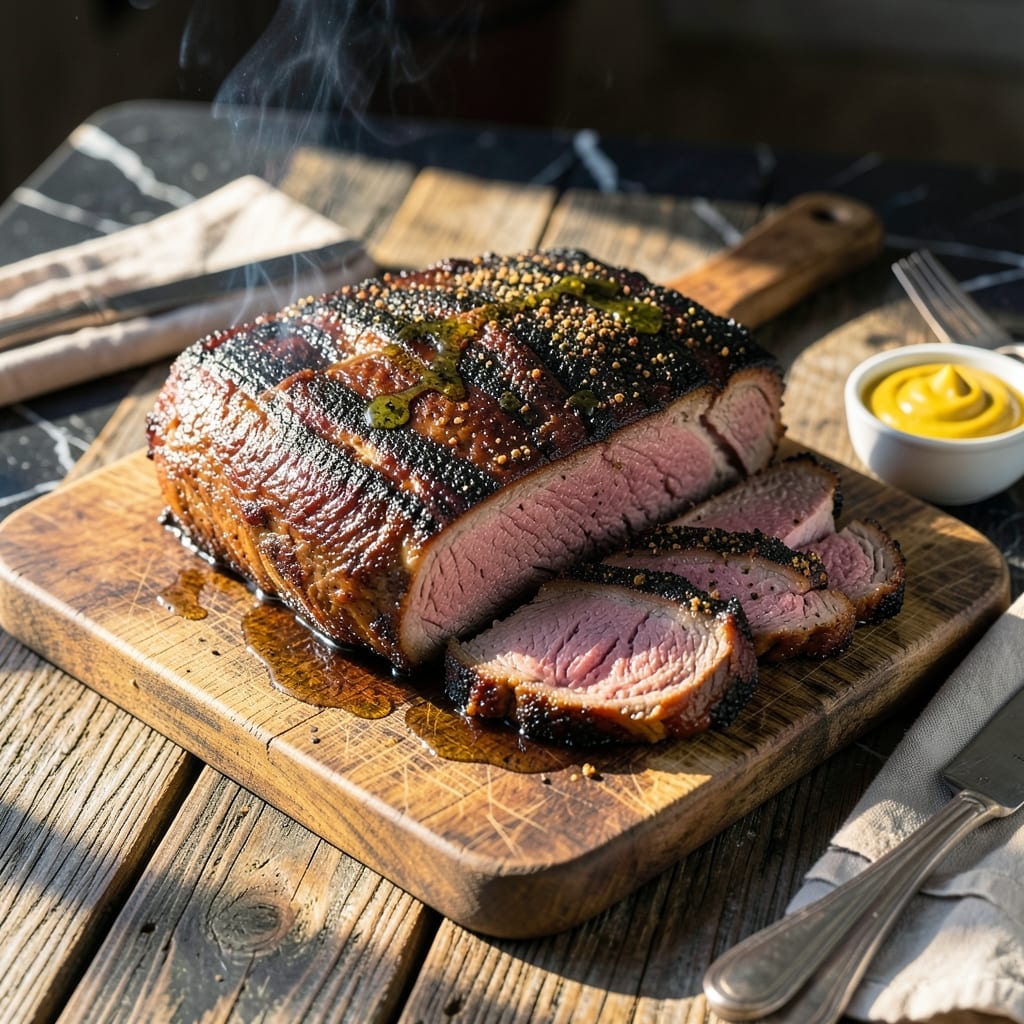
Mastering brisket on the grill requires patience and respect for Texas tradition. Oak smoke and slow heat transform tough cuts into tender, flavor-packed perfection.
This method honors classic technique while delivering best results. The key is maintaining consistent low heat and letting the smoke work its magic over time.
Ingredients for Best Brisket on the Grill
Texas tradition starts with quality beef and a simple, bold rub. Nothing else compares.
| Ingredient | Amount | Notes |
|---|---|---|
| Beef Brisket 🥩 | 5 lb | Full packer cut preferred |
| Kosher Salt 🧂 | ½ cup | Diamond Crystal preferred for texture |
| Coarse Black Pepper 🌶️ | ¼ cup | Freshly ground for maximum flavor |
| Garlic Powder 🧄 | 2 tbsp | Not garlic salt |
| Onion Powder 🧅 | 2 tbsp | Granulated for even distribution |
| Smoked Paprika 🌶️ | 1 tbsp | Adds depth to bark formation |
| Brown Sugar 🧈 | ¼ cup | Light or dark, packed |
| Oak Wood Chunks 🪵 | 4 pieces | For authentic Texas smoke profile |
| Yellow Mustard 🟡 | ¼ cup | Binder for dry rub adhesion |
| Beef Tallow 🫒 | ½ cup | For basting during cook |
| Apple Cider Vinegar 🍏 | ½ cup | For spritzing to maintain moisture |
| Beef Broth 🥘 | 2 cups | Low-sodium preferred for control |
[recipe_ingredient_scaler]
The brisket itself is non-negotiable—full packer cut (point + flat still attached) gives you the best texture and fat cap for self-basting. Source from a reputable butcher like Snake River Farms or Creekstone Farms for premium quality. Look for USDA Prime grade with good marbling throughout. The fat cap should be at least 1/4-inch thick. Avoid pre-trimmed briskets; you want to control the trimming yourself for optimal results.
Out of oak? Hickory or pecan wood work as substitutes, though oak delivers that classic Texas profile. No beef tallow? Melted unsalted butter can stand in for basting. For the broth, water with a beef bouillon cube works in a pinch. The brown sugar can be swapped with raw turbinado for a slightly more caramelized bark. If you must use table salt, reduce the amount by half—it’s much denser than kosher.
Store the brisket in the fridge uncovered for 12-24 hours after seasoning to let the rub penetrate. Cooked brisket rests well wrapped in a cooler for 4-6 hours (the Texas crutch). Leftovers keep in the fridge for 5 days or freeze for 3 months. Reheat gently in the oven with a splash of broth to revive.
Why You’ll Love This Recipe
- Set It and Forget: I just season the brisket, let the grill do the work, and come back to fall-apart tender meat.
- Smoky, Spiced Crust: That mix of coarse pepper, garlic, and onion powder forms a crust so good I sneak bites before serving.
- Feeds a Hungry Group: Honestly, one brisket covers my whole family plus leftovers for tacos the next day.
- Budget Stretcher: A single brisket gives me multiple meals—way cheaper than takeout for the same crowd.
Step-by-Step Instructions for Oak-Smoked Brisket on the Grill
Master the technique that delivers competition-level bark and smoke penetration with every cook.
Step 1: Prepare the Brisket with Texas-Style Rub
Begin by coating the 5 lb Beef Brisket with 0.25 cup Yellow Mustard—this creates the perfect adhesive for your rub without adding flavor. I apply it thinly but thoroughly, ensuring every nook and cranny is covered.
In a bowl, combine the 0.5 cup Kosher Salt, 0.25 cup Coarse Black Pepper, 2 tbsp Garlic Powder, 2 tbsp Onion Powder, 1 tbsp Smoked Paprika, and 0.25 cup Brown Sugar. Apply this rub generously to all surfaces, pressing firmly to ensure it adheres. The sugar will caramelize during the cook, creating that signature bark. Let it rest at room temperature for 1 hour.
Step 2: Set Up Your Grill for Indirect Heat and Smoke
Configure your grill for indirect cooking at 225-250°F. On a charcoal grill, bank your coals to one side and place a drip pan filled with 2 cups Beef Broth on the opposite side. This maintains moisture in the cooking chamber.
Add the 4 pieces Oak Wood Chunks directly onto the hot coals just before placing the brisket on the grill. You want clean, thin blue smoke—not thick white smoke, which can impart bitter flavors. Position the brisket fat-side up on the grill grate over the drip pan, as far from the heat source as possible.
Step 3: Smoke and Baste for Maximum Flavor
Close the lid and maintain a consistent temperature. Every 45-60 minutes, spritz the brisket with a mixture of 0.5 cup Apple Cider Vinegar and 0.5 cup Beef Broth to keep the surface moist and promote bark development.
After about 4-5 hours, when the internal temperature reaches 165-170°F, begin basting with 0.5 cup Beef Tallow every 30 minutes. This adds rich flavor and helps the bark set. The brisket is ready for the next phase when it develops a dark mahogany color and the bark feels firm to the touch.
Step 4: Wrap and Finish the Cook
Once the brisket hits an internal temperature of 180°F, remove it from the grill and wrap it tightly in butcher paper. This Texas crutch method helps power through the stall while preserving the bark’s texture.
Return the wrapped brisket to the grill and continue cooking until the internal temperature reaches 200-203°F and a probe slides in like butter. This typically takes another 3-4 hours. Avoid the temptation to rush this stage—patience ensures the connective tissue renders into gelatin, giving you that perfect pull-apart tenderness.
Step 5: Rest and Slice for Optimal Tenderness
Remove the brisket from the grill and let it rest, still wrapped, in a warm cooler or oven set to 150°F for at least 1 hour (I recommend 2 hours for best results). This resting period allows the juices to redistribute and the muscle fibers to relax.
Unwrap the brisket and slice against the grain into ¼-inch thick portions. The flat and point have different grain directions, so rotate your cutting board as needed. Serve immediately with extra juices from the wrap for a final touch of flavor.
Pro Tips For Making Best Brisket On The Grill
- Season Overnight: I learned this the hard way—rub the brisket with kosher salt, coarse black pepper, garlic powder, and onion powder the night before. The extra time lets the spices penetrate deep and form that perfect bark.
- Keep It Low: After burning my first brisket, I finally figured out that 225-250°F is the sweet spot. Any hotter and the outside chars before the inside gets tender.
- Skip the Poking: Resist the urge to prod or flip the brisket too often—every time you do, you lose precious juices. Let it cook undisturbed for at least 2-3 hours before checking.
- Rest Under Foil: Sounds weird, but it works: pull the brisket off the grill, wrap it in foil, and let it rest for a solid hour. The meat reabsorbs the juices, making it way more tender when you slice.
Wine and Beer Pairings for This Dish
Bold Red Wines
A full-bodied Texas Tempranillo brings smoky notes that echo the oak in your brisket. I love William Chris Vineyards for its peppery finish that cuts through the fat. The tannins soften against the rich beef, creating a perfect balance. 🍷
Classic Cabernet
California Cabernet Sauvignon from Napa Valley offers bold fruit flavors that stand up to the deep, smoky profile of grilled brisket. Look for bottles with high tannin content like Caymus or Opus One for the best pairing.
Craft Beer Options
A Texas-style porter with coffee and chocolate notes complements the caramelized bark beautifully. Try Saint Arnold Divine Reserve or Real Ale Coffee Porter for local authenticity. The roasted malt flavors enhance the char from the grill.
Smoked Beer Pairing
For something unique, Rauchbier (German smoked beer) mirrors the oak smoke in your brisket. Aecht Schlenkerla from Bamberg offers the perfect smoky depth without overpowering the meat. Serve chilled for contrast. ⚡
Light Beer Alternative
If you prefer lighter options, a crisp Mexican lager like Modelo Negra cleanses your palate between bites. The subtle sweetness balances the heat from any spicy rub you might use.
Non-Alcoholic Choice
For a non-alcoholic pairing, sparkling black cherry soda offers the acidity and fruit notes that mimic wine. I enjoy Boyertown Black Cherry for its bold flavor that stands up to the brisket.
Nutrition Facts
Frequently Asked Questions
How long does it take to grill brisket?
Expect 8-10 hours total at 225-250°F for a 5 lb cut. The first 4-5 hours are for smoking, then 3-4 hours wrapped to finish. Patience is key for tender results.
Can I use a gas grill instead of charcoal?
Yes, but add wood chips in a smoker box for authentic flavor. Maintain indirect heat at 225-250°F and avoid direct flames. Gas grills work but may need extra smoke enhancement.
Why did my brisket turn out tough?
Likely undercooked or rushed through the stall. It must reach 200-203°F internally for collagen to break down. Also, slicing too soon skips the crucial 1-2 hour rest.
Should I trim the fat cap before cooking?
Leave at least ¼-inch fat cap intact—it self-bastes the meat. Trim only excessive hard fat. The fat renders during cooking, adding moisture and flavor.

Trained in classic French technique but raised on slow-cooked ribs and spicy rubs, she blends culinary skill with smoke and soul.
- Recipe for Boneless Pork Chops in Cast Iron Skillet: Sear and Baste to Juicy Perfection - October 3, 2026
- Recipe for Boneless Cross Rib Roast: Slow-Roasted Beef with Herb Crust - October 3, 2026
- Hamburgers in Sauce Recipe Crock Pot: Slow-Cooked Savory Delight - October 3, 2026