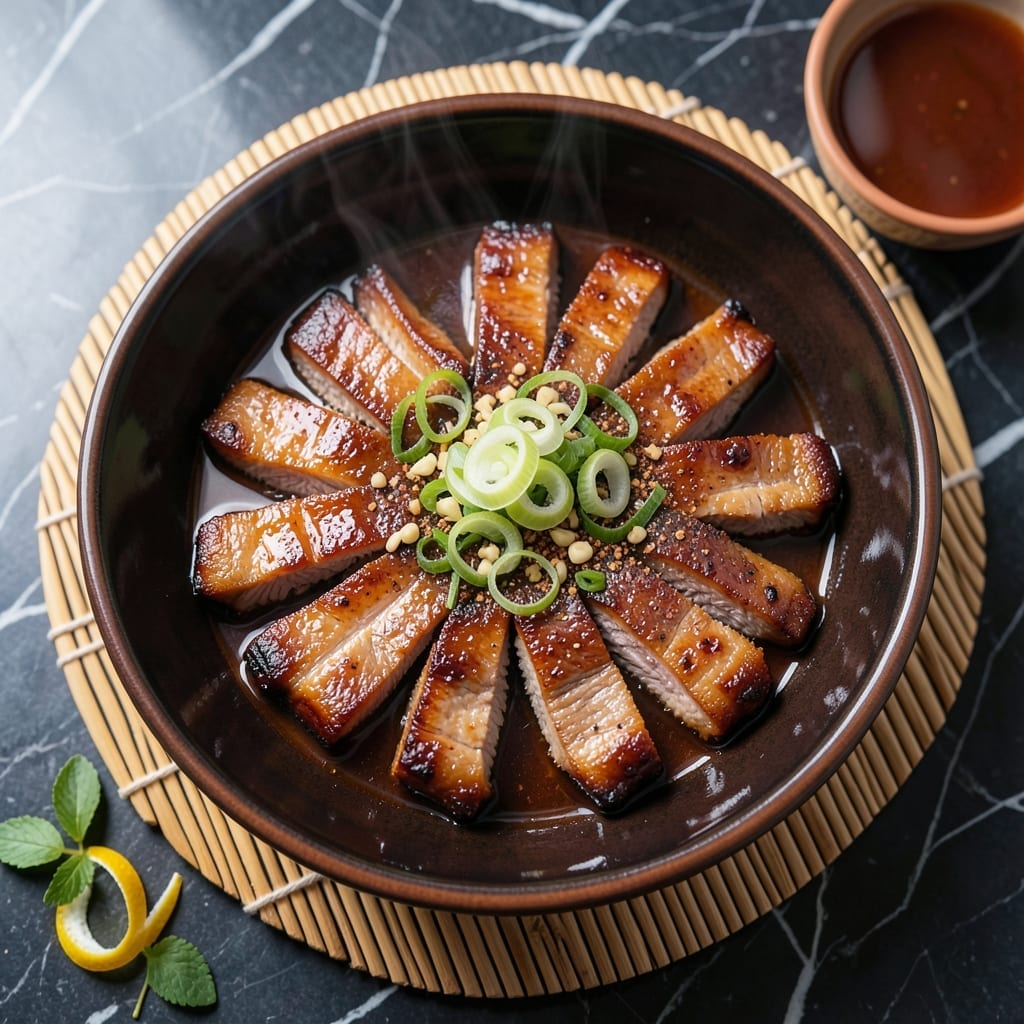
This recipe delivers the perfect balance of sweet and savory that defines authentic char siu. I developed this method after studying traditional Cantonese techniques.
The honey glaze caramelizes beautifully, creating a sticky, glossy exterior while keeping the pork tender and juicy inside. It’s a dish that impresses every time.
Ingredients for Chinese Barbecue Roast Pork
Authentic Cantonese flavors start with these carefully selected ingredients for perfect char siu every time.
| Ingredient | Amount | Notes |
|---|---|---|
| Pork Shoulder 🥩 | 2 lb | Boneless, cut into 2-inch strips |
| Honey 🍯 | ½ cup | Pure, unprocessed for best flavor |
| Soy Sauce 🥫 | ⅓ cup | Low-sodium preferred for balance |
| Hoisin Sauce 🥫 | 3 tbsp | Thick, aromatic Chinese sauce |
| Brown Sugar 🍚 | ¼ cup | Light or dark, packed |
| Chinese Five-Spice Powder 🌶️ | 1 tsp | Essential for authentic flavor |
| Garlic Cloves 🧄 | 4 cloves | Minced for maximum aroma |
| Fresh Ginger 🌿 | 1 tbsp | Finely grated, peeled |
| Shaoxing Wine 🍶 | 2 tbsp | Chinese rice wine, dry variety |
| Red Fermented Bean Curd 🧀 | 1 piece | Mashed, optional but traditional |
| Sesame Oil 🫒 | 1 tsp | Toasted for nutty aroma |
| Salt 🧂 | ½ tsp | Kosher or sea salt |
| Red Food Coloring 🎨 | ¼ tsp | Optional for traditional color |
[recipe_ingredient_scaler]
The pork is paramount here. Pork shoulder (also called pork butt) delivers the ideal fat-to-meat ratio for tender, juicy results. Asian markets often carry pre-cut strips, but any butcher can prepare it. Look for pieces with visible marbling—this ensures moisture during roasting. Organic or pasture-raised pork enhances flavor, though standard cuts work well too.
No Shaoxing wine? Dry sherry is the closest substitute, though a splash of mirin with extra rice vinegar can mimic the depth. Missing red fermented bean curd? Miso paste at half the amount adds similar umami. For the glaze, agave or maple syrup can replace honey in a pinch, though the flavor profile will shift slightly. Always use low-sodium soy sauce to control seasoning.
The roast pork keeps 4-5 days refrigerated in an airtight container. For longer storage, freeze sliced portions for up to 3 months. Reheat gently to preserve the sticky glaze. The marinade can be prepped a day ahead—flavors meld and deepen overnight (worth the extra minute).
Why You’ll Love This Recipe
- Minimal Hands-On Time: I just mix the honey, soy, hoisin, and brown sugar, slather it on the pork shoulder, and let the oven do the rest.
- Sticky Sweet Perfection: That glossy glaze from the honey and brown sugar caramelizing? I catch myself sneaking bites straight from the pan.
- Feeds a Hungry Crowd: Between us, this pork shoulder stretches far—great for Sunday dinner with enough left for fried rice the next day.
- Budget-Friendly Protein: Pork shoulder is cheap, and a little goes a long way. Honestly, it’s my go-to when I need to impress without breaking the bank.
Step-by-Step Instructions for Honey-Glazed Char Siu
Master these steps for authentic, restaurant-quality results every time.
Step 1: Prepare the Pork and Marinade Base
Begin by patting the 2 lb Pork Shoulder strips dry with paper towels. This removes excess moisture, allowing the marinade to adhere properly. Place the pork in a large bowl or resealable plastic bag.
In a separate bowl, combine the 0.5 cup Honey, 0.33 cup Soy Sauce, 3 tbsp Hoisin Sauce, and 0.25 cup Brown Sugar. Whisk vigorously until the mixture is smooth and the brown sugar fully dissolves. The consistency should be thick but pourable.
Step 2: Build the Full Marinade with Aromatics
To the honey-soy mixture, add the 1 tsp Chinese Five-Spice Powder, 4 cloves Garlic Cloves (minced), 1 tbsp Fresh Ginger (grated), 2 tbsp Shaoxing Wine, and 1 piece Red Fermented Bean Curd (mashed). Stir well to incorporate all the aromatic elements evenly.
Next, whisk in the 1 tsp Sesame Oil, 0.5 tsp Salt, and 0.25 tsp Red Food Coloring (if using). The food coloring provides the traditional vibrant red hue characteristic of authentic char siu, while the five-spice powder delivers the signature warm, complex flavor.
Step 3: Marinate and Prepare for Roasting
Pour the marinade over the pork strips, ensuring each piece is thoroughly coated. Massage the marinade into the meat for 1-2 minutes to maximize flavor penetration. Seal the bowl or bag and refrigerate for at least 4 hours, but preferably overnight. The longer the pork marinates, the deeper the flavor development.
When ready to cook, remove the pork from the refrigerator and let it sit at room temperature for 30 minutes. This ensures even cooking throughout. Preheat your oven to 375°F and line a baking sheet with parchment paper or aluminum foil for easy cleanup.
Step 4: Roast and Glaze to Perfection
Arrange the pork strips on the prepared baking sheet, leaving a little space between each piece to allow for even browning. Roast on the middle rack for 25 minutes, then flip each piece and roast for another 20-25 minutes until the edges begin to caramelize.
For the final touch, brush the pork generously with the remaining marinade from the bowl. Increase the oven temperature to 425°F and roast for an additional 5-8 minutes until the pork is deeply glossy and the internal temperature reaches 195°F. The edges should be slightly charred, creating that coveted sticky, sweet crust.
Step 5: Rest and Slice for Serving
Transfer the roasted pork to a cutting board and let it rest for 10 minutes. This resting period allows the juices to redistribute, ensuring moist, tender meat. Resist the urge to cut immediately—slicing too soon will cause the juices to escape, leaving the pork dry.
Once rested, slice the pork against the grain into ¼-inch thick pieces. The meat should be tender with a beautiful mahogany glaze. Serve warm with steamed rice and your favorite stir-fried vegetables for a complete, authentic meal.
Pro Tips For Making Chinese Barbecue Roast Pork
- Parboil First: I learned this the hard way—boil the pork shoulder for 10-15 minutes before roasting to remove impurities and guarantee a cleaner, more tender result.
- Score the Skin: Use a sharp knife to cut 1-inch slits in the skin before marinating so the honey and hoisin sauce penetrate deep into the meat.
- Skip the Overcrowding: After burning three batches, I finally figured out that leaving space between pork pieces on the rack ensures even caramelization instead of steamed meat.
- Double Glaze: Sounds weird, but it works: brush the pork with an extra layer of honey-brown sugar mix halfway through roasting for that sticky, glossy finish.
Regional Styles of This Recipe
Cantonese Classic
The traditional Cantonese version focuses on honey and hoisin as primary sweeteners, with five-spice powder providing the signature warm aroma. I use red fermented bean curd for depth—this is the gold standard in Guangzhou. The pork is often skewered and roasted over charcoal for smoky complexity. 🗺️
Hong Kong Style
In Hong Kong, char siu often includes maltose syrup in addition to honey for extra shine. The marinade might feature rose wine instead of Shaoxing, and the pork is typically cut into thinner strips. This version tends to be sweeter and more tender.
Malaysian Adaptation
Malaysian Chinese communities add sambal oelek or chili paste to the marinade for heat. I’ve seen versions with lemongrass and ketchup—a nod to local tastes. The result is a spicy-sweet fusion that’s uniquely Southeast Asian.
American Chinese Take
Many American Chinese restaurants use food coloring to achieve that bright red hue and may substitute ketchup for hoisin. The pork is often pre-cooked in a marinade, then finished under a broiler. It’s faster but lacks the depth of traditional methods.
Taiwanese Twist
In Taiwan, some chefs add pickled garlic or fermented tofu to the marinade for tang. The pork might be glazed with a mix of honey and oyster sauce for extra umami. I love how this version balances sweetness with a subtle funk. ✨
Sichuan Variation
Sichuan-style char siu incorporates doubanjiang (spicy bean paste) and Sichuan peppercorns for numbing heat. The result is a bold, fiery version that’s a far cry from the Cantonese original. This one’s for the adventurous eaters!
Nutrition Facts
Frequently Asked Questions
What cut of pork works best for this?
Use pork shoulder or pork butt for the best results. These cuts have enough fat to stay juicy during roasting. Avoid lean cuts like tenderloin as they can dry out.
Can I use a different sweetener?
Yes! Swap honey for maple syrup or agave, though the flavor will vary slightly. For authenticity, stick with honey or add maltose syrup for extra shine.
How do I get the signature red color?
Traditionally, red fermented bean curd creates the hue. For convenience, use red food coloring in the marinade. Skip it if you prefer a natural look—flavor remains the same.
Can I grill this instead of roasting?
Grill over indirect heat at 350°F for 30-40 minutes, turning occasionally. Finish with a char over direct heat for the sticky crust.

Trained in classic French technique but raised on slow-cooked ribs and spicy rubs, she blends culinary skill with smoke and soul.
- Recipe for Boneless Pork Chops in Cast Iron Skillet: Sear and Baste to Juicy Perfection - October 3, 2026
- Recipe for Boneless Cross Rib Roast: Slow-Roasted Beef with Herb Crust - October 3, 2026
- Hamburgers in Sauce Recipe Crock Pot: Slow-Cooked Savory Delight - October 3, 2026