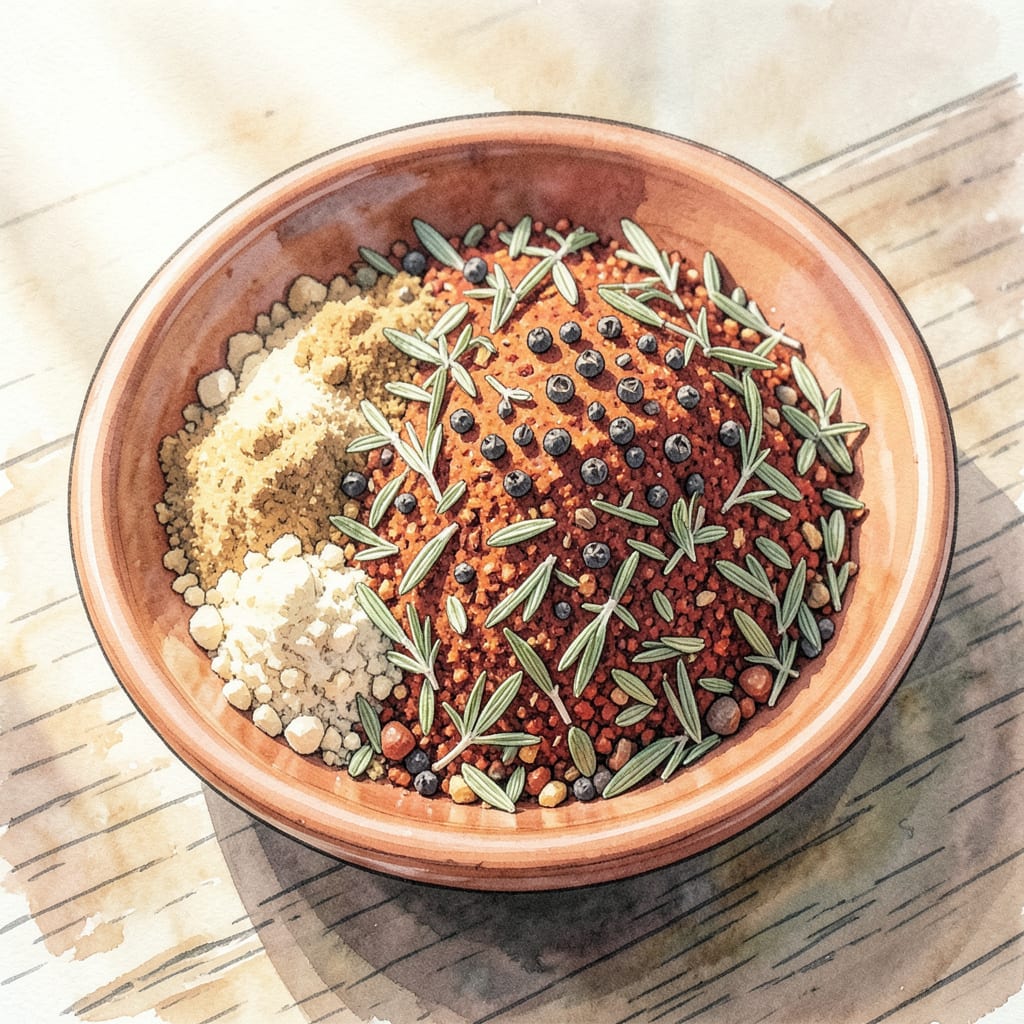
Creating the perfect Cajun seasoning blend is about balancing heat, depth, and aromatic complexity. This homemade version delivers restaurant-quality flavor without the additives found in store-bought mixes. I developed this recipe after years of experimenting with ratios, ensuring each spice plays its role—smoky paprika for warmth, garlic powder for savory depth, and just enough cayenne for controlled heat.
What sets this blend apart is its versatility. Use it as a dry rub for grilled chicken, a seasoning for blackened fish, or a bold sprinkle on roasted vegetables. Store in an airtight container for up to 6 months, and adjust the cayenne to match your heat preference. This is the foundation for authentic Louisiana flavor, right in your kitchen.
Ingredients for Best Cajun Seasoning
Nine spices, one perfect balance—this blend delivers that authentic Louisiana kick you’ve been missing.
| Ingredient | Amount | Notes |
|---|---|---|
| Smoked Paprika 🌶️ | 2 ½ tbsp | Sweet or hot variety works |
| Garlic Powder 🧄 | 2 tbsp | Freshly ground for potency |
| Onion Powder 🧅 | 2 tbsp | Granulated for even distribution |
| Dried Thyme 🌿 | 1 ½ tbsp | Rub between palms to release oils |
| Dried Oregano 🍃 | 1 ½ tbsp | Mexican oregano preferred |
| Ground Black Pepper 🌶️ | 1 tbsp | Freshly cracked for best flavor |
| Ground White Pepper 🌶️ | 1 tsp | Adds subtle earthy heat |
| Cayenne Pepper 🔥 | 1 tsp | Adjust for heat preference |
| Mustard Powder 🟡 | 1 tsp | Colman's brand recommended |
| Ground Coriander 🌿 | ½ tsp | Freshly ground if possible |
[recipe_ingredient_scaler]
The paprika is your foundation here. Smoked Spanish paprika (like La Chinata) gives that signature depth, but any good-quality smoked variety works. I get mine from Penzeys or the bulk section at Whole Foods—just make sure it’s vibrant red, not dull brown. The thyme and oregano should be dried but still aromatic; if they smell like dust, they’re too old. For the peppers, freshly ground black and white make a difference—pre-ground loses potency fast.
Out of white pepper? Double the black pepper (though you’ll lose some complexity). No mustard powder? Dry mustard from the spice aisle works, but avoid pre-made mustard—it’s too wet. The cayenne is flexible: start with ½ tsp if you’re heat-sensitive, or bump to 2 tsp for serious spice. I’ve even used gochugaru (Korean chili flakes) in a pinch—adds fruity heat. Just avoid generic “chili powder” blends; they’re already mixed with other spices.
This stays potent for 6 months in an airtight container (glass is best—plastic absorbs odors). Keep it in a cool, dark cabinet, not above the stove. If the color fades or aroma dulls, it’s time to make a fresh batch. Pro tip: label with the date—you’ll forget when you made it. Doubles as a killer gift; just tie a ribbon around the jar and include a handwritten note with usage ideas.
Step-by-Step Instructions for Homemade Cajun Seasoning
Here’s the foolproof method I’ve perfected for creating this vibrant, aromatic blend with maximum flavor impact.
Step 1: Gather and Prepare Your Spices
Start by assembling all your spices in one place. I like to use small prep bowls for each ingredient – this makes the blending process much smoother. Pay special attention to the dried thyme and dried oregano. Rub these between your palms before adding them to release their essential oils, which significantly enhances their aroma.
For the ground black pepper, I recommend using freshly cracked if possible. The difference in flavor is remarkable compared to pre-ground pepper. If you’re sensitive to heat, you might consider reducing the cayenne pepper slightly, but I find the 1 tsp gives just the right kick without overpowering the blend.
Step 2: Combine the Base Ingredients
In a medium mixing bowl, add the 2.5 tbsp smoked paprika, 2 tbsp garlic powder, and 2 tbsp onion powder. These three ingredients form the foundation of your Cajun blend, providing that characteristic deep red color and robust flavor base. Use a whisk to break up any clumps in the powders – this ensures even distribution throughout your final mixture.
The smoked paprika is particularly important here. Whether you use sweet or hot variety, it brings that essential smoky depth that defines authentic Cajun seasoning. I prefer to use a wire whisk rather than a spoon for this step as it helps aerate the mixture and prevents clumping.
Step 3: Incorporate the Herbs and Peppers
Now add the 1.5 tbsp dried thyme, 1.5 tbsp dried oregano, 1 tbsp ground black pepper, and 1 tsp ground white pepper. The white pepper adds a subtle earthiness that complements the black pepper beautifully. At this stage, you’ll notice the color deepen and the aroma become more complex as the herbs mingle with the base spices.
Switch to a silicone spatula for this step. The flexible edge helps scrape the bowl clean and ensures all the herbs get fully incorporated. I find that folding the mixture rather than stirring gives better results, as it prevents the lighter herbs from floating to the top.
Step 4: Add the Heat and Finishing Touches
For the final layer of flavor, add the 1 tsp cayenne pepper, 1 tsp mustard powder, and 0.5 tsp ground coriander. The mustard powder might seem unusual, but it adds a subtle tang that balances the heat from the cayenne. If you’re using freshly ground coriander, you’ll notice an immediate citrusy aroma that brightens the entire blend.
At this point, the mixture should be a rich, reddish-brown color with visible specks of herbs throughout. Give it one final thorough mixing, making sure to scrape the bottom of the bowl where the heavier spices tend to settle. The texture should be fine and uniform, with no visible clumps.
Step 5: Store for Maximum Freshness
Transfer your completed Cajun seasoning to an airtight container. I prefer glass jars with tight-fitting lids as they best preserve the volatile oils in the spices. Store in a cool, dark place away from direct sunlight. The blend will keep for up to 6 months, though I find it’s at its peak flavor within the first 3 months.
Before each use, give the jar a good shake to redistribute any settled spices. This ensures you get the perfect balance of flavors every time. The aroma should be immediately noticeable when you open the container – a complex mix of smoky, herbal, and slightly spicy notes that promises bold flavor for whatever you’re seasoning.
Wine and Beer Pairings for This best cajun seasoning
Bold Red Wines
When pairing with dishes seasoned with this blend, I reach for Zinfandel from California’s Dry Creek Valley. The wine’s jammy fruit and peppery notes mirror the seasoning’s smoky-sweet complexity. Look for bottles like Ravenswood Old Vine—its boldness stands up to the cayenne’s heat without overpowering. 🍷
A Syrah from the Rhône Valley works beautifully too, especially with grilled meats using this rub. The wine’s dark fruit and earthy undertones complement the smoked paprika and thyme. I love pairing it with blackened steak—each bite and sip enhances the other.
Crisp White Wines
For seafood dishes with this seasoning, Viognier is my unexpected favorite. Its stone fruit aromas and subtle spice notes balance the heat while highlighting the garlic and onion flavors. Try a bottle from Yalumba in Australia—it’s rich enough to handle the bold seasoning.
If you prefer something lighter, Dry Riesling from Washington State offers crisp acidity that cuts through the richness. The slight sweetness in Chateau Ste. Michelle Riesling creates a perfect contrast with the spicy notes in your Cajun-rubbed shrimp or fish.
Craft Beer Pairings
An American Amber Ale with caramel malt backbone stands up beautifully to this seasoning’s complexity. I love Fat Tire Amber Ale—its toasty notes complement the smoked paprika while the moderate hops balance the heat. The beer’s malty sweetness makes it ideal for Cajun-spiced burgers or ribs. 🍺
For something darker, try a Porter with coffee and chocolate undertones. Deschutes Black Butte Porter is my go-to—the roasted malt flavors echo the smokiness in the seasoning while the creamy texture soothes the palate between spicy bites.
Nutrition Facts

Trained in classic French technique but raised on slow-cooked ribs and spicy rubs, she blends culinary skill with smoke and soul.
- Recipe for Boneless Pork Chops in Cast Iron Skillet: Sear and Baste to Juicy Perfection - October 3, 2026
- Recipe for Boneless Cross Rib Roast: Slow-Roasted Beef with Herb Crust - October 3, 2026
- Hamburgers in Sauce Recipe Crock Pot: Slow-Cooked Savory Delight - October 3, 2026