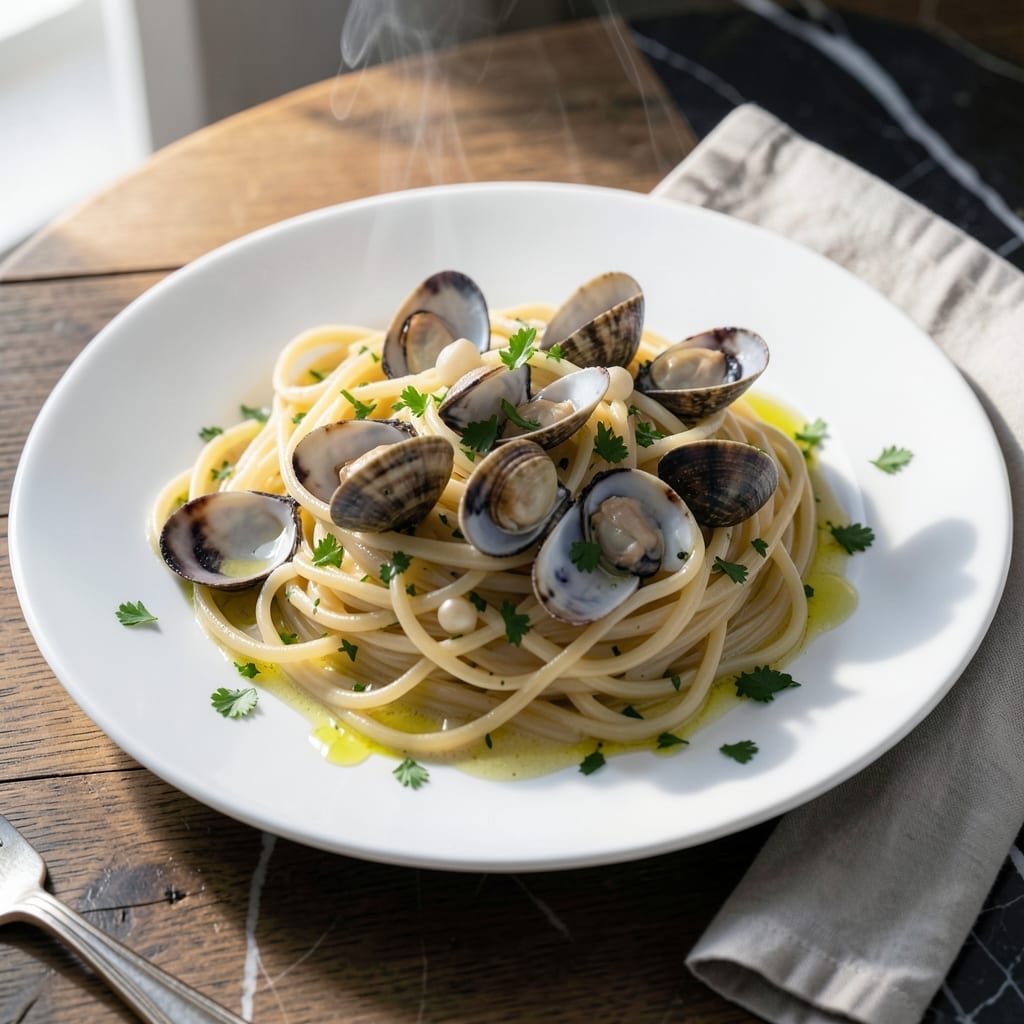
This recipe captures the coastal essence of Italy with briny clams and garlic white wine sauce. I developed this method after years of perfecting the balance between sweetness and salt.
The key is cooking the linguine in the same pot as the clams, allowing the pasta to absorb all the flavorful broth. It’s a foolproof technique that delivers restaurant-quality results every time.
Ingredients for Best Linguine with Clams
Bronze-cut pasta meets briny clams in a garlic white wine sauce that tastes like coastal Italy.
| Ingredient | Amount | Notes |
|---|---|---|
| Linguine Pasta 🍝 | 12 oz | Dried, high-quality bronze-cut preferred |
| Fresh Littleneck Clams 🦪 | 2 lb | Scrubbed, debearded if necessary |
| Extra-Virgin Olive Oil 🫒 | ¼ cup | Cold-pressed, fruity variety |
| Garlic Cloves 🧄 | 6 cloves | Finely minced for even distribution |
| Dry White Wine 🍷 | 1 cup | Crisp, unoaked variety like Pinot Grigio |
| Fresh Parsley 🌿 | ½ cup | Flat-leaf, finely chopped for garnish |
| Red Pepper Flakes 🌶️ | ½ tsp | Adjust for desired heat level |
| Lemon 🍋 | 1 whole | Zested and juiced for brightness |
| Unsalted Butter 🧈 | 4 tbsp | For enriching the sauce |
| Kosher Salt 🧂 | 1 tsp | Diamond Crystal preferred for seasoning |
| Freshly Ground Black Pepper 🌶️ | ½ tsp | Coarse grind for texture |
| Clam Juice 💧 | ½ cup | Optional, for extra briny depth |
| Shallots 🧅 | 2 whole | Finely diced for aromatic base |
[recipe_ingredient_scaler]
The clams are non-negotiable here. Littleneck or Manila are ideal—sweet, tender, and briny. Whole Foods or a reputable fishmonger will have the freshest selection. Look for clams that are tightly closed (or close when tapped) and smell like the ocean, nothing fishy. The pasta matters too: De Cecco or Barilla bronze-cut holds up best to the sauce and has the right texture.
No white wine? Dry vermouth is the closest substitute. Short on clams? Mussels work at a 1:1 ratio. If you can’t find fresh parsley, cilantro adds a different but pleasant note. The butter can be omitted for a lighter sauce, but it adds a richness that balances the acidity. Do not skip the lemon zest—it brightens the entire dish.
Store clams in the fridge covered with a damp towel, but cook them the same day. Leftover linguine keeps 2-3 days in the fridge, though the clams will toughen. Reheat gently with a splash of water or wine. Never refreeze cooked clams.
Why You’ll Love This Recipe
- One-Pot Magic: I love that I only need a single pan for this—linguine cooks right in the clam broth with garlic and wine.
- Briny Sweetness: The fresh littleneck clams release this incredible oceanic flavor that soaks into every strand of pasta.
- Weeknight Hero: Honestly, it’s fancy enough for date night but simple enough for a Tuesday with just 20 minutes of active time.
- Leftovers? Even Better: Between us, the flavors deepen overnight, and it reheats beautifully for lunch the next day.
Step-by-Step Instructions for Linguine With Clams
Master this technique for restaurant-quality results with perfectly briny clams and silky pasta.
Step 1: Prepare and Purge the Clams
Rinse the 2 lb Fresh Littleneck Clams under cold water to remove any grit. Scrub the shells with a brush, paying attention to the hinges where sand tends to collect. Discard any clams that are open and don’t close when tapped—they’re not viable.
Place the cleaned clams in a bowl of cold water with a handful of kosher salt for 20 minutes to purge any remaining sand. Repeat this process if the water appears cloudy after the initial purge. This ensures your final dish has no unwanted gritty texture.
Step 2: Sauté Aromatics in Olive Oil
Heat the 0.25 cup Extra-Virgin Olive Oil in a large, deep skillet or Dutch oven over medium heat. Add the 2 whole Shallots, finely diced, and cook for 2-3 minutes until they soften and turn translucent.
Add the 6 cloves Garlic Cloves, finely minced, and the 0.5 tsp Red Pepper Flakes. Sauté for an additional 1 minute until the garlic is fragrant but not browned—browned garlic can turn bitter. This aromatic base is the flavor foundation of your sauce.
Step 3: Steam the Clams in White Wine
Pour in the 1 cup Dry White Wine and the 0.5 cup Clam Juice, then bring the mixture to a gentle simmer. Add the purged Fresh Littleneck Clams, cover the skillet, and steam for 5-7 minutes until all the clams have opened.
Discard any clams that remain closed after steaming. Using a slotted spoon, transfer the opened clams to a bowl, leaving the flavorful cooking liquid in the skillet. This liquid is packed with briny, garlicky essence—perfect for your sauce.
Step 4: Cook Pasta and Finish the Sauce
Meanwhile, cook the 12 oz Linguine Pasta in a large pot of salted boiling water until 1 minute shy of al dente, per package instructions. Reserve 1 cup of pasta water before draining. The pasta will finish cooking in the sauce, absorbing maximum flavor.
Add the drained pasta to the skillet with the clam cooking liquid. Stir in the 4 tbsp Unsalted Butter, the zest and juice of the 1 whole Lemon, and the 0.5 tsp Freshly Ground Black Pepper. Toss everything together, adding reserved pasta water as needed to achieve a silky consistency.
Step 5: Combine and Garnish
Return the clams to the skillet, nestling them into the pasta. Gently toss everything to coat the clams in the sauce. Taste and adjust seasoning with additional kosher salt if needed, though the clams and clam juice are naturally salty.
Garnish with the 0.5 cup Fresh Parsley, finely chopped. Serve immediately in shallow bowls to showcase the clams and pasta. Each bite should deliver the briny sweetness of the clams, the richness of the garlic-white wine sauce, and the bright finish of lemon.
Pro Tips For Making Best Linguine With Clams
- Prep clams last: I learned this the hard way—shuck and clean the littlenecks right before cooking, or they’ll release grit into your sauce. Keep them in the fridge in a bowl of salted water until you’re ready.
- Toast the garlic: Cook the sliced garlic in olive oil on medium-low until just golden, about 2-3 minutes. Burnt garlic turns bitter, and nobody wants that in their linguine.
- Use pasta water: Before draining, reserve a cup of the starchy linguine water—it helps emulsify the sauce and clings to the pasta better than plain water.
- Steam in wine: After adding the white wine, cover the pan for 3-4 minutes to let the clams steam open fully. This guarantees they cook evenly and infuse the broth with briny flavor.
Best Sauces and Condiments for These Flavors
Garlic White Wine Boost
For extra depth, stir in 1 tbsp minced garlic and ¼ cup dry white wine into the finished dish. This doubles down on the aromatic base that makes this creation sing. I love how this amplifies the briny-sweet balance. 💫
Lemon Zest Garnish
Add 1 tbsp lemon zest on top just before serving for a bright, citrusy pop. The oils in the zest release a fragrant aroma that complements the clams beautifully. It’s my secret for that restaurant-quality finish.
Herb Butter Drizzle
Melt 2 tbsp unsalted butter with 1 tbsp chopped parsley and drizzle over each serving. This adds a rich, herby note that ties everything together. I use this trick to elevate the dish for guests.
Spicy Red Pepper Finish
Sprinkle ¼ tsp red pepper flakes over the pasta for a subtle heat that enhances the briny flavors. It’s a small touch with big impact—just enough to add complexity without overpowering.
This works well with the existing 0.5 tsp already in the sauce.
Bread for Dipping
Serve with crusty sourdough bread to soak up the garlic-white wine sauce. I always bake a fresh loaf from my local market when making this. The bread becomes part of the meal, not just a side. 🍞
Nutrition Facts
Frequently Asked Questions
Can I use canned clams instead of fresh?
Fresh clams are ideal, but canned work in a pinch. Use 2 cans (6.5 oz each) of chopped clams with their juice. Skip purging and reduce cooking time to 3-4 minutes since they’re pre-cooked.
What if my clams don’t open during cooking?
Discard any unopened clams immediately—this means they were dead before cooking. Never force them open or eat them. This is a safety rule, not just a quality one.
Can I make this dish ahead of time?
Cook the sauce and pasta separately, then combine just before serving. Store cooked clams in their broth for up to 24 hours. Reheat gently to prevent overcooking the clams.
What’s the best wine to use?
Choose a crisp, dry white like Pinot Grigio or Sauvignon Blanc. Avoid oaky Chardonnays—they’ll overpower the delicate clam flavor. Use something you’d drink.

Trained in classic French technique but raised on slow-cooked ribs and spicy rubs, she blends culinary skill with smoke and soul.
- Recipe for Boneless Pork Chops in Cast Iron Skillet: Sear and Baste to Juicy Perfection - October 3, 2026
- Recipe for Boneless Cross Rib Roast: Slow-Roasted Beef with Herb Crust - October 3, 2026
- Hamburgers in Sauce Recipe Crock Pot: Slow-Cooked Savory Delight - October 3, 2026