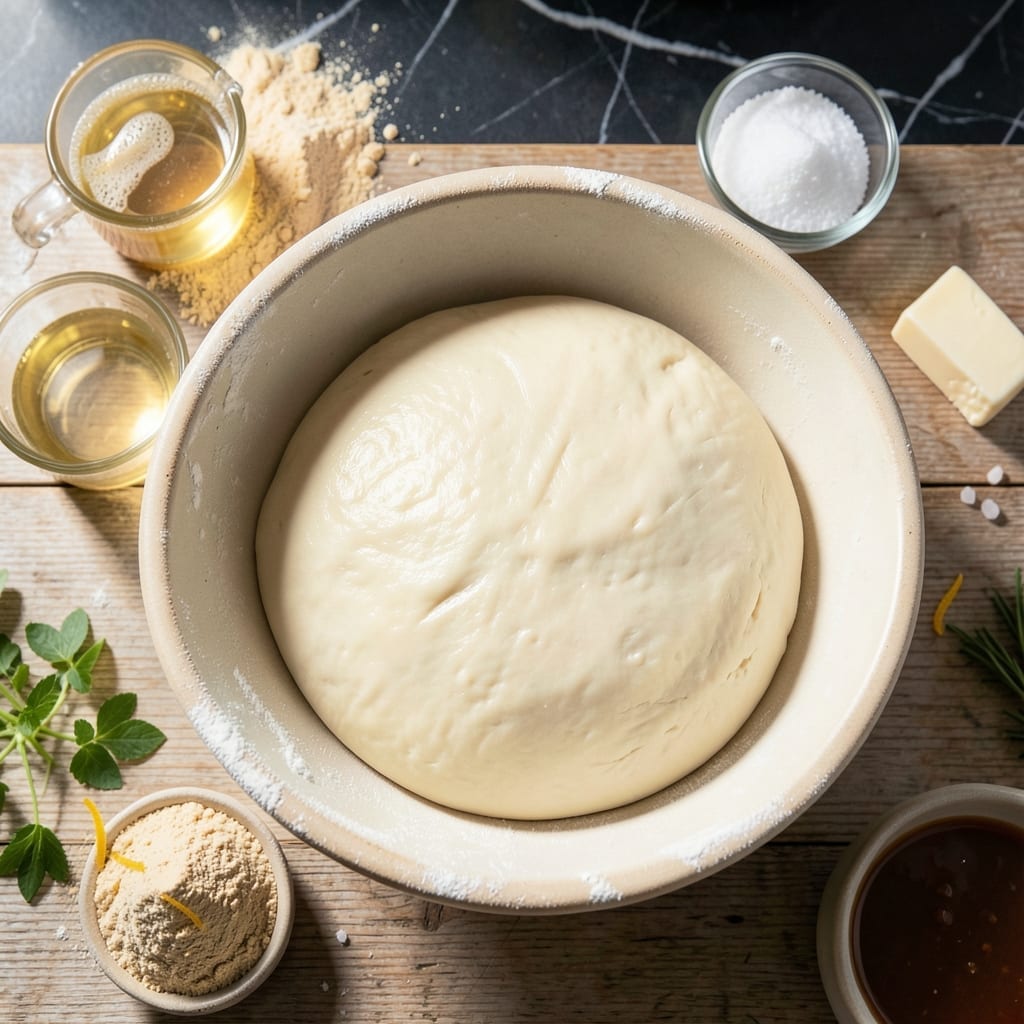
This dough recipe delivers pillowy softness with a simple yet precise method. I developed it to work for bread, rolls, or pizza crust with consistent results.
The secret lies in proper kneading and rising times. With just a few ingredients and patience, you’ll achieve bakery-quality texture every time.
Ingredients for Fluffy Dough
Simple pantry staples plus careful technique yield this versatile, cloud-like dough every time.
| Ingredient | Amount | Notes |
|---|---|---|
| Bread Flour 🌾 | 4 cups | High-protein for structure and lift |
| Warm Water 💧 | 1 ¼ cups | 110-115°F for yeast activation |
| Active Dry Yeast 🍞 | 2 ¼ tsp | One packet plus a quarter teaspoon |
| Granulated Sugar 🍚 | 2 tbsp | Feeds the yeast for rise |
| Sea Salt 🧂 | 1 ½ tsp | Fine grain for even distribution |
| Unsalted Butter 🧈 | 2 tbsp | Softened to room temperature |
| Whole Milk 🥛 | ¼ cup | Warm, enhances tenderness |
| Large Egg 🥚 | 1 whole | Room temperature for incorporation |
| Olive Oil 🫒 | 1 tbsp | For greasing bowls and pans |
| Honey 🍯 | 1 tbsp | Optional for subtle sweetness |
[recipe_ingredient_scaler]
The flour is critical here. King Arthur Bread Flour delivers consistent protein content (12.7%) for reliable structure. Yeast freshness matters—check the expiration date on the packet. Whole Foods or Trader Joe’s have bulk bins if you bake often. Warm the milk and water together to 110-115°F—too hot kills the yeast, too cool slows activation. Use a thermometer for precision.
No bread flour? All-purpose flour plus vital wheat gluten (1 tbsp per cup of flour) approximates the protein. Out of yeast? This isn’t a great candidate for sourdough starter. The butter can be swapped for vegetable oil (same amount) in a pinch, though flavor suffers. Skip the egg for a vegan version—add 1 tbsp ground flaxseed plus 3 tbsp water. Milk can be any dairy or non-dairy.
Dough rises best in a warm, draft-free spot—75-85°F. Once shaped, let it proof until nearly doubled. Store prepared dough in the fridge for up to 48 hours (it’ll develop more flavor) or freeze for 1 month. Bring to room temp before shaping.
Why You’ll Love This Recipe
- Five Ingredient Magic: I love that it only needs bread flour, warm water, yeast, sugar, and salt—no fancy additions.
- Pillowy Perfection: The yeast and sugar work together to create that light, airy texture I crave in every bite.
- Endless Possibilities: I use this dough for dinner rolls, pizza bases, or even cinnamon buns—it never lets me down.
- Budget Friendly: Honestly, it costs pennies to make and still tastes better than store-bought.
Step-by-Step Instructions for Fluffy Dough
Master the technique for light, airy results that rise beautifully every time.
Step 1: Activate the Yeast and Proof
In a small bowl, combine the 1.25 cups Warm Water with the 2 tbsp Granulated Sugar and 2.25 tsp Active Dry Yeast. Stir gently until the yeast dissolves completely. Let it sit undisturbed for 5-10 minutes until the mixture becomes frothy with a thick layer of bubbles on top.
This proofing step confirms your yeast is alive and active. If the mixture doesn’t bubble, your yeast may be expired—start over with fresh yeast. The sugar provides immediate food for the yeast, jumpstarting fermentation.
Step 2: Create the Dough Base
In a large mixing bowl, whisk together the 0.25 cup Whole Milk, 1 whole Large Egg, 1 tbsp Honey, and 2 tbsp Unsalted Butter until the butter is mostly melted and the mixture is smooth. The warmth of the milk helps soften the butter, ensuring even distribution throughout the dough.
Add the proofed yeast mixture to this bowl and stir to combine. The liquid ingredients should be lukewarm but not hot—anything above 115°F will kill the yeast and prevent rising.
Step 3: Incorporate Dry Ingredients and Knead
Gradually add the 4 cups Bread Flour and 1.5 tsp Sea Salt to the wet mixture, stirring with a wooden spoon until a shaggy dough forms. The high-protein content of bread flour develops strong gluten, which gives this dough its structure and lift.
Turn the dough out onto a lightly floured surface and knead for 8-10 minutes by hand, or use a stand mixer with a dough hook on medium speed for 6-8 minutes. The dough should become smooth, elastic, and slightly tacky but not sticky. If it sticks to your hands, add a light dusting of flour, 1 tbsp at a time, but avoid over-flouring.
Step 4: First Rise for Volume
Lightly grease a large bowl with the 1 tbsp Olive Oil and place the dough inside, turning it once to coat the surface. Cover the bowl with a clean kitchen towel or plastic wrap and let it rise in a warm, draft-free place for 1-2 hours, or until doubled in size.
For best results, I place the bowl in an oven with the light turned on, which maintains a consistent 80-85°F environment. The dough should spring back slowly when poked with a finger—if it springs back quickly, it needs more time.
Step 5: Shape and Second Rise
Once risen, gently punch down the dough to release excess air, then turn it out onto a clean surface. Shape it according to your recipe—whether into loaves, rolls, or another form. Place the shaped dough on a parchment-lined baking sheet or in greased pans.
Cover lightly and let it rise again for 30-45 minutes, or until puffy and nearly doubled in size. This second rise ensures maximum airiness. Preheat your oven to 375°F during the last 15 minutes of rising so it’s ready for baking.
Pro Tips For Making Fluffy Dough
- Test Your Yeast: I learned this the hard way—mix your active dry yeast with the warm water and sugar first, then wait 5-10 minutes for a foamy layer to confirm it’s alive before adding flour.
- Use Bread Flour: Skip all-purpose and stick with bread flour for that chewy, airy texture—its higher protein content actually changes the outcome.
- Don’t Overknead: After burning out my mixer three times, I finally figured out that 8-10 minutes of kneading is plenty; overworking the dough makes it tough, not fluffy.
- Warm the Water Right: Sounds weird, but it works: aim for 105-110°F water—too hot kills the yeast, too cold slows it down, and I skip the thermometer by testing it on my wrist like my grandmother did.
Troubleshooting fluffy dough
Dense Dough Issues
If your dough isn’t rising, check your yeast first. Expired or inactive yeast won’t create gas bubbles. Test it in warm water with sugar—it should foam within 5-10 minutes. Also, ensure your liquid ingredients are 110-115°F. Too hot kills yeast, too cold slows activation. 🌡️
Tough Texture Problems
Over-kneading or too much flour makes dough tough. Knead just until smooth and elastic—about 8-10 minutes by hand. If sticky, add flour 1 tbsp at a time, but stop once it pulls away from your hands cleanly.
Slow Rising
Cold environments slow fermentation. Ideal rising temperature is 75-85°F. I use my oven with the light on to maintain warmth. If your kitchen is chilly, extend rising time or find a warmer spot.
Collapsing After Shaping
Dough that collapses after shaping may need more gluten development. Try kneading longer next time. Also, ensure it’s fully risen before shaping—poke it; if the indent stays, it’s ready. Underproofed dough lacks structure.
Dry or Crumbly Dough
This usually means too much flour. Measure Bread Flour by weight for accuracy—4 cups should be about 480g. If already mixed, add warm water 1 tbsp at a time until it comes together. 💧
Uneven Baking
Uneven baking often results from improper shaping. Divide and shape dough evenly, ensuring uniform thickness. Rotate pans halfway through baking for even browning. A 375°F oven works best for most applications.
Nutrition Facts
Frequently Asked Questions
Why did my dough turn out dense?
Dense results usually mean underproofed dough or dead yeast. Check your yeast is bubbly after 5-10 minutes in warm water. Also ensure it rises until doubled in a 75-85°F spot.
Can I use all-purpose flour instead?
Yes, but add 1 tbsp vital wheat gluten per cup of flour. Bread flour’s higher protein creates better structure. The texture won’t be as light but will still work for most recipes.
How long can I store prepared dough?
Refrigerate for up to 48 hours or freeze for 1 month. Cold storage develops more flavor. Always bring to room temperature before shaping and baking.
What’s the ideal kneading time?
Knead by hand for 8-10 minutes or in a stand mixer for 6-8 minutes on medium. Stop when the dough feels smooth and elastic, not sticky. Over-kneading makes it tough.

Trained in classic French technique but raised on slow-cooked ribs and spicy rubs, she blends culinary skill with smoke and soul.
- Recipe for Boneless Pork Chops in Cast Iron Skillet: Sear and Baste to Juicy Perfection - October 3, 2026
- Recipe for Boneless Cross Rib Roast: Slow-Roasted Beef with Herb Crust - October 3, 2026
- Hamburgers in Sauce Recipe Crock Pot: Slow-Cooked Savory Delight - October 3, 2026