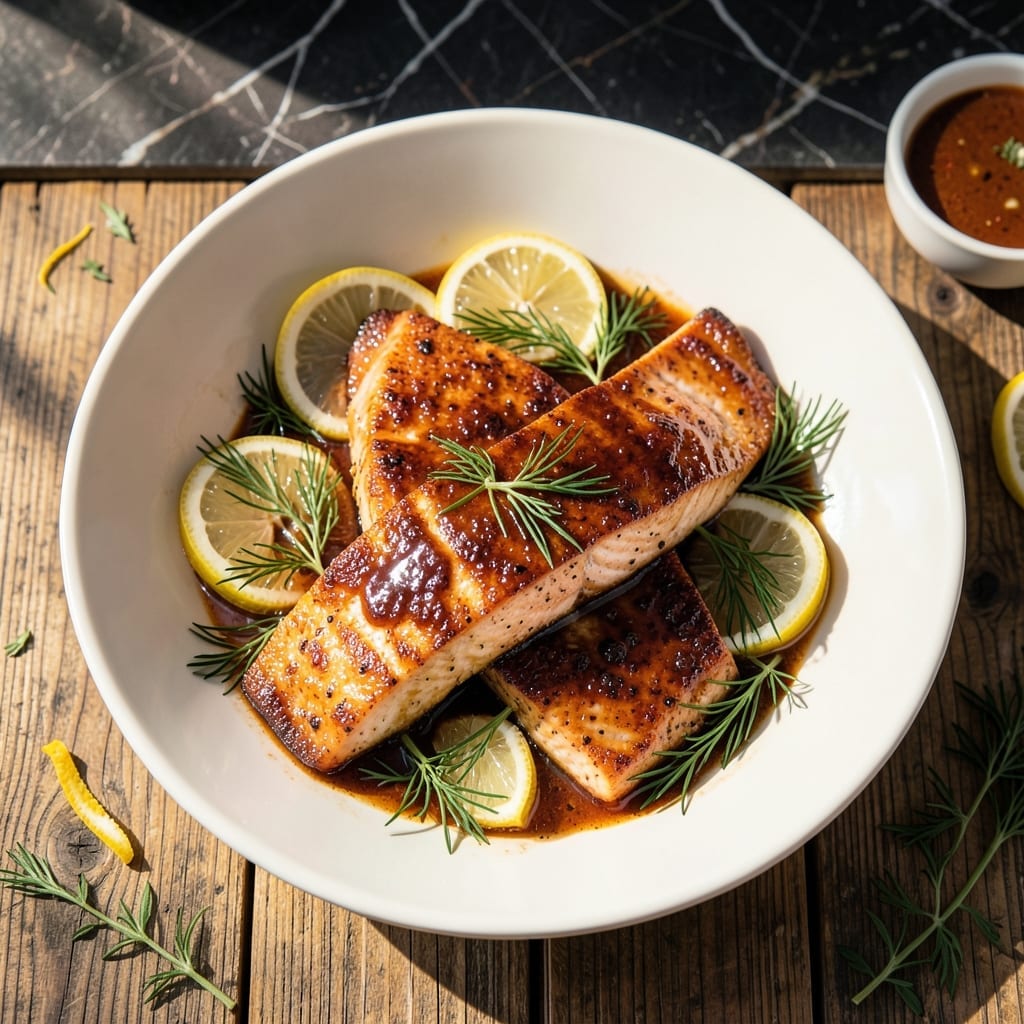
This oven-baked salmon delivers perfectly flaky results with minimal effort. The brown sugar glaze creates a caramelized crust that locks in moisture while adding subtle sweetness.
I developed this method after years of testing temperatures and timing. The key is starting with room-temperature salmon and baking at 400°F for just 12-15 minutes, depending on thickness.
The brown sugar forms a glossy, sticky coating that balances the fish’s natural richness. Each bite offers tender salmon with a hint of sweetness that complements without overpowering.
Serve this as a centerpiece for weeknight dinners or special occasions. The technique is foolproof, and the results taste restaurant-worthy.
Ingredients for Best Oven Baked Salmon Recipe Brown Sugar
Quality salmon plus a few pantry staples create this elegant, foolproof dish with minimal effort.
| Ingredient | Amount | Notes |
|---|---|---|
| Salmon Fillets 🐟 | 1 ½ lb | Skin-on or skinless, center-cut preferred |
| Light Brown Sugar 🍚 | ¼ cup | Packed for glaze consistency |
| Dijon Mustard 🟡 | 2 tbsp | Smooth, not whole grain |
| Soy Sauce 🫒 | 1 tbsp | Low-sodium preferred for balance |
| Extra-Virgin Olive Oil 🫒 | 2 tbsp | For brushing and moisture |
| Garlic Cloves 🧄 | 3 cloves | Minced for even distribution |
| Fresh Lemon Juice 🍋 | 1 tbsp | Zest can be added for extra brightness |
| Fresh Dill 🌿 | 2 tbsp | Chopped, for garnish and flavor |
| Kosher Salt 🧂 | ½ tsp | Diamond Crystal preferred for texture |
| Freshly Ground Black Pepper 🌶️ | ¼ tsp | Coarse grind for subtle heat |
| Unsalted Butter 🧈 | 1 tbsp | Optional, for richer glaze |
| Lemon Wedges 🍋 | 4 pieces | For serving and freshness |
[recipe_ingredient_scaler]
The salmon quality is critical. Wild-caught sockeye or king salmon from Whole Foods or Trader Joe’s offers the best flavor and texture. Choose fillets of even thickness for uniform cooking, and ensure they’re fresh—look for vibrant color and no fishy odor. If buying frozen, thaw overnight in the refrigerator (never at room temperature) for optimal results.
No Dijon mustard? Whole grain mustard works but will change texture slightly. Honey can replace brown sugar at a 1:1 ratio, though it will alter the glaze’s depth. For a soy-free version, coconut aminos offers a similar umami note. The olive oil can be any neutral oil, but extra-virgin adds a subtle fruitiness that complements the salmon’s richness.
Store raw salmon in the coldest part of your fridge and use within 1-2 days. The glaze ingredients keep indefinitely in the pantry. Leftovers stay fresh for 3-4 days refrigerated. Reheat gently in a low oven to preserve the flaky texture—microwaving can dry it out.
Why You’ll Love This Recipe
- One Pan Magic: I just toss the salmon with brown sugar, mustard, and soy sauce, then let the oven do the work—no flipping, no fuss.
- Sweet & Tangy Perfection: The brown sugar caramelizes with the Dijon and soy for that sticky, savory-sweet glaze that makes every bite irresistible.
- Weeknight Hero: Honestly, it’s my 30-minute dinner lifesaver when I need something healthy but crave-worthy.
- Leftovers? Yes Please: Cold salmon flakes beautifully over salads or into wraps the next day—no waste, just easy second meals.
Step-by-Step Instructions for Oven Baked Salmon with Brown Sugar
Here’s the method. Straightforward, tested, works every time.
Step 1: Prep the Salmon Fillets
Preheat your oven to 400°F. Line a baking sheet with parchment paper to prevent sticking. Pat the 1.5 lb salmon fillets dry with paper towels—this ensures the glaze adheres properly and the skin crisps evenly.
Place the fillets on the prepared baking sheet. Season both sides lightly with the 0.5 tsp kosher salt and 0.25 tsp freshly ground black pepper. Position them skin-side down if using skin-on fillets.
Step 2: Make the Brown Sugar Glaze
In a small bowl, whisk together the 0.25 cup light brown sugar, 2 tbsp Dijon mustard, 1 tbsp soy sauce, 2 tbsp extra-virgin olive oil, 3 cloves minced garlic, and 1 tbsp fresh lemon juice until smooth. The mixture should be thick but pourable.
For a richer finish, melt the 1 tbsp unsalted butter and stir it into the glaze. This step enhances the depth of flavor and gives the sauce a silky texture. Set the glaze aside momentarily while the oven finishes preheating.
Step 3: Apply Glaze and Bake
Brush the glaze evenly over the top and sides of the salmon fillets, ensuring complete coverage. Reserve a small amount for basting later. Place the baking sheet in the preheated oven on the center rack.
Bake for 12-15 minutes until the salmon flakes easily with a fork and the internal temperature reaches 145°F. Halfway through, brush the reserved glaze over the fillets to build layers of sweet, sticky flavor.
Step 4: Finish with Fresh Dill and Serve
Remove the salmon from the oven and let it rest for 3-5 minutes to allow the juices to redistribute. Sprinkle the 2 tbsp fresh dill evenly over the fillets for a bright, herbal finish.
Transfer the salmon to serving plates and garnish with the 4 pieces lemon wedges. The glaze should be caramelized at the edges with a glossy sheen. Serve immediately while hot for the best texture and flavor.
Pro Tips For Making Best Oven Baked Salmon Recipe Brown Sugar
- Preheat the Pan: Crank the oven to 400°F and let it fully preheat—I learned this the hard way after my first few batches came out unevenly cooked. The high heat guarantees that caramelized brown sugar crust forms right away.
- Pat Salmon Dry: Use a paper towel to thoroughly dry the fillets before adding the glaze, or the sugar will just dissolve into a sad, watery mess. Sounds tedious, but it actually changes the outcome.
- Skip Overcrowding: Leave at least an inch between fillets on the baking sheet, or they’ll steam instead of roast. After burning three batches by packing them too close, I finally figured out spacing matters most.
- Glaze Early, Not Late: Brush the brown sugar, mustard, and soy mixture onto the salmon 10 minutes before baking, not after—it gives the flavors time to penetrate. I was skeptical until I tried it, but now I swear by this step.
Perfect Pairings for These Flavors
Side Dish Pairings
I love serving this with roasted asparagus tossed in olive oil and finished with flaky salt. The spears crisp up in the same 400°F oven—just add them for the last 10 minutes of baking. 🥗
Another favorite is quinoa pilaf with toasted almonds and chopped parsley. The nutty grains soak up any extra glaze beautifully.
Wine Pairings
For white wine lovers, a crisp Sauvignon Blanc from New Zealand cuts through the richness. The citrus notes complement the lemon in the glaze perfectly.
If you prefer red, try a light Pinot Noir from Oregon’s Willamette Valley. Its earthy notes won’t overpower the salmon’s delicate flavor. 🍷
Bread Options
Warm sourdough bread from New Seasons Market is my go-to for soaking up every last bit of that caramelized glaze. Toast it lightly and rub with a garlic clove.
For a sweeter contrast, try cornbread with a touch of honey butter. The crumbly texture and subtle sweetness pair wonderfully.
Nutrition Facts
Frequently Asked Questions
Can I use dark brown sugar instead?
Yes, but it will deepen the flavor and color. Dark brown sugar has more molasses, giving a richer caramel note. Adjust to taste if you prefer a milder sweetness.
How do I prevent the glaze from burning?
Bake on the center rack and check at 12 minutes. If browning too quickly, tent loosely with foil. The 400°F temperature caramelizes without charring when monitored.
Can I make this ahead for guests?
Mix the glaze up to 2 days ahead and refrigerate. Prep salmon 30 minutes before baking to ensure even cooking. Always serve immediately for best texture.

Trained in classic French technique but raised on slow-cooked ribs and spicy rubs, she blends culinary skill with smoke and soul.
- Recipe for Boneless Pork Chops in Cast Iron Skillet: Sear and Baste to Juicy Perfection - October 3, 2026
- Recipe for Boneless Cross Rib Roast: Slow-Roasted Beef with Herb Crust - October 3, 2026
- Hamburgers in Sauce Recipe Crock Pot: Slow-Cooked Savory Delight - October 3, 2026