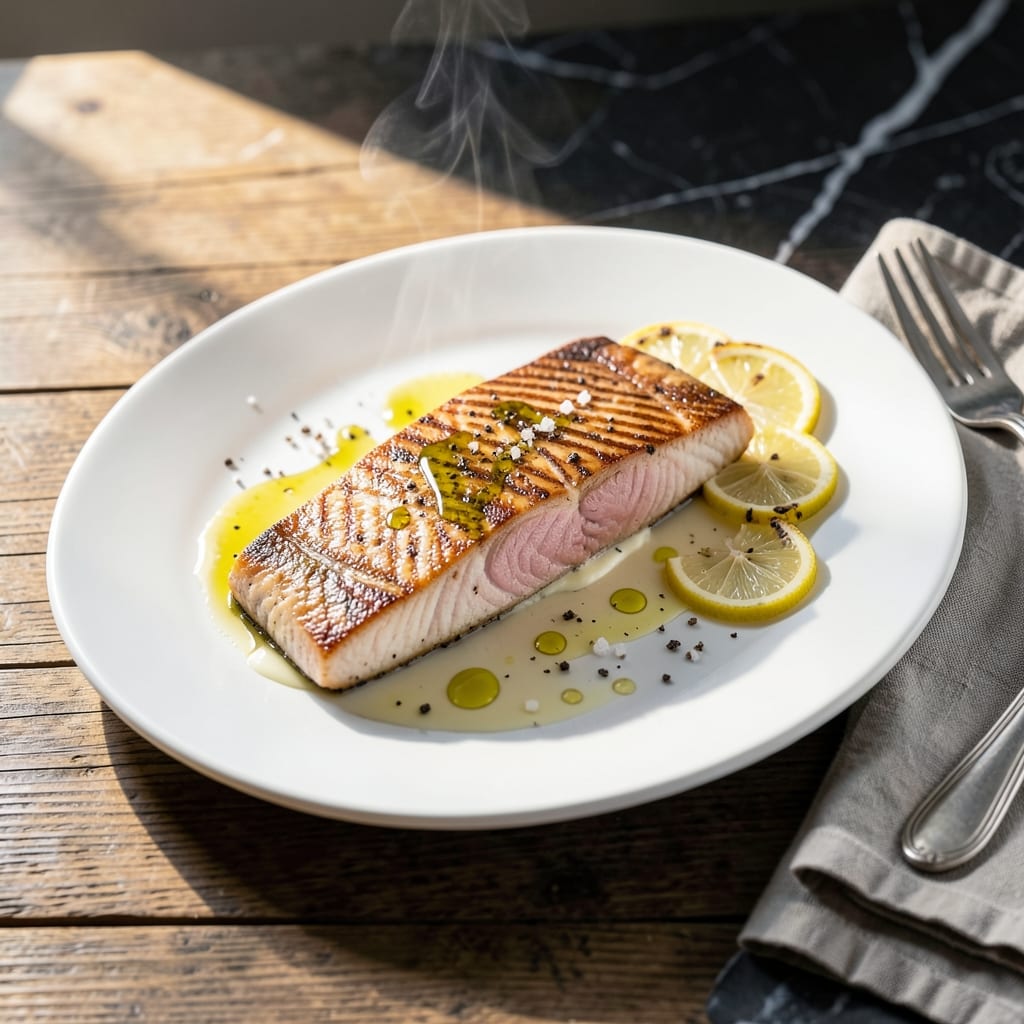
Atlantic char offers a delicate, mild flavor that shines with simple preparation. This recipe highlights its natural buttery finish without overpowering seasonings.
I developed this method after testing multiple approaches in my small Boston kitchen. The key is precise timing and temperature control to preserve the fish’s tender texture.
The result is a perfectly cooked fillet with a light, flaky interior and a golden crust. It pairs beautifully with fresh herbs and a squeeze of lemon.
Serve it with roasted vegetables or a light salad for a complete meal that lets the fish take center stage.
Ingredients for Atlantic Char
Delicate Atlantic char fillets with minimal ingredients to highlight their natural buttery richness.
| Ingredient | Amount | Notes |
|---|---|---|
| Atlantic Char Fillets 🐟 | 1 ½ lb | Skin-on, about 1-inch thick |
| Extra-Virgin Olive Oil 🫒 | 3 tbsp | Divided for cooking and finishing |
| Unsalted Butter 🧈 | 4 tbsp | Cold, cubed for basting |
| Kosher Salt 🧂 | 1 ½ tsp | Diamond Crystal preferred |
| Freshly Ground Black Pepper 🌶️ | ¾ tsp | Coarse grind for texture |
| Fresh Lemon 🍋 | 1 whole | Zest and juice for brightness |
| Fresh Thyme Sprigs 🌿 | 4 sprigs | Leaves stripped for garnish |
| Fresh Parsley 🍃 | ¼ cup | Finely chopped for garnish |
| Garlic Cloves 🧄 | 2 cloves | Lightly crushed for aromatics |
| Shallot 🧅 | 1 whole | Finely minced for depth |
| White Wine Vinegar 🍷 | 1 tsp | For acid balance |
| All-Purpose Flour 🌾 | ¼ cup | For light dusting |
[recipe_ingredient_scaler]
The char itself is the star—source skin-on fillets from a reputable fishmonger like Whole Foods or Legal Sea Foods in Boston. Look for vibrant color and no fishy odor. The butter should be high-quality unsalted (I prefer Plugrá or Kerrygold), as it contributes significantly to the final flavor. Fresh herbs are non-negotiable; organic thyme and parsley from a local market will have the best aromatic profile.
No white wine vinegar? Champagne vinegar or fresh lemon juice at the same quantity works perfectly. If fresh herbs are unavailable, dried thyme at one-third the amount is acceptable, though fresh is superior. The shallot can be replaced with red onion in a pinch, but its milder flavor is preferable. For a gluten-free version, swap the flour for cornstarch—use half the amount for the same effect.
Char fillets are best cooked the day of purchase but can be stored in the coldest part of the fridge for up to 1 day. The compound butter (if making ahead) keeps for 1 week refrigerated or 3 months frozen. Always bring fish to room temperature before cooking for even doneness.
Why You’ll Love This Recipe
- Minimal Effort: Honestly, it’s just season, sear, and serve—no fancy techniques or hard-to-find ingredients.
- Buttery Richness: The combo of olive oil and butter gives the char this luxurious, melt-in-your-mouth finish.
- Weeknight Hero: I throw it together after work when I need something fast but still impressive.
- Leftovers? Yes Please: Cold char flakes beautifully over salads the next day—zero waste, all flavor.
Step-by-Step Instructions for Atlantic Char
Master the technique for perfectly cooked fillets with a golden, crispy skin and tender interior.
Step 1: Prepare and Season the Fillets
Pat the 1.5 lb Atlantic Char Fillets completely dry with paper towels to ensure crispy skin. The skin-on side should be free of moisture—this is non-negotiable for achieving that perfect sear.
Season both sides evenly with 1.5 tsp Kosher Salt and 0.75 tsp Freshly Ground Black Pepper. I prefer Diamond Crystal kosher salt for its clean flavor and even distribution. Lightly dust the skin side with 0.25 cup All-Purpose Flour, shaking off any excess. This creates a delicate crust and prevents sticking.
Step 2: Sear the Fillets Skin-Side Down
Heat 2 tbsp Extra-Virgin Olive Oil in a large skillet over medium-high heat until it shimmers but doesn’t smoke. Add the fillets skin-side down, pressing gently with a fish spatula for the first 30 seconds to prevent curling.
Cook undisturbed for 4-5 minutes until the skin is golden brown and crisp. Watch for the edges to turn opaque and the skin to release easily from the pan—this tells you it’s ready to flip. Add the 1 whole Shallot (finely minced) and 2 cloves Garlic Cloves (lightly crushed) to the pan during the last minute of searing to infuse their aroma into the oil.
Step 3: Baste with Butter and Aromatics
Flip the fillets and immediately reduce heat to medium. Add the remaining 1 tbsp Extra-Virgin Olive Oil, 4 tbsp Unsalted Butter (cold, cubed), and 4 sprigs Fresh Thyme Sprigs to the pan.
Tilt the skillet slightly and spoon the foaming butter continuously over the fillets for 2-3 minutes. The butter should turn a light hazelnut brown, and the thyme will release its fragrance. Baste until the fish is just cooked through—the center should flake easily with a fork but still appear slightly translucent.
Step 4: Finish and Garnish
Transfer the fillets to a warm plate. Add 1 tsp White Wine Vinegar and the juice of 1 whole Fresh Lemon to the pan, swirling to combine with the butter and olive oil. Drizzle this mixture over the fillets.
Garnish with 0.25 cup Fresh Parsley (finely chopped) and the leaves from the thyme sprigs. Serve immediately while the skin is still crisp. The acid from the lemon and vinegar balances the richness of the butter, while the parsley adds a fresh finish.
Pro Tips For Making Atlantic Char
- Pat the Fillets Dry: I learned this the hard way—moisture on the skin means the char won’t sear properly. Press between paper towels for 30 seconds per side before seasoning.
- Hot Pan, Cold Fish: Get your skillet screaming hot first, then add the oil. Toss in the fillets straight from the fridge to prevent sticking and guarantee a crisp crust.
- Skip the Overcrowding: Resist the urge to cook all four fillets at once unless your pan is huge. Two at a time keeps the heat high and the char even.
- Baste with Butter: When the char is nearly done, tilt the pan and spoon that foaming butter over the fillets for 30 seconds. It adds richness without burning.
Wine and Beer Pairings for atlantic char
White Wine Pairings
A crisp Sauvignon Blanc from New Zealand cuts through the buttery richness beautifully. Its citrus notes complement the lemon finish. I love Kim Crawford for its vibrant acidity and approachable price point. 🍷
Chardonnay Options
For a richer pairing, try a lightly oaked Chardonnay like Kendall-Jackson Vintner’s Reserve. The vanilla notes from the oak enhance the char’s natural sweetness without overpowering it. Serve slightly chilled at 50-55°F.
Rosé Selections
A dry Provence rosé with its delicate strawberry and herb notes pairs wonderfully. Look for Whispering Angel or Miraval. The subtle fruit flavors won’t compete with the fish’s mild taste. 💫
Beer Pairings
A crisp Belgian-style witbier like Blue Moon or Allagash White works surprisingly well. The citrus and coriander notes echo the lemon in the recipe. Avoid hoppy IPAs that would clash with the delicate fish.
Light Lager
For beer lovers, a clean pilsner such as Sam Adams Noble Pils offers a refreshing contrast. Its light body and subtle bitterness cleanse the palate between bites. Serve ice cold at 38-42°F.
Nutrition Facts
Frequently Asked Questions
What’s the best cooking method for char?
Pan-searing is ideal for skin-on fillets. The hot skillet creates a crispy skin while keeping the interior tender. Finish with butter basting for extra richness.
How can I tell when the fish is done?
Look for opaque flesh that flakes easily with a fork. The internal temp should reach 145°F. Overcooking makes it dry, so pull it off just before it’s fully done.
Can I use a different fish in this recipe?
Yes! This method works well with trout, salmon, or Arctic char. Adjust cooking time based on thickness. Larger fillets may need an extra 1-2 minutes per side.
Why does the skin stick to the pan?
Patience is key—don’t move the fillets for the first 4-5 minutes. Ensure the pan is hot and the fillets are dry before cooking. A nonstick skillet helps too.

Trained in classic French technique but raised on slow-cooked ribs and spicy rubs, she blends culinary skill with smoke and soul.
- Recipe for Boneless Pork Chops in Cast Iron Skillet: Sear and Baste to Juicy Perfection - October 3, 2026
- Recipe for Boneless Cross Rib Roast: Slow-Roasted Beef with Herb Crust - October 3, 2026
- Hamburgers in Sauce Recipe Crock Pot: Slow-Cooked Savory Delight - October 3, 2026