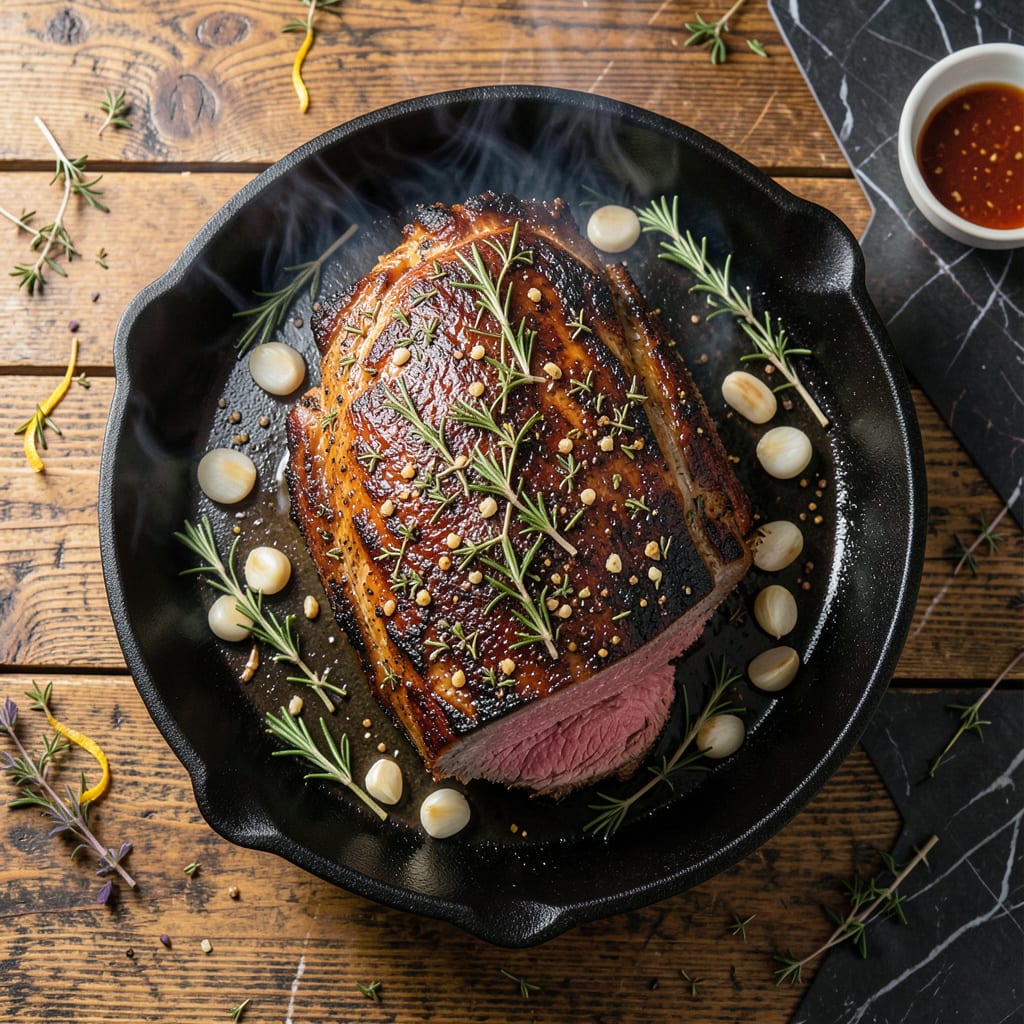
This prime rib recipe brings wood-fired elegance to your pellet grill with a herb-crusted masterpiece that rivals any steakhouse.
I’ve perfected the technique through years of competition cooking, ensuring tender, juicy meat with a perfectly seared exterior every time.
Ingredients for Best Pellet Grill Prime Rib
Prime rib requires quality cuts and bold herbs to achieve steakhouse-level results on your pellet grill.
| Ingredient | Amount | Notes |
|---|---|---|
| Prime Rib Roast 🥩 | 4 lb | Bone-in, well-marbled chuck end |
| Kosher Salt 🧂 | 2 tbsp | Diamond Crystal preferred for even seasoning |
| Coarsely Ground Black Pepper 🌶️ | 2 tbsp | Freshly cracked for best aroma |
| Fresh Rosemary 🌿 | ¼ cup | Finely chopped, stems discarded |
| Fresh Thyme 🍃 | ¼ cup | Leaves stripped from stems |
| Garlic Cloves 🧄 | 6 cloves | Minced to fine paste consistency |
| Olive Oil 🫒 | ¼ cup | Extra-virgin for crust binding |
| Dijon Mustard 🟡 | 2 tbsp | Whole-grain variety adds texture |
| Red Wine 🍷 | ½ cup | Dry variety like Cabernet Sauvignon |
| Beef Broth 🥘 | 1 cup | Low-sodium preferred for reduction control |
| Unsalted Butter 🧈 | 4 tbsp | For finishing baste |
| Horse Radish 🌿 | ¼ cup | Prepared, for serving |
[recipe_ingredient_scaler]
The prime rib is non-negotiable here. USDA Prime grade delivers the marbling you need for competition-level tenderness, but Choice grade works if Prime isn’t available. Source from a trusted butcher like Snake River Farms or high-end grocers such as Whole Foods. Look for bright red color with abundant white fat streaks throughout the meat. The bone-in cut adds flavor and helps maintain moisture during the long cook.
No fresh rosemary or thyme? Dried herbs at one-third the amount will work in a pinch, though the flavor won’t be as vibrant. Swap red wine for beef broth with a splash of balsamic vinegar if needed. For the mustard, whole-grain Dijon is ideal, but regular yellow mustard can substitute. The horseradish can be omitted, but its sharp bite cuts through the richness beautifully.
Prime rib benefits from resting before and after cooking. Store uncooked roast in the fridge for up to 3 days before cooking. Leftovers keep well for 4-5 days and make incredible sandwiches. The herb crust mixture can be prepared 1 day ahead and stored covered in the refrigerator.
Why You’ll Love This Recipe
- Set It and Forget: I toss the prime rib on the pellet grill, season it with salt, pepper, and those fresh herbs, then let the smoker do all the work.
- Herb Crust Heaven: That rosemary and thyme crust forms this incredible aromatic bark that makes every bite taste like a steakhouse special.
- Holiday Hero: I’ve served this at Christmas, Easter, and even a fancy Sunday dinner—it’s my reliable showstopper.
- Leftovers for Days: Honestly, the sandwiches I make with the leftovers might be even better than the original meal.
Step-by-Step Instructions for Wood-Fired Prime Rib
Master the reverse sear method on your pellet grill for perfect doneness and a flavorful crust.
Step 1: Prepare the Herb Crust and Season the Roast
In a small bowl, combine the 0.25 cup Fresh Rosemary, 0.25 cup Fresh Thyme, 6 cloves Garlic Cloves, 2 tbsp Kosher Salt, and 2 tbsp Coarsely Ground Black Pepper. Finely chop and mix until evenly distributed. This aromatic blend will form the base of your crust.
Pat the 4 lb Prime Rib Roast dry with paper towels to ensure the seasoning adheres properly. Rub the 0.25 cup Olive Oil and 2 tbsp Dijon Mustard all over the roast, then press the herb mixture onto every surface. Let it sit at room temperature for 1 hour to enhance flavor penetration.
Step 2: Smoke at Low Temperature for Even Cooking
Preheat your pellet grill to 225°F using a mild wood like oak or hickory. Place the seasoned prime rib directly on the grates, bone-side down. Insert a meat probe into the thickest part of the roast, avoiding the bone.
Smoke the roast until the internal temperature reaches 115-120°F for medium-rare, which typically takes 2 to 2.5 hours. Maintain a consistent temperature and avoid opening the lid unnecessarily. The low and slow method ensures a tender, evenly cooked center with a deep smoke flavor.
Step 3: Sear for a Crispy Exterior
Once the roast hits the target internal temperature, remove it from the grill and increase the heat to 450°F. This high-heat sear will develop a rich, caramelized crust.
Return the prime rib to the grill and sear for 10-15 minutes, turning occasionally to brown all sides evenly. Watch closely to prevent burning—you want a deep mahogany crust that complements the smoky aroma. Remove the roast when the internal temperature reaches 125-130°F for medium-rare.
Step 4: Rest and Prepare the Au Jus
Transfer the roast to a cutting board, tent loosely with foil, and let it rest for 20-30 minutes. This allows the juices to redistribute, ensuring a moist, flavorful result.
While the roast rests, place a small saucepan on the grill or stovetop. Add the 0.5 cup Red Wine and 1 cup Beef Broth, then simmer for 5-7 minutes until reduced by half. Whisk in the 4 tbsp Unsalted Butter until melted and fully incorporated. Strain and serve as an au jus alongside the prime rib.
Step 5: Slice and Serve
After resting, slice the prime rib against the grain into ½-inch thick portions. This ensures tenderness in every bite. Arrange the slices on a platter and drizzle with some of the prepared au jus.
Serve immediately with the remaining au jus on the side and 0.25 cup Horse Radish for those who enjoy an extra kick. The combination of smoky, herby crust and juicy interior will make this the centerpiece of your meal.
Pro Tips For Making Best Pellet Grill Prime Rib
- Dry the Roast: Pat the prime rib completely dry with paper towels before seasoning—I learned this the hard way after my first few roasts came out steamed instead of seared.
- Use a Meat Thermometer: Skip guessing and pull the roast at 115°F for medium-rare, then let it rest to 125°F. After overcooking one too many times, I finally bought a good thermometer.
- Rest Before Slicing: Give it a full 20-30 minutes under foil after cooking—sounds like forever, but the juices redistribute and every slice stays moist.
- Crush the Herbs: Roll the rosemary and thyme between your palms before sprinkling to release their oils. My grandmother swore by this, and she was right: the flavor clings better.
Regional Styles of This best pellet grill prime rib
Texas-Style Bold
In the Lone Star State, they amp up the flavor with a coffee-chili dry rub mixed into the herb crust. I add 2 tbsp finely ground coffee and 1 tbsp chili powder to the rosemary-thyme blend for depth. The coffee enhances the beef’s natural richness. 🌶️
California Wine Country
West Coast pitmasters often incorporate red wine reduction into their au jus. I use Napa Valley Cabernet and reduce it by half before adding beef broth. This creates a more pronounced wine flavor that pairs beautifully with the wood-fired notes.
Pacific Northwest
This region favors a juniper berry and black pepper crust to complement their local game meats. I crush 1 tbsp juniper berries and mix with the herbs for an earthy, piney aroma that works wonderfully with prime rib.
Midwest Classic
The heartland keeps it simple but effective with a garlic-heavy crust. I double the garlic to 12 cloves and add 1 tbsp onion powder. This approach lets the beef flavor shine while providing a robust aromatic base.
Southern Comfort
In the South, they often add a touch of sweetness. I incorporate 2 tbsp brown sugar into the herb crust for a subtle caramelization. The sugar helps create a darker, stickier crust that’s characteristic of Southern BBQ.
Coastal Herb Blend
Drawing from my coastal rides, I sometimes add foraged wild thyme and sea salt to the crust. The briny, herbal notes transport me back to those foggy mornings by the water. The wild herbs add complexity you can’t get from store-bought.

Trained in classic French technique but raised on slow-cooked ribs and spicy rubs, she blends culinary skill with smoke and soul.
- Recipe for Boneless Pork Chops in Cast Iron Skillet: Sear and Baste to Juicy Perfection - October 3, 2026
- Recipe for Boneless Cross Rib Roast: Slow-Roasted Beef with Herb Crust - October 3, 2026
- Hamburgers in Sauce Recipe Crock Pot: Slow-Cooked Savory Delight - October 3, 2026