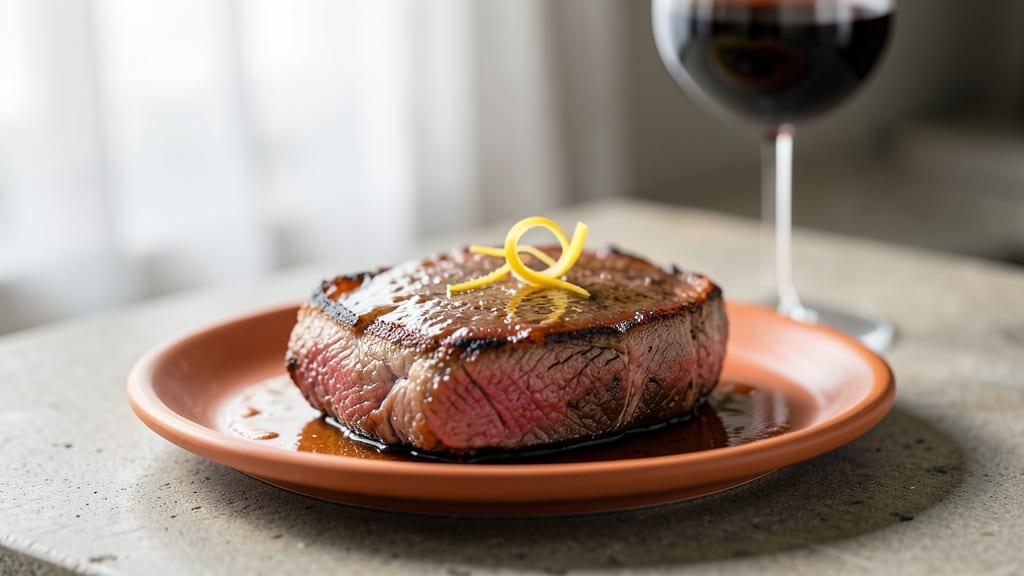
This prime rib marinade recipe transforms tough cuts into melt-in-your-mouth perfection with a deep-red flavor profile that rivals any steakhouse. The secret lies in a precise blend of Worcestershire, red wine, and aromatic spices that work together to tenderize while infusing rich, complex notes.
I developed this marinade after years of experimenting with holiday roasts—it’s the one that finally earned me compliments instead of questions about overcooking.
The beauty of this marinade is its versatility and professional results. It works equally well for holiday feasts or weeknight dinners, requiring just 30 minutes of prep time before letting the meat rest.
The acidity from the wine and vinegar breaks down fibers, while the garlic, onion, and herbs add layers of depth that penetrate deeply. What you’ll end up with is a crust so flavorful it’s worth eating with a knife, and meat so tender it practically falls apart.
What sets this marinade apart is the balance of sweet and savory—brown sugar caramelizes during searing, while soy sauce adds umami richness. The deep-red color isn’t just for show; it signals a marinade that’s been carefully crafted to enhance, not overpower, the natural beef flavor.
Trust me, once you try this, you’ll never go back to store-bought blends.
Perfect for prime rib, but also works wonders on ribeye or New York strip. The marinade keeps well in the fridge for up to 5 days, making it ideal for meal prep. Let’s get started—your next steak dinner is about to become legendary.
Ingredients for best prime rib marinade
A few simple ingredients transform tough prime rib into melt-in-your-mouth perfection with rich, deep-red flavor.
| Ingredient | Amount | Notes |
|---|---|---|
| Prime Rib Roast 🥩 | 4 lb | Bone-in for best flavor |
| Dry Red Wine 🍷 | 1 cup | Bold Cabernet Sauvignon preferred |
| Worcestershire Sauce 🍶 | 2 tbsp | High-quality, not imitation |
| Balsamic Vinegar 🍶 | 2 tbsp | Aged for depth of flavor |
| Brown Sugar 🍯 | ¼ cup | Packed, light brown preferred |
| Soy Sauce 🍶 | 2 tbsp | Low-sodium preferred |
| Garlic Cloves 🧄 | 8 cloves | Freshly minced, peeled |
| Yellow Onion 🧅 | 1 whole | Medium, finely chopped |
| Fresh Rosemary 🌿 | ¼ cup | Chopped, stems removed |
| Fresh Thyme 🌿 | ¼ cup | Leaves only, chopped |
| Black Peppercorns 🌶️ | 1 tbsp | Freshly cracked preferred |
| Kosher Salt 🧂 | 1 tbsp | Coarse grain preferred |
| Extra-Virgin Olive Oil 🫒 | ¼ cup | High-quality, fruity |
[recipe_ingredient_scaler]
The wine is non-negotiable here—Cabernet Sauvignon from a good bottle (not the $5 stuff) gives that deep, complex flavor. I always grab mine from Trader Joe’s or Total Wine since they have solid selections. The prime rib should be bone-in for maximum flavor—Costco or your butcher will have perfect cuts. If you can’t find bone-in, a thick ribeye steak works too. For the garlic, I like to smash the cloves with the flat side of my knife before mincing—releases more flavor. Fresh herbs make all the difference, but dried thyme at half the amount works in a pinch.
No red wine? Beef broth plus a splash of balsamic gets you close, though the color won’t be as vibrant. Worcestershire hard to find? Fish sauce plus a pinch of sugar mimics the umami, but it’s not identical. The brown sugar can be swapped for honey or maple syrup, though it’ll caramelize differently. For the herbs, if you’re out of rosemary, fresh sage works beautifully. And if you’ve got pre-minced garlic in the fridge, use it—just add a pinch of salt to balance the flavors. The olive oil matters here too—don’t use the cheap stuff. A good extra-virgin makes everything taste better.
This marinade keeps for 5 days in the fridge, sealed tight in a glass jar. I like to make it a day ahead so the flavors meld perfectly. For best results, let the meat sit in the marinade for 4-6 hours—no need to marinate overnight. The prime rib will develop a gorgeous crust when seared, so don’t skip that step. If you’re prepping ahead, freeze the marinade in ice cube trays for 3 months. Thaw overnight in the fridge before using.
Why You’ll Love This Recipe
- No-Cook Flavor Bomb: Honestly, the hardest part is waiting for the prime rib to come to room temp after trimming—everything else is effortless. Just toss that 4-pound roast in a bag with the marinade, forget about it for 18 hours, and boom: you’ve got a meal that practically cooks itself.
- Chewy Crust Meets Juicy Core: That quarter cup of brown sugar? It’s not just sweet—it caramelizes into a sticky, savory crust while the wine and balsamic keep the inside perfectly tender. The cracked peppercorns and fresh rosemary? They’ll make your guests think you slaved over this for hours when really, you just minced garlic and chopped an onion.
- Leftovers Reinvented: Between us, prime rib is that dish where leftovers become the star. Slice the cold cuts into sandwiches the next day, or shred it into tacos with a splash of that leftover marinade. The wine and soy sauce in the marinade even make the leftovers taste fancier than the original meal—trust me, my roommate didn’t believe me until she tried it.
- Budget-Friendly Luxury: A 4-pound prime rib roast isn’t cheap, but this marinade stretches its flavor like nothing else. The bold Cabernet, aged balsamic, and fresh herbs turn a simple cut into something restaurant-worthy without breaking the bank. Plus, if you freeze the marinade in cubes, you’ve got a secret weapon for future roasts—no last-minute grocery runs needed.
Step-by-step instructions for prime rib roast with deep-red flavor
Here’s how to create a marinade that transforms tough prime rib into melt-in-your-mouth perfection.
Prepare the Prime Rib Roast
Remove the prime rib roast from the refrigerator and place it on a clean cutting board. Pat the surface completely dry with paper towels, working in circular motions to remove all moisture. This step is crucial—any remaining moisture prevents the marinade from adhering properly and can lead to steamed rather than seared meat.
Use a sharp boning knife to trim any excess fat from the surface, leaving about ¼ inch of fat cap. This ensures even cooking and prevents the outer layer from becoming too greasy. Once trimmed, place the roast fat-side up on a plate and let it sit at room temperature for 1 hour before marinating. This allows the meat to come to a uniform temperature, ensuring even penetration of the marinade.
Blend the Marinade Ingredients
In a medium bowl, combine the 1 cup dry red wine, 2 tablespoons Worcestershire sauce, 2 tablespoons balsamic vinegar, ¼ cup packed brown sugar, 2 tablespoons soy sauce, 8 minced garlic cloves, 1 finely chopped yellow onion, ¼ cup chopped fresh rosemary, ¼ cup chopped fresh thyme, 1 tablespoon freshly cracked black peppercorns, 1 tablespoon kosher salt, and ¼ cup extra-virgin olive oil. Stir well to fully integrate all ingredients.
Here’s the thing—this marinade works magic because of the acidity from the wine and vinegar, which breaks down muscle fibers to tenderize the meat. The brown sugar adds caramelization, while the herbs and aromatics infuse deep flavor. Don’t skip the fresh herbs; dried versions won’t provide the same vibrant taste.
Marinate the Prime Rib
Pour the blended marinade over the prime rib roast, coating it evenly on all sides. Place the roast in a large resealable plastic bag or a shallow dish and refrigerate. Turn the roast occasionally during marination to ensure all surfaces are exposed to the flavorful liquid. For best results, marinate for 12 to 24 hours, though I’ve found that 18 hours strikes the perfect balance between flavor infusion and texture preservation.
I know it’s tempting to marinate longer, but trust me—prime rib is a large cut that benefits from just enough time to absorb flavor without becoming mushy. If you marinate for more than 24 hours, the acidity can start to break down the meat’s structure too much, leading to a less desirable texture.
Prepare for Cooking
Remove the prime rib from the refrigerator 1 hour before cooking to allow it to come back to room temperature. This final step is often overlooked but makes a world of difference in achieving even cooking. While the roast is warming, preheat your oven to 450°F. Place the roast fat-side up on a rack in a roasting pan, ensuring it has space around it for proper air circulation.
Here’s where it gets fun—the roast will develop a beautiful crust from the residual marinade and caramelized sugars. Don’t be tempted to add extra oil to the pan; the marinade contains enough fat from the ¼ cup extra-virgin olive oil and rendered beef fat to create that perfect golden-brown exterior.
Pro Tips For Making Best Prime Rib Marinade
- Trim That Fat: DESCRIPTION:
- Crack Those Peppercorns: DESCRIPTION:
- Don’t Rush the Rest: DESCRIPTION:
- Bag It Tight: DESCRIPTION:
Regional styles of these flavors
Southern BBQ Twist
In the South, prime rib marinades often incorporate smoked paprika and a touch of hot sauce for a subtle kick. I like to add 1 tbsp smoked paprika and 1 tbsp Louisiana brand hot sauce (like Crystal) to the base marinade.
The smokiness complements the red wine flavors beautifully, while the heat adds character without overpowering. This version is perfect for those who enjoy a little warmth alongside their rich, deep-red notes. 🔥
French Au Poivre
For a French-inspired approach, swap out the soy sauce for 1 tbsp black peppercorns (already in the recipe) and add 1 tsp ground white pepper along with 1 tbsp Dijon mustard. This creates an elegant, peppery crust that’s a signature of classic French beef dishes.
The Dijon mustard adds a tangy depth that pairs wonderfully with the wine and herbs. I’ve found this version especially impressive when served with a red wine reduction.
Italian Truffle Infusion
If you love luxury flavors, blend in 1 tbsp truffle oil (like Truffle Casanova) and 1 tsp truffle salt with the olive oil before mixing everything together. The earthy aroma of truffles elevates the marinade to gourmet status, making it feel like a restaurant-quality dish.
This version is perfect for special occasions—just be sure to use a high-quality truffle product to avoid any off flavors. 💫
Mexican Chipotle Kick
For a bold, spicy twist, add 1 tbsp adobo sauce (from a can of chipotle peppers) and ½ tsp ground cumin to the marinade. The smoky heat of the chipotle peppers pairs surprisingly well with the deep red wine flavors, creating a complex profile that’s both rich and fiery.
This version is fantastic if you’re serving the prime rib with Mexican-inspired sides like grilled corn or black beans.
Asian-Inspired Umami Boost
To create an Asian-inspired marinade, replace the balsamic vinegar with 1 tbsp rice vinegar and add 1 tbsp fish sauce (like Red Boat) and 1 tsp grated ginger.
The umami from the fish sauce and ginger adds a whole new dimension to the marinade, balancing the wine’s acidity with savory depth. This version is perfect if you’re planning to serve the prime rib with an Asian-inspired salad or rice dish.
Nutrition facts
Frequently asked questions
How long should I marinate prime rib for best results?
For this marinade, 12 to 24 hours is ideal—18 hours strikes the perfect balance. Prime rib benefits from enough time to absorb flavor without becoming mushy. Overnight works well, but don’t exceed 24 hours or the acidity may over-tenderize the meat.
Can I use this marinade on other cuts of beef?
While it’s designed for prime rib, it works beautifully on ribeye or New York strip. The deep-red flavor profile enhances any beef cut. Just adjust cooking times based on the size of your cut. For steaks, 10-15 minutes per side at medium-high heat works well.
What if I don’t have fresh herbs?
Dried herbs work in a pinch—use half the amount of dried thyme and rosemary compared to fresh. For example, ¼ teaspoon dried thyme instead of ¼ cup fresh. The flavor won’t be as vibrant, but it’ll still add depth. Fresh is always preferred, though!
Why does the recipe call for bone-in prime rib?
Bone-in cuts develop richer flavor during cooking because the bones contribute to the broth that surrounds the meat. The fat cap also helps create a perfect crust. If you can’t find bone-in, a thick ribeye steak works, but expect slightly less depth of flavor.
What’s the best way to handle leftover marinade?
Store unused marinade in a sealed glass jar in the fridge for up to 5 days. For longer storage, freeze in ice cube trays for up to 3 months. Never reuse marinade that touched raw meat without cooking it first.

Trained in classic French technique but raised on slow-cooked ribs and spicy rubs, she blends culinary skill with smoke and soul.
- Smoked Beef Ribs Recipe: Fall-Apart Tenderness with Smoky Depth - November 4, 2026
- Dry Rub Wings Recipe: Smoky-Spiced Crunch Without the Mess - November 4, 2026
- Corned Brisket Slow Cooker Recipe: Fall-Apart Tender With Smoky Depth - November 4, 2026