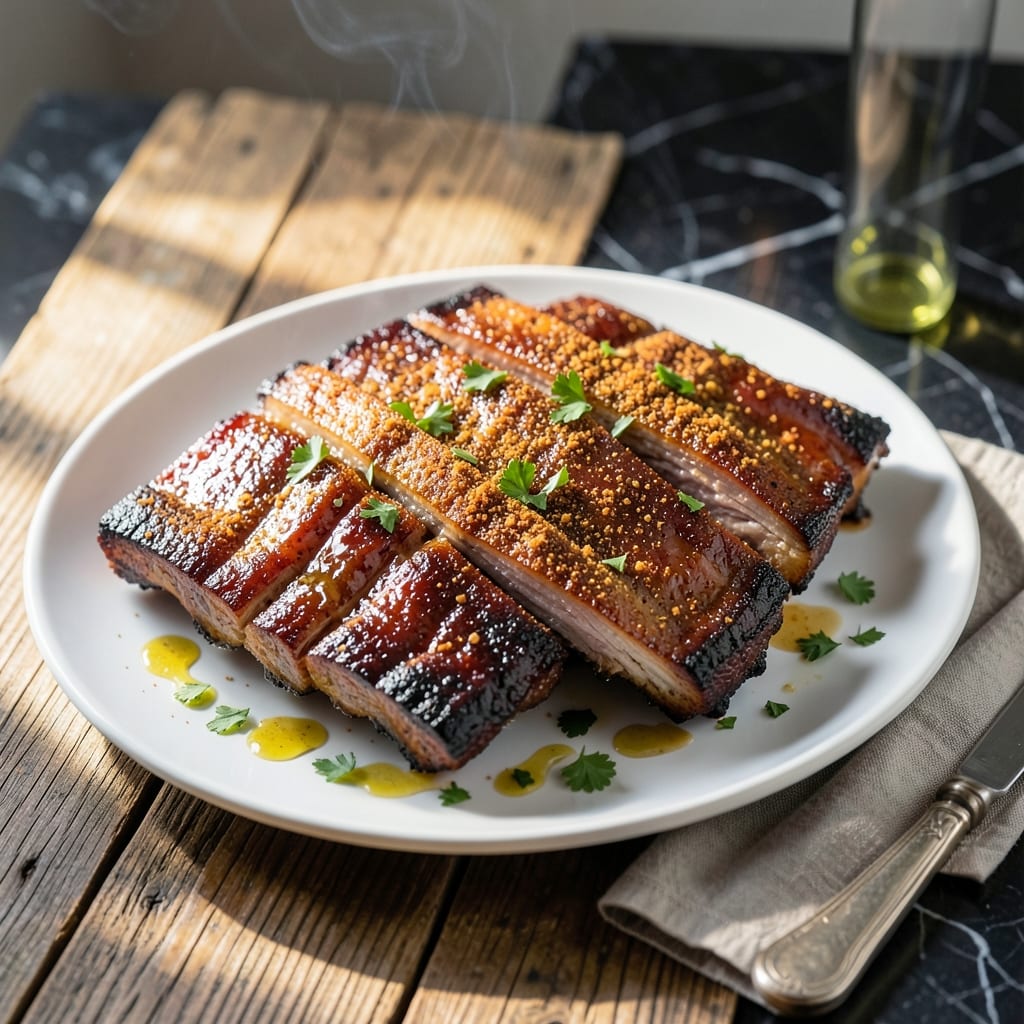
This slow-smoked pork spare ribs recipe delivers the best results you’ll ever taste—tender meat that literally falls off the bone with every bite.
I’ve perfected this method over years of trial and error, focusing on low heat and patience to break down the collagen without drying out the meat. The secret lies in the slow-smoking process, which infuses deep, smoky flavor while keeping the ribs juicy.
What sets this apart is the balance of a bold dry rub and careful temperature control. The ribs emerge with a dark, caramelized bark on the outside and melt-in-your-mouth tenderness inside.
Whether for a backyard cookout or a weekend project, this technique guarantees restaurant-quality ribs every time.
Ingredients for Best Recipe for Pork Spare Ribs
Restaurant-quality ribs start with a bold dry rub and slow-smoked pork spare ribs. Nothing less will do.
| Ingredient | Amount | Notes |
|---|---|---|
| Pork Spare Ribs 🍖 | 4 lb | Full rack, membrane removed |
| Brown Sugar 🍚 | ½ cup | Light or dark, packed |
| Paprika 🌶️ | 2 tbsp | Sweet or smoked variety |
| Garlic Powder 🧄 | 1 ½ tbsp | Not garlic salt |
| Onion Powder 🧅 | 1 ½ tbsp | Fresh ground preferred |
| Kosher Salt 🧂 | 2 tbsp | Diamond Crystal preferred |
| Ground Black Pepper 🌶️ | 1 tbsp | Freshly ground for best flavor |
| Chili Powder 🌶️ | 1 tbsp | Mild or hot variety |
| Ground Cumin 🌿 | 1 tsp | Toasted for deeper flavor |
| Mustard Powder 🟡 | 1 tsp | Balances sweetness in rub |
| Apple Cider Vinegar 🍏 | ½ cup | For mopping during smoking |
| Hickory Wood Chips 🪵 | 2 cups | Soaked in water 1 hour |
| Olive Oil 🫒 | 2 tbsp | To bind dry rub |
| Barbecue Sauce 🍯 | 1 cup | For glazing final 30 minutes |
[recipe_ingredient_scaler]
The pork spare ribs are the foundation—look for full racks with good marbling at Costco or your local butcher. Remove the membrane yourself for better bark formation. Diamond Crystal kosher salt is non-negotiable for the rub; its texture and flavor are superior. For the wood chips, hickory provides classic smokiness, but apple or cherry wood adds a sweeter note if preferred.
No hickory chips? Pecan or oak work well, though they’re slightly stronger. Brown sugar can be swapped for turbinado at a 1:1 ratio for a crunchier bark. Skip the mustard powder? A tablespoon of prepared yellow mustard in the rub gets you close. For barbecue sauce, Stubb’s Original or Sweet Baby Ray’s are reliable store-bought options for that final glaze.
The dry rub keeps in an airtight container for 3 months. Soak wood chips overnight for maximum smoke. Leftover ribs (if any) refrigerate for 4 days or freeze for 3 months—reheat gently to preserve texture.
Why You’ll Love This Recipe
- Set and Forget: I rub the ribs with brown sugar and spices, pop them in the oven, and let the heat do all the work while I tackle the rest of my day.
- Smoky Sweet Crust: That caramelized brown sugar and paprika crust? It’s sticky, smoky, and just a little spicy—honestly, the reason I make these every weekend.
- Crowd Pleaser: Between us, I’ve served these at backyard barbecues and quiet Sunday dinners, and everyone—even the picky eaters—goes back for seconds.
- Budget Stretcher: Pork spare ribs are affordable, and one batch feeds my family of five with leftovers for sandwiches the next day.
Step-by-Step Instructions for Pork Spare Ribs
Follow this method precisely to achieve competition-quality ribs with perfect bark and tenderness.
Step 1: Prepare and Season the Ribs
Begin by patting the 4 lb Pork Spare Ribs completely dry with paper towels. This ensures the dry rub adheres properly and promotes bark formation. Remove any remaining membrane from the bone side if not already done—it prevents the seasoning from penetrating.
In a bowl, combine the 0.5 cup Brown Sugar, 2 tbsp Paprika, 1.5 tbsp Garlic Powder, 1.5 tbsp Onion Powder, 2 tbsp Kosher Salt, 1 tbsp Ground Black Pepper, 1 tbsp Chili Powder, 1 tsp Ground Cumin, and 1 tsp Mustard Powder. Stir thoroughly to distribute the spices evenly.
Drizzle the 2 tbsp Olive Oil over the ribs and rub it into all surfaces. Apply the spice mixture generously, pressing it into the meat so it forms a thick, even crust. Let the seasoned ribs rest at room temperature for 30 minutes while you prepare the smoker.
Step 2: Set Up the Smoker with Wood Chips
Soak the 2 cups Hickory Wood Chips in water for at least 1 hour before smoking. This prevents them from burning too quickly and creates the ideal slow, steady smoke. Drain the wood chips just before use.
Preheat your smoker to 225°F using an indirect heat setup. When ready, add the soaked hickory wood chips to the smoker box or directly onto the coals. You want a thin, blue smoke—not thick white smoke, which can impart a bitter flavor.
Place the ribs bone-side down on the smoker grate. Maintain the temperature at 225°F throughout the cook. Close the lid and resist the urge to peek for at least 2 hours—consistent heat is critical for even cooking.
Step 3: Smoke and Mop for Moisture
Smoke the ribs undisturbed for 3 hours. After this time, combine the 0.5 cup Apple Cider Vinegar with an equal amount of water in a spray bottle. Every 45-60 minutes, lightly mist the ribs with this mixture to keep them moist and enhance bark development.
At the 4-hour mark, check the color—the ribs should have a deep mahogany hue. If they’re browning too quickly, wrap them tightly in butcher paper to prevent burning. Continue smoking until the internal temperature reaches 195-203°F, which typically takes 5-6 hours total.
Step 4: Glaze and Finish
During the final 30 minutes of smoking, brush the ribs generously with the 1 cup Barbecue Sauce. Apply the sauce in thin, even layers, allowing it to caramelize slightly between applications. This creates a sticky, glossy finish without overpowering the smoky flavor.
Remove the ribs from the smoker when they bend slightly when picked up with tongs—a sign they’re perfectly tender. Let them rest for 10-15 minutes before slicing between the bones. The meat should pull away cleanly from the bone with minimal resistance.
Pro Tips For Making Best Recipe For Pork Spare Ribs
- Pat Ribs Dry: Sounds weird, but it works: blot the ribs with paper towels before seasoning so the brown sugar and spices stick instead of sliding off.
- Low and Slow: After burning three batches, I finally figured out spare ribs need 275°F for 3-4 hours to get fall-off-the-bone tender without drying out.
- Skip the Rush: I learned this the hard way—don’t crank the heat to speed it up; the sugar in the rub will burn before the meat cooks through.
- Rest Before Serving: Give them 10 minutes under foil after cooking—your future self will thank you when the juices redistribute and stay on the plate, not the cutting board.
Dietary Considerations for These Flavors
Gluten-Free Friendly
This recipe is naturally gluten-free, as all ingredients—from the dry rub to the barbecue sauce—contain no wheat, barley, or rye. Just verify your barbecue sauce label, as some brands add thickeners. I trust Stubb’s Original for its clean, gluten-free formula. 💪
Keto Adaptations
To make these ribs keto-friendly, swap the 0.5 cup Brown Sugar in the rub for ½ cup erythritol-based sweetener like Swerve. Also, choose a sugar-free barbecue sauce such as G Hughes to keep carbs minimal.
Each serving of the original recipe has about 12g net carbs from the sugar, which drops to 2-3g with these substitutions.
Low-Sodium Options
Reduce sodium by cutting the 2 tbsp Kosher Salt in half and using no-salt-added versions of other seasonings. Low-sodium barbecue sauce is widely available and works perfectly for the final glaze.
Allergen Awareness
This dish is free of the top 9 allergens, including dairy, eggs, nuts, and soy. The only potential concern is mustard powder for those with mustard allergies—simply omit it if needed.
Vegetarian Substitute
For a meat-free version, try king oyster mushrooms or seitan ribs with the same rub and smoking technique. The texture won’t mimic pork exactly, but the smoky flavor profile translates beautifully. 🌱
Nutrition Facts
Frequently Asked Questions
What temperature should I smoke the ribs at?
Maintain a consistent 225°F throughout the entire 5-6 hour cook. This low-and-slow approach ensures the collagen breaks down without drying out the meat.
Can I use baby back ribs instead?
Yes, but reduce cooking time by 1-2 hours since baby back ribs are smaller. Spare ribs have more connective tissue, requiring the longer cook time for perfect tenderness.
How do I know when the ribs are done?
The ribs are ready when they reach an internal temperature of 195-203°F. They should bend slightly when picked up with tongs and the meat should pull away cleanly from the bone.
Should I wrap the ribs in foil during smoking?
Only if they’re browning too quickly. Otherwise, leave them unwrapped to develop a rich, caramelized bark. Wrapping can speed up cooking but may soften the exterior.

Trained in classic French technique but raised on slow-cooked ribs and spicy rubs, she blends culinary skill with smoke and soul.
- Recipe for Boneless Pork Chops in Cast Iron Skillet: Sear and Baste to Juicy Perfection - October 3, 2026
- Recipe for Boneless Cross Rib Roast: Slow-Roasted Beef with Herb Crust - October 3, 2026
- Hamburgers in Sauce Recipe Crock Pot: Slow-Cooked Savory Delight - October 3, 2026