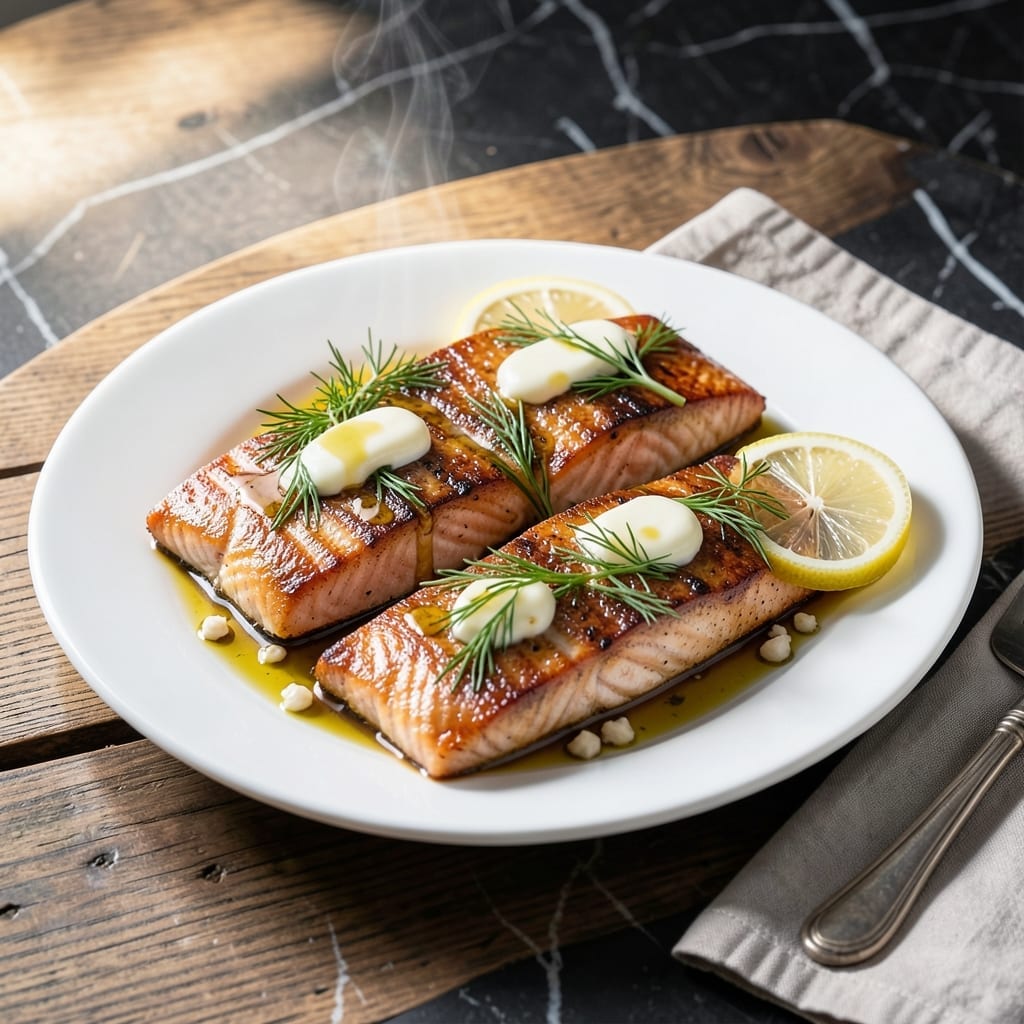
This salmon recipe delivers flaky perfection every time with a proven technique that guarantees restaurant-quality results at home.
Simple preparation highlights the fish’s natural richness, while lemon-dill brightness adds the ideal finishing touch to each tender bite.
Ingredients for Best Recipe for Salmon Fish
Restaurant-quality salmon requires just twelve carefully selected ingredients for optimal results.
| Ingredient | Amount | Notes |
|---|---|---|
| Salmon Fillets 🐟 | 4 whole | Skin-on, wild-caught preferred |
| Extra-Virgin Olive Oil 🫒 | 2 tbsp | Divided for cooking and finishing |
| Unsalted Butter 🧈 | 3 tbsp | Melted for basting |
| Fresh Dill 🌿 | ¼ cup | Chopped, stems removed |
| Garlic Cloves 🧄 | 3 cloves | Minced for depth of flavor |
| Lemon 🍋 | 1 whole | Zested and juiced |
| Kosher Salt 🧂 | 1 tsp | Diamond Crystal preferred |
| Freshly Ground Black Pepper 🌶️ | ½ tsp | Coarse grind recommended |
| Dijon Mustard 🟡 | 1 tbsp | For lemon-dill sauce |
| Mayonnaise 🥛 | 2 tbsp | Full-fat for creaminess |
| White Wine 🍷 | ¼ cup | Dry variety preferred |
| Fresh Parsley 🌿 | 2 tbsp | Chopped for garnish |
| Lemon Wedges 🍋 | 4 slices | For serving |
[recipe_ingredient_scaler]
The salmon quality is paramount. Wild-caught fillets with skin-on deliver superior texture and flavor—sockeye or king salmon are ideal. Source from reputable seafood counters at Whole Foods or local fishmongers who can confirm freshness. For the butter, European-style unsalted provides richer, creamier basting liquid. Always check the fish for any remaining pin bones before cooking (tweezers work best).
Short on time? Pre-minced garlic from a jar saves minutes without sacrificing quality. No white wine? Dry vermouth or chicken broth with a splash of vinegar works in a pinch. Fresh dill is non-negotiable here—dried dill at one-third the amount can substitute but lacks brightness. For the mayonnaise, Duke’s or Hellmann’s provide the perfect creamy base for the lemon-dill sauce.
Store fresh salmon in the coldest part of your refrigerator and use within 2 days. The lemon-dill sauce keeps 3-4 days in an airtight container. Leftovers reheat gently—microwave at 50% power to prevent drying out. Always bring salmon to room temperature 15 minutes before cooking for even doneness.
Why You’ll Love This Recipe
- One Pan Wonder: I sear the salmon in butter and oil, then let the garlic and dill do their magic—cleanup is just one pan.
- Buttery Garlic Bliss: That first bite of crispy salmon skin with the rich garlic butter and fresh dill? Ridiculously good.
- Weeknight Hero: It’s my go-to for busy evenings—ready in 20 minutes and fancy enough for company. (Yes, even on a Tuesday night)
- Meals for Days: Leftovers taste even better the next day, so I always make extra for lunches.
Step-by-Step Instructions for Salmon Fish
Master the technique that guarantees flaky, moist salmon with vibrant lemon-dill flavor every time.
Step 1: Prepare and Season the Salmon Fillets
Pat the 4 whole Salmon Fillets completely dry with paper towels—this is non-negotiable for achieving crisp skin. I focus on the skin side first, pressing firmly to remove all moisture, then flip and repeat. The moment you see the paper towel coming away clean, you’re ready to season.
Season both sides uniformly with the 1 tsp Kosher Salt and 0.5 tsp Freshly Ground Black Pepper. I distribute the salt by sprinkling from a height of about 12 inches above the fillets—this ensures even coverage without clumping. Let the seasoned fillets rest at room temperature for 10 minutes while you prep the remaining ingredients.
Step 2: Sear the Salmon Skin-Side Down
Heat 1 tbsp Extra-Virgin Olive Oil in a large skillet over medium-high heat until the oil shimmers but doesn’t smoke. Carefully place the fillets skin-side down in the pan, pressing gently with a fish spatula for 10 seconds to prevent curling and ensure full contact with the hot surface.
Cook undisturbed for 4-5 minutes until the skin transforms to a crisp, golden brown and the edges of the fillets turn opaque. Resist the urge to peek or move them—premature flipping ruins the crust. The skin should release cleanly from the pan when it’s ready.
Step 3: Baste with Garlic-Infused Butter
Reduce heat to medium and add the remaining 1 tbsp Extra-Virgin Olive Oil, 3 tbsp Unsalted Butter, minced 3 cloves Garlic Cloves, and 0.25 cup Fresh Dill. Tilt the pan slightly and use a spoon to baste the fillets continuously with the foaming butter mixture for 2-3 minutes.
The butter should turn a pale golden color and smell fragrant with garlic and dill. This basting technique cooks the top of the fillets gently while infusing them with flavor. The salmon is done when it reaches an internal temperature of 125°F and flakes easily with a fork.
Step 4: Create the Lemon-Dill Sauce
Transfer the salmon to a warm plate, leaving the butter mixture in the pan. Add the juice from the 1 whole Lemon, 1 tbsp Dijon Mustard, and 2 tbsp Mayonnaise. Whisk vigorously over low heat for 1 minute until the sauce emulsifies and thickens slightly.
For extra brightness, stir in the lemon zest from the same lemon. Pour in the 0.25 cup White Wine and let it simmer for 1-2 minutes until the sauce reduces by about one-third. The sauce should coat the back of a spoon with a velvety texture.
Step 5: Plate and Garnish for Service
Spoon the warm lemon-dill sauce over the salmon fillets, allowing some to pool around the base. Garnish with the 2 tbsp Fresh Parsley and serve immediately with the 4 slices Lemon Wedges on the side. The parsley adds a fresh pop of color and herbaceous note that complements the dill.
Each fillet should have a crisp, golden skin side and a tender, flaky interior that separates effortlessly with a fork. The sauce should be bright and creamy, tying all the flavors together without overpowering the delicate salmon.
Pro Tips For Making Best Recipe For Salmon Fish
- Skin Side Down First: Start cooking the salmon skin-side down in a hot pan with olive oil—this guarantees crispy skin and prevents sticking. I learned this the hard way after peeling half the fillet off the pan mid-flip.
- Pat It Dry: Blot the salmon fillets thoroughly with a paper towel before seasoning. Sounds tedious, but it actually changes the outcome—wet fish steams instead of searing.
- Skip Cold Butter: Let the butter sit at room temperature for 10 minutes before adding it to the pan. Cold butter can make the temperature drop too fast, and your salmon ends up unevenly cooked.
- Rest Before Serving: Give the salmon a solid 5 minutes off the heat before serving—it keeps the juices inside where they belong. I used to rush this part and wondered why my fish was dry.
Make-Ahead Tips for This Recipe
Prep Ahead for Success
You can chop the ¼ cup Fresh Dill and 2 tbsp Fresh Parsley up to 24 hours ahead. Store them in damp paper towels inside a sealed container. This keeps the herbs vibrant and ready to use. 🌿
Season in Advance
Pat the 4 whole Salmon Fillets dry and season with 1 tsp Kosher Salt and 0.5 tsp Freshly Ground Black Pepper the night before. Cover and refrigerate. This gives the seasoning time to penetrate deeply.
Make the Sauce Early
Whisk together the 1 tbsp Dijon Mustard, 2 tbsp Mayonnaise, lemon zest, and juice in advance. Store in an airtight container for up to 2 days. Stir in the warm butter mixture just before serving.
White Wine Prep
Measure out the ¼ cup White Wine the day before and leave it at room temperature. This takes the chill off and ensures it incorporates smoothly into the sauce. I always use a dry Sauvignon Blanc for brightness.
Room Temperature Tip
Take the salmon out of the fridge 15 minutes before cooking for even doneness. This small step makes a big difference in texture. Trust me, it’s worth the wait. ⏰
Storage Strategy
If prepping fully in advance, store seasoned salmon and sauce separately. Combine only when ready to cook for the best texture and flavor. This keeps everything fresh and vibrant.
Frequently Asked Questions
What temperature should I cook salmon to?
Cook until it reaches an internal temperature of 125°F. This ensures perfect doneness with tender, flaky texture without drying out. Use a meat thermometer for accuracy.
Can I use frozen salmon fillets?
Yes, but thaw completely first in the refrigerator for 12-24 hours. Pat dry thoroughly before cooking to achieve crisp skin. Never cook from frozen.
How do I prevent the skin from sticking?
Make sure your pan is very hot before adding the fillets and don’t move them for 4-5 minutes. Press gently with a spatula at the start for full contact. The skin will release when ready.
What can I substitute for white wine?
Dry vermouth or chicken broth with a splash of vinegar works well. The acidity helps balance the sauce’s richness. Use the same ¼ cup measurement.
Nutrition Facts

Trained in classic French technique but raised on slow-cooked ribs and spicy rubs, she blends culinary skill with smoke and soul.
- Recipe for Curried Lamb Chops: Spice-Rubbed and Pan-Seared to Succulence - October 3, 2026
- Recipe for Boneless Leg of Lamb Roast in the Oven: Herb-Crusted and Rosy Pink Inside - October 3, 2026
- Meat Loaf Recipe With Beef And Pork: Homestyle Blend With Rich Gravy - October 3, 2026