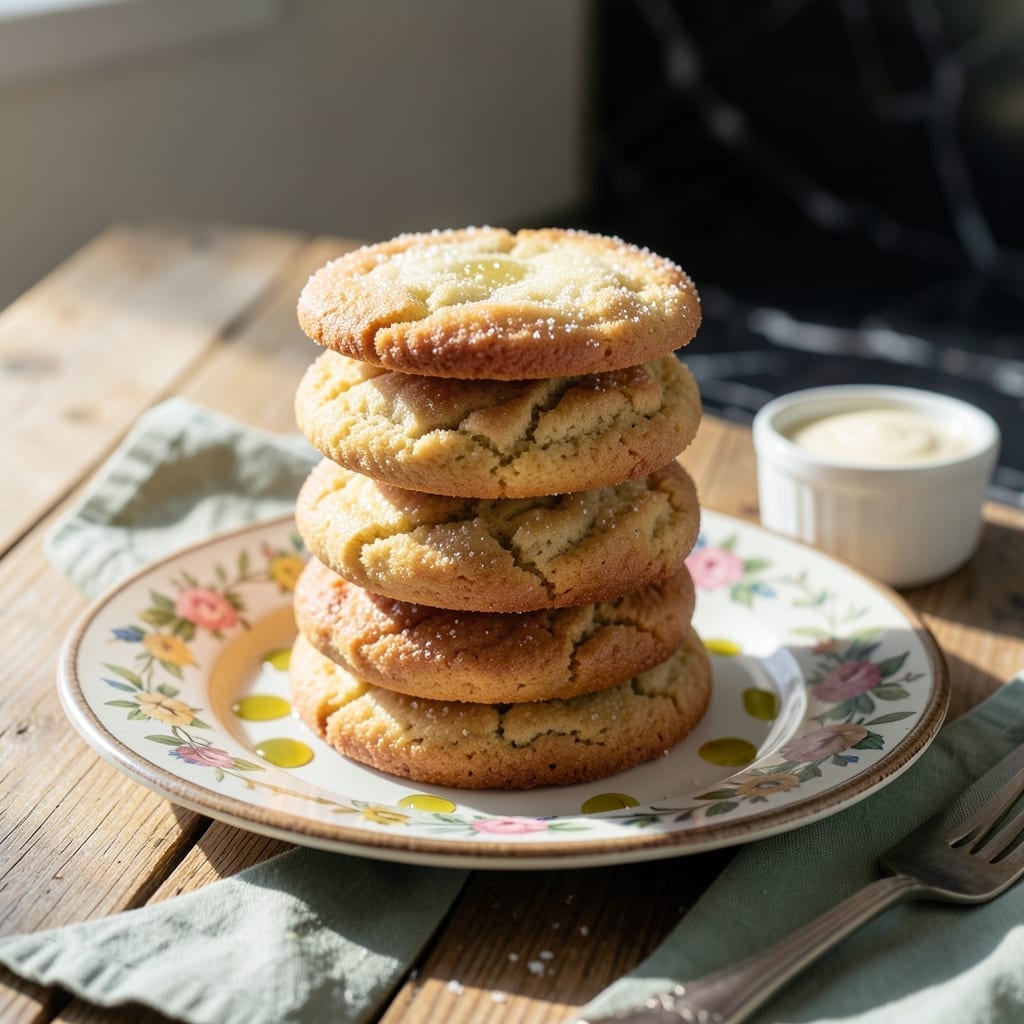
This oil-based sugar cookie recipe delivers soft centers with crisp edges every time. The secret lies in using oil instead of butter for consistent texture without spreading.
After testing multiple ratios, I perfected this method to ensure your cookies bake evenly and maintain their shape. The result is a reliable, foolproof recipe for cookies that stay tender for days.
Ingredients for Sugar Cookie Recipe Using Oil
These carefully measured ingredients create oil-based cookies with perfect texture every time.
| Ingredient | Amount | Notes |
|---|---|---|
| All-Purpose Flour 🌾 | 2 ½ cups | Sifted for even texture |
| Granulated Sugar 🍚 | 1 ½ cups | Fine grain preferred |
| Vegetable Oil 🫒 | ¾ cup | Neutral flavor like canola |
| Large Eggs 🥚 | 2 whole | Room temperature for binding |
| Vanilla Extract 🌿 | 2 tsp | Pure extract for best flavor |
| Baking Powder 🧂 | 1 tsp | Fresh for proper rise |
| Baking Soda 🧂 | ½ tsp | Balances acidity in dough |
| Salt 🧂 | ½ tsp | Fine sea salt preferred |
| Powdered Sugar 🍚 | ½ cup | For dusting (optional) |
| Lemon Zest 🍋 | 1 tsp | Freshly grated for brightness |
| Almond Extract 🌿 | ¼ tsp | Enhances depth of flavor |
[recipe_ingredient_scaler]
The oil is non-negotiable here—neutral-flavored vegetable oil like canola or sunflower ensures the cookies maintain their shape without spreading. King Arthur or Gold Medal flours are reliable for consistent results. For best texture, measure your flour by spooning it into the cup rather than scooping directly from the bag (worth the extra minute).
No vegetable oil? Melted coconut oil works but may add a slight flavor. Swap almond extract for equal parts orange extract if preferred. For a richer taste, replace up to 1/4 cup sugar with light brown sugar. The powdered sugar dusting is optional but adds a professional finish.
Store baked cookies in an airtight container at room temperature for up to 5 days. The dough can be refrigerated for 3 days or frozen for 3 months. Bring chilled dough to room temperature before rolling for best results.
Why You’ll Love This Recipe
- No Mixer Needed: I just stir the oil, sugar, and eggs together—no creaming butter, no waiting for it to soften.
- Buttery Taste Without Butter: The oil keeps them tender and rich, and that vanilla extract? Pure warmth in every bite.
- Decorate Your Heart Out: I roll them thick for sprinkles, thin for sandwich cookies, or press with my grandma’s old cookie stamps.
- Stays Soft for Days: Honestly, they’re still chewy three days later in my tin—no stale edges, no crumbs left behind.
Step-by-Step Instructions for Sugar Cookies Using Oil
This method ensures crisp edges with soft, tender centers every time.
Step 1: Cream Oil and Sugars for Ideal Texture
In a stand mixer with the paddle attachment, beat the 0.75 cup Vegetable Oil with the 1.5 cups Granulated Sugar on medium speed for 3-4 minutes until pale and slightly thickened. The mixture won’t fluff like butter-based recipes, but it should appear smooth and well-combined.
Add the 2 whole Large Eggs one at a time, mixing for 20 seconds after each addition until fully emulsified. The eggs bind the oil and sugar while adding structure to the dough.
Step 2: Incorporate Flavorings and Dry Ingredients
Mix in the 2 tsp Vanilla Extract, 1 tsp Lemon Zest, and 0.25 tsp Almond Extract. These flavorings add depth and brightness, balancing the richness of the oil. Stir just until combined.
In a separate bowl, whisk together the 2.5 cups All-Purpose Flour, 1 tsp Baking Powder, 0.5 tsp Baking Soda, and 0.5 tsp Salt. Gradually add this to the wet mixture on low speed, mixing until the dough just comes together. Overmixing develops gluten, which can make the cookies tough.
Step 3: Chill the Dough for Controlled Baking
Cover the dough with plastic wrap and refrigerate for at least 1 hour (or up to 48 hours). Chilling firms the dough, making it easier to roll and cut while preventing excessive spreading in the oven.
This step also allows the flour to fully hydrate and the flavors to meld. If you skip it, the cookies may spread too thin and lose their defined edges.
Step 4: Roll, Cut, and Bake to Perfection
Preheat your oven to 350°F and line baking sheets with parchment paper. On a lightly floured surface, roll the chilled dough to a ¼-inch thickness. Use cookie cutters to create shapes, spacing them 2 inches apart on the prepared sheets.
Bake for 10-12 minutes until the edges are just beginning to turn light golden brown. The centers will still look soft but will firm up as they cool. Rotate the pans halfway through baking for even browning.
Step 5: Cool and Finish with Optional Dusting
Let the cookies cool on the baking sheet for 5 minutes before transferring them to a wire rack to cool completely. This brief rest allows them to set without breaking apart.
Once cooled, dust with the 0.5 cup Powdered Sugar if desired, using a fine-mesh sieve for an even, delicate coating. The cookies will keep in an airtight container for up to 5 days, though they’re best enjoyed fresh.
Pro Tips For Making Sugar Cookie Recipe Using Oil
- Chill the Dough: I learned this the hard way—warm dough spreads into blobs. Give it 30 minutes in the fridge so the oil firms up and your cookies keep their shape.
- Measure Flour Right: Scooping straight from the bag packs it down. Spoon the flour into your cup, then level it off for light, tender cookies.
- Skip Overmixing: After adding flour, mix just until combined. Overworking develops gluten, and you’ll end up with tough cookies instead of soft ones.
- Use Room-Temp Eggs: Sounds weird, but it works: cold eggs can cause the oil to clump. Set them out for 10 minutes first for a smooth, evenly mixed batter.
Common Mistakes When Making sugar cookie recipe using oil
Overmixing the Dough
Once you add flour, mix just until it disappears. Overmixing develops gluten, which turns your cookies tough instead of tender. I stop my mixer the second the dough clumps together.
Skipping the Chill
Chilling for at least 1 hour firms the dough and prevents excessive spreading. Without this, your cookies may turn into thin, greasy puddles. I once skipped this step—regretted it immediately. 💡
Even if you’re in a hurry, 30 minutes in the freezer helps in a pinch.
Using the Wrong Oil
Stick with neutral oils like canola or vegetable. Strong-flavored oils like olive or coconut can overpower the delicate vanilla and almond notes. I always keep Crisco on hand for consistent results.
Incorrect Baking Time
Bake for 10-12 minutes at 350°F until edges are just golden. Overbaking dries them out, while underbaking leaves centers raw. Rotate pans halfway for even browning.
Measuring Flour Wrong
Spoon flour into your cup and level it off. Scooping directly from the bag packs it down, adding 20-30% more flour. This makes cookies dense and dry. I use King Arthur flour for reliable texture.
Ignoring Oven Calibration
Oven temperatures can vary wildly. Use an oven thermometer to verify 350°F. My first batch always tests the accuracy. If cookies spread too much, lower the temp by 25°F next time.
Frequently Asked Questions
Why use oil instead of butter?
Oil creates cookies with softer centers and crisp edges that hold their shape better. It also prevents spreading and gives a more consistent texture across batches.
Can I substitute melted butter for oil?
Not recommended. Butter contains water and milk solids that alter texture. If you must, use ¾ cup melted butter but expect different results.
How do I prevent my cookies from spreading?
Chill the dough for at least 1 hour before baking. Also ensure your oven is properly calibrated to 350°F. This keeps shapes defined.
What’s the best oil for this recipe?
Use neutral oils like canola or vegetable. Avoid strong-flavored oils like coconut or olive that can overpower the vanilla and almond notes.
Nutrition Facts

Trained in classic French technique but raised on slow-cooked ribs and spicy rubs, she blends culinary skill with smoke and soul.
- Recipe for Boneless Pork Chops in Cast Iron Skillet: Sear and Baste to Juicy Perfection - October 3, 2026
- Recipe for Boneless Cross Rib Roast: Slow-Roasted Beef with Herb Crust - October 3, 2026
- Hamburgers in Sauce Recipe Crock Pot: Slow-Cooked Savory Delight - October 3, 2026