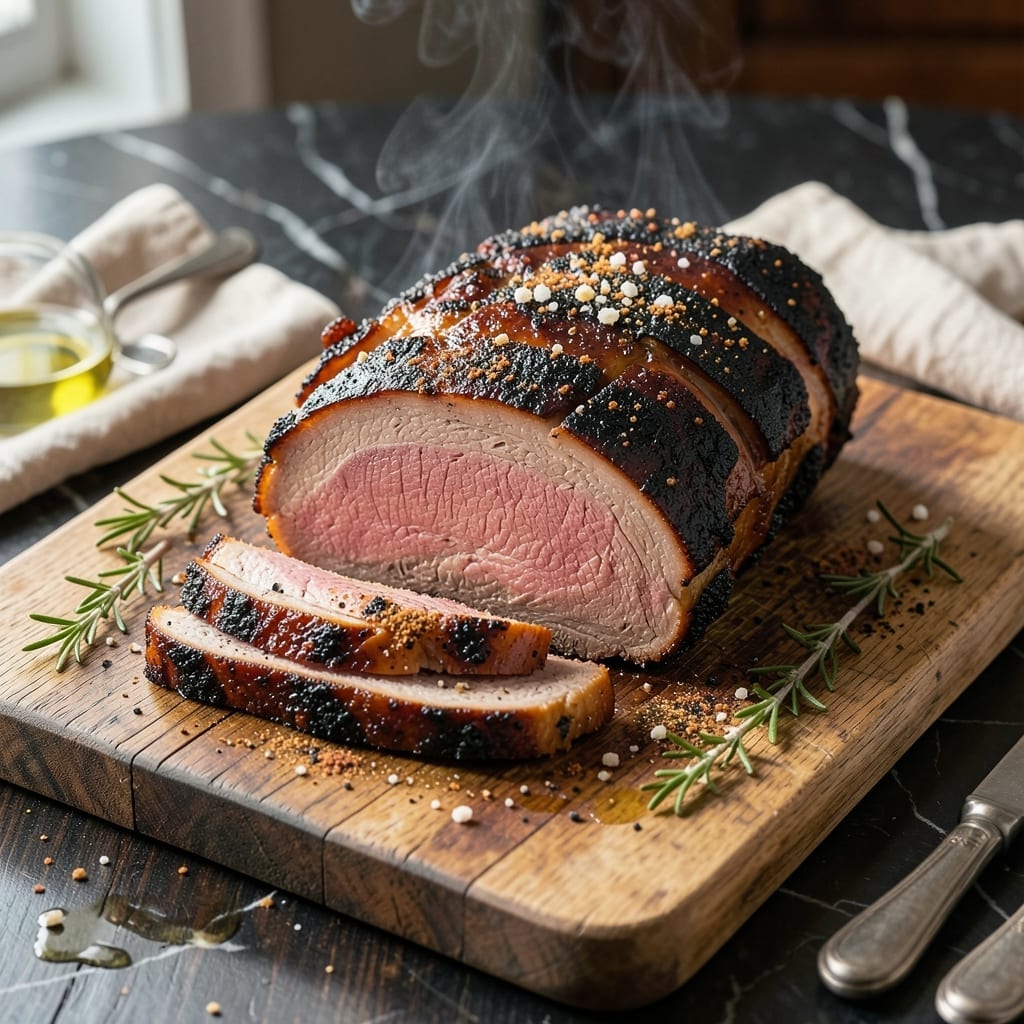
Mastering brisket on a pellet grill is about patience and precision. This method delivers tender, smoky perfection every time.
I’ve refined this technique through years of competition cooking. The low and slow approach ensures a best result with a perfect bark and juicy interior.
Ingredients for Best Smoked Brisket Recipe Pellet Grill
A few quality ingredients and a long cook time yield that legendary smoky tenderness.
| Ingredient | Amount | Notes |
|---|---|---|
| Whole Packer Brisket 🥩 | 12 lb | Untrimmed, with fat cap intact |
| Coarse Kosher Salt 🧂 | ½ cup | Diamond Crystal preferred for texture |
| Coarsely Ground Black Pepper 🌶️ | ½ cup | Freshly ground for maximum flavor |
| Garlic Powder 🧄 | 2 tbsp | High-quality for even coating |
| Onion Powder 🧅 | 2 tbsp | Balances the bold spices |
| Smoked Paprika 🌶️ | 2 tbsp | Adds depth to the bark |
| Brown Sugar 🍚 | ¼ cup | Light or dark, packed |
| Worcestershire Sauce 💧 | ¼ cup | Anchovy-free if preferred |
| Apple Cider Vinegar 🍏 | ¼ cup | Balances richness of the meat |
| Pellet Grill Wood Pellets 🪵 | 20 lb | Hickory or oak for classic flavor |
| Beef Tallow 🫒 | ½ cup | For spritzing during cook |
| Yellow Mustard 🟡 | ½ cup | Binder for the rub |
[recipe_ingredient_scaler]
The brisket itself is non-negotiable—look for USDA Prime or Choice grade with good marbling at Costco or a trusted butcher. The fat cap should be at least 1/4-inch thick to protect the meat during the long smoke. I always grab hickory pellets from Traeger for consistent heat and flavor. The rub ingredients are simple but freshness matters—check the expiration on your spices before starting.
No brown sugar? Raw turbinado sugar works in a pinch. Swap Worcestershire for coconut aminos if avoiding anchovies. The apple cider vinegar can be replaced with white vinegar at half the amount. For the binder, olive oil is a decent substitute for mustard. If you can’t find beef tallow, melted butter adds richness to the spritz (though it’s not traditional).
Store uncooked brisket in the fridge for up to 3 days before smoking. Once smoked, it keeps 4-5 days wrapped in foil. For longer storage, slice and freeze for up to 3 months. Always let it rest at least an hour before slicing—this keeps it juicy.
Why You’ll Love This Recipe
- Set It and Forget It: I just season the brisket, load the pellet grill, and let it do the work—no babysitting required.
- Smoky, Savory Crust: That coarse salt and pepper bark with garlic and onion powder? It’s the kind of flavor that makes people close their eyes on first bite.
- Feeds a Crowd: One packer brisket on my pellet grill means leftovers for sandwiches, tacos, or chili all week long.
- Budget-Friendly Luxury: Honestly, a whole packer is cheaper per pound than pre-cut brisket, and the results taste like a high-end BBQ joint.
Step-by-Step Instructions for Smoked Brisket Pellet Grill
Here’s the proven method that delivers competition-level results with a perfect bark every time.
Step 1: Trim and Apply the Rub to the Brisket
Start by trimming the fat cap of the 12 lb Whole Packer Brisket down to about ¼ inch thickness. I use a sharp boning knife for precision, leaving enough fat to protect the meat during the long cook while ensuring smoke penetration. Remove any hard fat or silver skin from the meat side.
In a bowl, combine the 0.5 cup Coarse Kosher Salt, 0.5 cup Coarsely Ground Black Pepper, 2 tbsp Garlic Powder, 2 tbsp Onion Powder, 2 tbsp Smoked Paprika, and 0.25 cup Brown Sugar. I press this rub firmly into every surface of the brisket, including the edges. The 0.5 cup Yellow Mustard acts as a binder to help the rub adhere perfectly.
Step 2: Set Up the Pellet Grill for Low and Slow Cooking
Fill your pellet grill with the 20 lb Pellet Grill Wood Pellets—hickory or oak for that classic smoky flavor. Preheat the grill to 225°F and ensure it maintains a consistent temperature. I always use a quality probe thermometer to monitor the grill temp, as pellet grills can sometimes fluctuate.
Once the grill is stable at 225°F and you see thin blue smoke (not thick white smoke), place the brisket fat-side up on the grill grates. The fat cap will render down during the cook, basting the meat and creating that beautiful bark we’re after. Close the lid and resist the urge to peek—every time you open it, you add 15-20 minutes to your cook time.
Step 3: Spritz and Monitor Through the Stall
After about 4 hours of smoking, I begin spritzing the brisket every 45-60 minutes with a mixture of the 0.25 cup Worcestershire Sauce and 0.25 cup Apple Cider Vinegar. This keeps the surface moist and adds a tangy depth to the bark. The vinegar also helps balance the richness of the meat.
At around the 6-8 hour mark, you’ll hit “the stall”—when the internal temperature stops rising as moisture evaporates. This is completely normal. I spritz with the 0.5 cup Beef Tallow mixed with a little hot water at this stage to power through. The brisket is ready to wrap when it reaches an internal temperature of 165-170°F.
Step 4: Wrap and Finish to Probe-Tender Perfection
Once the stall hits, wrap the brisket tightly in pink butcher paper (this “Texas crutch” method preserves the bark better than foil). Return it to the grill and continue cooking until the internal temperature reaches 200-205°F and a probe slides in like butter with no resistance.
This usually takes another 4-6 hours, but I trust the probe test over the thermometer—tenderness is what matters most. Once probe-tender, remove the brisket from the grill and let it rest in the butcher paper, wrapped in towels in a cooler, for at least 1 hour (I prefer 2 hours). This resting period allows the juices to redistribute, ensuring every slice is moist and flavorful.
Pro Tips For Making Best Smoked Brisket Recipe Pellet Grill
- Trim the Fat Cap: Leave about 1/4 inch of fat on the brisket—any thicker and it won’t render properly, any thinner and the meat dries out. I learned this the hard way after my first few came out greasy or tough.
- Season Overnight: Coat the brisket with salt, pepper, garlic and onion powder the night before smoking. The dry brine penetrates deep, and the crust forms better—sounds weird, but it works.
- Skip the Rush: Resist the urge to crank the pellet grill past 225°F. Low and slow is non-negotiable for that fall-apart texture, even if it means starting earlier than you’d like.
- Wrap at 165°F: When the internal temp hits 165°F, wrap the brisket in butcher paper or foil. This pushes through the stall faster and locks in moisture without turning it into pot roast.
Storing and Reheating best smoked brisket recipe pellet grill
Refrigerator Storage
Let your brisket cool for no more than 2 hours before wrapping it tightly in the butcher paper, then foil. Store in the fridge at 40°F or below for up to 4-5 days. The flavors deepen as it rests, making leftovers almost as good as fresh. ❄️
Freezer Storage
For longer storage, slice the brisket and vacuum-seal portions. It freezes beautifully for up to 3 months without losing moisture. I use a FoodSaver for airtight protection. Label each package with the date for easy tracking.
Oven Reheating
Preheat your oven to 325°F. Wrap the brisket in foil with 2 tbsp beef broth and heat for 20-30 minutes until reaching 165°F internal temperature. This method preserves the bark better than any other.
Sous Vide Reheating
Set your Anova sous vide to 165°F and submerge vacuum-sealed slices for 1-2 hours. This brings the meat back to its original tenderness. I swear by this method for competition-quality results every time. 🔥
Serving from Rest
If you’ve rested the whole brisket in a cooler, it stays hot for 4-6 hours. Slice just before serving to retain all those precious juices. This is my go-to for BBQ gatherings along the coast.
Nutrition Facts

Trained in classic French technique but raised on slow-cooked ribs and spicy rubs, she blends culinary skill with smoke and soul.
- Recipe for Boneless Pork Chops in Cast Iron Skillet: Sear and Baste to Juicy Perfection - October 3, 2026
- Recipe for Boneless Cross Rib Roast: Slow-Roasted Beef with Herb Crust - October 3, 2026
- Hamburgers in Sauce Recipe Crock Pot: Slow-Cooked Savory Delight - October 3, 2026