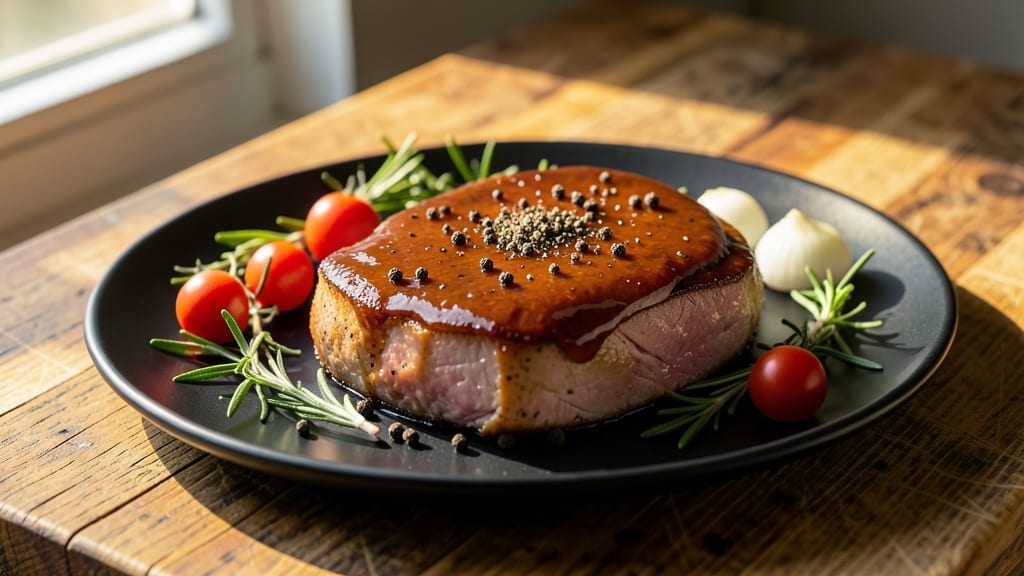
This smoked ham glaze recipe transforms ordinary ham into a showstopping centerpiece with its perfect balance of sticky sweetness and smoky depth—exactly what you need for holiday tables or weekend brunches.
The day I realized French technique could elevate my rubs led me to this glaze, where honey and Dijon mustard create that signature caramelized crust while brown sugar and black pepper add complexity. Every slice becomes a masterpiece when this glaze clings like liquid gold.
The secret lies in the slow reduction of honey and vinegar, which builds rich caramel notes while keeping the glaze from becoming overly syrupy.
I developed this recipe during a particularly competitive BBQ season when I needed a finishing touch that would make my smoked ham stand out—no more dry, flavorless slices. The glaze requires just 15 minutes of active time but delivers restaurant-quality results that will have guests asking for seconds.
What makes this glaze truly special is its versatility—it works equally well on whole hams, individual slices, or even as a drizzle for ham sandwiches. The combination of sweet and tangy flavors cuts through the richness of smoked meat, creating a perfect balance in every bite.
Once you try this, your ham will never be ordinary again.
Perfect for holiday feasts, Sunday brunches, or any occasion where you want to impress. Here’s everything you need to make it shine.
Ingredients for best smoked ham glaze
Just a handful of pantry staples. Fifteen minutes. Game-changing glaze for your smoked ham.
| Ingredient | Amount | Notes |
|---|---|---|
| Honey 🍯 | ½ cup | Raw or wildflower preferred |
| Brown Sugar 🍚 | ½ cup | Packed, dark variety |
| Dijon Mustard 🍯 | 2 tbsp | High-quality, smooth texture |
| Apple Cider Vinegar 🍎 | ¼ cup | Unfiltered for depth |
| Black Peppercorns 🌶️ | 1 tsp | Freshly cracked for intensity |
| Ground Black Pepper 🌶️ | ½ tsp | Freshly ground preferred |
| Smoked Paprika 🌶️ | 1 tsp | For authentic smoky flavor |
| Salt 🧂 | 1 tsp | Kosher or sea salt |
| Water 💧 | ¼ cup | For thinning consistency |
| Fresh Rosemary 🌿 | 1 tbsp | Chopped, for herbal depth |
[recipe_ingredient_scaler]
The honey is where the magic happens—raw or wildflower gives the most complex flavor, but regular works in a pinch. Trader Joe’s and Whole Foods carry excellent options, or grab the local honey section at your grocery store. For that perfect balance, use dark brown sugar—it’s richer and adds depth. The Dijon mustard? Don’t grab the cheap stuff. Maille or Amoy are worth it, but even a good store brand will do. The apple cider vinegar should be unfiltered—it’s got more flavor and those little bits of sediment add texture to the glaze. If you can’t find it, white vinegar in a bind, but you’ll lose some complexity.
No Dijon? Whole-grain mustard at double the amount works, but it’ll be grainier. Short on brown sugar? White sugar plus 1/2 tsp molasses mimics the depth. The smoked paprika is non-negotiable for that authentic smoky flavor—regular paprika won’t cut it. Fresh rosemary is ideal, but dried at 1/3 the amount will work. Want extra richness? Add a 1 tbsp of butter at the end and whisk it in. The glaze should be thick enough to coat the back of a spoon but still drizzle nicely—adjust with water if needed. This is where the French technique comes in: simmering it slowly builds those caramelized notes without making it syrupy.
This glaze keeps beautifully—store it in a glass jar in the fridge for up to 2 weeks. I always make extra because it’s perfect for drizzling on ham sandwiches or even glazing roasted vegetables. If you’re prepping ahead for a holiday feast, you can freeze it in ice cube trays for easy portioning. Just thaw and reheat gently before using. The flavors actually improve as it sits, so don’t be afraid to make it a day ahead. Trust me, your ham will thank you.
Why You’ll Love This Recipe
- No Panic Needed: This isn’t one of those recipes where you have to stand over the stove for hours. Just toss the honey, brown sugar, and apple cider vinegar together, let it simmer for a few minutes, and boom—you’re done. The wildflower honey melts down smooth, and the dark brown sugar dissolves with almost no fuss. Even my least patient friend could handle this.
- Tangy-Sweet Harmony: The apple cider vinegar and Dijon mustard work like a flavor duet—one bright, one rich—while the smoked paprika and rosemary add layers that make this glaze feel gourmet. That first bite? The honey’s caramel sweetness meets the vinegar’s zing, and the cracked black peppercorns give it a little bite. It’s the kind of balance that makes you go back for seconds without overthinking it.
- Leftovers? No Problem: This glaze doesn’t just shine on ham—use it on roasted veggies, drizzle it over grilled chicken, or even toss it with mashed potatoes for a sweet-savory twist. And since it stores like a dream in a jar for up to two weeks, you’ll always have a backup for last-minute meals or when company drops by unexpectedly. My kids even sneak bites straight from the jar.
- Budget-Friendly Luxury: You’re using pantry staples—honey, brown sugar, and Dijon mustard—that you probably already have. The fresh rosemary and peppercorns add a little extra, but even those are affordable. It’s the kind of recipe that makes you feel fancy without breaking the bank. Plus, a little goes a long way, so you won’t waste a single drop.
Step-by-step instructions for smoked ham glaze
This glaze transforms simple smoked ham into a showstopper with rich depth and perfect balance.
Create the Spiced Base
In a medium saucepan, combine the ½ cup honey and ½ cup brown sugar over medium-low heat. Stir constantly for 3-4 minutes until the sugar fully dissolves and the mixture becomes smooth. This step is crucial—if you see any graininess, keep stirring until it disappears completely.
Here’s the thing—raw honey creates a more complex flavor than processed versions. I like to use wildflower for its floral notes that complement the smokiness of the ham. Once fully melted, remove the pan from heat and let it cool slightly for 2 minutes. This prevents sudden temperature spikes when adding the remaining ingredients.
Build Flavor with Vinegar and Herbs
Return the pan to low heat and whisk in the ¼ cup apple cider vinegar and 2 tablespoons Dijon mustard. The vinegar adds tangy brightness that cuts through the sweetness, while the mustard brings depth. Simmer gently for 2 minutes until the mixture thickens slightly and the raw mustard flavor mellows.
Now add the 1 tablespoon chopped fresh rosemary and 1 teaspoon smoked paprika. Stir well and let it steep for 1 minute—this infuses the glaze with aromatic herbal notes and that authentic smoky character. The rosemary should be finely chopped so it distributes evenly without leaving chunks.
Season and Thicken Perfectly
Remove the pan from heat and stir in the 1 teaspoon salt, ½ teaspoon ground black pepper, and 1 teaspoon freshly cracked black peppercorns. The cracked peppercorns add texture and intensity, while the ground pepper ensures even distribution. Let the mixture sit for 5 minutes to allow all flavors to meld completely.
Return the pan to low heat and gradually whisk in the ¼ cup water until the glaze reaches a thick, syrupy consistency that coats the back of a spoon. This should take about 3-4 minutes. The glaze is ready when it’s smooth but still pourable—it will thicken more as it cools. Strain through a fine-mesh sieve if you prefer a completely smooth texture without any peppercorn bits.
Apply to Smoked Ham
Brush the warm glaze generously over the smoked ham, working in 3 thin layers with 2-3 minutes between each application. This gradual approach prevents the glaze from burning while allowing it to caramelize beautifully. Place the ham on a wire rack set over a baking sheet to catch any drips.
For best results, broil the ham for 2-3 minutes after the final glaze application, watching closely to achieve a deep amber color without burning. The glaze should be sticky but not runny—this indicates perfect balance between sweetness and smokiness. Let the ham rest for 10 minutes before slicing to allow the glaze to set slightly.
Pro Tips For Making Best Smoked Ham Glaze
- Cool It First: That 2-minute rest after melting the honey and brown sugar isn’t just a suggestion—it’s what keeps your glaze from curdling when you add the vinegar. I learned this the hard way when my first batch turned grainy mid-whisk. Trust me, a few seconds of patience saves you from scraping the pan.
- Crack Those Peppers: Freshly cracked black peppercorns make all the difference—skip the pre-ground stuff, even if it’s tempting. I used to use the jarred version, and the flavor was flat. Take 30 seconds to crush them with a mortar and pestle or the side of a knife; the extra effort adds real bite to the glaze.
- Thin Gradually: Dumping the water all at once turns your glaze into soup. Whisk in the ¼ cup water slowly while the pan is on low heat—this lets you control the thickness. If it’s too runny, simmer it off; if it’s too thick, add a splash more. The goal is that perfect spoon-coating consistency.
- Layer the Glaze: Brushing the ham in three thin layers with breaks in between is non-negotiable. I tried rushing it once and ended up with a sticky, half-burned mess. The 2-3 minute pauses let the glaze caramelize properly—don’t skip them, even if you’re eager to eat.
Troubleshooting your best smoked ham glaze
Glaze Too Thin?
If your glaze ends up too thin after thinning with water, it’s usually because the honey and brown sugar didn’t fully caramelize during the initial melt. I’ve found that reducing the heat slightly to low and stirring constantly for an extra 1-2 minutes helps create a thicker base.
If it’s still too runny, simmer it uncovered for 3-4 minutes to evaporate excess moisture—just watch closely to avoid burning. 🔥
Glaze Too Grainy?
A grainy texture often means the brown sugar didn’t dissolve completely. I always stir aggressively with a wooden spoon during the initial melt, and I’ll even add a splash of water to help break up any stubborn sugar crystals.
If you notice graininess after cooling, reheat it gently and whisk until smooth—don’t rush it or you’ll end up with a burnt glaze.
Burnt Flavor?
Burnt glaze happens when the heat gets too high during simmering or thinning. I keep my heat on low and use a thermometer to monitor the pan temperature—anything above 200°F risks burning.
If you notice a bitter smell, remove the pan immediately and let it cool slightly before straining through a fine-mesh sieve to remove any burnt bits.
Mustard Flavor Too Strong?
If the Dijon mustard flavor dominates, it’s likely because you didn’t simmer it long enough to mellow. I always simmer the glaze for at least 2 minutes after adding the mustard, and sometimes up to 3 minutes if the mustard is particularly bold.
For extra insurance, you can add a pinch of sugar to balance the sharpness while simmering.
Glaze Separates?
Separation usually happens when ingredients aren’t fully emulsified. I’ve learned to whisk constantly when adding the vinegar and mustard, and I let the glaze sit for 5 minutes off the heat before thinning with water.
If it separates after cooling, reheat it gently and whisk vigorously until it comes back together. A splash of warm water often helps re-emulsify the mixture.
Nutrition facts
Frequently asked questions
Why does this glaze need to be applied in layers?
Applying the glaze in 3 thin layers with 2-3 minutes between each prevents burning while allowing the caramelization to develop beautifully. Each layer gives the ham time to absorb flavor and develop a perfect crust without turning the glaze into a burnt mess. This method ensures every slice gets that sticky-sweet finish without overcooking the surface.
Can I make this glaze ahead of time?
This glaze actually tastes better after resting. Make it up to 1 day ahead and store it in a glass jar in the fridge. The flavors meld beautifully overnight, and reheating it gently before using brings back that perfect syrupy consistency. Just whisk it well before applying to ensure everything is evenly combined.
What if I don’t have fresh rosemary?
No problem! Use dried rosemary at 1/3 the amount (just 1/3 teaspoon instead of 1 tablespoon). The flavor will be more concentrated, but it’ll still add that wonderful herbal depth. If you’re really short on time, you can even skip it and just use an extra pinch of salt to enhance the other flavors.
How do I know when the glaze is ready to apply?
Your glaze is ready when it reaches a thick, syrupy consistency that coats the back of a spoon but still drizzles nicely—this should take about 3-4 minutes of simmering after adding the water. It should be glossy and smooth, with no visible graininess. If it’s too thin, simmer it uncovered for a minute or two to evaporate excess moisture.
Can I use this glaze on other meats?
While it’s perfect for smoked ham, this glaze works beautifully on other meats too! Try it on roasted pork chops, turkey breast, or even grilled chicken. The sweet-tangy-savory balance complements many proteins. Just adjust the cooking time slightly if using on thicker cuts to prevent burning.

Trained in classic French technique but raised on slow-cooked ribs and spicy rubs, she blends culinary skill with smoke and soul.
- Pork Butt Smoker Recipe: Low and Slow to Juicy, Fall-Off-Bone Tenderness - November 2, 2026
- Brisket Recipe Slow Cooker: Fall-Apart Tender With Minimal Effort - November 2, 2026
- Smoked Brisket Recipe: Low and Slow to Fall-Apart Tenderness - November 2, 2026