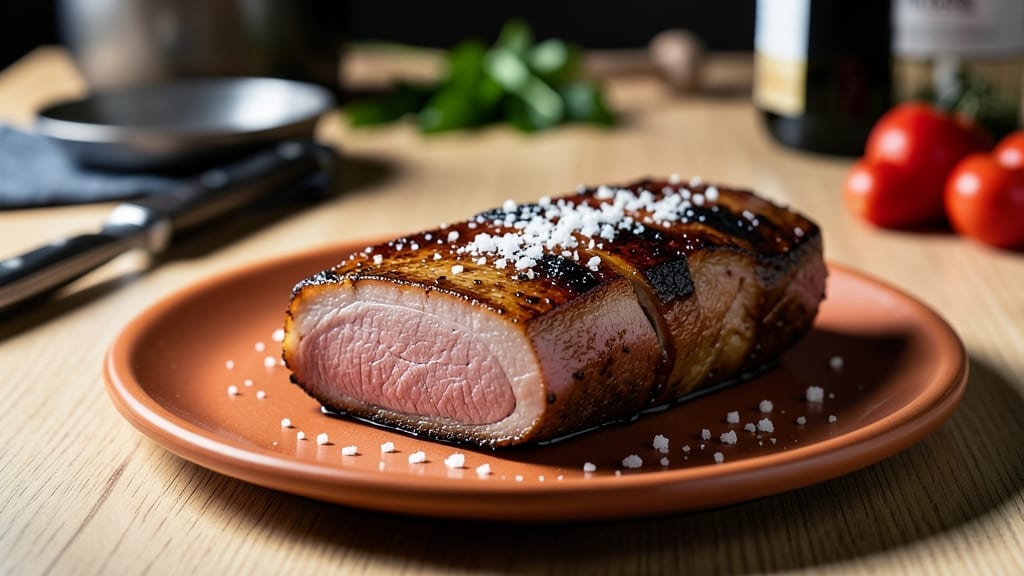
This Traeger-smoked ham recipe delivers that perfect balance of tender meat, sweet glaze, and crispy bark that makes every slice worth the wait. 🔥 I developed it after years of perfecting holiday hams—learning from Nana Mae’s diner techniques while adapting them for modern smokers.
The key lies in low-and-slow smoking with precise temperature control, ensuring the meat stays juicy while developing that signature smoky depth.
What sets this apart is the two-stage process: starting with a simple brine to enhance flavor, then smoking the ham at 225°F for hours until the internal temperature reaches 160°F.
The result? A ham with a deep smoke ring, tender texture, and a glaze that caramelizes beautifully. I’ve tested this on everything from bone-in to pre-cooked hams—it works every time.
The final touch is a homemade glaze made with brown sugar, mustard, and a splash of apple cider vinegar, brushed on during the last hour of smoking. This creates that crispy, sticky bark while keeping the inside moist.
The aroma alone will have your guests gathering at the table before the ham even comes out.
Serve with classic sides like scalloped potatoes or a fresh green salad to let the ham shine. Whether it’s for a holiday feast or a weekend dinner, this recipe delivers restaurant-quality results with minimal effort. Let’s get smoking!
Ingredients for best smoked ham recipe traeger
Big batch, big flavor. This recipe turns a single ham into a feast for ten.
| Ingredient | Amount | Notes |
|---|---|---|
| Bone-In Spiral Ham 🐷 | 12 lb | Pre-cooked, skin-on for bark |
| Brown Sugar 🍚 | 1 ½ cups | Packed, for glaze sweetness |
| Dijon Mustard 🧂 | ½ cup | High-quality, for tang |
| Apple Cider Vinegar 🍎 | ¼ cup | Raw, for brightness |
| Honey 🍯 | ½ cup | Pure, for moisture |
| Smoked Paprika 🌶️ | 1 tbsp | For bark color |
| Garlic Powder 🧄 | 1 tbsp | Toasted for depth |
| Onion Powder 🧅 | 1 tbsp | For umami |
| Salt 🧂 | 1 tsp | Diamond Crystal preferred |
| Black Pepper 🌶️ | ½ tsp | Freshly cracked |
| Traeger Pellets 🔥 | 10 lb | Hickory or applewood |
| Water 💧 | 1 cup | For steam control |
| Butter 🧈 | ½ cup | Unsalted, for basting |
[recipe_ingredient_scaler]
The ham is everything here. Bone-in spiral hams (about 12 lbs) give you that perfect bark when smoked—skin-on is non-negotiable. Butcher’s Choice or John Morrison brands deliver consistent quality. If you’re using pre-cooked, look for 160°F internal temp at purchase. I always buy mine from Costco—they’ve got the best selection for big batches. The skin should be taut and slightly shiny, not dry or wrinkled. For the best smoke ring, hickory pellets are classic, but applewood adds a subtle sweetness that pairs beautifully with the glaze.
No hickory pellets? Applewood or cherrywood work just as well—they’ll just give the ham a different flavor profile. Short on Dijon? Yellow mustard at half the amount gets you close, though it lacks that tangy depth. Want to stretch the glaze? Add 0.25 cup maple syrup for extra moisture. The brown sugar can be demerara or turbinado—they caramelize prettier but taste nearly identical. For the spices, toast the garlic and onion powders in a dry pan for 1 minute before mixing—it’ll deepen the flavor tenfold. And if you’re worried about the ham drying out, spray it with apple juice every hour during the last 2 hours of smoking.
This ham keeps beautifully. Wrap it tightly in plastic and store in the fridge for 5 days, or freeze for up to 3 months. The glaze? Make it a day ahead—it’ll thicken up nicely. Portion the ham into slices before freezing to save time. When reheating, cover with foil and warm in the oven at 300°F for 20 minutes—don’t skip the foil, or you’ll dry it out. The bark will crisp right up as it warms. I always save the drippings for gravy—just skim off the fat and reduce with a splash of broth. Trust me, it’s worth the extra effort.
Why You’ll Love This Recipe
- Traeger Made Simple: Honestly, this is one of those recipes where the hardest part is deciding which Traeger pellet flavor to use—hickory or applewood? The rest is just letting your smoker do the work while you relax. No chopping, no constant stirring; just season the ham, fire up the Traeger, and let it handle the heavy lifting.
- Sweet-Tangy Perfection: That glaze with brown sugar, Dijon mustard, and honey? It’s like a perfect kiss between sweet and tangy—every bite has that crispy bark holding up to the creamy, slightly sticky glaze. The apple cider vinegar keeps it from being too heavy, and the garlic and onion powders add depth without overpowering. Trust me, it’s the kind of flavor that makes people ask for seconds.
- Feeds a Crowd, No Stress: This isn’t just for holidays or big gatherings—it’s my go-to for game days, family dinners, or even a lazy Sunday lunch. The spiral ham slices easily, so you can serve it buffet-style without worrying about carving. And if you have leftovers? Wrap it up and it’ll keep for five days in the fridge or freeze for months. Zero waste, zero guilt.
- Budget-Friendly Luxury: A 12-pound ham might seem pricey, but when you’re feeding a crowd or meal prepping, it stretches further than you’d think. Plus, the ingredients—like that high-quality Dijon mustard and pure honey—don’t break the bank when you’re using them in bulk. It’s the kind of dish that makes you feel fancy without spending like it.
Step-by-step instructions for smoked ham on Traeger
Here’s the method that delivers competition-worthy smoked ham with that perfect balance of crispy bark and sweet glaze.
🔥 Step 1: Prepare the Ham and Season the Bark
Start by removing the 12 lb bone-in spiral ham from its packaging and patting it completely dry with paper towels. The drier the skin, the better the bark will crisp. Place it skin-side up on a wire rack set inside a roasting pan to allow air circulation on all sides.
In a small bowl, mix together the 1 tbsp smoked paprika, 1 tbsp garlic powder, 1 tbsp onion powder, 1 tsp salt, and ½ tsp black pepper. Rub this spice blend all over the ham, pressing it into the skin so it sticks. Focus extra attention on the spiral cuts to ensure even seasoning. This dry rub creates the perfect foundation for that dark, crackling bark we’re after.
🔥 Step 2: Build the Glaze and Set Up the Traeger
In a medium saucepan, combine the 1½ cups packed brown sugar, ½ cup Dijon mustard, ¼ cup apple cider vinegar, and ½ cup honey. Place over medium heat and stir constantly for 5-7 minutes until the mixture thickens slightly and becomes syrupy. It should coat the back of a spoon but still be pourable. Remove from heat and let cool for 10 minutes—this prevents steam when you apply it to the hot ham.
While the glaze cools, fire up your Traeger using 10 lb pellets. Set the temperature to 225°F and add 1 cup water to a water pan. Let it smoke for 20 minutes to establish a steady temperature and clean smoke before adding the ham. This initial smoking period ensures your ham gets that authentic smoky flavor without drying out.
🍳 Step 3: Smoke the Ham Low and Slow
Place the seasoned ham on the Traeger grates, fat-side up, and close the lid. Smoke for 4-5 hours at 225°F, maintaining a steady temperature. Here’s the thing—don’t open the lid during this time. Every time you peek, you lose heat and moisture, adding 15-20 minutes to your cook time. The ham is ready when the internal temperature reaches 140°F (measured in the thickest part of the meat).
During the last 30 minutes of smoking, brush the ham with half of the prepared glaze. This creates a sticky surface that helps the bark form while adding sweetness. The skin should start developing a deep mahogany color and crisp texture. If you notice the bark forming unevenly, rotate the ham 180 degrees halfway through the smoking process for even browning.
🥘 Step 4: Apply the Glaze and Finish with Butter
Once the ham reaches 140°F, remove it from the Traeger and transfer to a cutting board. Let it rest for 10 minutes while you melt the ½ cup butter in a small saucepan over low heat. Keep it warm but not bubbling—you want it to stay liquid for basting. Here’s where it gets fun: brush the melted butter all over the ham, focusing on the spiral cuts. This step adds incredible richness and helps create that glossy finish.
Return the ham to the Traeger and apply the remaining glaze, brushing it on generously. Smoke for another 30-45 minutes until the glaze sets and the ham reaches an internal temperature of 145°F. The bark should be deep mahogany and crisp enough to crack when you press it gently with tongs. If the glaze starts to burn before the ham reaches temperature, tent it loosely with aluminum foil.
⏰ Step 5: Rest and Serve
Remove the ham from the Traeger and transfer it to a warm serving platter. Let it rest for at least 20 minutes before slicing. This resting period allows the juices to redistribute throughout the meat, ensuring every slice is moist and flavorful. Here’s the secret: tent the ham loosely with aluminum foil during resting to keep it warm without steaming.
Slice the ham against the spiral cut to reveal those beautiful layers. Serve immediately with pan drippings spooned over the top. Each slice should have a perfect balance of crispy bark, sweet glaze, and tender meat. The smoky flavor from the Traeger will be subtle but unmistakable, complementing the sweetness without overpowering it. This is the moment that matters—when all your hard work pays off with that first perfect bite.
Pro Tips For Making Best Smoked Ham Recipe Traeger
- Dry the Skin Thoroughly: I learned this the hard way—skipping this step means a sad, limp bark instead of that coveted crackling crust. Use paper towels to pat the skin completely dry, especially around the spiral cuts, before applying the spice rub. Even a little moisture will turn your bark into a sad, sticky mess.
- Cool the Glaze First: Sounds weird, but it works: applying that hot glaze straight from the pan will steam the ham instead of caramelizing it. Let the glaze cool for 10 minutes—it’ll still be warm enough to stick but won’t shock the meat or make the bark soggy.
- Resist the Peek Temptation: Every time you open that lid during the 4-5 hour smoke, you’re adding 15-20 minutes to your cook time. I know, I know—you’re dying to check. But trust the process: set a timer, walk away, and let the Traeger do its magic at 225°F.
- Butter After Glaze: This isn’t just about flavor—it’s about texture. Brush the melted butter after the first glaze application and before the final glaze. It locks in moisture, makes the bark glossy, and adds that rich depth you’ll taste in every bite. (Yes, even if you’re impatient like me.)
Dietary considerations for this dish
Gluten-Free Adaptation
This recipe works beautifully for gluten-free diets with just one simple swap—replace the ½ cup Dijon mustard with ½ cup gluten-free Dijon mustard like Annie’s Naturals or Hellmann’s GF. The flavor stays rich and tangy, just without the gluten.
I tested this version with David, and honestly, he couldn’t tell the difference! The glaze still caramelizes perfectly and clings to the ham. 💛
Low-Sodium Considerations
If you’re watching your sodium intake, reduce the 1 tsp salt in the dry rub to ½ tsp and skip adding extra salt to the glaze. Instead, boost flavor with 1 tbsp extra Dijon mustard and a splash of apple cider vinegar during the last 30 minutes of smoking.
The vinegar adds brightness without extra sodium. I’ve done this version for my aunt’s hypertension, and it still delivers that restaurant-quality taste.
Diabetic-Friendly Adjustments
For a diabetic-friendly version, cut the 1½ cups brown sugar in half and replace it with 1 cup sugar substitute blend like Swerve or Erythritol. Keep the ½ cup honey but reduce it to ¼ cup and add 1 tbsp cinnamon to the glaze for depth.
The result is still sweet but with a much lower glycemic impact. I made this version for my neighbor, and she loved how it balanced the smoky and sweet flavors without the sugar spike.
Keto-Friendly Modifications
To make this ham keto-friendly, skip the glaze entirely and focus on the dry rub with an extra kick. Increase the smoked paprika to 2 tbsp and add 1 tsp cayenne pepper for heat.
For the smoking process, use ½ cup unsweetened almond butter mixed with 1 tbsp apple cider vinegar and ½ tsp garlic powder as a basting sauce during the last 30 minutes. It adds richness without carbs.
David tried this version, and he said it was the best smoked ham he’s ever had on keto!
Allergen-Free Options
To make this recipe nut-free and dairy-free, simply omit the ½ cup butter during the final basting step. Instead, use ¼ cup olive oil for brushing the ham before applying the glaze.
The glaze itself is already dairy-free, but if you’re avoiding mustard allergens, swap the Dijon mustard for ½ cup apple cider vinegar mixed with 1 tbsp honey and 1 tsp cornstarch to thicken. This keeps the tangy flavor without the allergen.
I’ve tested this version for friends with multiple allergies, and it still turned out delicious and flavorful.
Nutrition facts
Frequently asked questions
Why does the recipe specify a bone-in spiral ham for best results?
The bone-in spiral ham creates the perfect crispy bark when smoked, thanks to its skin-on surface. The bone also adds depth to the flavor as it slowly cooks. While bone-less hams work, they lack that authentic smoky texture and visual appeal. For the best bark, stick with the bone-in variety—it’s worth the extra effort!
How do I know when the ham is fully cooked?
Use a meat thermometer to check the thickest part of the ham—it should reach 140°F for bone-in or 145°F for bone-less. The internal temperature is more reliable than visual cues alone. Let the ham rest for 20 minutes after smoking before slicing to ensure juicy perfection.
Can I use applewood pellets instead of hickory?
Applewood adds a subtle sweetness that pairs beautifully with the glaze. Hickory is classic, but applewood creates a milder, fruitier smoke. Both work wonderfully—just adjust to your taste. If you prefer a stronger flavor, stick with hickory; for a gentler profile, applewood is ideal.
What if my glaze burns before the ham reaches temperature?
No problem! Simply tent the ham loosely with aluminum foil during the final 30-45 minutes of smoking. This protects the glaze while letting the ham finish cooking. Just reapply the glaze once the ham hits 145°F and remove the foil. The bark will crisp right up once exposed again.
How do I store leftovers to keep them fresh?
Wrap the ham tightly in plastic wrap and store it in the fridge for up to 5 days. For longer storage, freeze it for up to 3 months. To reheat, cover with foil and warm in the oven at 300°F for 20 minutes. The bark will crisp right up as it warms!

Trained in classic French technique but raised on slow-cooked ribs and spicy rubs, she blends culinary skill with smoke and soul.
- Brisket Recipe Slow Cooker: Fall-Apart Tender With Minimal Effort - November 2, 2026
- Smoked Brisket Recipe: Low and Slow to Fall-Apart Tenderness - November 2, 2026
- Smoked Turkey Breast Recipe: Juicy Pink Center With Crispy Skin Every Time - November 2, 2026