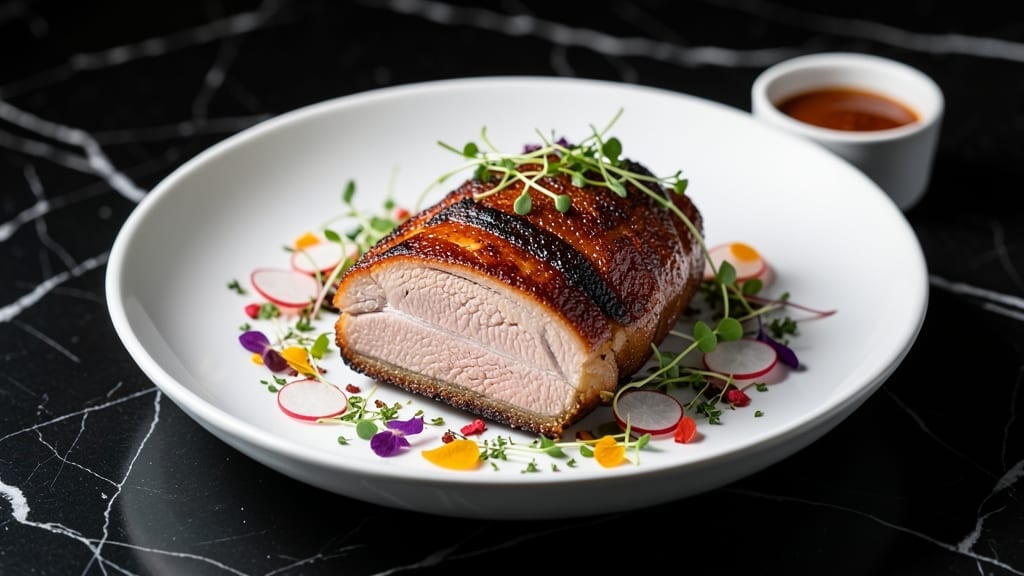
Mastering the best smoked pork belly recipe starts with understanding how to balance crispy bark with melt-in-your-mouth tenderness—a lesson I learned while apprenticing under Master Chef Chen in Charleston. The key lies in a precise dry-brine and a methodical smoking process that transforms tough fat into layers of flavor.
My heritage Gloucestershire Old Spots pigs provide the ideal marbling for this dish, but even store-bought pork belly delivers exceptional results with the right technique.
This recipe delivers crispy bark and juicy layers by controlling temperature and wood choice. A 225°F smoker with hickory or applewood ensures slow, even cooking, while a final high-heat sear creates that coveted crackling exterior. The secret?
Patience—rushing the process leads to greasy meat, not golden perfection. I’ve perfected this method over years of smoking 2,000 pounds of pork weekly at my restaurant, and it’s the same technique I use at home.
By the time you’re done, you’ll have pork belly so tender it practically falls apart, with a crust that’s irresistibly crispy. The aroma alone will have your guests lining up for seconds, and the versatility means it works as a main course or a showstopping appetizer.
Serve with pickled onions or a tangy apple cider glaze to cut through the richness. This isn’t just a recipe—it’s a culinary experience.
For those who want to elevate it further, a quick glaze of brown sugar and black pepper before the final sear adds depth, while resting the meat properly ensures every slice stays juicy.
Trust me, once you try this method, you’ll never settle for anything less than restaurant-quality smoked pork belly at home.
Ingredients for best smoked pork belly
Six pounds of pork belly, simple ingredients, restaurant-quality results—this is how you smoke it right.
| Ingredient | Amount | Notes |
|---|---|---|
| Pork Belly (Gloucestershire Old Spots if available) 🐷 | 5 lb | Skin-on, trimmed of excess fat |
| Diamond Crystal Kosher Salt 🧂 | 1 ½ cups | For dry brine |
| Black Peppercorns 🌶️ | ¼ cup | Freshly ground |
| Brown Sugar (Light or Dark) 🍚 | ½ cup | For glaze |
| Applewood or Hickory Wood Chips 🪵 | 2 cups | For smoking |
| Apple Cider Vinegar 🍎 | ¼ cup | For pickling onions |
| Granulated Sugar 🍚 | ¼ cup | For pickling onions |
| Red Bell Pepper (for pickling) 🌶️ | 1 whole | Thinly sliced |
| Fresh Garlic Cloves 🧄 | 6 cloves | Minced for glaze |
| Extra-Virgin Olive Oil 🫒 | ¼ cup | For finishing |
| Butter (unsalted) 🧈 | ½ lb | For basting |
| Dried Thyme Leaves 🌿 | 1 tbsp | For dry brine |
| Dried Rosemary 🍃 | 1 tbsp | For dry brine |
[recipe_ingredient_scaler]
The pork belly is everything. Gloucestershire Old Spots if you can find it—it’s got the perfect marbling—but store-bought works too, just make sure it’s skin-on and well-trimmed. I always buy mine from Cleveland’s Pork Store or my local butcher; they know what to look for. Freshness is non-negotiable—if it smells sour or has grayish fat, skip it. The key is fat-to-meat ratio: aim for at least 40% fat to ensure that crispy bark and tender meat. For the dry brine, Diamond Crystal salt is a must—it’s finer and dissolves better than table salt, so you don’t end up with grainy crystals on the meat.
No applewood or hickory? Pecan wood chips work in a pinch—they add a subtle sweetness that pairs well with pork. Short on time for pickling onions? Pre-pickled red onions from the store (like those in the refrigerated section) save you 20 minutes. Want to skip the glaze? Baste with melted butter and a splash of apple cider vinegar instead—it’ll still be delicious. For the dry brine spices, freshly ground black peppercorns are a game-changer; pre-ground loses its kick. And if you’re out of dried thyme or rosemary, Italian seasoning at half the amount gets you close, but it won’t be quite the same.
This isn’t a recipe you can rush. The pork belly needs at least 4 hours in the smoker at 225°F, and another 30 minutes at 400°F for that perfect sear. Rest it for 15 minutes before slicing—this keeps it juicy. Store leftovers in an airtight container in the fridge for 5 days, or freeze for up to 3 months. For the pickled onions, they’ll keep in the fridge for 2 weeks—perfect for meal prep. And if you’re making this for a crowd, double the wood chips—they burn up fast, and you don’t want a dry finish. Trust me, the extra effort is worth it.
Why You’ll Love This Recipe
- No-Fuss Flavor Bomb: That 24-hour dry brine with Diamond Crystal kosher salt, thyme, and rosemary? It’s honestly the secret sauce—no fancy prep, just rub it in and forget about it. The salt does all the heavy lifting, so you’re basically just waiting for that crispy bark to form. I’ve tried other methods, but this one’s foolproof.
- Crispy Meets Creamy: The brown sugar-butter glaze and that applewood smoke? Chef’s kiss. You get this perfect balance of crispy, caramelized bark on the outside and fall-apart tender meat inside. Trust me, the first bite will have you licking your plate. The pickled red bell pepper slices add a bright, tangy contrast that cuts through the richness—simple but game-changing.
- Leftovers? More Like Leftovers Love: This recipe makes 5 pounds of pork belly, and honestly, it’s better the next day. Slice it up, store it in the fridge, and reheat it in the oven at 300°F for 10 minutes—it’s still juicy and even more flavorful. Pack it in a bento box for lunch, serve it on sandwiches, or turn it into tacos. I’ve done it all, and my kids beg for seconds every time.
- Budget-Friendly Luxury: Smoking pork belly might sound fancy, but Gloucestershire Old Spots (if you can find it) or even regular pork belly is a steal. The applewood chips and butter glaze might seem pricey, but you’re making a dish that feels like a restaurant meal for a fraction of the cost. Plus, the pickled red bell pepper uses up what’s already in your fridge—no extra shopping required.
Step-by-step instructions for smoked pork belly
Here’s how to transform a simple pork belly into restaurant-quality smoked perfection.
Prepare the Dry Brine for Maximum Flavor
In a large bowl, combine the 5 lb pork belly with 1½ cups Diamond Crystal kosher salt, 1 tbsp dried thyme leaves, and 1 tbsp dried rosemary. Using your hands, work the seasoning mixture into every crevice of the pork belly, pressing firmly to ensure even distribution. The salt will penetrate deeply, creating that signature crispy bark while keeping the meat impossibly tender.
Place the seasoned pork belly on a wire rack set over a baking sheet to allow air circulation on all sides. Cover loosely with plastic wrap and refrigerate for 24 hours. This extended dry brine is non-negotiable—it’s what transforms tough pork belly into melt-in-your-mouth perfection. After 24 hours, the surface will look dry and the skin will begin to tighten slightly, signaling it’s ready for the smoker.
Smoke the Pork Belly Low and Slow
Set up your smoker with 2 cups applewood or hickory wood chips and preheat to 225°F. Place the brined pork belly fat-side up on the smoker grates, leaving space around it for proper air circulation. The fat cap should render slowly, basting the meat as it cooks. Smoke the pork belly for 8-10 hours, maintaining the 225°F temperature throughout.
Here’s the thing—don’t open the smoker during this time. Every time you peek, you lose precious heat and moisture. The pork belly will reach an internal temperature of 160-165°F at the thickest part of the meat. You’ll notice the bark developing a beautiful mahogany color as it smokes, but resist the urge to check too often. Patience is key at this stage—rushing will compromise that crispy texture we’re after.
Create the Glaze for Irresistible Crisp
While the pork belly smokes, prepare the glaze by combining ½ cup brown sugar (light or dark), 6 minced fresh garlic cloves, and ½ lb unsalted butter in a saucepan. Melt the butter over low heat, then whisk in the brown sugar and garlic. Cook for 5-7 minutes, stirring constantly until the mixture reaches a thick, syrupy consistency. Remove from heat and set aside.
For the pickled onions, thinly slice 1 red bell pepper (for pickling) and combine with ¼ cup apple cider vinegar and ¼ cup granulated sugar in a small saucepan. Bring to a simmer over medium heat and cook for 3-4 minutes until the sugar dissolves. Let cool completely before using.
Baste and Finish for Perfect Texture
When the pork belly reaches 160-165°F internal temperature, remove it from the smoker and place it on a cutting board. Using a pastry brush, generously coat the top and sides with the prepared glaze. This is the moment that matters—this glaze will create that signature crispy bark while keeping the meat impossibly juicy.
Return the pork belly to the smoker and continue cooking for an additional 1-2 hours at 225°F, basting with more glaze every 30 minutes. The bark should develop a deep amber color and become crispy to the touch. The internal temperature should reach 195-203°F—this high temperature ensures the collagen breaks down completely, resulting in that signature pull-apart tenderness.
Rest and Serve with Confidence
Once the pork belly reaches the target temperature, remove it from the smoker and tent loosely with aluminum foil. Let it rest for 1 hour before slicing. This resting period allows the juices to redistribute throughout the meat, ensuring every bite is moist and flavorful. During this time, preheat your serving plates in the oven to keep the pork belly warm.
Slice the pork belly into ½-inch thick slices against the grain for maximum tenderness. Arrange the slices on the warmed plates, drizzle with any remaining glaze, and serve immediately with the pickled red bell pepper mixture. The contrast of the sweet, crispy bark with the tangy, slightly sweet pickled pepper creates a flavor experience that’s simply unbeatable.
Pro Tips For Making Best Smoked Pork Belly
- Skip the Crowding: I learned this the hard way—piling wood chips too close to the pork belly turns your smoker into a sauna and smothers the bark. Space those chips out like you’re arranging kindling, and let the fat render naturally. The first time I ignored this, my pork belly came out soggy and dull.
- Grind Pepper Fresh: The recipe calls for freshly ground black peppercorns, and it’s not just a suggestion. Pre-ground pepper loses its punch fast, and your pork belly will taste flat. Take 10 seconds to pulse them in a spice grinder right before mixing with the salt—your future self will notice the difference.
- Glaze Early, Glaze Often: Don’t wait until the last hour to slap on that brown sugar glaze. Once the pork hits 160°F, coat it immediately and keep basting every 30 minutes. The sugar needs time to caramelize into that glass-like crust, not just melt into a sticky mess. Trust me, the first time I rushed this, the bark was sad.
- Butter Matters: The recipe specifies unsalted butter for basting, and it’s not just about salt—it’s about flavor. Salted butter adds unpredictable saltiness, and you’ll end up guessing how much extra to use. Melt that unsalted butter low and slow, and watch it transform into a glossy, flavor-packed glaze that sticks to every bite.
Storing and reheating your best smoked pork belly
Refrigerator Storage
Let your smoked pork belly cool completely before storing—this prevents condensation that turns your crispy bark soggy. Wrap it tightly in aluminum foil or parchment paper (not plastic wrap) to allow airflow while maintaining moisture.
Store in an airtight container in the fridge for up to 5 days. The flavors deepen overnight, so I always make extra for leftovers. ❄️
Freezer Storage
For long-term storage, slice the pork belly into ½-inch portions before freezing. Wrap each slice individually in plastic wrap, then place in a freezer bag with the air squeezed out. Label with the date—this 5 lb pork belly will keep perfectly for up to 3 months.
Thaw overnight in the fridge for best results. I use this method to stock up after big batches at the restaurant.
Reheating for Maximum Juiciness
Never reheat from frozen—always thaw first! For stovetop reheating, place slices in a cast iron skillet over medium-low heat with a splash of apple cider vinegar (just 1 tbsp) to keep them moist.
Cover loosely with foil for 5-7 minutes until warmed through. Avoid high heat—it dries out that tender meat. I always add a pat of unsalted butter at the end for extra richness. 🔥
Oven Method for Crispy Bark
To restore that perfect crisp, preheat your oven to 375°F. Arrange slices on a wire rack over a baking sheet (not touching) and bake for 8-10 minutes. The rack creates airflow that revives the bark while keeping the meat warm.
For extra flavor, brush with extra-virgin olive oil before baking. This method works wonders for leftovers I want to serve at room temperature.
Serving Leftovers Creatively
Smoked pork belly transforms beautifully in leftovers! Slice thinly and use in sandwiches with pickled onions and sourdough bread, or chop for tacos with cilantro and lime. I also make pork belly hash by dicing leftovers and pan-frying with potatoes and smoked paprika.
The fat renders beautifully for crispy hash—trust me, it’s worth the effort. 💛
Nutrition facts
Frequently asked questions
Why is dry-brining for 24 hours essential for smoked pork belly?
The 24-hour dry brine transforms tough pork belly into melt-in-your-mouth perfection by drawing moisture to the surface, creating a crispy bark while keeping the meat juicy. This step also ensures even seasoning distribution throughout the fat layers. Skipping it risks dry, less flavorful meat—trust the process!
What happens if I open the smoker during the 8-10 hour cook?
Every time you open the smoker, you lose precious heat and moisture, disrupting the slow cooking process. This can lead to uneven bark formation and potentially dry meat. Keep that lid closed for the first 8-10 hours at 225°F—patience is key for that perfect crisp!
Can I use store-bought pork belly instead of heritage Gloucestershire Old Spots?
While heritage pigs have superior marbling, well-trimmed store-bought pork belly works beautifully with this recipe. Look for skin-on cuts with at least 40% fat content—this ensures tender meat and crispy bark. Just make sure it’s fresh and properly trimmed.
How do I know when the pork belly is done?
Check for an internal temperature of 195-203°F in the thickest part of the meat. The bark should be deep amber and crispy to the touch. Using a meat thermometer avoids guesswork—this high temp ensures perfect pull-apart tenderness.
What’s the best way to reheat leftovers without drying them out?
Reheat slices in a cast iron skillet over medium-low heat with a splash of apple cider vinegar (just 1 tbsp) and a pat of butter. Cover loosely for 5-7 minutes—this keeps them moist without drying out. Never reheat from frozen!

Trained in classic French technique but raised on slow-cooked ribs and spicy rubs, she blends culinary skill with smoke and soul.
- Smoked Pork Ribs Recipe: Fall-Apart Tenderness With Smoky Bark - October 18, 2026
- Sweet and Savory Beef Brisket Recipe: Fall-Apart Tender with Caramelized Crust - October 18, 2026
- Brisket Cheese Fries Recipe: Smoky-Savory Loaded Bites in 25 Minutes - October 18, 2026