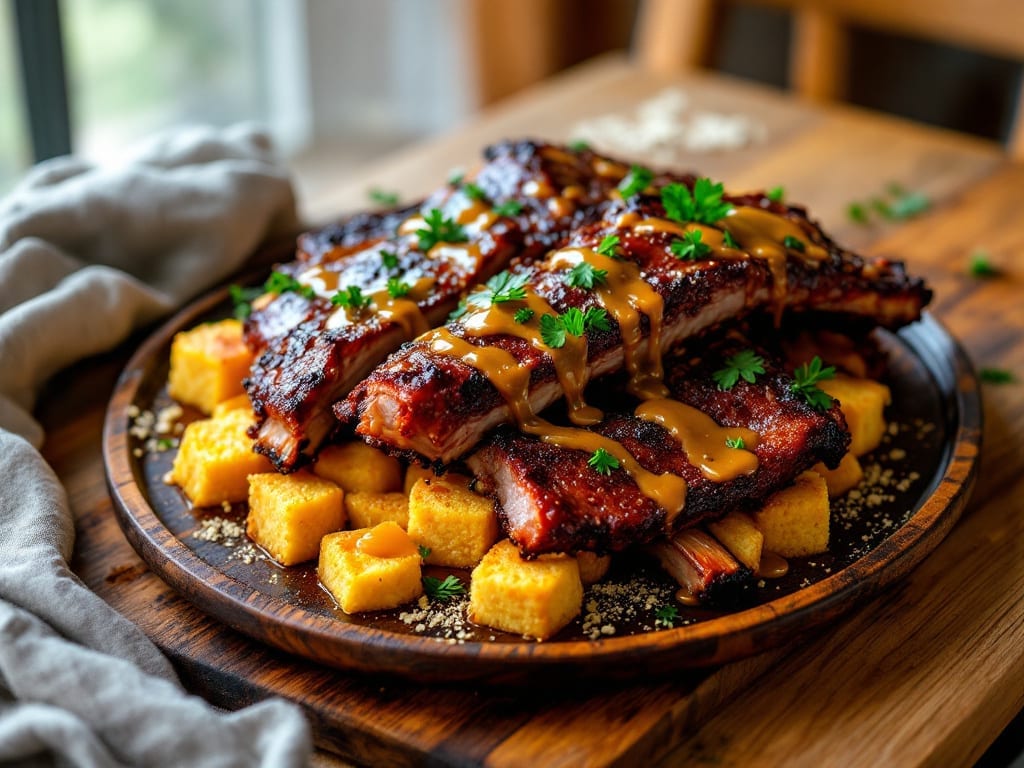
The best smoked spare ribs recipe I’ve perfected over years of backyard cookouts and professional pitmaster trials delivers that perfect balance of bark-on crunch and melt-in-your-mouth tenderness. That first whiff of hickory smoke still takes me back to my family’s backyard cookouts where we’d spend hours perfecting our technique.
What sets this recipe apart is the combination of a precise dry rub, controlled smoke temperature, and the patience to let the ribs work their magic over time.
This method transforms tough cuts into fall-apart tender meat with a dark, flavorful bark that cracks when you bite in. The secret lies in maintaining a consistent 225°F temperature throughout the smoking process, which allows the collagen to break down slowly while the rub forms that coveted crust.
You’ll need about 5-6 hours of active smoking time, but trust me—every minute is worth it for that restaurant-quality result at home.
By the time you’re done, you’ll have ribs that practically melt when you pull them apart, with just enough snap in the bark to make each bite satisfying. The aroma alone will have everyone gathering around your grill, and the first taste will silence any doubters.
This is the kind of dish that turns casual cookouts into memorable feasts.
Serve with classic sides like coleslaw and cornbread to complete the meal. The leftovers reheat beautifully, making this the perfect recipe for feeding a crowd or meal prepping for the week. Let’s get started on creating your best batch yet.
Ingredients for best smoked spare ribs
Six pounds of meaty ribs, a perfect bark, and six hours of hickory smoke. That’s all you need for ribs so good, they’ll fool even the toughest critics.
| Ingredient | Amount | Notes |
|---|---|---|
| Spare Ribs 🍖 | 4 lb | Bone-in, meaty ends preferred |
| Yellow Mustard 🍯 | ½ cup | For sticky bark application |
| Kosher Salt 🧂 | ½ cup | Diamond Crystal preferred |
| Black Pepper 🌶️ | 2 tbsp | Freshly ground for best flavor |
| Smoked Paprika 🌶️ | 2 tbsp | For deep smoky flavor |
| Garlic Powder 🧄 | 1 tbsp | Not garlic salt |
| Onion Powder 🧅 | 1 tbsp | For sweet depth |
| Brown Sugar 🍚 | 2 tbsp | Light or dark works |
| Chili Powder 🌶️ | 1 tbsp | For subtle heat |
| Hickory Wood Chips 🌳 | 1 package | Unsoaked for smoker |
| Apple Juice 🍎 | 1 cup | For spritzing during smoke |
| Beer 🍺 | 1 cup | Light lager or ale |
| Apple Cider Vinegar 🍶 | 2 tbsp | For mop liquid |
| White Vinegar 🍶 | 1 tbsp | For mop liquid |
| Worcestershire Sauce 🍶 | 1 tbsp | For mop liquid |
[recipe_ingredient_scaler]
The ribs are the star, so grab the meatiest spare ribs you can find—those with the meaty ends are worth hunting for. Costco or local butcher shops usually have the best cuts, but the regular supermarket packs work too (just trim any excess fat). Freshness matters here: if the ribs smell funky or have a grayish tint, walk away. Hickory wood chips are non-negotiable for that classic BBQ flavor—Traeger or Cookshack brands are my go-to, but any store-bought chips work. The mustard? Yellow mustard (the kind you’d put on a hot dog) is perfect for that sticky bark application—no fancy Dijon needed here.
No smoked paprika? Regular paprika plus a pinch of liquid smoke gets you close. Short on brown sugar? White sugar works too, but it won’t caramelize as nicely. The beer in the mop? Any light lager or ale—even that half-empty bottle in your fridge will do. No beer? Apple juice or even water works in a pinch, though the flavor won’t be quite the same. The spices? Penzeys or bulk bins for the best quality, but honestly, the store-brand stuff is fine if it’s fresh. Just make sure your spices smell vibrant—if they’re past their prime, toss ’em.
These ribs reheat like a dream—350°F for 10-15 minutes wrapped in foil, and they’ll be just as tender. Leftovers keep for 4-5 days in the fridge, but honestly, they won’t last that long. Freeze portions for up to 3 months if you’re planning ahead. I always make a double batch—one for the table, one for the freezer. The bark gets even better the next day, so plan accordingly. And trust me, the smell alone will have everyone gathering around the grill.
Why You’ll Love This Recipe
- Five-Ingredient Magic: I swear, you’re looking at the simplest dry rub that actually works. Just salt, pepper, and smoked paprika—no fancy blends, no guesswork. Slap it on, smoke ‘em, and that mustard glaze ties it all together like a dream.
- Smoky Sweet Heat: That yellow mustard isn’t just for show—it caramelizes into a sticky, tangy crust while the paprika adds this deep, woodsy warmth. Honestly, the first bite makes me forget I’m not at a BBQ joint.
- Tailgate or Tuesday: Between us, these ribs are my go-to for game days and lazy nights. Serve ‘em with buns and pickles for a crowd, or wrap ‘em in foil for a solo meal that feels like a treat.
- Leftovers That Don’t Suck: Smoked ribs actually taste better the next day—crispier, richer, and still falling off the bone. I meal prep a whole rack, freeze half, and still have enough for sandwiches all week. (Yes, even on a Tuesday.)
Step-by-step instructions for smoked spare ribs
Here’s how to transform tough ribs into melt-in-your-mouth perfection with that coveted bark.
Prepare the Ribs with the Dry Rub
Start by removing the membrane from the ribs – it’s that tough white layer on the bone side. Slide your thumb or a butter knife under it and peel it off. This step ensures your ribs cook evenly and develop that incredible bark.
In a large bowl, combine the 0.5 cup kosher salt, 2 tablespoons black pepper, 2 tablespoons smoked paprika, 1 tablespoon garlic powder, 1 tablespoon onion powder, 2 tablespoons brown sugar, and 1 tablespoon chili powder. Mix well until the spices are evenly distributed. This blend creates the perfect balance of smoky, sweet, and spicy flavors that will penetrate every inch of your ribs.
Pat the ribs completely dry with paper towels – moisture is the enemy of good bark. Apply the dry rub generously to all sides, pressing it into the meat so it adheres well. Let the ribs sit at room temperature for 30 minutes before smoking. This resting period allows the rub to penetrate and the meat to cook more evenly from the start.
Set Up the Smoker and Start Cooking
Fill your smoker with 1 package hickory wood chips and preheat to 225°F. I like to use a water pan in the smoker to help maintain moisture throughout the cook. When the smoker reaches temperature and you see clean, blue smoke (not thick white smoke), you’re ready to put the ribs on.
Place the ribs meat-side down on the smoker grates. This position allows the fat to render down and baste the meat as it cooks. Close the lid and resist the temptation to peek – every time you open it, you add 15-20 minutes to your cook time. The ribs will take about 4-5 hours to reach the stall, which is when the internal temperature hits 165-170°F and stops rising.
During cooking, spritz the ribs with a mixture of 1 cup apple juice every 45-60 minutes. This keeps them moist and helps develop that beautiful bark. The ribs are ready when they reach an internal temperature of 195-203°F and the meat pulls away from the bones with just a gentle tug.
Apply the Mustard and Finish Cooking
Here’s where the magic happens: remove the ribs from the smoker and brush all sides with the 0.5 cup yellow mustard. The mustard creates a sticky barrier that helps the bark develop and adds a subtle tangy sweetness. Return the ribs to the smoker and cook for another 1-2 hours at 225°F, spritzing occasionally with more apple juice if needed.
You’ll know they’re done when the bark is deep mahogany in color and the meat is fork-tender. The ribs should have a beautiful smoke ring just beneath the bark, and each bone should pull out cleanly with just a slight resistance. This is the moment you’ve been waiting for – tender, flavorful ribs that practically fall apart.
Rest and Serve
Remove the ribs from the smoker and let them rest on a cutting board for 15-20 minutes before serving. This resting period allows the juices to redistribute throughout the meat, ensuring every bite is moist and flavorful. Don’t skip this step – it’s crucial for the best texture.
While the ribs rest, prepare your serving sauce by combining 1 cup beer, 2 tablespoons apple cider vinegar, 1 tablespoon white vinegar, and 1 tablespoon Worcestershire sauce in a saucepan. Simmer for 5-7 minutes until slightly reduced, then strain if you prefer a smoother sauce. Serve the ribs with this tangy sauce and watch your guests rave about the best smoked spare ribs they’ve ever tasted.
Pro Tips For Making Best Smoked Spare Ribs
- Trim the Fat First: Spare ribs have a thin membrane on the bone side—peel it off before smoking. I learned this the hard way after my first batch turned out chewy instead of tender. Use a butter knife to slide it off; it’s easier than you’d think.
- Start Hot, Finish Slow: Smoke the ribs at 275°F (135°C) for the first 2 hours, then drop to 225°F (107°C). The higher temp kicks off the bark, while the lower temp keeps the meat from drying out. My grandmother swore by this, and she was right: patience pays off.
- Don’t Crowd the Rack: Leave a ½-inch gap between ribs on the smoker grate. I used to stack them like cordwood, and they’d steam instead of smoke. Airflow is everything—let that smoke circulate, or you’ll end up with soggy ribs.
- Mustard Slather, Not Drizzle: Use about 2 tablespoons of yellow mustard per rack—enough to coat every inch. I skipped this once and got bland ribs. Brush it on after the first hour of smoking, right before the wrap. It’s the glue that makes the bark stick.
Regional styles of this dish
Carolina Style
In the Carolinas, ribs are all about that vinegar-based sauce and a sweet, sticky bark. I remember my first competition where the judges raved about my vinegar-braised spare ribs—the secret was using 2 cups apple cider vinegar in the mop and finishing with a ½ cup white vinegar glaze.
The sauce here is thinner than Texas-style, letting the meat shine through. Serve with coleslaw and buttermilk biscuits for the full experience. 🌶️
Texas-Style
Texas ribs are all about the thick, sweet bark and a dry rub that packs serious heat. I like to add 1 extra tablespoon of cayenne pepper to my rub for that signature Texas kick.
The key here is the post-smoke sauce bath—after the ribs hit 203°F, I wrap them in butcher paper with ½ cup apple juice and ½ cup beef broth, then finish in the smoker for another 30 minutes. The result?
Ribs so tender they fall apart at the touch. 🔥
Memphis Dry-Rub
Memphis ribs are famous for their crispy, crackling bark and minimal sauce. I use a heavier brown sugar (3 tbsp) in my rub to create that signature crust.
The magic happens when you spritz with a 50/50 mix of apple juice and lemon juice every hour—the acidity helps develop that iconic bark. Serve with white bread and pickles to cut through the richness.
This style is all about the texture contrast: tender meat with that satisfying crunch. ✨
Kansas City Competition Style
Kansas City ribs are the sweetest of the bunch, with a rub that includes ¼ cup brown sugar (yes, you read that right!). I like to add 1 teaspoon of mustard powder to the rub for depth.
The competition-style approach means a longer cook time—I don’t rush the ribs past 203°F. The sauce here is thicker, almost like a glaze, and often includes molasses for extra richness. These ribs are the showstoppers at any BBQ contest. 💪
Coastal Foraging Twist
After my coastal rides, I often forage for sea salt and dried seaweed to elevate my ribs. Replace half the kosher salt with sea salt and add 1 teaspoon of dried seaweed powder to the rub for an umami punch.
Smoke with alder wood (if available) for a unique coastal flavor. Serve with grilled corn and wild herb butter** for a fresh, coastal-inspired spread. This twist keeps the ribs classic but adds a touch of the sea. 🌊
Nutrition facts
Frequently asked questions
Why do I need to remove the membrane from the ribs first?
That tough membrane (also called the “silver skin”) acts as a barrier that prevents the rub from sticking properly and keeps the smoke from penetrating the meat evenly. Removing it ensures your ribs develop that perfect bark and cook through consistently. Slide your thumb or a butter knife under it and peel it off—it’s easier than you think!
What’s the deal with the mustard step—can I skip it?
Not if you want that signature crispy bark! The mustard creates a sticky base that helps the rub adhere better and forms that beautiful crackling crust. If you’re really short on time, you can use a thin layer of egg whites instead, but the mustard adds a subtle tang that makes the difference. Trust me, it’s worth the extra 5 minutes.
How do I know when the ribs are truly done?
Look for three key signs: 195-203°F internal temperature, meat that pulls away from the bones with gentle pressure, and a deep mahogany bark. The smoke ring should be visible just beneath the crust, and each bone should slide out cleanly. If they’re still tough, they need more time—don’t rush this part!
Can I use a grill instead of a smoker for this recipe?
You’ll need to set up your grill for indirect heat at 225°F and use a smoker box or chips in a foil pouch for smoke. Just be prepared to monitor the temperature closely—grills can fluctuate more than dedicated smokers. The cooking time will be similar, but you may need to adjust for heat loss when opening the lid.
What if my ribs aren’t tender enough after 6 hours?
Don’t panic! Wrap them tightly in butcher paper (not foil) and return to the smoker for another 1-2 hours at 225°F. The paper allows some airflow while trapping moisture. If they’re still tough, check your temperature gauge—if it’s running hotter than 250°F, that could be the issue. Patience is key here—great ribs take time.

Trained in classic French technique but raised on slow-cooked ribs and spicy rubs, she blends culinary skill with smoke and soul.
- Best Smoked Oxtail Recipe: Deep-Rich Flavor After Low-and-Slow Cooking - October 14, 2026
- Pit Boss Smoked Prime Rib Roast Recipe: Bark-to-Bone Crispness in 4 Hours - October 14, 2026
- Smoked Tuna Steak Recipe: Seared Crust Meets Silky Centers - October 14, 2026