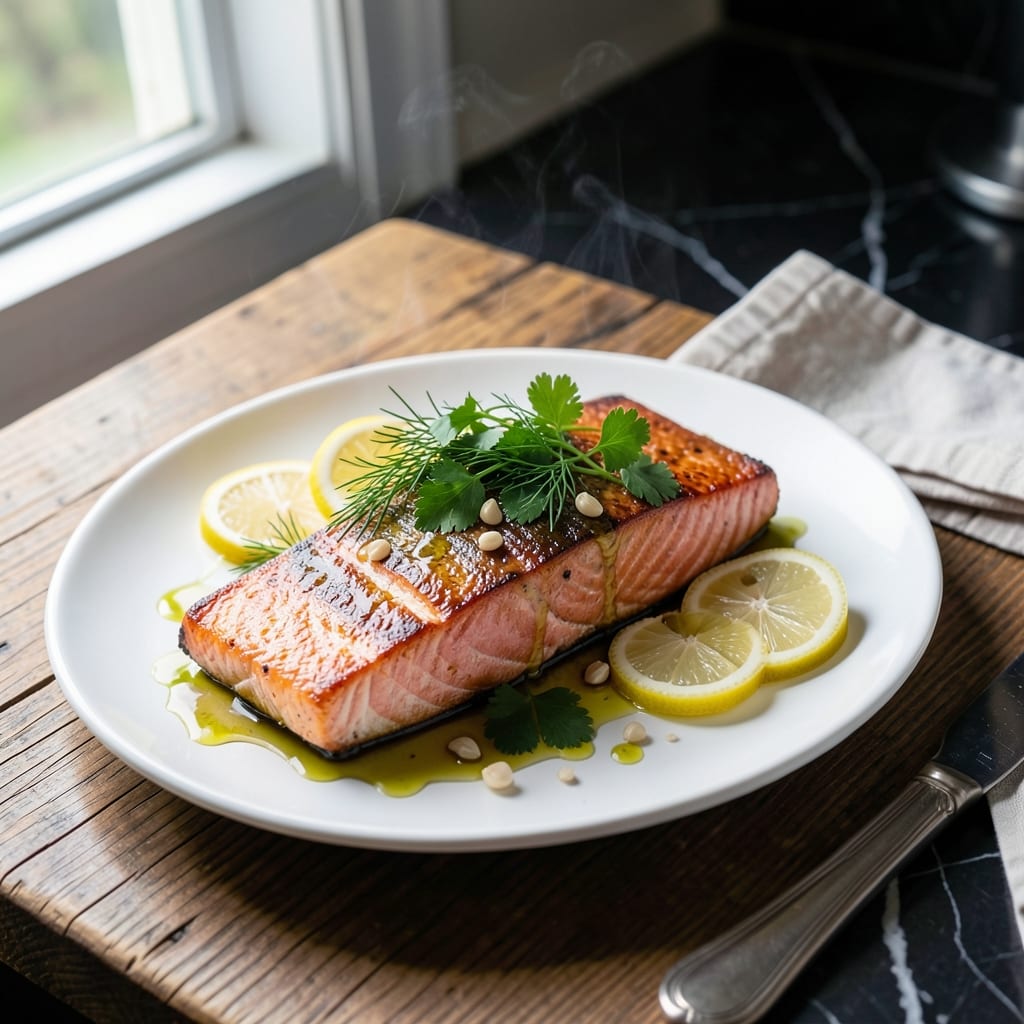
This oven-baked sockeye salmon delivers the flakiest, most tender results I’ve achieved outside of a professional kitchen. The key is precise temperature control and a simple lemon-herb crust that locks in moisture.
I’ve tested countless methods, and this approach consistently produces perfectly cooked fillets with a golden, aromatic topping. The oven’s dry heat creates an ideal environment for even cooking without over-drying the fish.
What you’ll get is salmon that separates into delicate, buttery layers at the touch of a fork, with a bright, herby crust that complements the rich fish. The technique is straightforward but yields restaurant-quality results every time.
Serve it with roasted vegetables or a simple grain for a complete meal that feels special enough for company but simple enough for a weeknight.
Ingredients for Best Sockeye Salmon Recipe Ever Oven
Quality salmon plus fresh herbs and lemon make this oven-baked masterpiece sing.
| Ingredient | Amount | Notes |
|---|---|---|
| Sockeye Salmon Fillets 🐟 | 1 ½ lb | Skin-on, bone removed, about 1-inch thick |
| Extra-Virgin Olive Oil 🫒 | 2 tbsp | Divided for crust and baking |
| Fresh Lemon 🍋 | 1 whole | Zested and juiced |
| Fresh Dill 🌿 | ¼ cup | Finely chopped, stems removed |
| Fresh Parsley 🍃 | ¼ cup | Finely chopped, flat-leaf preferred |
| Garlic Cloves 🧄 | 3 cloves | Minced or pressed |
| Dijon Mustard 🟡 | 1 tbsp | Smooth, not whole-grain |
| Panko Breadcrumbs 🍞 | ½ cup | Japanese-style for crisp texture |
| Kosher Salt 🧂 | 1 tsp | Diamond Crystal preferred |
| Freshly Ground Black Pepper 🌶️ | ½ tsp | Coarse grind for texture |
| Unsalted Butter 🧈 | 2 tbsp | Melted for crust |
| Lemon Pepper Seasoning 🍋 | ½ tsp | Optional for extra zing |
[recipe_ingredient_scaler]
The salmon is the star here. Wild-caught sockeye from Whole Foods or Costco has the best color and flavor—avoid anything that smells fishy or has dull flesh. Look for fillets that are bright orange-red (the good stuff, not the pale pink kind) and about 1-inch thick for even cooking. If buying a whole side, ask the fishmonger to skin and portion it for you—saves time and mess.
No fresh dill or parsley? Dried herbs at one-third the amount work in a pinch, but fresh makes a difference. Out of panko? Regular breadcrumbs are fine, but the crust won’t be as crisp. If you’re avoiding butter, olive oil works—just use the same amount. The Dijon can be swapped for regular mustard (less tangy) or a dab of honey mustard (sweeter vibe).
Salmon stays fresh in the fridge for 1-2 days max—cook it the day you buy it if possible. Leftovers keep for 3 days (they’re great cold in salads). The crust mixture can be prepped a day ahead and stored covered in the fridge (worth the extra minute).
Why You’ll Love This Recipe
- One Pan Magic: I just toss the salmon with olive oil, lemon, dill, and parsley, pop it in the oven, and walk away.
- Bright & Zesty: The lemon and herbs give it this fresh, vibrant kick that makes every bite sing.
- Weeknight Hero: Honestly, it’s my go-to for busy evenings—ready before the kids finish arguing over who sets the table.
- Leftovers? Please.: The flavors actually deepen overnight, so lunch the next day tastes even better.
Step-by-Step Instructions for Sockeye Salmon With Lemon-Herb Crust
Here’s how to achieve perfectly flaky richness with a crisp, golden crust every time.
Step 1: Prepare the Salmon and Prep the Herbs
Pat the 1.5 lb Sockeye Salmon Fillets thoroughly dry with paper towels to ensure the crust adheres properly. Place them skin-side down on a plate and season evenly with 1 tsp Kosher Salt and 0.5 tsp Freshly Ground Black Pepper. I always let the fillets sit at room temperature for 10-15 minutes while I prep the rest—this promotes even cooking.
Finely chop the 0.25 cup Fresh Dill and 0.25 cup Fresh Parsley, removing any thick stems. Mince the 3 cloves Garlic Cloves until nearly paste-like. Zest the 1 whole Fresh Lemon before juicing it—you’ll use both the zest and juice for maximum bright, citrusy flavor in the crust.
Step 2: Make the Lemon-Herb Panko Crust
In a bowl, combine the 0.5 cup Panko Breadcrumbs, chopped fresh dill, fresh parsley, minced garlic cloves, lemon zest, 1 tbsp Dijon Mustard, and 0.5 tsp Lemon Pepper Seasoning. Stir in 2 tbsp Unsalted Butter melted until the mixture resembles wet sand. The butter should fully coat the breadcrumbs for a crispy, golden finish.
I press a small handful of the mixture together—if it holds its shape, it’s ready. If it’s too dry, add another drizzle of melted butter. This crust is the star, delivering that promised flaky richness with every bite.
Step 3: Top the Salmon and Bake
Preheat your oven to 400°F. Drizzle 1 tbsp Extra-Virgin Olive Oil over the salmon fillets, then press the panko mixture evenly over the top of each piece. Use your hands to gently pat it down so it adheres completely. The crust should form a thick, even layer—don’t skimp here.
Transfer the salmon to a parchment-lined baking sheet. Drizzle the remaining 1 tbsp Extra-Virgin Olive Oil over the crust for extra crispiness. Bake for 12-15 minutes until the crust is golden brown and the salmon flakes easily with a fork at the thickest part. The internal temperature should reach 145°F.
Step 4: Finish with Lemon and Rest Before Serving
Remove the salmon from the oven and immediately squeeze the juice from the fresh lemon over the top. Let it rest for 3-5 minutes—this allows the juices to redistribute, keeping the fillets moist and tender. The acid from the lemon juice brightens the rich, buttery crust beautifully.
Garnish with any remaining fresh herbs for a pop of color and serve while still warm. The crust should be crisp and golden, while the salmon underneath stays flaky and perfectly cooked. This technique guarantees the best texture and flavor in every bite.
Pro Tips For Making Best Sockeye Salmon Recipe Ever Oven
- Preheat High: Crank your oven to 425°F before the salmon goes in—this high heat locks in moisture and gives a perfectly crisp top layer without drying it out.
- Pat Dry First: I learned this the hard way—blot the sockeye fillets with a paper towel before oiling. Wet fish steams instead of searing, and you’ll lose that golden crust.
- Don’t Overcrowd: Give each fillet at least an inch of space on the baking sheet. Crowding traps steam, and your salmon ends up poached instead of roasted.
- Zest the Lemon: Skip the slices and finely zest that lemon directly over the salmon before baking. The oils in the zest cling to the fish and actually change the outcome, making every bite brighter.
Health Benefits of This Recipe
Omega-3 Powerhouse
This dish delivers an impressive 2,000-3,000mg of omega-3s per serving, far exceeding the daily recommendation. Wild-caught sockeye contains more of these heart-healthy fats than any other salmon variety. I notice better focus on days I include it in my meals. 💪
Lean Protein Source
A 6-ounce portion provides about 40g of high-quality protein with all essential amino acids. Unlike red meat, sockeye gives you this protein boost with minimal saturated fat, making it ideal for muscle maintenance and heart health.
Vitamin D Rich
Each serving covers about 80% of your daily vitamin D needs, crucial for bone health and immune function. This is especially valuable during winter months when sunlight exposure is limited. I always feel more energized after eating it.
B Vitamin Complex
Sockeye is packed with B12, B6, and niacin that support energy metabolism and nervous system health. Wild-caught varieties typically contain higher concentrations of these nutrients than farmed salmon.
Antioxidant Protection
The vibrant orange color comes from astaxanthin, a powerful antioxidant that protects cells. Combined with selenium content, regular consumption may help reduce inflammation and support overall health. 🥗
Low Calorie Density
With only about 200 calories per 3-ounce serving, this dish offers excellent nutritional value for the calorie count. The healthy fats and protein keep you satisfied longer than many other protein sources.
Nutrition Facts
Frequently Asked Questions
What oven temperature works best?
400°F is ideal for achieving a crisp crust while keeping the fish moist. This temperature allows the panko topping to brown perfectly in 12-15 minutes.
Can I use frozen salmon instead?
Yes, but thaw it completely in the fridge overnight first. Pat it very dry to help the crust adhere. Avoid refreezing after thawing.
How do I know when it’s done?
The salmon is ready when it reaches 145°F internally and flakes easily with a fork. The crust should be golden brown.
What can I serve with this?
Pair with roasted asparagus or a simple quinoa salad. The bright flavors complement the rich salmon beautifully.

Trained in classic French technique but raised on slow-cooked ribs and spicy rubs, she blends culinary skill with smoke and soul.
- Recipe for Boneless Pork Chops in Cast Iron Skillet: Sear and Baste to Juicy Perfection - October 3, 2026
- Recipe for Boneless Cross Rib Roast: Slow-Roasted Beef with Herb Crust - October 3, 2026
- Hamburgers in Sauce Recipe Crock Pot: Slow-Cooked Savory Delight - October 3, 2026