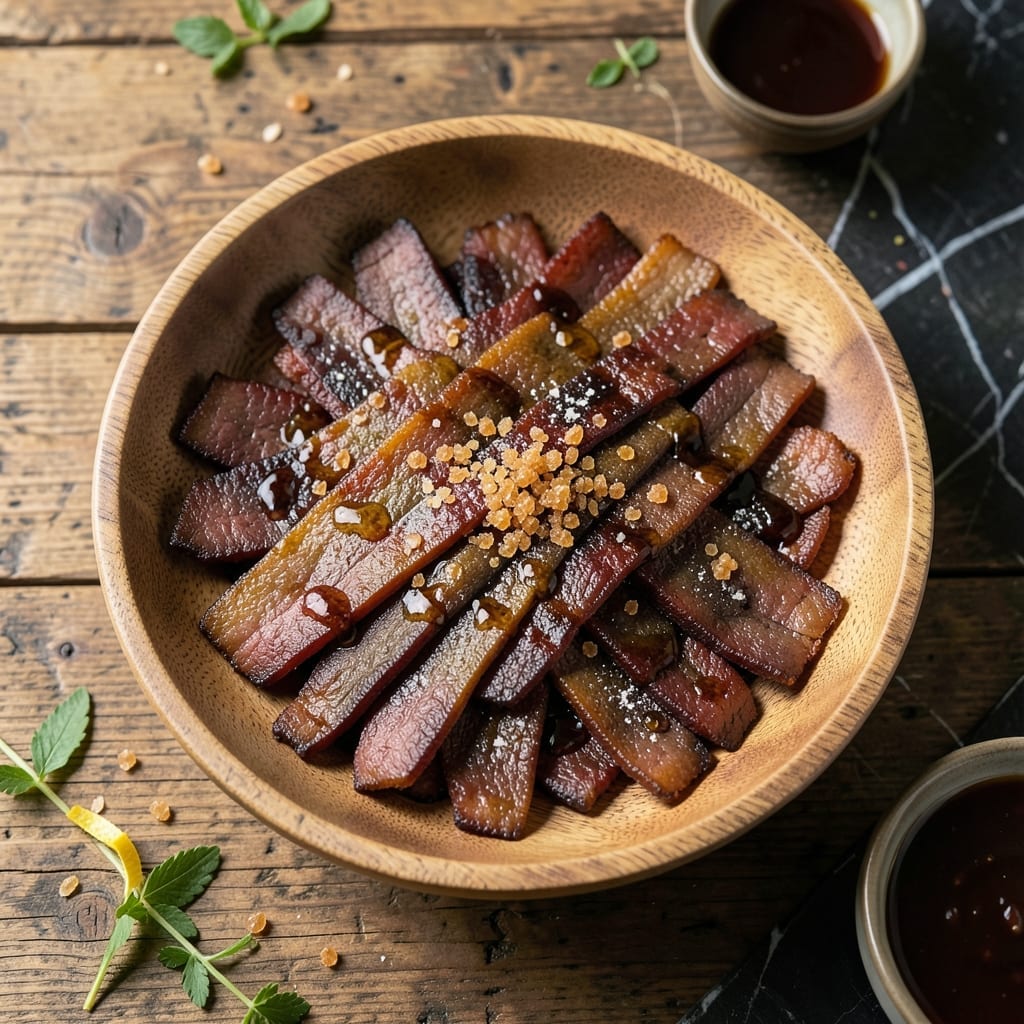
I developed this method after years of perfecting the balance between smoky depth and natural sweetness. The key is thin, consistent slicing and a marinade that tenderizes while preserving the meat’s rich flavor.
You’ll end up with trail-ready jerky that’s both tender and packed with complex flavor—no gamey aftertaste, just pure, concentrated venison goodness.
Ingredients for Best Venison Jerky
Thin slices, bold marinade, and venison that tastes like the great outdoors never left.
| Ingredient | Amount | Notes |
|---|---|---|
| Venison 🦌 | 2 lb | Lean, sliced against the grain |
| Soy Sauce 🫒 | ½ cup | Low-sodium preferred |
| Worcestershire Sauce 🫒 | ¼ cup | For umami depth |
| Brown Sugar 🧈 | ½ cup | Light or dark variety |
| Honey 🍯 | 2 tbsp | Local preferred for flavor |
| Garlic Powder 🧄 | 1 tbsp | Not garlic salt |
| Onion Powder 🧅 | 1 tbsp | Fresh ground preferred |
| Smoked Paprika 🌶️ | 1 tbsp | For smoky depth |
| Black Pepper 🌶️ | 2 tsp | Freshly ground preferred |
| Cayenne Pepper 🔥 | ½ tsp | Adjust for heat preference |
| Liquid Smoke 💨 | 1 tbsp | Optional for extra smokiness |
| Salt 🧂 | 1 tsp | Kosher or sea salt |
[recipe_ingredient_scaler]
The venison is everything here. Deer from a trusted butcher—ask for the hindquarter or shoulder, as it’s leaner and slices better. I get mine from local hunters I know (or Whole Foods if I’m in a pinch). Freeze it for 30 minutes before slicing—firm but not rock-hard—to get those perfect quarter-inch strips. Trim off every bit of fat and connective tissue; it doesn’t dry well.
No venison? Lean beef like top round works in a pinch, but the flavor won’t be as rich. Out of liquid smoke? Half the amount of smoked salt gets you close. Swap honey for maple syrup if you’re avoiding bee products. If you’re watching sodium, coconut aminos instead of soy sauce keeps it flavorful without the salt bomb. The brown sugar can be light or dark—dark just adds a hint of molasses.
Marinated venison keeps 3-4 days in the fridge. The jerky itself? Up to 2 weeks in a sealed container at room temp, or 6 months frozen. Honestly, it never lasts that long in my house. Vacuum-seal if you’re packing it for a hike.
Why You’ll Love This Recipe
- Set and Forget: I just mix the marinade, coat the venison, and let the dehydrator do the work overnight.
- Sweet & Savory: The brown sugar and honey balance the soy and Worcestershire for that perfect umami-sweet bite.
- Trail or Tailgate: I pack this for hiking trips or share it at football watch parties—it’s always the first snack to disappear.
- Budget Stretcher: A single deer harvest makes pounds of jerky, and the ingredients are all pantry staples I already keep on hand.
Step-by-Step Instructions for Smoky-Sweet Venison Jerky
Here’s how I turn lean venison into tender, flavor-packed jerky that’s perfect for any adventure.
Step 1: Slice the Venison Against the Grain
Place the 2 lb venison in the freezer for 30-45 minutes to firm up—this makes slicing easier. Using a sharp knife, cut against the grain into ¼-inch thick strips. Slicing against the grain ensures the jerky stays tender after drying.
Trim off any visible fat or connective tissue, as these won’t dry evenly and can spoil faster. Uniform thickness is key here; aim for strips that are as consistent as possible so they dry at the same rate. Lay the slices out on a clean surface while you prepare the marinade.
Step 2: Mix the Marinade with Bold Flavors
In a large bowl, whisk together the 0.5 cup soy sauce, 0.25 cup Worcestershire sauce, 0.5 cup brown sugar, and 2 tbsp honey until the sugar dissolves. The brown sugar and honey create that signature sweetness that balances the savory depth of the soy and Worcestershire.
Add the 1 tbsp garlic powder, 1 tbsp onion powder, 1 tbsp smoked paprika, 2 tsp black pepper, 0.5 tsp cayenne pepper, 1 tbsp liquid smoke, and 1 tsp salt. Stir well to combine. The smoked paprika and liquid smoke give it that rich, campfire-like flavor without needing a smoker.
Step 3: Marinate the Venison for Maximum Flavor
Submerge all the venison strips in the marinade, ensuring each piece is fully coated. Press down lightly to help the meat absorb the liquid. Cover the bowl with plastic wrap and refrigerate for at least 4 hours, but overnight is ideal.
The longer the venison marinates, the deeper the flavors penetrate. I like to give the bowl a quick stir halfway through to redistribute the marinade. You’ll notice the meat darkens as it soaks up all those bold, smoky-sweet flavors.
Step 4: Dry the Jerky to Perfection
Arrange the marinated strips on the racks of your dehydrator, leaving a little space between each piece for airflow. Set the dehydrator to 160-165°F and dry for 4-6 hours. If you don’t have a dehydrator, use an oven set to its lowest temperature (around 170°F) with the door slightly ajar.
Check the jerky after 4 hours. It’s done when the strips are dry to the touch but still flexible—bend a piece to test. If it cracks, it’s overdone; if it feels moist, it needs more time. Properly dried jerky should be leathery, not brittle, with no moisture remaining.
Let the jerky cool completely before storing it in an airtight container. It’ll keep for up to 2 weeks at room temperature, or longer in the refrigerator or freezer.
Pro Tips For Making Best Venison Jerky
- Slice Against Grain: Cut the venison into thin strips against the grain—about 1/4 inch thick—for a jerky that’s tender instead of chewy. I learned this the hard way after my first batch felt like leather.
- Marinate Overnight: Let the venison soak in the soy sauce, Worcestershire, brown sugar, and honey mix for at least 12 hours. Sounds like a long time, but it actually changes the outcome—deep flavor and perfect tenderness.
- Pat Dry Thoroughly: After marinating, blot the strips with paper towels until they’re almost dry. Skip this and your jerky will steam instead of dehydrate, leaving it gummy.
- Use Low Heat: Keep your dehydrator or oven at 160-175°F—any higher and the outside dries too fast, sealing in moisture. My first batch at 200°F was a sad, overcooked lesson.
Common Mistakes When Making Perfect Results
Uneven Slicing
Cutting inconsistent thickness leads to some pieces drying too fast while others stay underdone. I always freeze the 2 lb venison for 30-45 minutes first to firm it up, then use a sharp knife for ¼-inch strips. This ensures even drying throughout the batch. 🔥
Skipping the Fat Trim
Leaving fat or connective tissue on the meat causes spoilage and uneven texture. I take my time to trim every visible bit from the venison before slicing. Fat doesn’t dry like muscle tissue and can turn rancid during storage.
Overcrowding the Dehydrator
Packing strips too close together traps moisture and prevents proper airflow. I space pieces at least ½ inch apart on dehydrator racks. For oven drying, use a cooling rack over a baking sheet to allow air circulation on all sides.
Insufficient Marinating Time
Rushing the marinade step results in bland jerky. I let my strips soak for at least 4 hours, but overnight is ideal. The soy sauce and Worcestershire need time to fully penetrate the meat for maximum flavor.
Drying at Wrong Temperature
Too high heat cooks the meat instead of drying it. I set my dehydrator to 160-165°F for 4-6 hours. For oven drying, 170°F with the door slightly open works. Higher temperatures can make the jerky brittle.
Improper Storage
Storing warm jerky traps moisture and causes mold. I always let my jerky cool completely before sealing in airtight containers. At room temperature, it keeps for 2 weeks—longer if refrigerated or frozen. Vacuum sealing extends shelf life even more. 💡
Nutrition Facts
Frequently Asked Questions
What cut of venison works best?
Use lean cuts like hindquarter or shoulder for the best texture. These have less fat and slice uniformly into ¼-inch strips for even drying.
How can I adjust the spice level?
Modify the ½ tsp cayenne pepper to taste. Start with ¼ tsp for mild heat, or add more for extra kick. The smoked paprika adds depth without extra spice.
Can I use an oven instead of a dehydrator?
Yes! Set your oven to its lowest temperature, around 170°F, and prop the door open slightly. Dry for 4-6 hours on a cooling rack for airflow.
How do I know when it’s done?
Test by bending a strip—it should be dry but still flexible, not brittle. If it cracks, it’s overdone. Properly dried jerky has no moisture when touched.

Trained in classic French technique but raised on slow-cooked ribs and spicy rubs, she blends culinary skill with smoke and soul.
- Recipe for Boneless Pork Chops in Cast Iron Skillet: Sear and Baste to Juicy Perfection - October 3, 2026
- Recipe for Boneless Cross Rib Roast: Slow-Roasted Beef with Herb Crust - October 3, 2026
- Hamburgers in Sauce Recipe Crock Pot: Slow-Cooked Savory Delight - October 3, 2026