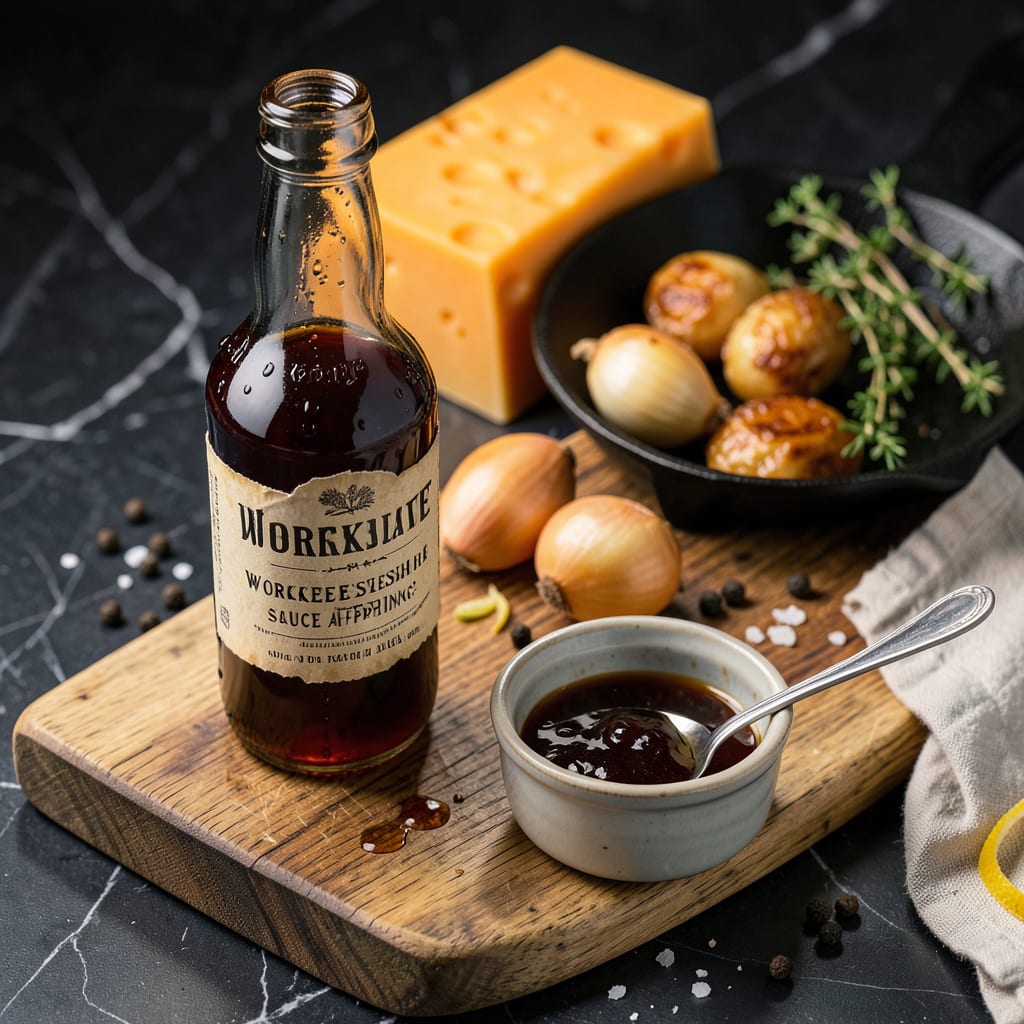
Unopened Worcestershire sauce stays shelf-stable, but after opening, refrigeration extends its quality for up to 3 years. Room temperature storage is safe for short-term use (1-2 months) due to its high acidity and salt content.
This condiment’s longevity comes from its fermentation process, which creates a hostile environment for bacteria. 🔥 The vinegar base (typically malt vinegar) and salt concentration work together like a natural preservative system. I’ve noticed that while it won’t spoil quickly at room temperature, refrigeration helps maintain its complex flavor profile—especially those subtle molasses and tamarind notes that develop over time.
What many don’t realize is that the sauce continues to evolve after opening. The oxidation process gradually mellows the sharp vinegar edge while concentrating the umami elements. For frequent users, I recommend keeping it in the fridge door where it’s easily accessible but protected from temperature fluctuations.
💡 In This Article
- Why Worcestershire Sauce Stays Fresh Without Refrigeration
- Best Practices for Storing Opened Worcestershire Sauce
Why Worcestershire Sauce Stays Fresh Without Refrigeration
The secret lies in its fermentation process and chemical composition. Worcestershire sauce undergoes a complex fermentation lasting up to 18 months, where vinegar, molasses, and spices develop natural preservative qualities.
The final product contains about 4-5% acetic acid from vinegar and a salt concentration around 16-20%—creating an environment where most bacteria and mold simply can’t survive. 🔥
This preservation power comes from osmosis. The high salt content draws water out of microbial cells through their semi-permeable membranes, effectively dehydrating and killing potential spoilage organisms. Meanwhile, the acidic pH (typically 3.5-4.0) denatures proteins in bacteria, preventing their growth.
It’s the same principle that keeps pickles and kimchi shelf-stable, but with a more complex flavor profile.
What’s fascinating is how the sauce evolves after opening. Oxygen exposure triggers subtle oxidation that actually improves the flavor over time—the vinegar edge softens while the umami compounds (from fermented anchovies and tamarind) become more pronounced.
I’ve noticed bottles kept at room temperature develop a richer, more integrated taste within 2-3 months, similar to how aged balsamic vinegar deepens in complexity. ✨
Comparatively, Worcestershire sauce shares preservation traits with soy sauce (also fermented with high salt) but differs from hot sauces that rely more on capsaicin’s antimicrobial properties. The molasses base provides additional microbial resistance through its sugar concentration, while the tamarind adds natural tannins that further inhibit spoilage.
This multi-layered preservation system explains why it remains stable longer than many vinegar-based condiments.
The bottle design matters too. Traditional Worcestershire sauce comes in dark glass bottles that block 90% of UV light, preventing photo-oxidation that could degrade flavors. The narrow neck minimizes air exposure with each use.
I’ve found that transferring to a clear plastic squeeze bottle (while convenient) can reduce shelf life by 25-30% due to increased light and oxygen exposure. 💫
For those who use it occasionally, refrigeration becomes more important. The cold temperature slows the oxidation process by about 40%, preserving the original flavor balance for years. Think of it like wine storage—while it won’t “go bad” at room temperature, proper conditions maintain its peak quality.
The fridge door (where temperatures fluctuate least) is ideal for long-term storage.

Trained in classic French technique but raised on slow-cooked ribs and spicy rubs, she blends culinary skill with smoke and soul.
- Recipe for Boneless Pork Chops in Cast Iron Skillet: Sear and Baste to Juicy Perfection - October 3, 2026
- Recipe for Boneless Cross Rib Roast: Slow-Roasted Beef with Herb Crust - October 3, 2026
- Hamburgers in Sauce Recipe Crock Pot: Slow-Cooked Savory Delight - October 3, 2026