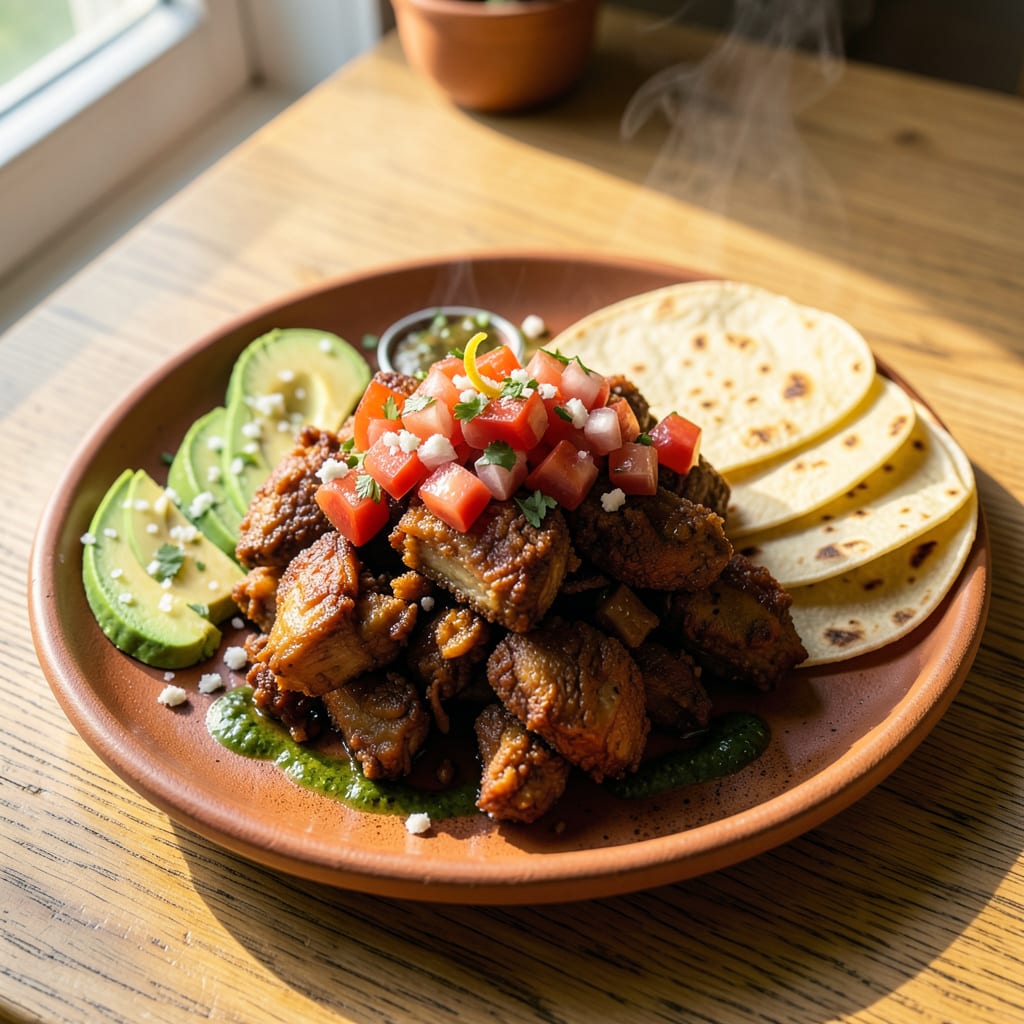
The best way to reheat carnitas is in a skillet with a little oil over medium-high heat, stirring occasionally until crispy (5-7 minutes). Avoid microwaving to prevent sogginess and preserve texture.
This method works because the dry heat reactivates the collagen in the meat while allowing excess moisture to evaporate. 🔥 I’ve found that using a cast-iron skillet gives the most even heat distribution, which is crucial for getting that perfect balance between crispy edges and tender centers. The oil acts as a conductor, helping to recreate the caramelization that makes fresh carnitas so irresistible.
What many people don’t realize is that microwaves turn carnitas into a steamed, rubbery mess by trapping moisture. The skillet approach, on the other hand, mimics the original cooking process—just like how I’d finish them fresh from the slow cooker with a quick sear.
💡 In This Article
- Why Skillet Reheating Preserves Carnitas Texture
- Step-by-Step Guide to Reheating Carnitas Without Drying Out
Why Skillet Reheating Preserves Carnitas Texture
The magic happens when dry heat meets collagen. Carnitas contain gelatinized collagen from slow cooking, which gives them that signature tender-yet-structural quality. When you reheat in a skillet, the 350-375°F surface temperature causes these collagen fibers to contract and tighten, pushing out excess moisture while creating crispy edges.
This is the same principle that makes fresh carnitas so addictive—the Maillard reaction kicks in again, developing those deep, caramelized flavors.
Compare this to a microwave, where the moist heat environment turns collagen into a soggy mess. Microwaves excite water molecules, creating steam that gets trapped in the meat fibers. The result? A rubbery texture instead of that perfect crisp-tender contrast.
Even ovens fall short unless you use convection—the still air creates uneven heating and can dry out the exterior before the interior warms through. 🔥
What most home cooks miss is the role of fat conduction. A thin layer of oil (about 1-2 teaspoons) in the skillet creates micro-contact points that transfer heat more efficiently than dry methods. I use rendered pork fat when available—it has a higher smoke point (370°F) than most neutral oils and adds authentic flavor.
The fat also helps redistribute the meat’s natural juices as you stir.
The stirring motion itself is crucial. Those 30-second intervals you give the meat aren’t just to prevent burning—they’re exposing different surfaces to the hot pan. Each time you stir, you’re creating new opportunities for moisture to escape and for crispy crusts to form.
Think of it like giving each piece its own mini-sear, just like when you first finish the carnitas after braising.
Here’s what’s actually happening at the molecular level: The heat causes the protein strands to denature and rebond in tighter formations, squeezing out liquid. Simultaneously, the sugars in the meat caramelize where they contact the hot oil.
This dual action is why skillet-reheated carnitas taste almost identical to fresh ones, while other methods leave you with either dry or mushy results. ✨
Pro tip from my pitmaster days: If your carnitas seem dry before reheating, toss them with a splash of broth or orange juice (1-2 tablespoons) before hitting the skillet. The liquid creates steam that briefly plumps the meat fibers, then evaporates during searing to leave you with juicy, crispy perfection.
This is how I salvage day-old carnitas at my food truck when we’re in a rush.
The skillet method also gives you visual control. You can see the edges turning golden-brown, hear the satisfying sizzle, and smell that intoxicating mix of pork fat and spices coming back to life. That sensory feedback is something you just can’t get from an oven or microwave—it’s the difference between cooking and simply heating. 💫

Trained in classic French technique but raised on slow-cooked ribs and spicy rubs, she blends culinary skill with smoke and soul.
- Recipe for Boneless Pork Chops in Cast Iron Skillet: Sear and Baste to Juicy Perfection - October 3, 2026
- Recipe for Boneless Cross Rib Roast: Slow-Roasted Beef with Herb Crust - October 3, 2026
- Hamburgers in Sauce Recipe Crock Pot: Slow-Cooked Savory Delight - October 3, 2026