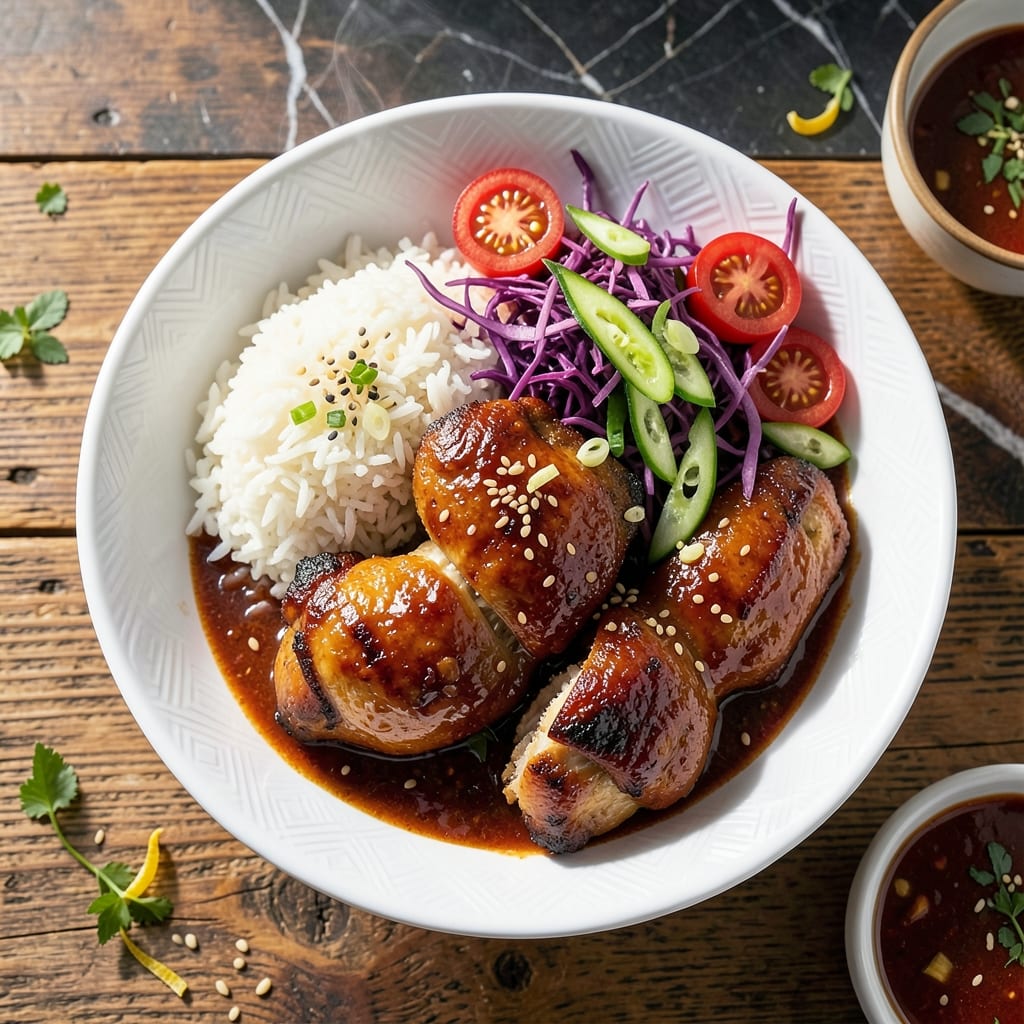
This Korean BBQ chicken delivers restaurant-quality flavor with caramelized edges and a sticky-sweet glaze. I developed this method to replicate the bold, savory taste of bibimbap bowls without the complicated steps.
The secret is marinating the chicken in a blend of soy sauce, brown sugar, and gochujang before searing it at high heat. This creates a perfect balance of smoky, sweet, and spicy notes that coat every bite.
You’ll end up with tender chicken pieces that boast a glossy, caramelized exterior and juicy interior. The sauce reduces into a thick, aromatic glaze that clings to the meat beautifully.
Serve it over steamed rice with fresh vegetables for a complete, vibrant meal. This dish brings authentic Korean flavors to your home kitchen effortlessly.
Ingredients for Bibibop Chicken
Pantry staples and a few special ingredients bring bold Korean BBQ flavors to life at home.
| Ingredient | Amount | Notes |
|---|---|---|
| Boneless Skinless Chicken Thighs 🍗 | 1 ½ lb | Cut into bite-sized pieces |
| Soy Sauce 🥄 | ½ cup | Low-sodium preferred |
| Brown Sugar 🍚 | ⅓ cup | Packed, for caramelization |
| Gochujang 🌶️ | 3 tbsp | Korean red pepper paste |
| Garlic Cloves 🧄 | 4 cloves | Minced for maximum flavor |
| Fresh Ginger 🌿 | 1 tbsp | Grated, peeled first |
| Sesame Oil 🫒 | 1 tbsp | Toasted for depth |
| Rice Vinegar 💧 | 2 tbsp | Balances sweetness |
| Vegetable Oil 🫒 | 2 tbsp | High smoke point for searing |
| Sesame Seeds 🌰 | 2 tsp | Toasted, for garnish |
| Green Onions 🧅 | 3 whole | Thinly sliced for serving |
| Steamed White Rice 🍚 | 2 cups | Cooked, for serving |
| Fresh Cucumber 🥒 | 1 whole | Julienned, for freshness |
| Carrot 🥕 | 1 whole | Julienned, for color |
[recipe_ingredient_scaler]
The gochujang is non-negotiable here—look for it in the Asian aisle at Kroger or H-Mart. I grab mine from H-Mart (the red tub with the yellow lid, can’t miss it). Chicken thighs stay juicier than breasts (trust me on this one), and the skinless kind saves you a step. For the soy sauce, Kikkoman low-sodium is my go-to, but any brand works in a pinch.
No gochujang? Sriracha plus a pinch of sugar gets you close, but it won’t have that deep fermented funk. Out of brown sugar? White sugar plus molasses works—just use a little less. The rice vinegar can be swapped for apple cider vinegar (same amount), and if you don’t have sesame oil, skip it rather than using another oil—the flavor is key here.
Marinate the chicken for at least 2 hours (overnight is even better). Leftovers keep for 4 days in the fridge—reheat gently to avoid drying it out. The sauce thickens as it cools, so thin with a splash of water if needed.
Why You’ll Love This Recipe
- One Pan Wonder: Between us, I just toss the chicken thighs with the sauce and let the oven do the work.
- Sweet Heat Perfection: The gochujang and brown sugar give that sticky-sweet kick with just enough spice to keep things interesting.
- Meal Prep Hero: I make a double batch on Sunday and it tastes even better reheated for lunches all week.
- Budget Friendly: Chicken thighs stay juicy and cheap, and a little gochujang goes a long way for flavor.
Step-by-Step Instructions for Korean BBQ Glazed Chicken
Here’s how to build layers of flavor and achieve those sticky, caramelized edges we’re after.
Step 1: Marinate the Chicken Thighs
In a large bowl, whisk together the 0.5 cup Soy Sauce, 0.33 cup Brown Sugar, 3 tbsp Gochujang, minced 4 cloves Garlic Cloves, 1 tbsp Fresh Ginger, 1 tbsp Sesame Oil, and 2 tbsp Rice Vinegar until the brown sugar dissolves completely. I use a fork for this—it helps break up the gochujang’s thick texture.
Add the 1.5 lb Boneless Skinless Chicken Thighs (cut into bite-sized pieces) and stir to coat every piece thoroughly. The marinade should cling to the chicken with a glossy sheen. Let it sit at room temperature for 15 minutes while you prep the rest of your ingredients.
Step 2: Sear the Chicken for Maximum Flavor
Heat the 2 tbsp Vegetable Oil in a large skillet over medium-high heat until it shimmers. Carefully add the marinated chicken in a single layer, being careful not to crowd the pan. You should hear a satisfying sizzle when it hits the oil.
Cook undisturbed for 4-5 minutes until the bottoms develop a deep caramelized crust. This is where the magic happens—the sugars in the marinade create that signature sticky glaze. Flip the pieces and cook for another 4-5 minutes until fully cooked through and glossy.
Step 3: Reduce the Sauce to Perfection
Once the chicken is cooked, remove it from the skillet and set aside. Pour any remaining marinade into the skillet and let it simmer over medium heat for 2-3 minutes. Stir constantly—the sauce will thicken and turn a deep, glossy mahogany color.
Return the chicken to the skillet and toss to coat in the reduced sauce. Cook for another 1-2 minutes until everything is heated through and the chicken is lacquered with that beautiful glaze. The sauce should cling to each piece without pooling at the bottom of the pan.
Step 4: Garnish and Serve with Fresh Accompaniments
Transfer the glazed chicken to a serving platter. Sprinkle with the 2 tsp Sesame Seeds and thinly sliced 3 whole Green Onions for a pop of color and nutty crunch. The sesame seeds should toast slightly from the residual heat, releasing their aroma.
Serve immediately over 2 cups Steamed White Rice with julienned 1 whole Fresh Cucumber and 1 whole Carrot on the side. The cool crunch of the vegetables balances the rich, sweet-spicy chicken perfectly. Each bite should deliver tender chicken with a sticky, caramelized exterior and a hint of smoky depth from the gochujang.
Pro Tips For Making Bibibop Chicken
- Prevent Sugar Burn: Brown sugar caramelizes fast—add it to the sauce only after the chicken is nearly done, or you’ll end up with bitter char instead of that sweet-spicy glaze.
- Thighs Over Breasts: Boneless skinless chicken thighs stay juicy even when cooked through, while breasts dry out fast. I learned this the hard way after ruining two batches with tough, chewy meat.
- Marinate 30 Minutes: Gochujang and soy sauce need time to work their magic. Give the chicken a solid half-hour in the fridge before cooking—any less and the flavor just sits on the surface.
- Double the Garlic: Sounds like overkill, but garlic mellows when cooked. I use twice what the recipe calls for—minced fine so it melts into the sauce instead of burning.
Perfect Pairings for This Dish
Rice Bowl Companions
Steamed white rice is the perfect base for this dish—2 cups per serving soaks up the glaze beautifully. I use a 1:1.5 rice-to-water ratio in my rice cooker for fluffy grains every time. The neutral flavor lets the bold chicken shine. 🍚
Fresh Vegetable Pairings
Julienned cucumber and carrot add a refreshing crunch that cuts through the richness. I toss them with a pinch of salt and 1 tsp rice vinegar for extra brightness. The vibrant colors make your bowl pop visually.
Kimchi for Tang
A small scoop of spicy kimchi on the side introduces fermented depth and heat. The probiotics balance the meal, and its acidity cleanses your palate between bites. Look for Mother-in-Law’s Kimchi at your local Asian market.
Beverage Balance
An ice-cold Korean barley tea (boricha) complements the spices without overpowering. For beer lovers, a crisp Asian lager like Hite or Sapporo works wonders. The carbonation lifts the rich flavors. 🍺
Extra Toppings
Add pickled radish for sweetness or sliced avocado for creaminess. A fried egg with a runny yolk takes this to the next level. I keep these toppings on hand for customizable bowls.
Nutrition Facts
Frequently Asked Questions
Can I use chicken breast instead of thighs?
You can, but thighs stay juicier. If using breasts, marinate for 1 hour max and cook for 3-4 minutes per side to prevent dryness.
How do I make it less spicy?
Reduce gochujang to 1 tbsp and add 1 tsp honey for balance. The brown sugar will still caramelize beautifully.
Can I make this ahead of time?
Marinate chicken up to 24 hours ahead. Cook just before serving for best texture—the glaze is freshest when hot.
What if my sauce is too thin?
Simmer uncovered for 1-2 extra minutes. If too thick, thin with 1-2 tsp water. It should coat the back of a spoon.

Trained in classic French technique but raised on slow-cooked ribs and spicy rubs, she blends culinary skill with smoke and soul.
- Recipe for Boneless Pork Chops in Cast Iron Skillet: Sear and Baste to Juicy Perfection - October 3, 2026
- Recipe for Boneless Cross Rib Roast: Slow-Roasted Beef with Herb Crust - October 3, 2026
- Hamburgers in Sauce Recipe Crock Pot: Slow-Cooked Savory Delight - October 3, 2026