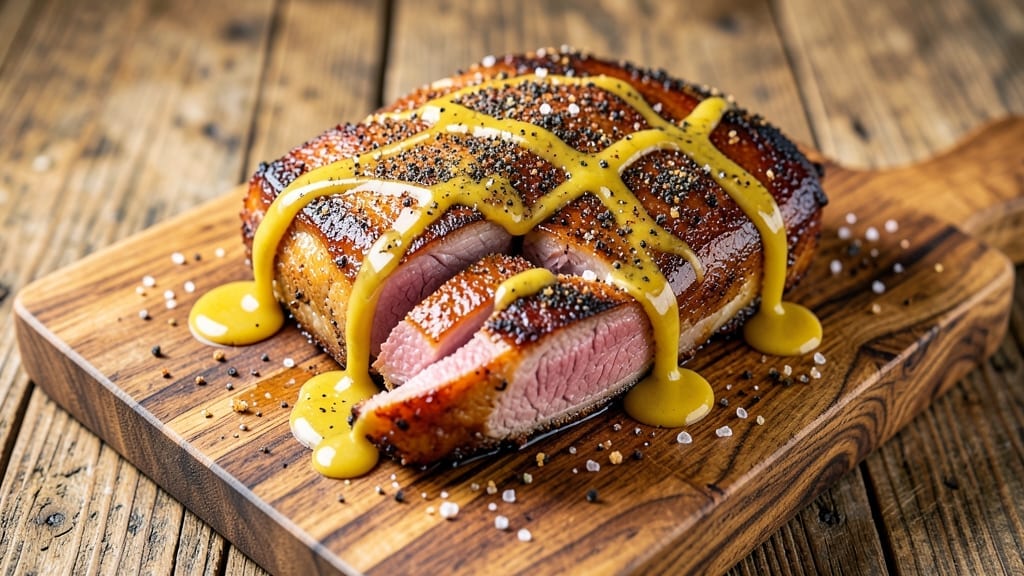
Mastering Big Green Egg brisket transforms a simple cut into a showstopper with a deep, smoky bark and melt-in-your-mouth tenderness. The key lies in precise temperature control and charcoal management—something I perfected after years of backyard cookouts where the smoke would either fade or overwhelm.
This isn’t just another brisket recipe; it’s a method that honors the Big Green Egg’s unique heat retention while delivering restaurant-quality results at home.
The secret starts with a dry rub that clings to the meat like armor, creating that coveted bark without burning. You’ll work with a 225°F smoke for hours, adjusting airflow by lifting the lid just enough to peek inside—never more than 30 seconds at a time.
That’s where the magic happens: slow-cooked collagen breaking down into juicy perfection while the crust develops a glossy, crackling finish. The French technique I learned—controlling moisture and heat—meets the raw power of charcoal smoke in this recipe.
By the time you’re ready to slice, you’ll have a brisket so tender it practically falls apart, with a bark so dark and glossy it looks like it came from a competition pit. The internal temperature should hit 203°F—probe it, don’t guess.
Let it rest for an hour before slicing against the grain, and you’ll serve up a masterpiece that’ll have everyone asking for seconds. This is the kind of brisket that turns casual cookouts into legendary meals.
Pair it with a simple cornbread and a tangy BBQ sauce for the full experience. The Big Green Egg’s even heat distribution means no cold spots, no flare-ups—just consistent, professional results.
Whether you’re cooking for a crowd or treating yourself to a solo feast, this recipe delivers every time. Let’s get smoking.
Ingredients for big green egg brisket
Eight pounds of brisket and a handful of pantry staples transform your Big Green Egg into a smoky masterpiece.
| Ingredient | Amount | Notes |
|---|---|---|
| Packer Brisket 🥩 | 8 lb | Whole packer cut, fat cap intact |
| Yellow Mustard 🍯 | ½ cup | For initial coating |
| Kosher Salt 🧂 | ½ cup | Coarse grain preferred |
| Black Peppercorns 🌶️ | 2 tbsp | Freshly cracked |
| Smoked Paprika 🌶️ | 2 tbsp | For deep smoky flavor |
| Garlic Powder 🧄 | 1 tbsp | Freshly ground preferred |
| Onion Powder 🧅 | 1 tbsp | For sweet base notes |
| Brown Sugar 🍚 | 2 tbsp | Light or dark |
| Ground Cumin 🌿 | 1 tsp | Toasted for depth |
| Chopped Onions 🧅 | 1 lb | Yellow or red |
| Chopped Carrots 🥕 | 1 lb | Whole or baby |
| Apple Juice 🍎 | 1 cup | For spritzing |
| Charcoal Briquettes 🔥 | 10 lb | Lump charcoal preferred |
| Cherry Wood Chips 🌳 | 2 cups | Soaked overnight |
| Beef Tallow 🧈 | ¼ cup | For extra fat cap |
[recipe_ingredient_scaler]
The brisket cut matters most here—packer brisket with that thick fat cap is non-negotiable. Costco or local butchers usually have it pre-trimmed, but ask for the fat left on if they don’t. That fat is your smoke shield and flavor insurance. The yellow mustard isn’t just for sticking the rub—it adds a subtle tang that cuts through the richness. I grab mine from the store brand section (it’s just as good as name brands). For the spices, Penzeys or bulk bins give the freshest grind, but don’t stress if you’re using store-bought—just check the date. The brown sugar should be light unless you want a deeper caramelized bark, and the beef tallow? That’s your secret weapon for locking in moisture during the long cook.
No lump charcoal? Brickets with a chunk of oak wood work in a pinch, but you’ll lose some of that clean burn. Cherry wood chips are ideal, but hickory or pecan add their own character. Running short on apple juice? White grape juice or even water will spritz just fine. The onions and carrots can be pre-chopped from the bag—no need to peel them. If your rub seems too dry, add a splash of vinegar to help it stick. And trust me on the beef tallow—it’s worth the extra minute to melt it and brush it on before the final hour of cooking. That’s what turns ‘good’ brisket into ‘legendary’ brisket.
This brisket deserves time—12-16 hours in the Egg, depending on your heat. The cherry wood chips should be replenished every 3-4 hours to maintain that sweet smoke. Wrap the brisket in butcher paper (not foil!) after the first 6 hours to speed up the stall. Store leftovers in the fridge for 5-7 days or freeze for up to 3 months. I like to portion mine into 1/2 lb servings with a little of the juices—perfect for sandwiches or tacos. The bark stays crispy for days if you keep it wrapped in parchment.
Why You’ll Love This Recipe
- No-Fuss Setup: I swear, the Green Egg’s built-in heat and lid mean I just toss in the brisket, slather it with that tangy yellow mustard, and let it do all the work. No thermometer math, no babysitting—just set it and forget it until the house smells like a Texas roadside BBQ joint.
- Smoky-Sweet Magic: That smoked paprika and peppercorns? They turn tough brisket into something so tender it falls apart at the touch. Honestly, the first time I bit into it, I nearly dropped the fork—it’s got this perfect balance of heat and sweetness that sticks with you.
- Tailgate-Ready in Minutes: Between us, this is my go-to for game days, potlucks, or lazy Sundays. The brisket’s hearty enough for a crowd, and the mustard gives it that crowd-pleasing tang that even picky eaters love. (Yes, even my dad, who claims he hates BBQ.)
- Leftovers That Don’t Suck: I make this on Sunday and eat it all week—sandwiches, tacos, you name it. The Green Egg keeps it juicy, and the salt and peppercorns make every slice taste like it just came off the grill. Budget win, flavor win.
Step-by-step instructions for Big Green Egg brisket
Here’s how to transform your Big Green Egg into a smoky masterpiece with perfect bark and tender meat.
Prepare the Brisket and Create the Rub
Start by trimming the fat cap of the 8 lb packer brisket to about ¼-inch thickness using a sharp knife. Leave the fat cap intact elsewhere for flavor and moisture during cooking. Pat the brisket dry with paper towels—this ensures the rub adheres properly and promotes better bark formation.
In a medium bowl, combine the 0.5 cup kosher salt, 2 tbsp black peppercorns (freshly cracked), 2 tbsp smoked paprika, 1 tbsp garlic powder, 1 tbsp onion powder, 2 tbsp brown sugar, and 1 tsp ground cumin. Mix thoroughly until evenly distributed. This blend creates a perfect balance of smoky, sweet, and savory flavors that penetrate the meat.
Generously coat the brisket with the 0.5 cup yellow mustard first—this helps the rub stick and adds a subtle tang. Then, press the spice rub firmly into all sides of the brisket, including the fat cap. Place the seasoned brisket on a wire rack set over a baking sheet, fat side up, and refrigerate uncovered for at least 4 hours or overnight. This step is crucial for deep flavor penetration and proper bark development.
Set Up the Big Green Egg for Indirect Heat
While the brisket rests, prepare the Big Green Egg by adding the 2 cups soaked cherry wood chips to the charcoal basket. Arrange 5 lb of the 10 lb charcoal briquettes around the edges of the cooking chamber, leaving the center empty for indirect heat. Light the charcoal and let it burn until fully covered with white ash, about 15-20 minutes.
Once the coals are ready, spread the remaining 5 lb charcoal evenly around the edges of the cooking chamber. Place a drip pan filled with the 1 lb chopped onions and 1 lb chopped carrots in the center, along with a water pan containing 1 cup apple juice. This creates a moist environment that helps maintain tenderness during the long cook.
Preheat the Big Green Egg to 225°F by closing the lid and letting it stabilize for 10 minutes. You’ll know it’s ready when the temperature holds steady and you see clean, blue smoke. This low-and-slow approach is essential for achieving that perfect balance of smoky bark and juicy interior.
Smoke the Brisket Low and Slow
Place the brisket on the grill grate, fat side up, directly over the drip pan. Close the lid immediately and resist the urge to peek—every time you open it, you lose heat and extend cook time. Smoke the brisket undisturbed for 6 hours, maintaining a temperature between 225-250°F. This long cook time allows the connective tissue to break down gradually, resulting in fork-tender meat.
After 6 hours, check the internal temperature using a meat thermometer. It should be around 165-170°F, which is when you’ll hit “the stall”—a period where the temperature plateaus as moisture evaporates. This is normal and expected. Here’s the thing—don’t panic. Instead, this is when you’ll add the 0.25 cup beef tallow to the fat cap. The extra fat helps maintain moisture and creates a thicker bark.
Continue smoking the brisket until the internal temperature reaches 203°F and a probe slides in easily with no resistance. This typically takes an additional 4-6 hours, but trust the probe test over the thermometer. The brisket should have a beautiful dark mahogany bark on the outside and a pink smoke ring just beneath the surface.
Rest and Slice for Maximum Juiciness
Once the brisket reaches the target temperature, remove it from the grill and transfer it to a cutting board. Tent loosely with foil and let it rest for at least 1 hour. This resting period is critical—it allows the juices to redistribute throughout the meat, ensuring each slice is moist and flavorful. Real talk: Skipping this step results in dry, tough meat that falls apart when sliced.
During the rest, the internal temperature will rise another 5-10°F due to carryover cooking. Use this time to prepare your serving plates and gather your favorite sides. The brisket should be easy to slice with a sharp knife, and each piece should pull apart with gentle pressure, not fall apart.
Slice the brisket against the grain into ¼-inch thick pieces. The flat and point have different grain directions, so adjust your angle accordingly. Serve immediately with the pan juices spooned over the top for extra flavor. Each bite should deliver a perfect combination of smoky bark, tender meat, and rich, juicy interior that makes this brisket truly unforgettable.
Pro Tips For Making Big Green Egg Brisket
- Trim the Fat Cap: That thick layer of fat on a packer brisket isn’t just for show—it’s your moisture shield. Trim it down to about ¼-inch thick on the fat cap before smoking; anything thicker will render unevenly and leave you with a dry, greasy mess instead of tender, juicy meat. I learned this the hard way when my first attempt turned into a grease-soaked disaster.
- Mustard Slather, Not Drizzle: Yellow mustard isn’t just a binder—it’s the flavor glue in this recipe. Spread it on thick (about ¼-inch layer) before adding the dry rub, and don’t skimp. The mustard caramelizes into a sticky, smoky-sweet crust that clings to the meat. I used to dab it on lightly, and the rub would just slide off like sand. Now? Every bite has that tangy depth.
- Skip the Crowd in Stage 1: The first 2 hours in the Big Green Egg are where the crust forms. If you stack briskets or crowd them in the grill, you’ll steam the meat instead of sear it. Keep them spaced at least 1-inch apart—yes, even if it looks sparse. The heat needs room to work, or you’ll end up with a sad, soggy exterior that falls apart before it’s done.
- Probe Like a Detective: That internal temp gauge isn’t just for show—use it every 30 minutes after the stall. The point where the probe hits 170°F and holds for 10 minutes is your target, not the 203°F finish. I’ve pulled briskets too early (tough) and too late (dry), but hitting that sweet spot? That’s when the fat melts into the muscle like butter. No guessing—just numbers.
Pro cooking tips for this recipe
Charcoal Mastery
The Big Green Egg’s magic lies in charcoal management—not all coals are created equal. I swear by lump charcoal for its cleaner burn and better heat control, but if you must use briquettes, add a chunk of oak or hickory to the basket for that authentic smoke.
The key is maintaining 225-250°F without flare-ups. I arrange my coals in a two-zone setup: hot coals on one side for searing (if needed) and a cool zone on the other for indirect heat.
Never let the coals burn too hot or you’ll end up with a burnt bark and dry meat. 🔥
Lid Discipline
Here’s the truth: Every time you lift that lid, you lose heat and extend cook time by 10-15 minutes. I’ve seen beginners peek every 10 minutes, turning a 12-hour cook into 16. The rule is simple: only open the lid to check temperature or add wood chips.
Use a remote thermometer (like the ThermoWorks Smoke) to monitor internal temp without disturbing the Egg. If you must peek, do it quickly—no more than 30 seconds—and close it back up immediately.
Spritzing Secrets
Most brisket recipes skip spritzing, but I’ve found that a light spritz every 2 hours keeps the bark from getting too hard and adds moisture.
My go-to is apple juice (it’s sweet enough to caramelize but not so sweet it masks the smoke), but white grape juice or even water works in a pinch.
Use a spray bottle for even distribution—no dousing the coals! The goal is to keep the surface slightly damp, not soggy. This is especially helpful during the stall phase when the brisket needs every bit of help to push through.
The Stall Solution
When your brisket hits 165°F, you’ll hit the stall—a frustrating plateau where moisture evaporates and temps stall. My trick? Butcher paper wrap. Unlike foil, it lets the brisket breathe while trapping steam.
Wrap it tightly (I use pink butcher paper from the grocery store) and return it to the Egg. The temp will drop 10-15°F at first, but it’s temporary. Within 1-2 hours, it’ll climb back up and finish strong.
Pro tip: Add beef tallow to the fat cap before wrapping—it melts into the bark, adding richness and preventing dryness.
Wood Chip Rotation
Wood chips aren’t just for flavor—they’re for consistent smoke. I add 2 cups of soaked cherry wood chips to the basket at the start, then replenish every 3-4 hours with fresh, dry chips.
The smoke should be blue and clean, not white (which means wet wood) or orange (which means the coals are too hot). If the smoke gets too thick, crack the lid slightly to let it dissipate.
The goal is a steady, sweet smoke that coats the brisket evenly without overpowering it. 🌳
Resting Like a Pro
Skipping the rest is the fastest way to ruin your brisket. After hitting 203°F, transfer it to a cutting board, tent loosely with foil, and let it rest for at least 1 hour (I often wait 2 hours for larger cuts).
This lets the juices redistribute—if you slice too soon, they’ll run out onto your plate, leaving you with dry meat. While it rests, the internal temp will rise another 5-10°F due to carryover cooking. Trust the probe, not the thermometer, and resist the urge to cut into it early.
Patience here makes all the difference. ⏳
Nutrition facts
Frequently asked questions
How do I know when my Big Green Egg brisket is perfectly cooked?
Your brisket is done when it reaches an internal temperature of 203°F and a meat probe slides in easily with no resistance. The bark should be dark mahogany with a glossy finish, and you’ll see a pink smoke ring just beneath the surface. Never rely on time alone—always use a meat thermometer for accuracy. The 1-hour rest after removing it from heat is crucial for juicy slices.
Can I use regular charcoal briquettes instead of lump charcoal?
While lump charcoal gives cleaner smoke and better heat control, briquettes will work if you add a chunk of oak or hickory wood to the basket for authentic flavor. Just monitor the temperature closely—briquettes burn hotter and can cause flare-ups. For 225-250°F consistency, spread them evenly around the Egg’s edges and avoid overloading.
What’s the best way to handle the stall phase?
When your brisket hits 165°F and stalls, wrap it tightly in butcher paper (not foil) and return it to the Egg. This traps steam while allowing airflow, helping it push through the stall in 1-2 hours. Before wrapping, brush the fat cap with beef tallow—it melts into the bark, adding richness and preventing dryness. The temp will drop 10-15°F temporarily, but it’ll climb back up.
How long can I store leftover brisket?
Store leftovers in an airtight container in the fridge for 5-7 days or freeze for up to 3 months. For reheating, warm slices in a 350°F oven for 10-15 minutes with a splash of beef broth to restore moisture. The bark stays crispy if you reheat it quickly—just avoid microwaving, which makes it soggy. Portion into ½ lb servings for easy sandwiches or tacos.
What if my brisket turns out too dry?
Dry brisket usually means it didn’t rest long enough or was overcooked. Next time, rest for at least 1 hour (2 hours for large cuts) and aim for 203°F internal temp. To salvage dry slices, shred them and mix with pan juices or BBQ sauce, then serve in tacos or sandwiches. For future cooks, monitor the fat cap thickness—it should be ¼-inch—and avoid opening the lid too often.

Trained in classic French technique but raised on slow-cooked ribs and spicy rubs, she blends culinary skill with smoke and soul.
- Big Green Egg Brisket Recipe: Smoky Bark and Juicy Interiors Mastered - October 15, 2026
- Texas Oven-Roasted Beef Brisket Recipe: Low-and-Slow Smoky Depth Without the Pit - October 15, 2026
- Lima Beans and Smoked Neck Bones Recipe: Collagen-Rich Stew That Deepens in Flavor - October 15, 2026