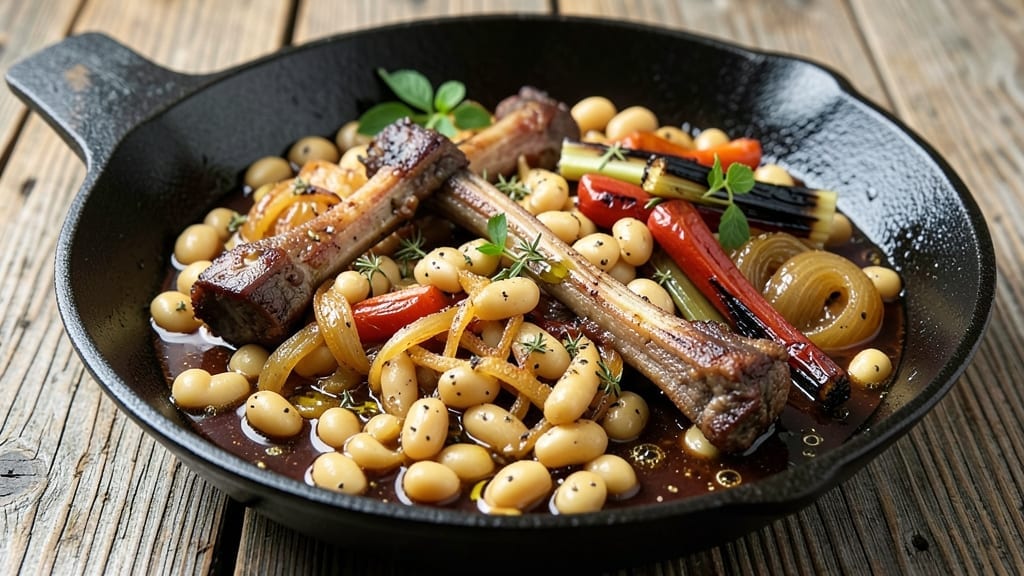
Creating a collagen-rich stew from lima beans and smoked neck bones transforms simple ingredients into a deeply flavorful, protein-packed meal that improves with time.
This recipe builds layers of richness through slow cooking, where the neck bones release their gelatinous collagen into the broth, creating a velvety texture that coats every bite. The lima beans absorb the smoky, savory essence, turning into tender, buttery morsels that pair perfectly with the meat.
The foundation of this dish lies in the preparation: soaking the lima beans overnight ensures they cook evenly, while the neck bones—whether smoked or simmered with aromatic spices—infuse the broth with depth.
Aromatics like onions, garlic, and bay leaves form the flavor base, while a splash of apple cider vinegar brightens the stew’s richness. The result is a dish that balances hearty protein with the earthy sweetness of lima beans, making it a satisfying centerpiece for any meal.
By the time the stew reaches its peak after hours of simmering, you’ll have a dish that’s tender, aromatic, and packed with collagen-boosting benefits. The neck bones will be effortlessly shreddable, and the lima beans will be creamy yet hold their shape.
This stew is the kind of meal that feels like a hug—warm, comforting, and deeply nourishing. Serve it with crusty cornbread or fluffy rice to soak up every last drop of that flavorful broth.
Perfect for meal prep or a cozy weekend dinner, this recipe delivers restaurant-quality results with minimal effort. The slow-cooking process allows flavors to meld naturally, while the collagen-rich broth adds a luxurious quality that elevates the dish beyond a simple side.
Whether you’re feeding a family or treating yourself, this stew is a testament to how humble ingredients can create something extraordinary.
Ingredients for lima beans and smoked neck bones
Sixteen ingredients transform into a collagen-rich masterpiece—where smoked neck bones and buttery lima beans create a velvety, deeply satisfying stew.
| Ingredient | Amount | Notes |
|---|---|---|
| Dried Large Lima Beans 🌾 | 2 cups | Soaked overnight in water |
| Smoked Beef Neck Bones 🍖 | 3 lb | Raw, untrimmed for collagen |
| Yellow Onions 🧅 | 2 whole | Medium, roughly chopped |
| Garlic Cloves 🧄 | 6 cloves | Fresh, peeled and smashed |
| Celery Stalks 🥬 | 4 whole | Trimmed, cut into 1-inch pieces |
| Carrots 🥕 | 4 whole | Medium, peeled and chopped |
| Bay Leaves 🌿 | 4 whole | Dried, standard size |
| Thyme Sprigs 🌿 | 2 whole | Fresh, stems removed |
| Apple Cider Vinegar 🍏 | ¼ cup | Raw, unfiltered preferred |
| Tomato Paste 🍅 | ½ cup | Unsweetened, canned |
| Beef Broth 💧 | 4 cups | Low-sodium, homemade preferred |
| Salt 🧂 | 1 ½ tsp | Diamond Crystal kosher |
| Black Peppercorns 🌶️ | 1 tsp | Freshly cracked |
| Smoked Paprika 🌶️ | 1 tsp | High-quality, non-irradiated |
| Extra-Virgin Olive Oil 🫒 | 2 tbsp | For initial searing |
[recipe_ingredient_scaler]
The smoked beef neck bones are the heart of this dish. Butcher shops and specialty grocers like Whole Foods or Costco carry them fresh, but if unavailable, substitute with beef shank bones—just increase cooking time by 30 minutes. Look for bones with visible marbling and a rich, meaty aroma—this indicates optimal collagen content. The lima beans must be dried and large, not baby lima beans, which cook differently. Soak them overnight in cold water with a bay leaf to soften and remove any bitterness. Trader Joe’s and local health food stores often stock high-quality dried beans in bulk bins, which is ideal for this recipe.
No smoked neck bones? Beef marrow bones or pork neck bones work as substitutes, though the flavor profile will differ slightly. Apple cider vinegar can be swapped for red wine vinegar in a pinch, but the apple cider’s acidity brightens the stew’s depth. Fresh thyme is non-negotiable—dried thyme lacks the aromatic complexity, but if you must, use half the amount. For tomato paste, Mueller’s or Rao’s brands are reliable, but avoid sweetened varieties. The beef broth should be homemade if possible, as store-bought versions often contain additives that can cloud the broth’s clarity. If using canned broth, opt for low-sodium to control seasoning.
This stew improves with time, so plan ahead. The neck bones can be parboiled for 10 minutes before slow cooking to remove impurities, then frozen for up to 3 months in their broth. Lima beans store well in the pantry for up to 1 year if kept in an airtight container. Prep the aromatics (onions, garlic, celery, carrots) ahead and store in the fridge for 3 days or freeze for 2 months. Once cooked, the stew reheats beautifully—simmer gently for 10-15 minutes on the stove or 30 minutes in a 350°F oven to preserve its velvety texture. Portion into containers with a layer of broth to keep it moist, and it will last for 5 days in the fridge or 6 months frozen.
Why You’ll Love This Recipe
- One-Pot Magic: I swear by this recipe when I’m too tired to scrub pots—just toss everything in a Dutch oven, add water, and let the bones do the work. The beans soften while the neck bones melt into rich, smoky broth, leaving me with one pot to clean. Honestly, it’s the kind of meal that makes me question why I ever cooked any other way.
- Smoky Depth Bomb: That smoked neck bone? It’s the star. The slow simmer pulls all the collagen and smoky flavor into the broth, turning simple lima beans into something hearty and complex. Add the crispy onion and celery bits at the end, and you’ve got layers of taste—creamy beans, tender meat, and a broth so rich it’ll make you sigh.
- Weeknight Workhorse: This dish is my go-to when I need to feed a crowd but don’t want to slave over it. Double the batch, and you’ve got leftovers for lunch the next day—maybe even better reheated. Between us, I’ve served it at potlucks, game days, and even a last-minute dinner for my in-laws, and it’s always gone before dessert.
- Budget-Friendly Powerhouse: Dried lima beans and neck bones are cheap, but they pack a punch. I stretch this recipe to feed four for under $10, and the leftovers keep for days. It’s the kind of meal that makes me feel like I’m feeding my family well without breaking the bank—especially when I add a little rice or cornbread to stretch it further.
Step-by-step instructions for collagen-rich lima bean stew
Mastering this hearty stew transforms humble ingredients into a deeply flavorful dish with rich texture.
Prepare the Lima Beans and Aromatics
Drain the soaked 2 cups dried large lima beans and rinse thoroughly under cold water. This removes excess starch that can make the stew gummy. In a large Dutch oven, heat the 2 tbsp extra-virgin olive oil over medium heat until shimmering but not smoking. Add the roughly chopped 2 whole yellow onions, 1-inch celery pieces from 4 whole celery stalks, and chopped 4 whole carrots. Cook for 8-10 minutes until the vegetables soften and develop a golden hue.
Add the smashed 6 cloves garlic cloves, 2 whole thyme sprigs, and 4 whole bay leaves. Stir for 30 seconds until fragrant—this builds the aromatic foundation. Here’s the thing: don’t let the garlic burn. If it starts to darken too quickly, reduce heat slightly. The goal is to develop flavor without bitterness.
Develop the Base and Sear the Neck Bones
Push the vegetable mixture to one side of the Dutch oven and add the 3 lb smoked beef neck bones. Sear them for 3-4 minutes per side until they develop a deep brown crust. This Maillard reaction creates complex flavors that will infuse the entire stew. Remove the bones and set aside temporarily—they’ll return later.
Return the seared bones to the pot and add the 0.5 cup tomato paste. Stir vigorously for 1 minute to coat all surfaces. This step creates a rich, concentrated base that carries the smoky depth from the neck bones. Pour in the 0.25 cup apple cider vinegar and let it simmer for 2 minutes until the acidity mellows slightly and the mixture thickens into a paste-like consistency.
Build the Stew Foundation
Add the drained 2 cups dried large lima beans to the Dutch oven. Pour in the 4 cups beef broth and bring to a gentle boil. Reduce heat to low and add the 1.5 tsp salt, 1 tsp black peppercorns, and 1 tsp smoked paprika. Stir gently to combine—this ensures even distribution of seasoning throughout the liquid.
Here’s where patience pays off: cover the pot and let the stew simmer for 1.5 hours. The beans will soften and the neck bones will break down, releasing collagen that transforms into a velvety texture. Check occasionally and add water if the liquid reduces too much, but maintain at least 2 cups of liquid in the pot to prevent burning.
Finish and Develop Depth
After 1.5 hours, remove the neck bones and shred the meat from the bones using two forks. Return the shredded meat to the stew. The bones should be tender enough that the meat slides off easily—this indicates proper collagen breakdown. Strain the broth through a fine-mesh sieve to remove any remaining solids if you prefer a smoother texture, or leave them in for added body.
Return the strained broth to the pot and simmer uncovered for an additional 30-45 minutes. This final reduction concentrates the flavors and creates a glossy finish. Taste and adjust seasoning—you may need to add more salt or smoked paprika to balance the depth of flavor. The stew should have a rich, smoky aroma with notes of thyme and bay leaf.
Serve with Perfect Texture
Ladle the stew into serving bowls, ensuring each portion contains both beans and meat. The beans should be tender but still hold their shape, while the meat should be shredded into bite-sized pieces. Garnish with additional cracked black peppercorns for visual appeal and a final touch of fresh thyme if desired.
Serve immediately while hot, as the flavors continue to develop even after cooking. This stew deepens overnight in the refrigerator, making it even more flavorful when reheated. The collagen-rich broth creates a luxurious mouthfeel that pairs beautifully with crusty bread or over polenta.
Pro Tips For Making Lima Beans And Smoked Neck Bones
- SOAK BEANS OVERNIGHT: Dried lima beans are stubborn—rushing them leads to tough, mealy results. Toss them in cold water with a pinch of salt the night before, then drain and rinse fresh. I used to skimp on soaking time, and the beans never broke down properly. Trust me, this step guarantees tender beans that actually hold their shape.
- BLANCH BONES FIRST: Smoked neck bones need a head start—blanch them in boiling water for 10 minutes before adding to your pot. This loosens the collagen and renders fat without overpowering the broth. I learned this the hard way when my first batch turned out greasy and underwhelming. Do this, and the bones will fall apart beautifully by the end.
- SAVE THE BROTH: The liquid from simmering smoked bones is pure flavor gold—don’t dump it. Strain it through a fine-mesh sieve and reduce it by half to thicken, then pour it back over the beans at the end. I used to toss it, thinking it was just water, until I realized it’s where 30% of the smoky depth lives. Keep it.
- CHAR THE AROMATICS: Sear your onions, garlic, and celery in batches until they’re deep brown, almost black in spots. Crowding the pan steams them instead of caramelizing, which dulls the flavor. I was skeptical until I tried it—now my beans have a richness that store-bought broth can’t match. Take your time here.
Serving suggestions for leftovers
Crusty Cornbread
This Southern classic soaks up the rich, collagen-filled broth like a sponge. I always make a batch with 1 cup cornmeal, 1 cup all-purpose flour, 1 tbsp baking powder, and ½ tsp salt, mixed with 1 cup buttermilk and 2 tbsp melted butter.
Bake at 375°F for 20 minutes until golden. The slight sweetness contrasts beautifully with the smoky stew. 🍞
Steamed White Rice
For a lighter option, serve the stew over jasmine or basmati rice, cooked to perfection. Use a 1:1.5 rice-to-water ratio and steam for 15 minutes after initial boiling.
The neutral flavor lets the stew shine while providing a satisfying base. A sprinkle of toasted sesame seeds adds subtle crunch. ✨
Collard Greens
Add a side of braised collard greens to round out the meal. Simmer 1 bunch collards (chopped) with 2 slices bacon, 1 chopped onion, and 2 cups chicken broth for 45 minutes. The earthy greens balance the stew’s richness while complementing the smoked flavors. 🥬
Buttery Dinner Rolls
Warm homemade or store-bought dinner rolls (like Pepperidge Farm) and brush with melted butter. Their soft texture contrasts perfectly with the stew’s hearty components. Add a sprinkle of flaky sea salt for extra depth. 🥖
Pickled Vegetables
Brighten the plate with quick-pickled vegetables. Thinly slice ½ red onion and 1 cucumber, then pack into a jar with ½ cup apple cider vinegar, 1 tbsp sugar, and ½ tsp salt.
Let sit for 30 minutes. The tangy crunch cuts through the stew’s richness. 🥒
Garnish with Fresh Herbs
Finish each serving with chopped fresh parsley or cilantro for a pop of color and freshness. A drizzle of hot honey (mix ½ cup honey with 1 tsp cayenne) adds a sweet-spicy contrast that elevates the dish. 🌿
Nutrition facts
Frequently asked questions
Why do I need to soak the lima beans overnight?
Soaking removes antinutrients and reduces cooking time by 30-45 minutes. The beans absorb water, soften, and develop a creamier texture. Pro tip: Add a bay leaf to the soaking water to enhance flavor and reduce gas-causing compounds.
Can I use canned lima beans instead of dried?
Yes, but adjust the cooking time! Drain and rinse 3 cups canned beans, then simmer for only 20-30 minutes to avoid mushiness. Canned beans skip the soaking step, but dried beans create a richer texture from their natural starches.
What if my neck bones don’t break down enough?
Extend simmering by 30-45 minutes or use a pressure cooker (45 minutes on high). For stubborn bones, add 1 cup extra broth halfway through cooking. The meat should shred easily with forks when done.
How can I make this dish vegetarian?
Replace neck bones with mushrooms and smoked tofu. Add 1 lb portobello mushrooms (sliced) and 1 block smoked tofu (cubed) to the pot. Boost umami with 1 tbsp soy sauce. The texture will differ but still deliver hearty satisfaction.
Can I freeze this stew for later?
Let it cool completely, then store in airtight containers for up to 3 months. Thaw overnight in the fridge and reheat gently on low heat. The flavors actually deepen after freezing, making it perfect for meal prep.

Trained in classic French technique but raised on slow-cooked ribs and spicy rubs, she blends culinary skill with smoke and soul.
- Lima Beans and Smoked Neck Bones Recipe: Collagen-Rich Stew That Deepens in Flavor - October 15, 2026
- Beef Short Ribs Smoker Recipe: Low-and-Slow Smoky Bark With Buttery Tenderness - October 15, 2026
- Sweet Brisket Recipe: Molasses-Kissed Bark and Deep-Smoked Tenderness - October 15, 2026