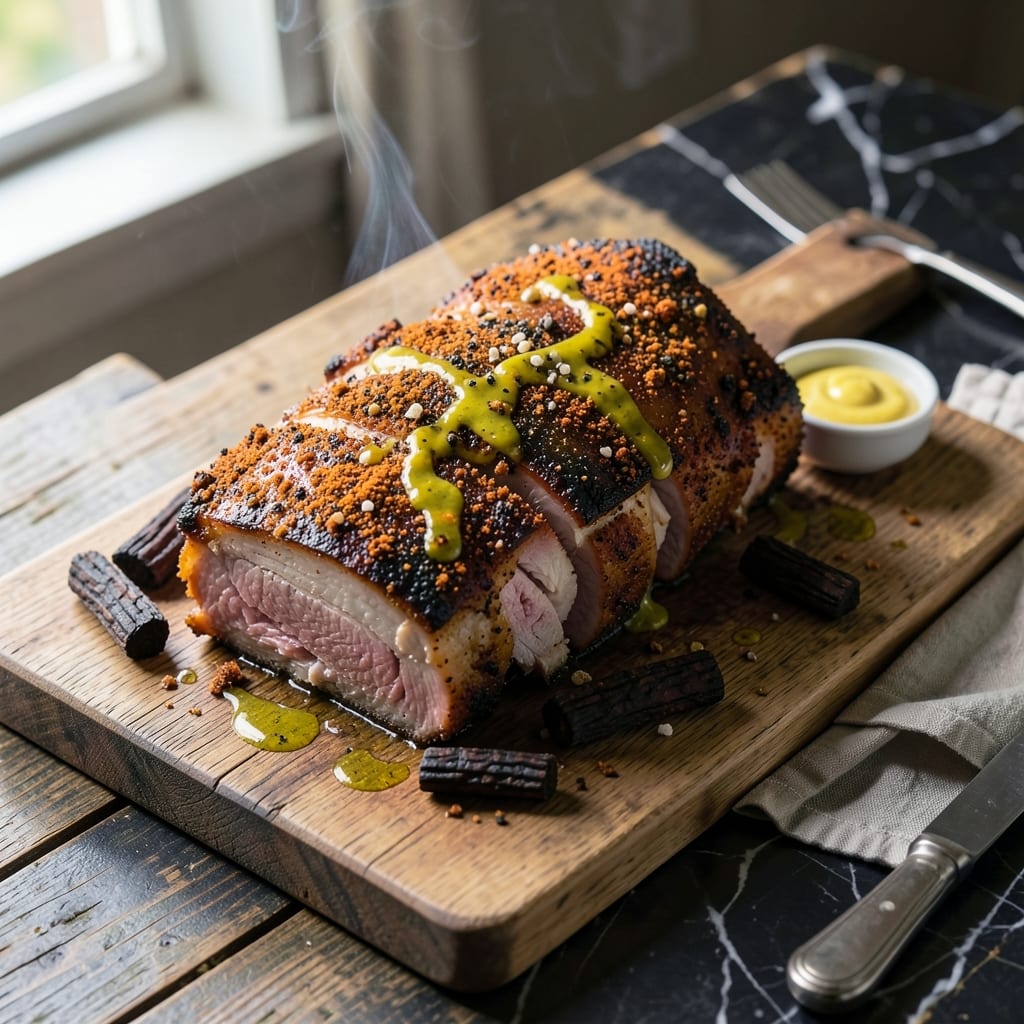
Mastering pork butt on the Big Green Egg is about patience and precision. This method delivers pull-apart tenderness with that signature smoky char only ceramic cookers can achieve.
I developed this technique over years of competition cooking, refining the balance between low heat and wood smoke. The key is maintaining a steady 225°F while letting the pork develop its bark.
What emerges after 12-14 hours is meat so tender it nearly collapses at the touch, with a deep mahogany crust. The collagen renders into gelatin, creating that unmistakable melt-in-your-mouth quality.
Serve with classic Carolina vinegar sauce or let the pork shine on its own. This is the dish that made me a pitmaster.
Ingredients for Big Green Egg Pork Butt
Pantry staples plus a trip to the butcher. Nothing too fancy, just good meat and time.
| Ingredient | Amount | Notes |
|---|---|---|
| Pork Butt 🥩 | 8 lb | Bone-in, skin-on preferred |
| Yellow Mustard 🟡 | ½ cup | For binder on pork rub |
| Kosher Salt 🧂 | ½ cup | Diamond Crystal preferred |
| Coarse Black Pepper 🌶️ | ¼ cup | Freshly ground preferred |
| Paprika 🌶️ | 3 tbsp | Sweet or smoked variety |
| Garlic Powder 🧄 | 2 tbsp | Not garlic salt |
| Onion Powder 🧅 | 2 tbsp | Fresh ground preferred |
| Cayenne Pepper 🔥 | 1 tbsp | Adjust for heat preference |
| Brown Sugar 🟤 | ½ cup | Light or dark variety |
| Apple Cider Vinegar 🍏 | ½ cup | For Carolina vinegar sauce |
| Hickory Wood Chunks 🪵 | 4 pieces | For smoky flavor |
| Apple Juice 🍎 | 2 cups | For spritzing pork |
| Butter 🧈 | ½ cup | For finishing sauce |
[recipe_ingredient_scaler]
The pork butt is everything here. Bone-in, skin-on gives you that perfect bark and moisture. I always grab mine from Costco—consistent quality, good marbling, and the size works for a long cook. If your local butcher has Boston butt (same thing), even better. Look for at least 8 pounds so it holds heat well. The rub spices? Penzeys if you’re feeling fancy, but grocery store brands work fine too.
No pork butt? Pork shoulder is your next best bet—slightly leaner but still great. Out of apple juice? Cider works in a pinch, or just skip the spritz. Don’t have hickory? Cherry or pecan wood gives a milder, sweeter smoke. The vinegar in the sauce is non-negotiable for that Carolina tang though. If you’re feeling lazy, store-bought vinegar sauce (Bessie’s is solid) saves time.
The rub keeps in a sealed jar for 6 months. Pork butt freezes beautifully—vacuum seal if you can. Leaves you with leftovers that make killer sandwiches, tacos, or nachos for 5 days in the fridge.
Why You’ll Love This Recipe
- Set It and Forget: I throw the pork butt on the Big Green Egg with just mustard, salt, pepper, and paprika—then let the smoker do all the work.
- Smoky, Spicy Bark: That crust from the paprika and coarse pepper? It’s the reason I make this every weekend.
- Feeds a Hungry Crowd: One pork butt means leftovers for tacos, sandwiches, or straight from the fridge at 2 a.m.
- Pocketbook Friendly: A big cut of pork butt costs less than fancy meats but tastes like a million bucks.
Step-by-Step Instructions for Smoky Pork Butt
Here’s the method I use for fall-apart tender pork with maximum bark on the Big Green Egg.
Step 1: Apply the Rub and Let It Set
Pat the 8 lb pork butt dry with paper towels, then coat it generously with the 0.5 cup yellow mustard—this acts as a binder for the rub. I use a basting brush to ensure every crevice gets covered evenly.
In a bowl, combine the 0.5 cup kosher salt, 0.25 cup coarse black pepper, 3 tbsp paprika, 2 tbsp garlic powder, 2 tbsp onion powder, 1 tbsp cayenne pepper, and 0.5 cup brown sugar. Press this mixture into the mustard-coated pork until it’s fully covered. Let it sit at room temperature for 30-45 minutes while you prep the smoker.
Step 2: Set Up the Big Green Egg for Low and Slow
Load the 4 pieces hickory wood chunks into the Big Green Egg and light it using your preferred method. I aim for a temperature of 225-250°F—this low-and-slow approach ensures the pork becomes tender without drying out.
Once the egg stabilizes at temperature, place the pork butt directly on the grill grates, fat-side up. The fat cap will render down during the cook, basting the meat naturally. Close the lid and let it smoke undisturbed for the first 4 hours.
Step 3: Spritz and Wrap for the Stall
After the initial 4 hours, begin spritzing the pork every 45-60 minutes with the 2 cups apple juice. This keeps the surface moist and builds a beautiful bark. I use a spray bottle for an even mist—just don’t oversaturate it.
When the internal temperature reaches 165-170°F, you’ll hit the stall. At this point, wrap the pork tightly in pink butcher paper or foil (I prefer paper for better bark). Return it to the egg and continue cooking until it reaches 203°F internally—this is where it becomes probe-tender.
Step 4: Rest and Finish with Butter
Once the pork hits 203°F, remove it from the Big Green Egg and let it rest wrapped in a cooler or warm oven for at least 1 hour. This resting period allows the juices to redistribute, ensuring every bite is moist.
Before serving, melt the 0.5 cup butter and mix it with the 0.5 cup apple cider vinegar for a tangy finishing sauce. Pull the pork apart with forks or your hands, drizzle with the sauce, and serve immediately.
Pro Tips For Making Big Green Egg Pork Butt
- Start Low and Slow: Set your Big Green Egg to 225°F—any higher and the fat renders too fast, leaving the meat dry. I learned this the hard way after my first attempt came out tough as leather.
- Slather with Mustard: Coat the pork butt with a thin layer of yellow mustard before seasoning—it acts like glue for the salt, pepper, and paprika, and the flavor disappears into the bark.
- Skip the Rush: Resist the urge to pull it early just because it looks done. Pork butt needs to hit 203°F internally to shred like butter.
- Rest Under Foil: Once it’s off the egg, wrap it tight in foil and let it sit for at least 30 minutes—this redistributes the juices so they don’t all spill out when you slice or pull it.
Creative Variations of These Flavors
Carolina Vinegar Style
Swap the brown sugar in your rub for 2 tbsp turbinado sugar and add 1 tbsp celery salt for that classic Eastern NC profile. Serve with a thin vinegar-based mop sauce—I mix 2 cups apple cider vinegar with 1 tbsp red pepper flakes and ¼ cup hot sauce. Honestly, this is how we do it in my Georgia family gatherings. 🌶️
Memphis Dry Rub
Skip the wrapping phase entirely and go dry rub all the way. Add 2 tbsp ground coriander and 1 tbsp dry mustard to your rub blend. The bark gets so crispy it’ll shatter. I learned this from a pitmaster buddy in Memphis—perfect for those who love texture.
Kansas City Sweet
Double the brown sugar to 1 cup and add 1 tbsp chili powder to your rub. After pulling, toss the pork in 1 cup Kansas City-style sauce before serving. I prefer Joe’s Kansas City brand for that perfect sweet-heat balance. This is my go-to when I want to impress judges. 🔥
Texas-Style Spicy
Increase cayenne to 2 tbsp and add 1 tbsp chipotle powder for a south-of-the-border kick. Use mesquite wood chunks instead of hickory for more intense smoke. This variation pays homage to the Texas-Mexico border influence in BBQ.
Competition Injection
Before applying the rub, inject the pork with a mixture of 1 cup apple juice, ½ cup melted butter, and ¼ cup brown sugar. This adds moisture and sweetness deep into the meat. I use a Meat Injector Pro from my kitchen—game changer for competitions.
Nutrition Facts
Frequently Asked Questions
What’s the ideal temperature for cooking?
Maintain a steady 225-250°F throughout the cook. This low-and-slow approach ensures tender meat without drying out. Use a reliable thermometer to monitor the dome temperature.
How do I know when it’s done?
The pork is ready when it reaches an internal temperature of 203°F and feels probe-tender. The meat should pull apart easily with a fork. Don’t rush it—patience is key.
Can I use a different wood for smoking?
Yes! Hickory is classic, but cherry or pecan add a sweeter, milder smoke. Avoid softwoods like pine—stick to hardwoods for the best flavor.

Trained in classic French technique but raised on slow-cooked ribs and spicy rubs, she blends culinary skill with smoke and soul.
- Recipe for Boneless Pork Chops in Cast Iron Skillet: Sear and Baste to Juicy Perfection - October 3, 2026
- Recipe for Boneless Cross Rib Roast: Slow-Roasted Beef with Herb Crust - October 3, 2026
- Hamburgers in Sauce Recipe Crock Pot: Slow-Cooked Savory Delight - October 3, 2026