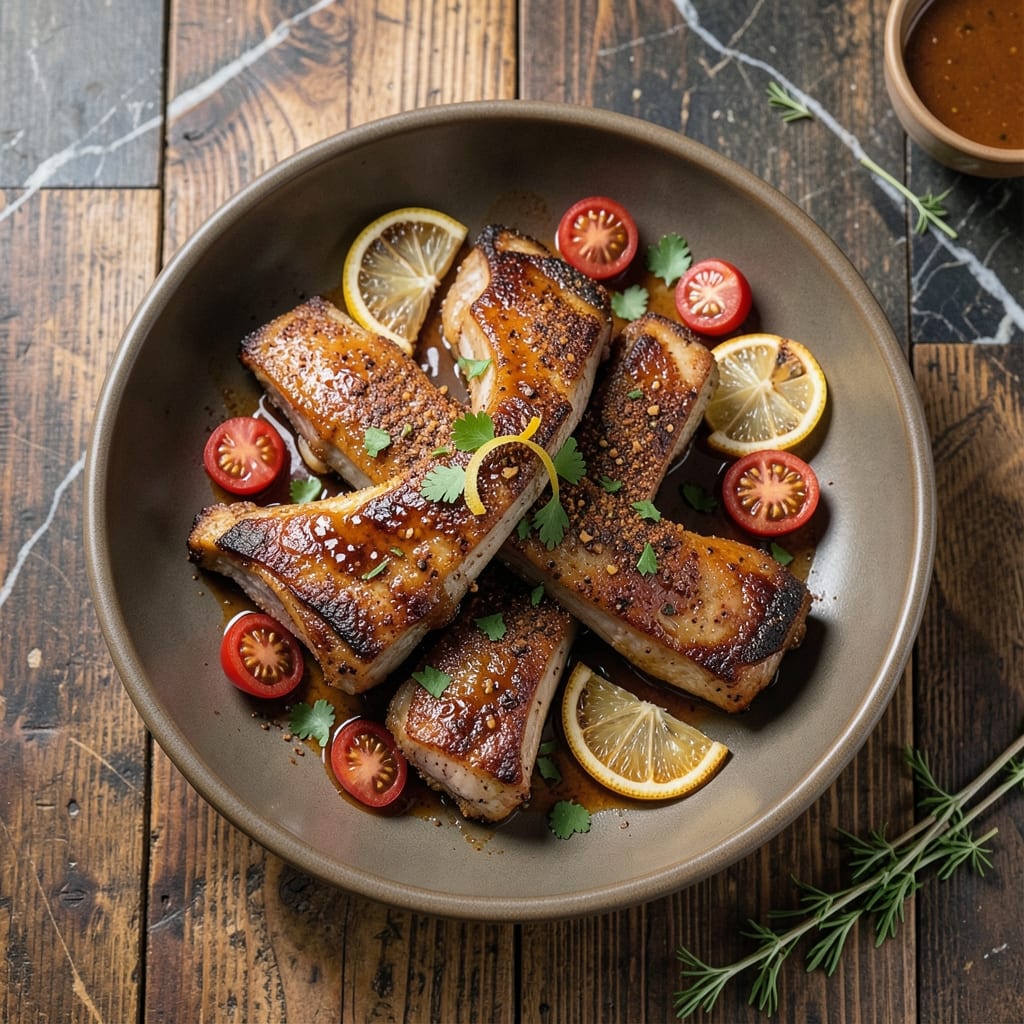
I developed this slow-roasted pork backbone method after years of testing in my small Boston kitchen. The key is low heat and patience, transforming tough cuts into fall-off-the-bone tenderness.
This approach builds layers of smoky richness through careful seasoning and extended cooking. I’ve found the sweet spot at 275°F, allowing the meat to break down gradually while developing deep flavor.
What emerges is meat so tender it nearly melts, with a caramelized exterior that seals in juices. The slow roast ensures every bite carries that signature smoky depth without drying out.
The process is straightforward but demands attention to detail. The results, however, speak for themselves.
Ingredients for Pork Backbone
Meaty pork backbone, bold spices, and patience create this melt-in-your-mouth dish.
| Ingredient | Amount | Notes |
|---|---|---|
| Pork Backbone 🐖 | 2 ½ lb | Meaty sections preferred |
| Kosher Salt 🧂 | 1 ½ tbsp | Diamond Crystal preferred |
| Coarse Black Pepper 🌶️ | 1 tbsp | Freshly ground |
| Smoked Paprika 🌶️ | 1 tbsp | Sweet or hot variety |
| Garlic Powder 🧄 | 1 tbsp | Not garlic salt |
| Onion Powder 🧅 | 1 tbsp | Fresh ground preferred |
| Brown Sugar 🍚 | 2 tbsp | Light or dark |
| Dijon Mustard 🟡 | 2 tbsp | Whole grain acceptable |
| Apple Cider Vinegar 🍏 | ¼ cup | For acidity balance |
| Olive Oil 🫒 | 2 tbsp | Extra-virgin for richness |
| Liquid Smoke 🔥 | 1 tsp | Optional for extra smokiness |
| Fresh Rosemary 🌿 | 2 sprigs | Chopped for garnish |
| Fresh Thyme 🍃 | 4 sprigs | Leaves stripped |
[recipe_ingredient_scaler]
The pork backbone is everything here. Ask your butcher for meaty sections—some cuts are all bone with little meat. I get mine from Whole Foods or local butchers in Boston (they’ll cut it to your specs). Look for good marbling in the meat—this fat renders down during the slow roast. The backbone pieces should be uniform in size so they cook evenly. Don’t trim too much fat off; it’s flavor.
No smoked paprika? Regular paprika plus a pinch of chipotle powder works. Fresh garlic and onion can replace the powders at a 3:1 ratio (use 3 cloves for 1 tbsp powder). Brown sugar can be swapped with maple syrup or honey (though honey’s flavor is stronger). If you’re out of Dijon, yellow mustard in a pinch—just add a little extra vinegar to balance. Liquid smoke is optional but adds that signature depth.
This reheats like a dream—tastes even better the next day. Store in the fridge for up to 4 days or freeze for 3 months. I like to pull the meat off the bone after cooking and crisp it up in a pan before serving. Leftovers make killer tacos or sandwiches.
Why You’ll Love This Recipe
- Five-Minute Prep: I just rub the backbone with salt, pepper, smoked paprika, and garlic powder—no marinating, no fuss.
- Smoky Depth: That smoked paprika and garlic powder crust gives every bite a rich, almost barbecue-like flavor without the grill.
- Stretches Far: One pork backbone feeds my family of four, and the leftovers make killer tacos the next day.
Step-by-Step Instructions for Slow-Roasted Pork Backbone
Here’s the method I use to transform this cut into fall-off-the-bone perfection.
Step 1: Create the Dry Rub and Prep the Pork
In a small bowl, combine the 1.5 tbsp Kosher Salt, 1 tbsp Coarse Black Pepper, 1 tbsp Smoked Paprika, 1 tbsp Garlic Powder, 1 tbsp Onion Powder, and 2 tbsp Brown Sugar. Whisk until evenly blended—the sugar should disappear into the spices.
Pat the 2.5 lb Pork Backbone completely dry with paper towels. This removes surface moisture that could prevent the rub from adhering. Massage the spice mixture all over the pork, pressing firmly so it forms a thick crust. Let it sit at room temperature for 30 minutes while your oven preheats.
Step 2: Prepare the Wet Marinade Components
In a separate bowl, whisk together the 2 tbsp Dijon Mustard, 0.25 cup Apple Cider Vinegar, 2 tbsp Olive Oil, and 1 tsp Liquid Smoke until fully emulsified. The vinegar will slightly thin the mustard, creating a pourable consistency.
Strip the leaves from the 4 sprigs Fresh Thyme and finely chop them. Roughly chop the 2 sprigs Fresh Rosemary as well. Stir these herbs into the wet mixture—their aromatic oils will infuse the marinade with depth. This combination balances the acidity of the vinegar with the richness of the oil.
Step 3: Combine and Slow-Roast to Tenderness
Place the seasoned pork backbone in a roasting pan or Dutch oven. Pour the wet marinade evenly over the meat, making sure to coat all surfaces. The liquid should pool slightly at the bottom of the pan—this will create steam that keeps the meat moist during the long cook.
Cover the pan tightly with foil or a lid and transfer to a preheated 300°F oven. Roast for 2.5 to 3 hours, basting with the pan juices every 45 minutes. You’ll know it’s ready when the meat nearly falls off the bone when tested with a fork and the internal temperature reaches 195-200°F.
Step 4: Rest and Serve with Pan Juices
Carefully transfer the pork to a cutting board and tent loosely with foil. Let it rest for 15 minutes—this allows the juices to redistribute throughout the meat. Meanwhile, skim any excess fat from the pan juices and reduce them on the stovetop over medium heat for 5-7 minutes until slightly thickened.
Serve the pork backbone with the reduced pan juices spooned over the top. The meat should pull away from the bone effortlessly, with a deep mahogany color and a sticky, caramelized exterior. Each bite will deliver the smoky, savory depth from the dry rub and the tangy brightness from the vinegar-mustard glaze.
Pro Tips For Making Pork Backbone
- Preheat the Pan: Get your pan smoking hot before adding the pork backbone—I learned this the hard way after my first batch came out pale and soggy instead of crisp.
- Pat It Dry: Blot the pork backbone with paper towels before seasoning; even a little moisture prevents the spices from sticking and ruins the crust.
- Don’t Rush the Sear: Give each side at least 3-4 minutes on high heat to develop that deep, smoky crust from the smoked paprika and black pepper.
- Rest Before Serving: Tent the pork backbone with foil and let it rest 5-10 minutes after cooking—this keeps the juices from running all over the plate when you cut in.
Wine and Beer Pairings for This pork backbone
Bold Red Wines
A full-bodied Zinfandel from California’s Dry Creek Valley stands up to the smoky richness. The jammy fruit and pepper notes complement the caramelized exterior. I love Ravenswood for its consistent quality and value. 🍷
Rich Whites
Surprisingly, a buttery Chardonnay works beautifully here. The oak aging adds vanilla notes that pair well with the brown sugar in the rub. Kendall-Jackson Vintner’s Reserve is my go-to for this match.
Craft Beer Options
A smoky Porter like Founders Porter enhances the dish’s depth with its chocolate and coffee undertones. For something lighter, a Brown Ale offers caramel notes that echo the glaze. 🍺
Regional Italian
An Italian Chianti Classico with its high acidity and cherry notes cuts through the fat beautifully. The tannins soften the dish’s richness while the fruit complements the smokiness.
Cider Pairing
For non-grape options, a dry hard cider like Angry Orchard Dry works surprisingly well. The apple notes tie into the cider vinegar in the recipe while the effervescence cleanses the palate.
Rosés Work Too
A fuller-bodied Provence rosé with its strawberry and herb notes offers a refreshing contrast. Serve slightly chilled to balance the warmth of the dish. ✨
Nutrition Facts
Frequently Asked Questions
What’s the best way to prepare the bones?
Pat them completely dry before seasoning to help the rub stick. Ask your butcher for meaty sections with good marbling for best results.
Can I use a different cooking method?
Slow cooking in a crockpot works well on low heat for 6-8 hours. Avoid high heat, as it can dry out the meat.
How do I know when it’s done?
The meat should reach 195-200°F internally and pull away from the bone easily. A fork test is the most reliable method.
What if my rub is too dry?
Add a splash of olive oil or apple cider vinegar to help it adhere. The liquid helps create a better crust during cooking.

Trained in classic French technique but raised on slow-cooked ribs and spicy rubs, she blends culinary skill with smoke and soul.
- Recipe for Boneless Pork Chops in Cast Iron Skillet: Sear and Baste to Juicy Perfection - October 3, 2026
- Recipe for Boneless Cross Rib Roast: Slow-Roasted Beef with Herb Crust - October 3, 2026
- Hamburgers in Sauce Recipe Crock Pot: Slow-Cooked Savory Delight - October 3, 2026