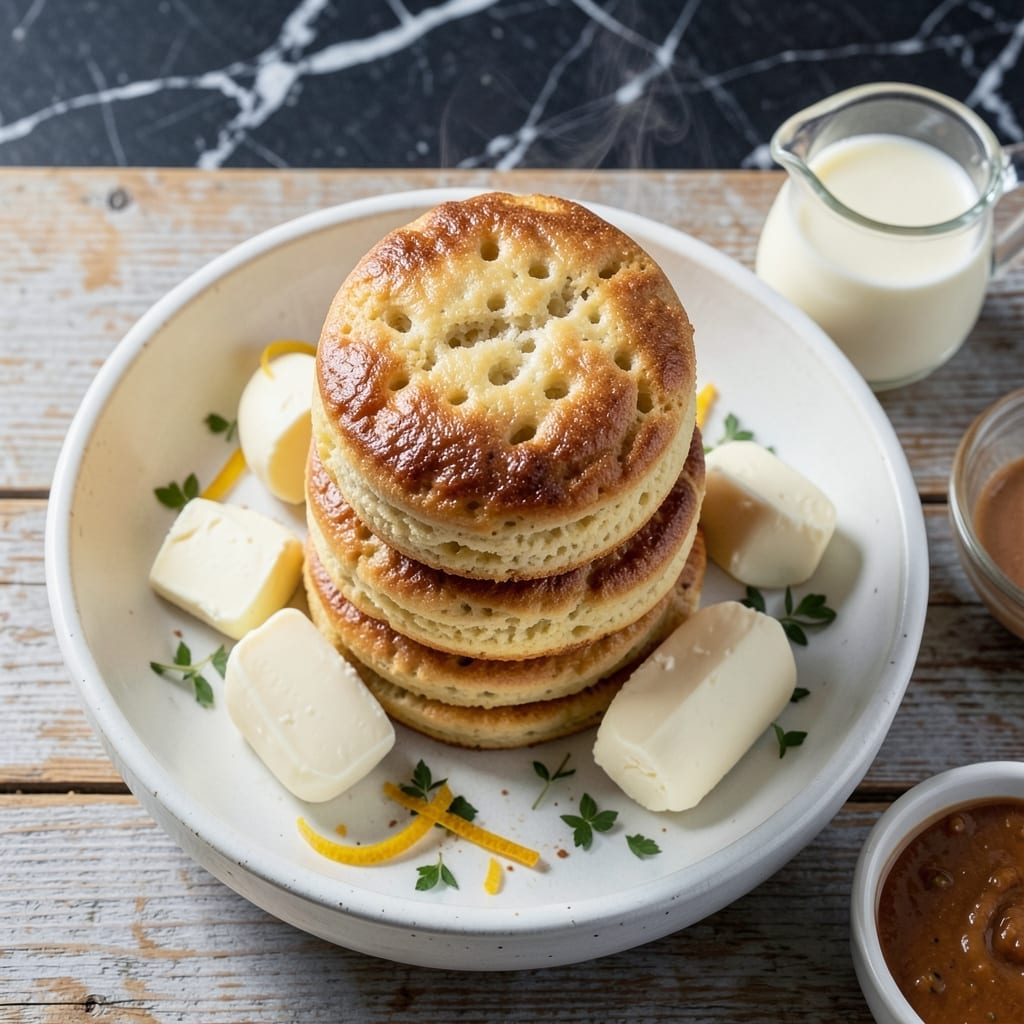
This recipe delivers flaky, buttery biscuits with layers that separate beautifully, just like the famous original. The secret lies in cold butter and a gentle touch.
With simple ingredients and precise technique, you’ll achieve tender, golden biscuits that rise high in the oven. These are perfect for breakfast or any meal.
Ingredients for Biscuitville Biscuit
Cold butter, precise ratios, and a gentle hand yield those signature flaky layers you love.
| Ingredient | Amount | Notes |
|---|---|---|
| All-Purpose Flour 🌾 | 2 ½ cups | Plus extra for dusting |
| Baking Powder 🧂 | 1 tbsp | Aluminum-free for best flavor |
| Granulated Sugar 🍚 | 1 tbsp | Balances the richness |
| Salt 🧂 | 1 tsp | Fine sea salt preferred |
| Unsalted Butter 🧈 | ½ cup | Very cold, cubed |
| Buttermilk 🥛 | 1 cup | Full-fat for richness |
| Baking Soda 🧂 | ½ tsp | For optimal rise |
| Cream of Tartar 🧂 | ½ tsp | Stabilizes the layers |
| Large Egg 🥚 | 1 whole | Cold, for binding |
| Unsalted Butter 🧈 | 2 tbsp | Melted, for brushing |
[recipe_ingredient_scaler]
The butter is non-negotiable—European-style or Plugrá if you can find it, but standard unsalted works fine. Look for buttermilk with live cultures at Whole Foods or most grocery stores. The flour should be unbleached all-purpose (King Arthur is my go-to). Cold ingredients are key here, so don’t skimp on chilling everything, including your mixing bowl (worth the extra minute).
No buttermilk? Whole milk plus 1 tbsp vinegar or lemon juice does the trick. Out of cream of tartar? Substitute with 1.5 tsp vinegar or lemon juice—the acidity is what matters. For a richer biscuit, swap 1/4 cup of the buttermilk for heavy cream. The sugar can be omitted if you prefer savory, but I find it balances the tang beautifully.
Baked biscuits stay fresh for 2 days at room temperature in an airtight container. For longer storage, freeze uncooked dough on a tray, then transfer to a bag—bake straight from frozen, adding 2-3 minutes to the time. Always reheat in a 350°F oven for best texture.
Why You’ll Love This Recipe
- 5 Ingredient Magic: I love that I only need flour, baking powder, sugar, salt, and butter—no fancy shopping required.
- Buttery Layers: The cold butter creates those flaky, golden layers that melt in your mouth every time.
- Breakfast to Dinner: Honestly, these biscuits work with sausage gravy at dawn or as a side with fried chicken at night.
- Freezer Friendly: I double the batch, bake half, and freeze the rest—fresh biscuits in minutes whenever I want.
Step-by-Step Instructions for Flaky Buttermilk Biscuits
Master the technique for creating tall, layered biscuits with a tender crumb and golden crust.
Step 1: Combine Dry Ingredients for Lift
In a large mixing bowl, whisk together the 2.5 cups All-Purpose Flour, 1 tbsp Baking Powder, 1 tbsp Granulated Sugar, 1 tsp Salt, 0.5 tsp Baking Soda, and 0.5 tsp Cream of Tartar. The combination of baking powder, baking soda, and cream of tartar creates a double-acting rise for maximum flakiness.
Whisk vigorously for 30 seconds to ensure even distribution of leavening agents. This prevents hot spots of concentrated baking powder that could leave a metallic taste. The mixture should appear uniform in color with no visible clumps.
Step 2: Cut in Cold Butter for Layered Texture
Add the 0.5 cup Unsalted Butter (very cold and cubed) to the dry ingredients. Using a pastry cutter or your fingertips, work the butter into the flour until the mixture resembles coarse crumbs with pea-sized butter pieces visible throughout.
This step is critical for flakiness—those visible butter pieces will create steam pockets during baking, separating the dough into distinct layers. Work quickly to keep the butter cold; if it starts to melt or smear, chill the mixture for 10 minutes before proceeding.
Step 3: Create the Dough with Wet Ingredients
Make a well in the center of the flour-butter mixture. Add the 1 cup Buttermilk (full-fat) and 1 whole Large Egg (cold) to the well. Using a fork, gently stir the wet ingredients into the dry, just until the dough begins to come together.
The dough will be shaggy and slightly sticky—that’s perfect. Overmixing develops gluten, which makes biscuits tough rather than flaky. The buttermilk’s acidity reacts with the baking soda for additional lift, while the egg adds structure to support those tall layers.
Step 4: Laminate and Cut for Maximum Flake
Turn the dough onto a lightly floured surface (using some of the extra all-purpose flour) and gently pat into a 1-inch thick rectangle. Fold the rectangle in thirds like a business letter, then rotate 90 degrees and pat out again.
Repeat this fold-and-pat process 2 more times for a total of three folds. This laminating technique creates multiple thin layers of butter between dough, resulting in those signature flaky strata. Use a 2.5-inch biscuit cutter to cut straight down without twisting—twisting seals the edges and prevents rise.
Step 5: Bake to Golden Perfection
Place the biscuits on a parchment-lined baking sheet, touching slightly for support during rising. Bake at 425°F for 12-15 minutes until the tops are golden brown and the layers are visibly separated.
Immediately brush the hot biscuits with the 2 tbsp Unsalted Butter (melted) for added richness and shine. The internal temperature should reach 200°F. Serve warm, when the biscuits are at their most tender and the layers peel apart effortlessly.
Pro Tips For Making Biscuitville Biscuit
- Chill the Butter: Cut your unsalted butter into small cubes and refrigerate for 15 minutes before mixing—this keeps it from melting into the flour too soon, which is the thing that matters most for flaky layers.
- Don’t Overmix: I learned this the hard way—once the dough just comes together, stop mixing, even if it looks shaggy. Overworking it makes biscuits tough instead of tender.
- Use Cold Hands: Sounds weird, but it works: wet your hands with ice water before handling the dough to prevent the butter from warming up as you fold and shape.
- Bake Immediately: Get these in a hot 425°F oven as soon as they’re shaped—any delay and the baking powder loses its lift, leaving you with flat, sad biscuits.
Common Mistakes When Making This Dish
Overworking the Dough
This is the most common mistake I see—once you add the wet ingredients, mix just until the dough comes together. Overworking develops gluten, which turns your biscuits into dense hockey pucks instead of flaky layers. A shaggy, slightly sticky dough is exactly what you want. 💪
Warm Butter Disaster
Your butter must stay ice cold throughout the process. If it starts to melt or smear into the flour, it won’t create those essential steam pockets for lift. I chill my mixing bowl and pastry cutter for 10 minutes beforehand as extra insurance.
Skipping the Laminating
Those beautiful layers don’t happen by accident. Folding and turning the dough 3 times creates thin butter layers that expand during baking. Skip this, and you’ll get biscuits that are flat and tough rather than tall and flaky.
Twisting the Cutter
Press the biscuit cutter straight down and lift—no twisting. Twisting seals the edges, which prevents the biscuits from rising properly. I use a 2.5-inch cutter for uniform size, and I dip it in flour between cuts to prevent sticking.
Overcrowding the Pan
Give each biscuit 1 inch of space on all sides so they have room to expand. Crowding causes them to rise unevenly or merge into one giant biscuit. I bake them on a parchment-lined sheet for easy cleanup.
Underbaking
Golden brown tops aren’t just for looks—they indicate the biscuits are fully cooked inside. Pull them out too early, and you’ll get a gummy center. Aim for 12-15 minutes at 425°F, and always check the internal temp reaches 200°F. 🔥
Nutrition Facts
Frequently Asked Questions
What makes these biscuits so flaky?
Cold butter and laminating create steam pockets that separate the dough into layers. Folding the dough 3 times ensures maximum flake.
Can I use regular milk instead of buttermilk?
Yes! Mix 1 cup milk with 1 tbsp vinegar or lemon juice, then let sit for 5 minutes to mimic buttermilk’s tang. The acidity is key for rise and flavor.
Why did my biscuits turn out dense?
Overworking the dough or warm butter are the usual culprits. Mix just until combined and keep butter ice cold throughout. Handle the dough as little as possible.
How do I store leftover biscuits?
Keep in an airtight container at room temperature for up to 2 days. For longer storage, freeze baked biscuits and reheat in a 350°F oven for 5-10 minutes.

Trained in classic French technique but raised on slow-cooked ribs and spicy rubs, she blends culinary skill with smoke and soul.
- Recipe for Boneless Pork Chops in Cast Iron Skillet: Sear and Baste to Juicy Perfection - October 3, 2026
- Recipe for Boneless Cross Rib Roast: Slow-Roasted Beef with Herb Crust - October 3, 2026
- Hamburgers in Sauce Recipe Crock Pot: Slow-Cooked Savory Delight - October 3, 2026