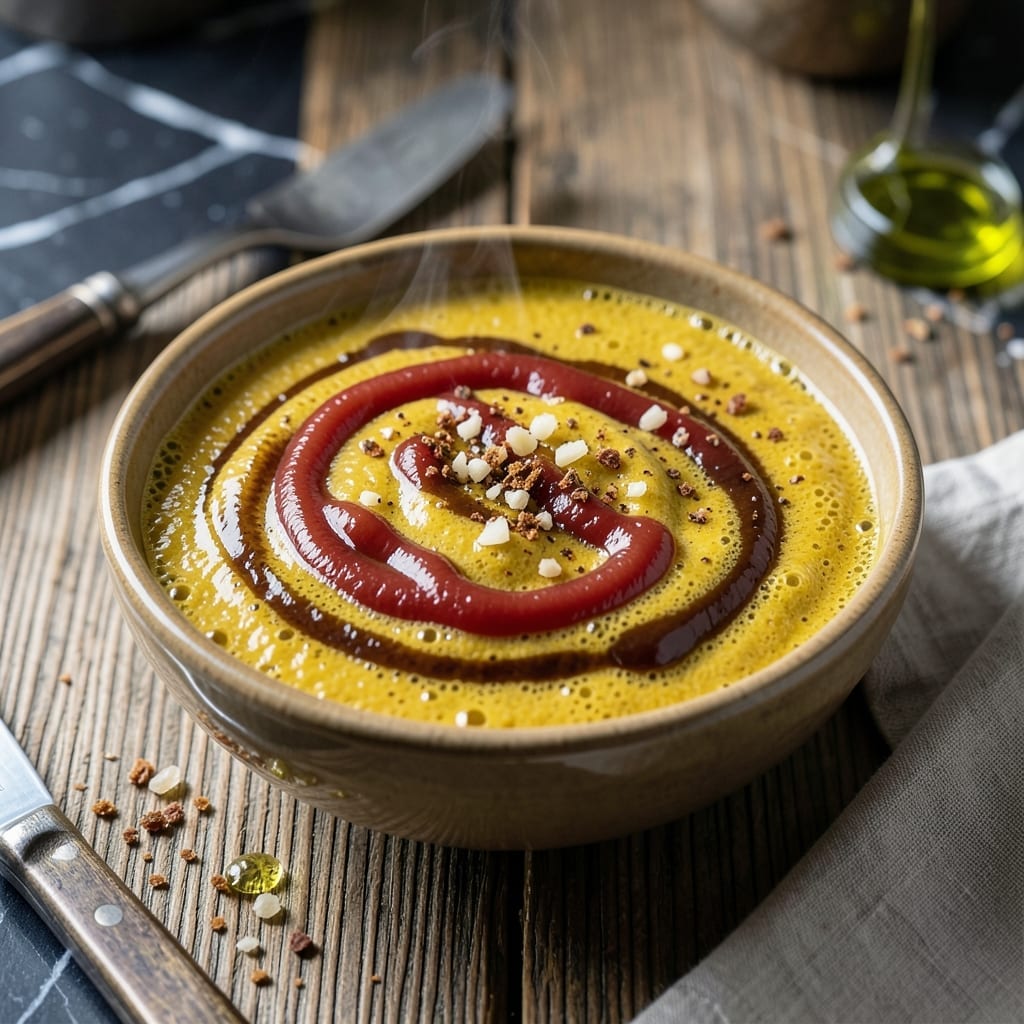
This sauce captures the essence of Carolina barbecue with its signature mustard base and sharp vinegar tang. My pitmaster training taught me that balance is everything—sweet, heat, and acid in perfect harmony.
What makes this version special is the slow melding of flavors, creating a sauce that clings to smoked meats while cutting through richness. It’s the ideal companion for pulled pork or ribs.
Ingredients for Carolina Mustard Barbecue Sauce
Ten ingredients blend into that iconic Carolina tang with sweet heat and acidity.
| Ingredient | Amount | Notes |
|---|---|---|
| Yellow Mustard 🟡 | 1 ½ cups | Classic American variety |
| Apple Cider Vinegar 🍏 | ½ cup | For signature tang |
| Brown Sugar 🥤 | ½ cup | Light or dark works |
| Honey 🍯 | ¼ cup | Balances the acidity |
| Ketchup 🍅 | ½ cup | Adds depth and color |
| Worcestershire Sauce 🥫 | 1 tbsp | Umami boost |
| Hot Sauce 🌶️ | 1 tbsp | For subtle heat |
| Garlic Powder 🧄 | 1 tsp | Savory depth |
| Onion Powder 🧅 | 1 tsp | Enhances flavor base |
| Salt 🧂 | 1 tsp | To taste |
| Black Pepper 🌶️ | ½ tsp | Freshly ground preferred |
[recipe_ingredient_scaler]
The mustard base is everything here. French’s yellow mustard is the classic choice—skip the Dijon or spicy varieties, they’ll throw off the balance. Apple cider vinegar (not white) gives that signature sharpness. I grab mine at Trader Joe’s for the best price, but any grocery store brand works. Look for vinegar with at least 5% acidity for the right punch.
No honey? Maple syrup or agave at the same amount keeps it sweet. Want more heat? Add cayenne or extra hot sauce. Short on ketchup? Tomato paste thinned with a little water gets you close. The Worcestershire adds depth, but soy sauce in a pinch works if you’re out. The brown sugar can be swapped for white, but it’ll taste slightly less rich.
This keeps for 2 weeks in the fridge—just give it a stir before using. Freeze for up to 6 months in airtight containers. The flavors deepen after a day, so make it ahead if you can.
Why You’ll Love This Recipe
- 5-Minute Mix: I just dump everything in a bowl and stir—no cooking, no fuss, just tangy-sweet perfection ready to use.
- Tangy Sweet Heat: The mustard and vinegar give it that signature Carolina bite, while the honey and brown sugar balance it into this addictive glaze.
- Grill or Drizzle: I slather it on pulled pork one day, then use it as a dipping sauce for chicken tenders the next. So versatile.
- Pantry Staples: Between us, I always have these ingredients on hand, so I can whip this up anytime without a special grocery trip.
Step-by-Step Instructions for Carolina Mustard Barbecue Sauce
Here’s the simple method that delivers that signature tangy-sweet balance Carolina is famous for.
Step 1: Combine the Liquid Base
In a medium saucepan, whisk together the 1.5 cups Yellow Mustard, 0.5 cup Apple Cider Vinegar, and 0.5 cup Ketchup until completely smooth. I find this order helps prevent clumping as the vinegar thins the mustard first.
Place the saucepan over medium heat and bring the mixture to a gentle simmer. You’ll notice the raw vinegar smell mellows as it heats—that’s how you know it’s ready for the next ingredients.
Step 2: Add Sweetness and Depth
Stir in the 0.5 cup Brown Sugar and 0.25 cup Honey, whisking constantly until both are fully dissolved. The mixture will thicken slightly as the sugar melts, and you’ll see it turn a richer amber color.
This is where the magic happens—the vinegar’s sharpness starts balancing with the honey’s floral notes and the molasses in the brown sugar. Keep the heat at a steady simmer, not a boil, to prevent scorching.
Step 3: Build Flavor with Seasonings
Add the 1 tbsp Worcestershire Sauce, 1 tbsp Hot Sauce, 1 tsp Garlic Powder, 1 tsp Onion Powder, 1 tsp Salt, and 0.5 tsp Black Pepper. Whisk vigorously for 30 seconds to distribute everything evenly.
Real talk: The Worcestershire adds a subtle umami depth that makes this sauce taste far more complex than it is. The hot sauce should add a gentle warmth, not overpowering heat—this is Carolina style, after all.
Step 4: Simmer to Perfection
Reduce the heat to low and let the sauce simmer uncovered for 15-20 minutes. Stir occasionally with a spatula, making sure to scrape the bottom of the pan to prevent sticking.
You’re aiming for a consistency that coats the back of a spoon but still pours easily. The sauce will darken slightly and develop a glossy sheen as it thickens. If it reduces too much, add a splash of water to reach your desired thickness.
Remove from heat and let cool completely before using. The flavors will meld and mellow as it sits, with the vinegar tang softening and the spices blooming. This makes about 3 cups of sauce—perfect for slathering on pulled pork or serving as a dipping sauce.
Pro Tips For Making Carolina Mustard Barbecue Sauce
- Simmer Low and Slow: Keep the heat on medium-low and let it bubble gently for 15-20 minutes—I learned this the hard way after scorching a batch on high.
- Balance the Vinegar: Apple cider vinegar can overpower fast, so start with 1/2 cup and adjust to taste after the sugar dissolves.
- Skip the Boil: Never let it reach a rolling boil, or the mustard will separate and turn grainy—stir often to keep it smooth.
- Use Cheap Mustard: Sounds weird, but it works: the bright yellow dollar-store mustard actually gives the best tang and color for this sauce.
Regional Styles of This carolina mustard barbecue sauce
Eastern Carolina Style
This is the vinegar-forward original, with no tomato—just mustard, apple cider vinegar, and a touch of brown sugar for balance. It’s thinner and tangier, designed to mop onto whole hog BBQ. My family’s version uses 2 cups vinegar to 1 cup mustard.
Western Carolina Style
Here’s where tomato sneaks in, creating the version most recognize today. I add ½ cup ketchup to the base, plus honey for sweetness. The result is thicker, stickier, and perfect for pulled pork. It’s the style I grew up with at local cookouts. 🗺️
South Carolina Twist
Down in the Lowcountry, they often include peach preserves or peach nectar for a fruity note. I’ve seen 2 tbsp preserves stirred in at the end for a subtle sweetness. It’s a nod to the state’s famous peach orchards.
Piedmont Variation
In the foothills, they sometimes swap apple cider vinegar for white vinegar and add crushed red pepper for heat. The result is sharper and spicier—great for those who love a kick. I add ½ tsp red pepper flakes for balance.
Coastal Influence
Near the shore, seafood-inspired versions use less sugar and more lemon juice for brightness. I’ll add 2 tbsp lemon juice to my base when serving with shrimp or fish. It’s a refreshing change from the classic pork pairing.
My Competition Style
A touch of bourbon or molasses deepens the flavor for judging. I use 1 tbsp bourbon and 1 tbsp molasses in my award-winning version. The judges always notice the extra complexity. 💛
Nutrition Facts
Frequently Asked Questions
Why use apple cider vinegar instead of white?
Apple cider vinegar brings a fruity depth that white vinegar lacks. It also has 5% acidity, which gives that signature Carolina tang. White vinegar can taste harsher and less complex.
Can I make this sauce ahead of time?
The flavors meld and mellow after a day in the fridge. It keeps for 2 weeks refrigerated or 6 months frozen in an airtight container. Stir well before using.
What’s the best way to fix a sauce that’s too tangy?
Balance the acidity by adding 1-2 tablespoons of honey or brown sugar, then taste. A pinch of salt can also help round out the flavors.
Is there a good substitute for yellow mustard?
In a pinch, use Dijon mustard, but reduce the amount by 25% as it’s stronger. Avoid spicy mustards—they’ll overpower the other flavors.

Trained in classic French technique but raised on slow-cooked ribs and spicy rubs, she blends culinary skill with smoke and soul.
- Recipe for Boneless Pork Chops in Cast Iron Skillet: Sear and Baste to Juicy Perfection - October 3, 2026
- Recipe for Boneless Cross Rib Roast: Slow-Roasted Beef with Herb Crust - October 3, 2026
- Hamburgers in Sauce Recipe Crock Pot: Slow-Cooked Savory Delight - October 3, 2026