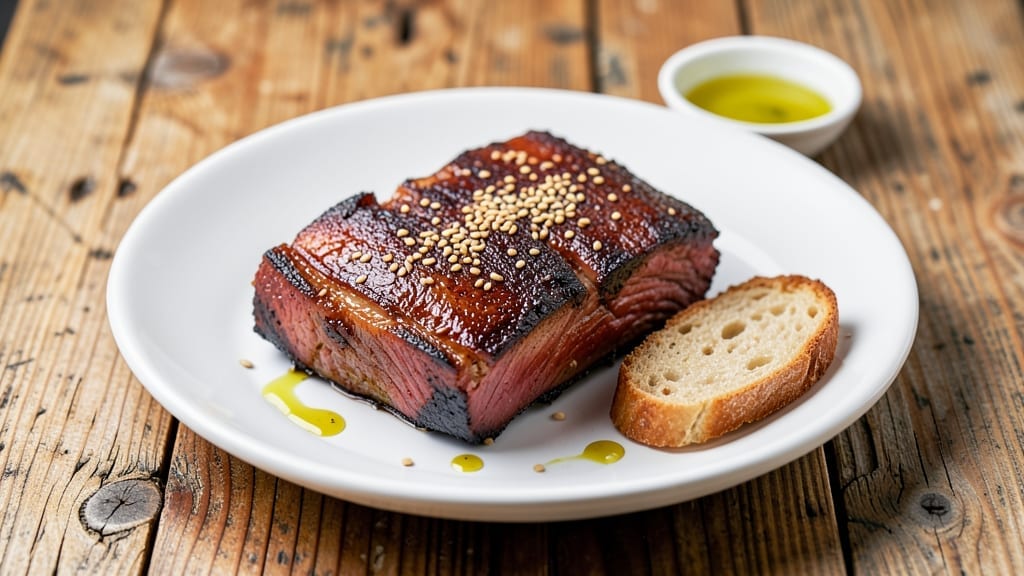
This oven-braised bison brisket recipe delivers restaurant-quality tenderness with minimal effort—perfect for weekend dinners or special occasions. After years of perfecting slow-cooked meats, I’ve refined this method to transform tough brisket into fall-apart perfection using just your oven and a few key techniques.
The secret lies in low-and-slow cooking, where collagen melts into rich, velvety juices that keep the meat impossibly moist.
What sets this recipe apart is its foolproof approach—no fancy equipment needed, just a heavy roasting pan and patience. The brisket develops deep, savory flavors as it cooks, while a simple rub of salt, pepper, and garlic ensures a perfect crust.
Unlike traditional beef brisket, bison cooks faster and stays remarkably tender, making this dish ideal for home cooks who want professional results without the hours.
By the time you pull it from the oven, you’ll have a golden, caramelized exterior and meat so tender it practically dissolves on your fork. The aromas alone—smoky, earthy, and rich—will fill your kitchen, signaling a meal worth celebrating.
Serve with roasted potatoes or a crisp green salad to balance the richness, and you’ve got a showstopping main course that’s surprisingly simple to achieve.
This method works equally well for holiday feasts or casual weeknight dinners, proving that slow-roasted bison brisket belongs in every home cook’s repertoire. Let’s get started—your taste buds (and dinner guests) will thank you.
Ingredients for bison brisket recipe oven
Twelve simple ingredients plus a few pantry staples create this showstopping bison brisket.
| Ingredient | Amount | Notes |
|---|---|---|
| Bison Brisket 🦬 | 4 lb | Fat cap trimmed, 1.5-inch thick |
| Dry Red Wine 🍷 | 1 cup | Bold, dry variety like Cabernet |
| Beef Broth 🥣 | 2 cups | Low-sodium preferred |
| Garlic Cloves 🧄 | 6 cloves | Mince fresh for depth |
| Carrots 🥕 | 2 whole | Thickly sliced, no peeling |
| Onions 🧅 | 1 whole | Yellow, halved lengthwise |
| Rosemary 🌿 | 1 tbsp | Fresh sprigs, stems removed |
| Thyme 🌿 | 1 tbsp | Fresh leaves or 0.5 tsp dried |
| Salt 🧂 | 1 tbsp | Kosher or flaky sea salt |
| Black Peppercorns 🌶️ | 1 tbsp | Freshly cracked, coarse |
| Olive Oil 🫒 | 2 tbsp | Extra-virgin for richness |
| Tomato Paste 🍅 | 2 tbsp | High-quality, unsweetened |
[recipe_ingredient_scaler]
The bison brisket is your star—look for 1.5-inch thick cuts from Wild Game Supply Co. or your local butcher. The fat cap should be visible but trimmed to 1/4-inch thickness—this ensures tender meat without greasiness. If you can’t find bison, chuck roast works in a pinch, though it’ll take longer to tenderize. Costco often carries pre-trimmed bison brisket, which saves time. Always let it sit at room temperature for 30-45 minutes before cooking for even doneness.
No red wine? Beef broth with 1 tbsp balsamic vinegar mimics the depth—just don’t skip the acidity. Fresh rosemary and thyme are ideal, but dried herbs at half the amount work if you’re in a rush. The carrots and onions add sweetness—Trader Joe’s pre-cut veggies save prep time. For the tomato paste, San Marzano canned tomatoes blended is a great swap if you’re avoiding paste. The garlic should be minced finely—no need for fancy tools, just a sharp knife.
This brisket keeps beautifully for 4-5 days in the fridge, reheating like it just came out of the oven. For 3 months in the freezer, wrap tightly in foil and place in a sealed bag. I portion mine into 1-pound containers so leftovers go straight to lunches. The aromas alone make reheating worth it—just add a splash of broth to the pan and cover while warming. The crust might soften slightly, but the meat stays fall-apart tender.
Why You’ll Love This Recipe
- One-Pot Magic: Honestly, I love that this recipe turns your oven into a hands-off flavor machine. Just toss the bison brisket into that Dutch oven with a splash of bold Cabernet, some beef broth, and those aromatic carrots and onions, then let the oven do the heavy lifting. No last-minute frantic cleanup—just one pot to love.
- Wine-Infused Wow Factor: Between the deep, caramelized tomato paste and that reduced dry red wine, every bite tastes like a restaurant-worthy dish. The garlic and rosemary crust? Chef’s kiss. It’s the kind of flavor that makes people ask, “What’s in this?”—and honestly, it’s just good old-fashioned slow-roasting with ingredients that actually matter.
- Leftovers That Shine: This brisket doesn’t just taste good—it lasts. Four to five days in the fridge, and reheating it is a breeze. My kids even beg for seconds, and honestly, who am I to say no? Plus, it’s the perfect meal to double for game day or a busy weeknight when you want to feed a crowd without the fuss.
- Budget-Friendly Beef: Bison is lean and rich, but it’s also way more affordable than premium cuts. With just a few pantry staples—like that tomato paste and fresh herbs—you’re getting a dish that feels special without breaking the bank. And if you freeze it for three months? That’s a win for your wallet and your freezer.
Step-by-step instructions for slow-roasted bison brisket
Here’s how to transform your bison brisket into melt-in-your-mouth perfection using just your oven.
Prepare the Brisket and Herb Crust
Begin by trimming any excess fat from the 4 lb bison brisket, leaving a 1½-inch thick fat cap. This balance ensures moisture while allowing for flavorful rendering. Pat the brisket dry with paper towels – this critical step prevents steam from forming, which would otherwise inhibit browning.
In a small bowl, combine the 1 tbsp rosemary, 1 tbsp thyme, 1 tbsp salt, and 1 tbsp freshly cracked black peppercorns. Rub this aromatic mixture all over the brisket, pressing firmly to create a flavorful crust. The herbs will infuse their earthy notes while the salt enhances the natural richness of the bison meat. Let the seasoned brisket sit at room temperature for 30 minutes before roasting – this ensures even cooking from edge to center.
Create the Flavorful Base
Preheat your oven to 300°F. In a large Dutch oven or heavy oven-safe pot, heat the 2 tbsp olive oil over medium heat. Add the 6 minced garlic cloves and cook for 30 seconds until fragrant – you’ll know it’s ready when you can smell that sweet garlic aroma.
Add the 2 thickly sliced carrots and 1 halved yellow onion to the pot. Sauté for 5 minutes until the vegetables begin to soften. Stir in the 2 tbsp tomato paste and cook for another 2 minutes, allowing it to develop a deep, caramelized flavor. This aromatic base will form the flavor foundation for your brisket.
Build the Roasting Liquids
Pour in the 1 cup dry red wine and let it simmer for 3 minutes until reduced by half. This reduction intensifies the wine’s flavor profile. Add the 2 cups beef broth and scrape up any browned bits from the bottom of the pot – these contain concentrated flavors that will infuse your brisket.
The liquid should now be rich and aromatic. Place the seasoned brisket fat-side up in the pot, nestling it among the vegetables. The brisket should be partially submerged in the liquid, which will help keep it moist during the long cooking process. Bring the liquid to a gentle simmer, then cover the pot with a tight-fitting lid.
Slow-Roast to Tender Perfection
Transfer the pot to your preheated 300°F oven. Roast for 4 hours, maintaining a gentle simmer throughout. Here’s the thing – you’ll want to check the liquid level occasionally and add more beef broth if it reduces too much. The goal is to keep the brisket submerged in flavorful liquid.
After 4 hours, check the internal temperature using a meat thermometer. When it reaches 195°F, your brisket will be fork-tender and falling apart at the touch. If it hasn’t reached this temperature, continue roasting for another 30-60 minute increments until it does. This low-and-slow method is what creates that signature tender, melt-in-your-mouth texture you’re after.
Rest and Serve
Once the brisket reaches the perfect internal temperature, remove it from the pot and transfer to a cutting board. Tent loosely with aluminum foil and let it rest for at least 30 minutes. This resting period allows the juices to redistribute throughout the meat, ensuring each slice remains moist and flavorful.
After resting, slice the brisket against the grain into ¼-inch thick slices. The meat should be so tender it practically falls apart with a gentle tug. Serve the brisket with the pan juices reduced by half for a rich, flavorful sauce. Each bite should deliver that perfect balance of rich bison flavor, herbaceous notes, and deep wine undertones that make this brisket truly exceptional.
Pro Tips For Making Bison Brisket Recipe Oven
- Check Liquid Levels: That 300°F oven isn’t just for cooking—it’s also an evaporator. After 2 hours, peek under the lid and add a splash of beef broth if the liquid drops below halfway up the brisket. I’ve seen briskets dry out because someone forgot this, and it’s a crime against tenderness.
- Mince Garlic Like a Pro: Those 6 cloves of garlic aren’t just flavor—they’re the backbone of this dish. Pulse them in a food processor for 2 seconds, then finish by hand to keep some texture. Over-mincing turns them to paste, and you’ll taste the difference. (Yes, I’ve burned garlic before—don’t let it brown.)
- Don’t Rush the Rest: The 30-minute rest isn’t optional—it’s where the magic happens. Cutting into the brisket too soon sends juices pooling on your plate instead of your fork. Cover it loosely with foil and let it sit; your patience will pay off in every forkful.
- Caramelize the Tomato Paste: That 2-minute cook with the tomato paste isn’t just stirring—it’s building depth. Let it bubble and darken slightly before adding the wine. I used to skip this, and the sauce always tasted flat. A little color change = a world of flavor.
Common mistakes when making this recipe
Skipping the Room Temp Step
I’ve learned the hard way that letting cold meat sit at room temperature is a game-changer. Skipping this step means your brisket will cook unevenly—cold edges will steam instead of browning, while the center stays raw.
Always let your 4 lb bison brisket sit uncovered for 30 minutes before roasting. Trust me, this extra time prevents dry spots and ensures that perfect caramelized crust. 💡
Overcrowding the Pot
Using too much liquid or overpacking vegetables around the brisket creates a steamy environment that turns your meat into rubber. Keep the 2 cups beef broth and 1 cup red wine at a gentle simmer, but don’t drown the brisket.
The vegetables should nestle around it, not smother it. If the liquid reduces too quickly, add broth in ¼ cup increments—just enough to keep the brisket submerged without flooding the pot.
Ignoring the Lid
A tight-fitting lid is your best friend during the 4-hour roast. Letting steam escape causes uneven cooking and dry edges. If your lid isn’t snug, use aluminum foil to seal gaps.
I once forgot this trick and ended up with a brisket that was tender but dry—definitely not the fall-apart texture we’re after. 🔥
Checking Too Often
Resist the urge to open the oven door every 30 minutes to peek at your brisket. Each time you do, you lose 10-15°F of heat, slowing down the cooking process.
Plan to check the internal temperature only every 1-2 hours using a meat thermometer. Patience here is key to that perfect 195°F finish.
Skipping the Rest
After removing the brisket from the oven, the temptation to slice it immediately is strong—but don’t! Skipping the 30-minute rest means all those delicious juices will run out onto your cutting board.
Tent it loosely with foil and let it rest so the meat stays juicy and tender. This step is non-negotiable for restaurant-quality results.
Nutrition facts
Frequently asked questions
Why does bison brisket cook faster than beef brisket?
Bison has less connective tissue than beef, so it tenderizes more quickly—your 4 lb brisket will reach 195°F in about 4 hours at 300°F. This means you’ll get that melt-in-your-mouth texture without waiting all day. The leaner fat distribution also renders faster, adding flavor without excess grease.
What if I don’t have a Dutch oven?
Any heavy oven-safe pot or even a deep baking dish will work! Just ensure it’s large enough to fit your brisket and veggies without crowding. The key is maintaining a gentle simmer—add broth as needed to keep the liquid level. A cast-iron skillet also works beautifully for browning before transferring to the oven.
How do I tell when the brisket is done without a thermometer?
If you don’t have a thermometer, pierce the thickest part with a knife—juices should run clear, not pink. The meat should also pull apart easily with gentle tugs. For extra assurance, check the 30-minute rest step: if it’s still firm, return it to the oven for another 30 minutes before slicing. Patience pays off!
Can I use beef broth instead of red wine?
Skip the wine entirely and use 2 cups beef broth with 1 tablespoon balsamic vinegar to mimic acidity. The flavor will be rich and savory, just without the wine’s depth. For a deeper taste, add a splash of dry sherry or soy sauce if available. Your brisket will still be tender and delicious.

Trained in classic French technique but raised on slow-cooked ribs and spicy rubs, she blends culinary skill with smoke and soul.
- Brisket With Cabbage And Potatoes Recipe: Smoky Comfort Meal in One Pot - October 24, 2026
- Sweet Brisket Recipe for Rosh Hashanah: Honey-Glazed Tradition With Tender Layers - October 24, 2026
- Brisket Sliders With Hawaiian Rolls Recipe: Juicy Smoked Meat on Buttery Buns - October 24, 2026