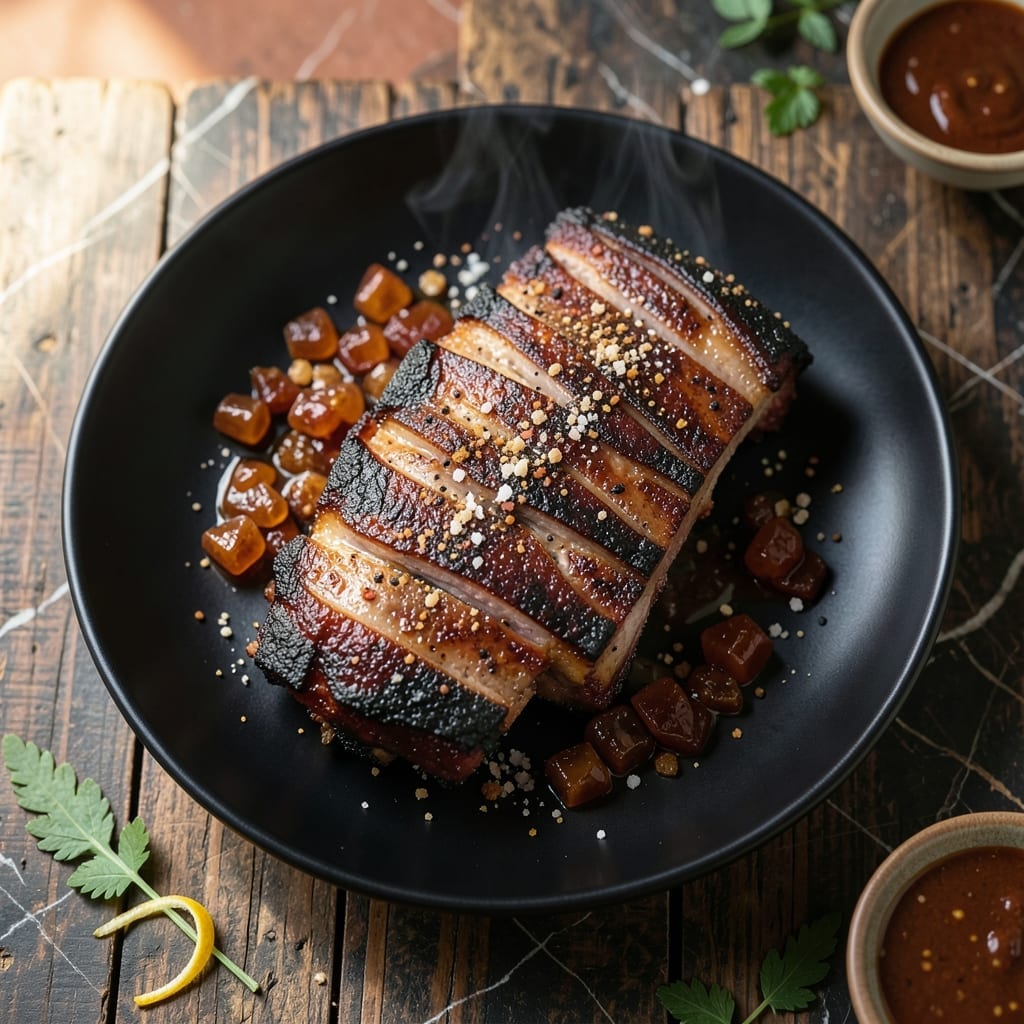
Bison ribs demand a different approach than traditional pork ribs, and I’ve perfected a method that brings out their deep, gamey richness. Slow-smoking at 225°F for 6-8 hours ensures the meat becomes fall-off-the-bone tender while retaining its bold flavor.
The key is patience—low heat allows the connective tissue to break down gradually, resulting in a texture that’s both tender and satisfying. A dry rub of coarse salt, black pepper, and smoked paprika enhances the natural robustness of the bison without overpowering it.
What you’ll achieve is a dish that highlights the unique qualities of bison: leaner than beef but packed with intense, savory depth. The slow-smoked process infuses every bite with a subtle wood-kissed aroma.
Serve these ribs with a simple mop sauce or let the natural flavor shine. This is wild game at its finest.
Ingredients for Bison Ribs
Bison ribs shine with simple seasonings and low, slow smoke. No fancy tricks here.
| Ingredient | Amount | Notes |
|---|---|---|
| Bison Ribs 🥩 | 4 lb | Full rack, membrane removed |
| Coarse Kosher Salt 🧂 | 2 tbsp | Diamond Crystal preferred |
| Black Pepper 🌶️ | 2 tbsp | Freshly cracked, coarse grind |
| Smoked Paprika 🌶️ | 1 tbsp | Sweet or hot variety |
| Brown Sugar 🍚 | ¼ cup | Light or dark, packed |
| Garlic Powder 🧄 | 1 tbsp | Not garlic salt |
| Onion Powder 🧅 | 1 tbsp | Freshly ground preferred |
| Dried Thyme 🍃 | 1 tsp | Crushed between fingers |
| Apple Cider Vinegar 🍏 | ½ cup | For mop sauce base |
| Honey 🍯 | ¼ cup | Local preferred, for mop sauce |
| Olive Oil 🫒 | ¼ cup | For mop sauce, extra-virgin |
| Hickory Wood Chips 🪵 | 2 cups | Soaked in water 30 minutes |
| Beer 🍺 | 1 cup | Dark amber, for spritzing |
[recipe_ingredient_scaler]
The ribs are everything. Look for full racks from specialty butchers—Wild Fork or US Wellness Meats have great options online if your local store doesn’t carry bison. Membrane removal is non-negotiable (use a butter knife and paper towel for grip). Bison is leaner than beef, so don’t over-trim the fat cap. A good 2-3 mm layer keeps them moist during the long cook.
No smoked paprika? Regular paprika plus a pinch of liquid smoke works in a pinch, but the flavor won’t be as deep. Swap honey for maple syrup in the mop sauce if you’re avoiding bee products. Dark beer not on hand? Apple juice with a splash of vinegar mimics the sweet-tart balance. The brown sugar can be omitted, but it helps form that perfect bark.
Dry rub can be mixed the night before—keeps the flavors melding. Smoked ribs hold well wrapped in foil for 2 hours in a cooler (perfect for timing a dinner party). Leftovers? They’re even better the next day. Reheat gently in a 250°F oven wrapped in foil with a splash of water.
Why You’ll Love This Recipe
- Set It and Forget It: I rub the ribs with salt, pepper, smoked paprika, and brown sugar, then let the oven do the work.
- Smoky Sweet Balance: The brown sugar caramelizes while the smoked paprika adds that deep, campfire-like flavor to the bison.
- Feeds the Crew: One rack of bison ribs easily serves my family of four, with leftovers for sandwiches the next day.
- Budget Luxury: Honestly, bison ribs feel fancy but cost less than steak, and the dry rub uses pantry staples I already have.
Step-by-Step Instructions for Slow-Smoked Bison Ribs
Here’s the method I use to achieve fall-off-the-bone tenderness with deep smoky flavor.
Step 1: Prepare and Season the Bison Ribs
Start by patting the 4 lb bison ribs completely dry with paper towels. This ensures the rub adheres properly and creates a better bark. Remove the membrane from the bone side if it hasn’t been done already—a butter knife helps lift it for easy removal.
Combine the 2 tbsp coarse kosher salt, 2 tbsp black pepper, 1 tbsp smoked paprika, 0.25 cup brown sugar, 1 tbsp garlic powder, 1 tbsp onion powder, and 1 tsp dried thyme in a bowl. Rub this mixture generously over all surfaces of the ribs, pressing it in firmly. Let them sit at room temperature for 30-45 minutes while you prepare the smoker.
Step 2: Soak Wood Chips and Prepare the Smoker
Place the 2 cups hickory wood chips in a bowl of water to soak for at least 30 minutes. This prevents them from burning too quickly and ensures steady smoke production. Meanwhile, set up your smoker for indirect heat at 225-250°F.
Once the wood chips are soaked, drain them and add to the smoker’s wood chip box or directly onto the coals. You want thin, blue smoke—not thick white smoke, which can make the meat bitter. When the smoker reaches temperature and you see that clean blue smoke, you’re ready to start cooking.
Step 3: Smoke the Ribs Low and Slow
Place the ribs bone-side down on the smoker grate, away from direct heat. Close the lid and smoke undisturbed for 3 hours. Resist the urge to peek—every time you open the lid, you lose heat and smoke, adding to your cooking time.
After 3 hours, it’s time to start spritzing. Mix the 1 cup beer in a spray bottle and lightly mist the ribs every 45-60 minutes. This keeps them moist and helps build that beautiful dark bark. The ribs should have a deep reddish-brown color developing at this stage.
Step 4: Wrap and Continue Cooking
When the ribs reach an internal temperature of 165°F (usually after 4-5 hours total), it’s time to wrap. Lay out a large sheet of heavy-duty foil and place the ribs meat-side down. Pour a mix of the 0.5 cup apple cider vinegar, 0.25 cup honey, and 0.25 cup olive oil over them.
Wrap tightly in the foil and return to the smoker. Continue cooking for another 1.5-2 hours or until the ribs are probe-tender. The meat should pull back from the bones by about ¼ inch and a probe should slide in like butter.
Step 5: Rest and Serve
Carefully unwrap the ribs and transfer them to a cutting board. Let them rest for 10-15 minutes—this allows the juices to redistribute and makes them easier to slice. The bones should be clean with no meat clinging to them when you cut between them.
Serve the ribs with some of the juices from the foil packet spooned over the top. Each bite should be tender, smoky, and rich with the deep flavor of bison. The meat should pull away from the bone with just a gentle tug.
Pro Tips For Making Bison Ribs
- Low and Slow Wins: Bison ribs are leaner than pork—keep your smoker or oven at 225°F and give them 5-6 hours. I learned this the hard way after pulling tough ribs at 275°F.
- Pat Them Dry: Blot the ribs with paper towels before seasoning so the brown sugar and spices stick instead of sliding off.
- Skip the Rush: Resist the urge to crank the heat to speed things up—bison ribs turn out rubbery if cooked too fast, even if they look done.
- Rest Before Slicing: Let them rest 10-15 minutes under foil after cooking, or all those juices will end up on the cutting board instead of in the meat.
Perfect Pairings for bison ribs
Bold Beverage Pairings
A dark amber ale or porter complements the smoky depth of these ribs beautifully—the malt sweetness balances the gamey richness. I recommend New Belgium Fat Tire or Deschutes Black Butte Porter for perfect harmony. 🍺
Classic Side Dishes
Smoked baked beans with bacon and brown sugar mirror the ribs’ sweet-spicy profile. For freshness, a crisp apple slaw with a light vinegar dressing cuts through the richness without overpowering the meat.
Vegetable Companions
Grilled asparagus brushed with olive oil and finished with flaky salt offers a simple, elegant contrast. For heartier meals, roasted Brussels sprouts with pancetta add a satisfying crunch and smoky note.
Sauce Enhancements
The mop sauce from the recipe works perfectly, but I also love serving with a spicy chipotle BBQ sauce on the side. A tangy mustard sauce with a touch of honey offers another great dipping option.
Dessert Pairing
End with peach cobbler or apple crisp to echo the fruit notes from the mop sauce. These desserts complement the meal’s rustic, smoky character while providing a sweet finish. 💫
Nutrition Facts
Frequently Asked Questions
Do I need to marinate the ribs before smoking?
No marinade needed! The dry rub provides all the flavor. Just let the seasoned ribs sit for 30-45 minutes before smoking to help the spices adhere.
Can I use an oven instead of a smoker?
Yes, but add liquid smoke to mimic the flavor. Bake at 225°F for 6-8 hours in a covered pan with a little water. The texture will be similar, just less smoky.
How do I know when they’re done?
The meat should pull back from the bones by ¼ inch and a probe should slide in like butter. Internal temp should reach 195-203°F.
Why are my ribs tough?
Likely not cooked long enough. Bison is leaner than beef, so it needs the full 6-8 hours at low temp to break down the connective tissue properly.

Trained in classic French technique but raised on slow-cooked ribs and spicy rubs, she blends culinary skill with smoke and soul.
- Recipe for Boneless Pork Chops in Cast Iron Skillet: Sear and Baste to Juicy Perfection - October 3, 2026
- Recipe for Boneless Cross Rib Roast: Slow-Roasted Beef with Herb Crust - October 3, 2026
- Hamburgers in Sauce Recipe Crock Pot: Slow-Cooked Savory Delight - October 3, 2026