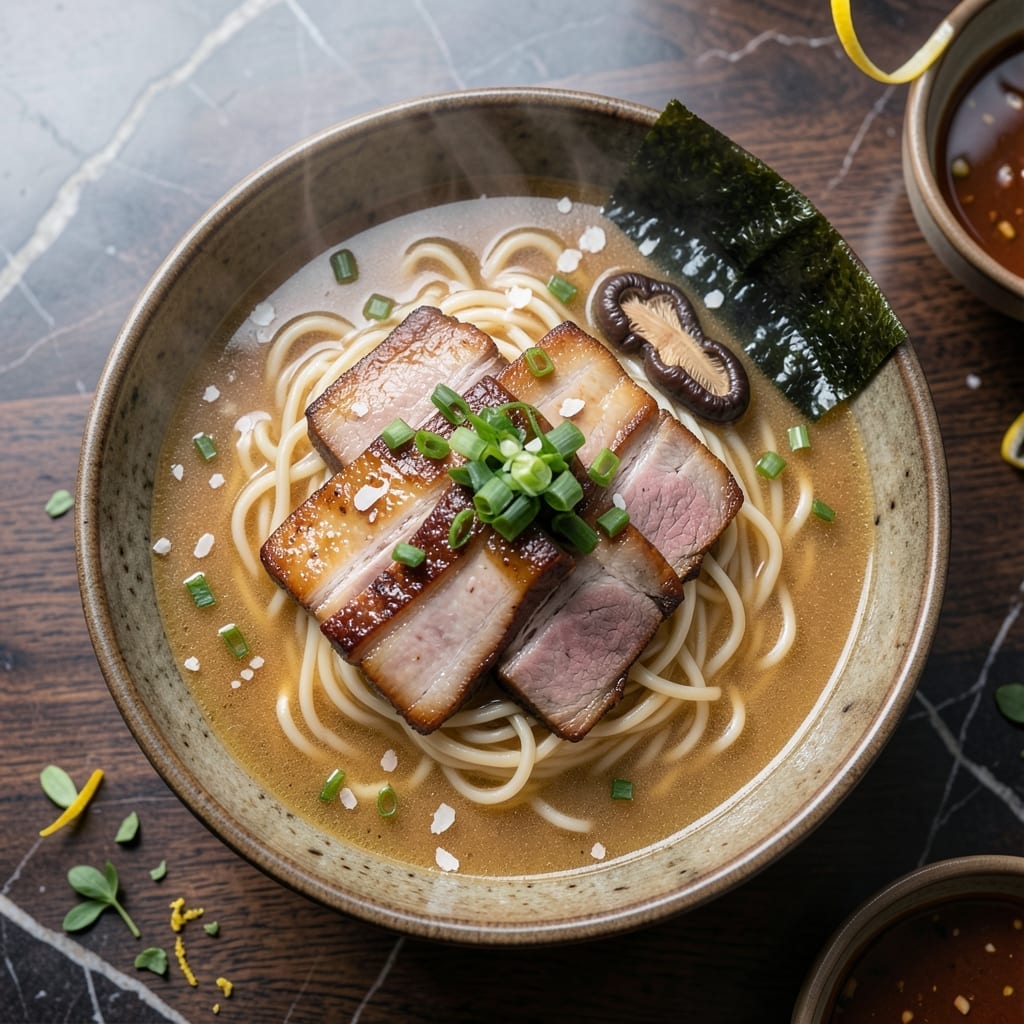
I’ve spent years refining this ramen recipe to capture the authentic depth of traditional Japanese bowls. The foundation is a rich, slow-simmered broth that develops complex layers of umami through careful ingredient selection and timing.
Every element matters—from the traditional tare seasoning base to the perfectly chewy noodles and thoughtful toppings. This isn’t a shortcut version; it’s the real method used by ramen masters, adapted for home kitchens.
The result is a bowl with soul: silky broth, springy noodles, and toppings that complement rather than overpower. Each component builds on the next, creating that signature ramen harmony.
Patience is required, but the payoff is a restaurant-quality bowl that honors the craft. Here’s how to achieve it.
Ingredients for Ramen Recipe Authentic
Authentic Japanese ramen requires patience and precise ingredients to achieve traditional depth and harmony.
| Ingredient | Amount | Notes |
|---|---|---|
| Chicken Bones 🍗 | 4 lb | For stock, necks and backs preferred |
| Pork Belly 🥓 | 1 lb | Skin-on for chashu preparation |
| Dried Shiitake Mushrooms 🍄 | 1 oz | For umami depth in broth |
| Kombu Seaweed 🌿 | 1 piece | 4×6 inch sheet, wiped clean |
| Bonito Flakes 🐟 | 1 oz | For dashi base, high quality |
| Ramen Noodles 🍜 | 4 pieces | Fresh or dried, alkaline preferred |
| Soy Sauce 🥄 | ½ cup | Japanese variety, low-sodium acceptable |
| Mirin 🍶 | ¼ cup | Sweet rice wine for tare |
| Miso Paste 🟤 | 3 tbsp | Red or white, fermented properly |
| Soft-Boiled Eggs 🥚 | 4 whole | 6-minute cook time recommended |
| Green Onions 🧅 | 4 whole | Thinly sliced for garnish |
| Bamboo Shoots 🌱 | ½ cup | Canned, drained and sliced |
| Nori Seaweed Sheets 🌊 | 4 sheets | Toasted and cut in half |
| Sesame Oil 🫒 | 1 tbsp | Toasted for aroma, finish only |
| Garlic Cloves 🧄 | 6 cloves | Smashed for broth infusion |
[recipe_ingredient_scaler]
The broth foundation demands quality bones and umami-rich elements. Chicken necks and backs from local butchers offer superior gelatin content for that silky texture. Dried shiitake mushrooms and kombu should be sourced from Asian markets for optimal potency. Bonito flakes must be freshly shaved—look for vibrant color and strong aroma.
For the tare, Japanese soy sauce and mirin are non-negotiable—Kikkoman and Hikari are reliable brands. No mirin? Substitute dry sherry with a pinch of sugar. The pork belly can be replaced with chicken thigh for chashu, though the texture differs. Fresh ramen noodles from specialty grocers exceed dried, but either works.
Broth develops more complexity overnight. Store bones and aromatics separately in the fridge for up to 2 days before simmering. Completed ramen keeps 3-4 days refrigerated, but the noodles are best fresh. Freeze broth portions for up to 3 months without toppings.
Why You’ll Love This Recipe
- One Pot Wonder: I let the chicken bones and kombu simmer together while I prep the rest—hardly any active work.
- Umami Bomb: The pork belly and bonito flakes create this deep, savory broth that’s ridiculously addictive.
- Sunday Project: Honestly, it’s my favorite weekend ritual, and the leftovers taste even better Monday.
- Budget Stretcher: Dried shiitake and kombu go a long way, so I get multiple bowls from one batch.
Step-by-Step Instructions for Authentic Ramen
Master the traditional process for creating a rich, layered broth with perfect toppings.
Step 1: Create the Dashi Base with Kombu and Bonito
Begin by wiping the 1 piece Kombu Seaweed with a damp cloth to remove any dust. Place it in a large pot with 12 cups of cold water and let it soak for 30 minutes. Heat the pot over medium-low heat until the water reaches 160°F—just before simmering.
Remove the kombu just before boiling to avoid bitterness. Add the 1 oz Bonito Flakes and let them steep off heat for 10 minutes. Strain through a fine-mesh sieve, pressing gently to extract maximum flavor without clouding the stock. This forms the delicate foundation for your broth.
Step 2: Build the Chicken and Pork Broth
In the same pot, combine the dashi with the 4 lb Chicken Bones, 1 lb Pork Belly, 1 oz Dried Shiitake Mushrooms, and 6 cloves Garlic Cloves. Bring to a boil, then reduce to a gentle simmer. Skim off any foam that rises to the surface during the first 30 minutes.
Simmer uncovered for 4-5 hours, adding water as needed to maintain the level. The broth should reduce slightly and develop a deep amber color. Strain through a cheesecloth-lined colander, discarding solids. This long simmer extracts maximum umami and collagen from the bones and pork.
Step 3: Prepare the Aromatic Tare
In a small saucepan, combine the 0.5 cup Soy Sauce, 0.25 cup Mirin, and 3 tbsp Miso Paste. Simmer over low heat for 5-7 minutes, stirring frequently until the mixture thickens slightly and the miso fully dissolves.
This concentrated seasoning base will be added to each bowl individually, allowing you to control the saltiness and depth of flavor. The mirin adds a subtle sweetness that balances the saltiness of the soy and miso. Let it cool before using.
Step 4: Cook Noodles and Assemble Bowls
Cook the 4 pieces Ramen Noodles according to package instructions, but reduce the cooking time by 30 seconds for optimal texture. They should be tender but still have a slight bite. Drain well and divide among four serving bowls.
Ladle 2 cups of the hot broth into each bowl. Add 2 tablespoons of the tare to each serving and stir gently to combine. Top each bowl with half of a Soft-Boiled Egg, sliced Green Onions, Bamboo Shoots, and half sheet of Nori Seaweed Sheets.
Step 5: Finish with Aromatic Oil
Drizzle each bowl with ¼ teaspoon of the 1 tbsp Sesame Oil just before serving. The toasted sesame oil adds a final aromatic note that ties all the components together. Serve immediately while the broth is piping hot and the noodles are at their peak texture.
The steam from the hot broth will gently cook the nori and warm the toppings without overcooking them. This final touch ensures each bite delivers the full spectrum of traditional ramen flavors.
Pro Tips For Making Ramen Recipe Authentic
- Simmer Low and Slow: I learned this the hard way—boiling chicken bones vigorous destroys the collagen before it turns into that silky, rich broth. Keep it at a gentle simmer, barely bubbling, for at least 6-8 hours.
- Toast the Bonito: Sounds weird, but it works: lightly toast the bonito flakes in a dry pan for 30 seconds before adding to the broth. It wakes up the umami in a way raw flakes just can’t.
- Skip the Rinse: Resist the urge to rinse dried shiitake mushrooms—those dusty bits are pure flavor. Just wipe them with a damp cloth if needed, then soak to extract every bit of depth.
- Chill for Fat: After straining your broth, let it cool completely in the fridge overnight. The hardened fat on top comes off easily, leaving a cleaner, more refined base for your ramen.
Troubleshooting Perfect Results
Cloudy Broth
If your broth turns cloudy, you likely let it boil too vigorously. Always keep it at a gentle simmer. To fix, strain through a coffee filter or cheesecloth for clarity. I learned this trick after my first few cloudy batches. 💡
Weak Flavor
For broth lacking depth, extend the simmer time to 6 hours. Add 2 more oz of dried shiitake or 1 piece of kombu during the last hour. The umami compounds need time to fully extract.
Mushy Noodles
Noodles turn mushy when overcooked. Reduce boiling time by 1-2 minutes from package instructions. Rinse briefly under cold water to stop cooking immediately. Fresh noodles cook faster than dried—test at 2 minutes.
Eggs Not Set
For perfect 6-minute eggs, use room temperature eggs and boil in water that’s at a full, rolling boil. Shock in ice water immediately to stop carryover cooking. The yolk should be creamy, not runny.
Tare Too Salty
If your tare is too salty, balance with 1 tsp sugar or 1 tbsp mirin. Thin it with 1-2 tbsp of warm broth. Taste as you go—this seasoning base should be bold but not overpowering.
Pork Not Tender
For chashu that’s tough, ensure you’re braising at 180-200°F for 2-3 hours. Use a mix of soy sauce and sake in the braising liquid. Slice against the grain for maximum tenderness. 🔥
Nutrition Facts
Frequently Asked Questions
Can I use store-bought chicken broth instead of making it from scratch?
You can, but the depth of flavor will suffer. Use low-sodium broth and reduce it by half to concentrate flavors.
What’s the best way to store leftover broth?
Cool completely, then refrigerate in airtight containers for up to 4 days. For longer storage, freeze for 3 months.
Can I make this vegetarian?
Yes! Swap chicken bones for mushrooms and seaweed, and use vegetable stock. The umami will come from shiitake and kombu.
Why is my broth bland?
Likely under-simmered. Extend cooking to 6 hours and add extra shiitake or bonito flakes for depth.

Trained in classic French technique but raised on slow-cooked ribs and spicy rubs, she blends culinary skill with smoke and soul.
- Recipe for Boneless Pork Chops in Cast Iron Skillet: Sear and Baste to Juicy Perfection - October 3, 2026
- Recipe for Boneless Cross Rib Roast: Slow-Roasted Beef with Herb Crust - October 3, 2026
- Hamburgers in Sauce Recipe Crock Pot: Slow-Cooked Savory Delight - October 3, 2026