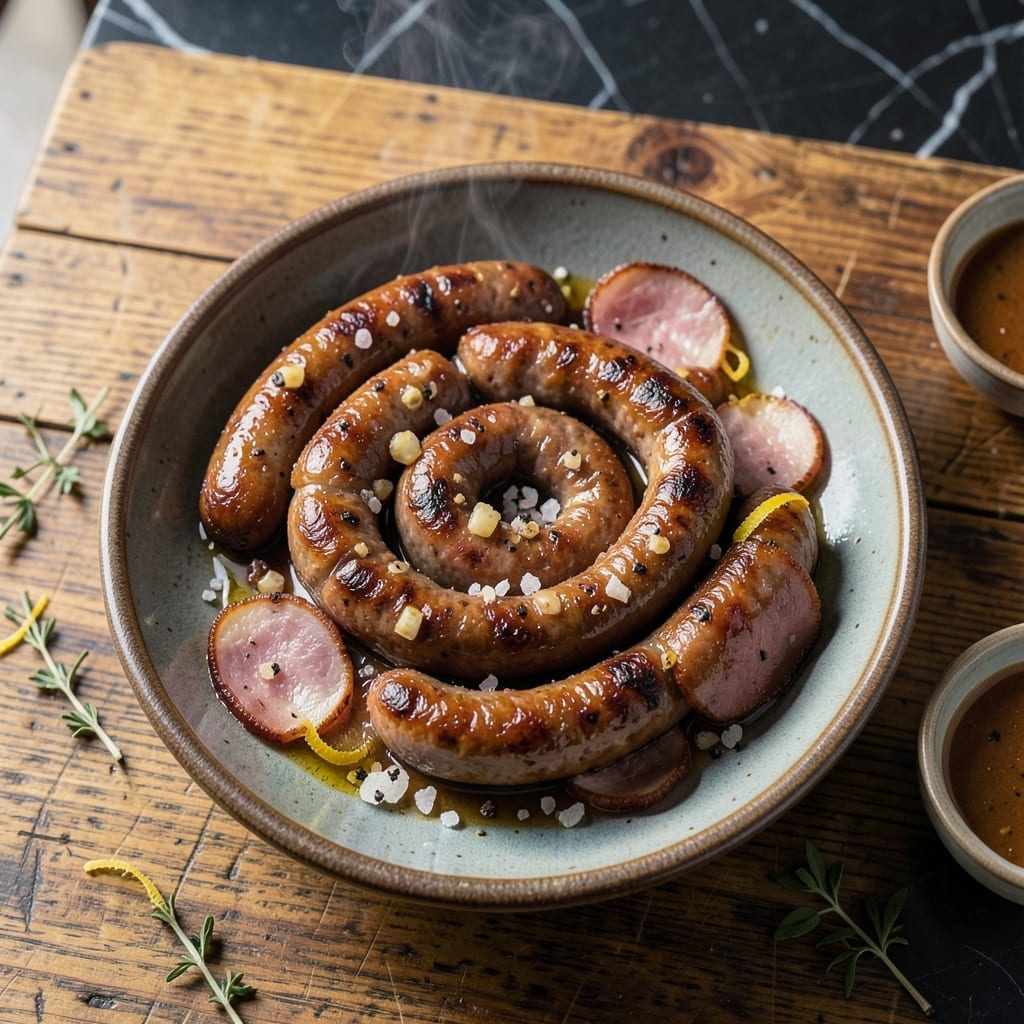
Bison meat offers a leaner, deeper flavor than traditional pork, making these sausages a standout for any grill master. My French training taught me how to balance bold spices with wild game’s natural richness.
This recipe uses simple techniques to create restaurant-quality results at home. The key is keeping the meat cold while grinding and mixing to maintain texture and prevent fat from smearing.
You’ll end up with sausages that are juicy, aromatic, and packed with herbal complexity. They cook up with a satisfying snap and deliver a taste that’s both rustic and refined.
Perfect for weekend cookouts or elevating weeknight dinners. Here’s how to make them.
Ingredients for Bison Sausage
Lean bison, bold spices, and a few herbs create these restaurant-quality sausages at home.
| Ingredient | Amount | Notes |
|---|---|---|
| Ground Bison 🦬 | 2 lb | 80/20 fat ratio preferred |
| Pork Fat 🐖 | ½ lb | Chilled, diced small |
| Kosher Salt 🧂 | 1 ½ tbsp | Diamond Crystal preferred |
| Black Pepper 🌶️ | 1 tbsp | Freshly ground coarse |
| Garlic Powder 🧄 | 1 tbsp | Not garlic salt |
| Onion Powder 🧅 | 1 tbsp | Fresh ground preferred |
| Dried Sage 🍃 | 1 tbsp | Rubbed between fingers |
| Dried Thyme 🌿 | 1 tbsp | French variety ideal |
| Dried Rosemary 🌿 | 1 tsp | Crushed finely |
| Fennel Seeds 🌱 | 1 tbsp | Lightly toasted first |
| Red Pepper Flakes 🌶️ | ½ tsp | Adjust for heat preference |
| Paprika 🌶️ | 1 tbsp | Sweet or smoked variety |
| Ice Water 💧 | ¼ cup | For binding mixture |
| Natural Hog Casings 🌭 | 6 pieces | Rinsed, soaked 30 minutes |
[recipe_ingredient_scaler]
The bison is the star here. Look for 80/20 ground bison at Whole Foods or a specialty butcher—leanness is key for that wild game flavor. Pork fat is non-negotiable (20% of total weight) to keep them juicy since bison is so lean. Ask your butcher for pure leaf lard if you can’t find pork fat separately. The casings? Natural hog casings from Amazon or butcher shops—just soak them first.
No pork fat? Beef fat works in a pinch but changes the flavor. Out of fresh herbs? Double the dried—just bloom them in the ice water first. Want more heat? Add cayenne at 1/4 tsp. The fennel seeds are crucial for that classic sausage taste—don’t skip. If you can’t find whole seeds, ground fennel at half the amount will do.
Keep everything ice-cold during prep—30 minutes in the freezer before grinding helps. Finished sausages freeze beautifully for 3 months. Cook from thawed for best texture (or par-cook from frozen).
Why You’ll Love This Recipe
- I’ll be real: doubling the recipe means I always have sausage ready for a quick weeknight meal.
- Five Ingredients: I love that this comes together with just ground bison, pork fat, and a handful of pantry spices—no fancy shopping required.
- Rich and Savory: The pork fat keeps the bison juicy while the garlic powder gives it that deep, satisfying flavor I crave.
- Breakfast or Dinner: Honestly, I make a big batch and use it for omelets, pasta, or even grilled on its own—so versatile.
Step-by-Step Instructions for Bison Sausage
Here’s the method I use to make perfectly seasoned sausage with a rich, herbal depth.
Step 1: Combine and Mix the Meat and Fat
In a large mixing bowl, combine the 2 lb Ground Bison and 0.5 lb Pork Fat. I like to use my hands for this—it gives me better control over the texture. The pork fat is essential, as bison is so lean it needs that extra richness for a juicy sausage.
Work the mixture gently, just until the fat is evenly distributed throughout the bison. Don’t overmix or the fat will start to melt, which can lead to a dense, dry sausage. Keep everything cold during this process to maintain the integrity of the fat.
Step 2: Add the Seasonings and Ice Water
Sprinkle the 1.5 tbsp Kosher Salt, 1 tbsp Black Pepper, 1 tbsp Garlic Powder, 1 tbsp Onion Powder, 1 tbsp Dried Sage, 1 tbsp Dried Thyme, 1 tsp Dried Rosemary, 1 tbsp Fennel Seeds, 0.5 tsp Red Pepper Flakes, and 1 tbsp Paprika over the meat.
Pour in the 0.25 cup Ice Water—this helps distribute the spices evenly and keeps the mixture cold. Mix gently but thoroughly, ensuring all the seasonings are well incorporated. The mixture should feel slightly sticky but not wet.
Step 3: Rest the Mixture
Cover the bowl and let the mixture rest in the refrigerator for 30-60 minutes. This resting period allows the salt to penetrate the meat and the flavors to meld together. It also gives the ice water time to fully hydrate the proteins.
While the mixture rests, prepare the 6 pieces Natural Hog Casings. Rinse them under cold water and soak in a bowl of cold water for 30 minutes to soften them, which makes them easier to work with and less likely to tear.
Step 4: Stuff and Shape the Sausage
Fit a sausage stuffer or a stand mixer with a sausage attachment with the soaked Natural Hog Casings. Slide the casing onto the nozzle, leaving a few inches hanging off the end. Tie a knot at the end of the casing to close it.
Feed the meat mixture into the stuffer and begin filling the casing at a steady, controlled pace. Avoid overfilling—you want a firm but not tight sausage. Twist the casing into 4-inch links, alternating directions with each twist to create even sections.
Step 5: Rest and Cook or Store
Let the sausages rest at room temperature for 15-20 minutes before cooking. This allows the casing to dry slightly, which helps it hold its shape and develop a better texture when cooked.
To cook, grill or pan-fry over medium heat for 12-15 minutes, turning occasionally, until the internal temperature reaches 160°F. If not cooking immediately, refrigerate the sausages for up to 3 days or freeze for up to 3 months.
Pro Tips For Making Bison Sausage
- Chill the Fat: Keep your pork fat ice cold before mixing—I learned this the hard way after my first batch turned greasy instead of emulsified.
- Don’t Overmix: Stop combining the bison and fat as soon as it holds together, about 30 seconds max. Overworking creates dense, tough sausage.
- Test for Seasoning: Fry a tiny patty first and taste it. Bison needs more salt than you think, and garlic powder can overpower if you’re heavy-handed.
- Rest Before Cooking: Let the formed sausages sit in the fridge for at least an hour, or preferably overnight. This keeps them from crumbling on the grill or pan.
Storing and Reheating This Dish
Refrigerator Storage
Let your sausages cool completely before storing—I usually wait 2 hours max. Place them in airtight containers or zip-top bags, squeezing out excess air. They’ll keep in the fridge at 40°F or below for up to 3 days. The flavors actually deepen overnight as the herbs meld with the meat. ❄️
Freezer Storage
For longer storage, freeze your sausages in a single layer first on a baking sheet for 1 hour. Then transfer to freezer-safe bags or vacuum-sealed packs. They’ll stay fresh for up to 3 months. Label with the date—I use masking tape and a Sharpie for easy tracking.
Thawing Properly
Always thaw in the refrigerator overnight for best texture. For a quicker method, submerge sealed sausages in cold water, changing the water every 30 minutes. Never thaw at room temperature—this can lead to uneven texture and safety risks.
Reheating Methods
My favorite way to reheat is in a cast-iron skillet over medium heat with a splash of water or broth. Cover and cook for 8-10 minutes, turning occasionally. This keeps them juicy and prevents the casings from drying out. 🔥
Grill Reheating
Preheat your grill to medium-low heat and cook for 10-12 minutes, turning frequently. Add a little oil to the grates to prevent sticking. This method gives that fresh-off-the-grill snap to the casings, just like the first cook.
Nutrition Facts
Frequently Asked Questions
Why add pork fat to bison sausage?
Bison is extremely lean, so the added pork fat prevents dryness and ensures juicy texture. Without it, the sausages can become tough and crumbly.
Can I use synthetic casings instead?
Yes, but natural hog casings give the best snap and flavor. Synthetic ones work in a pinch but may not hold moisture as well. Soak them first for easier stuffing.
What if my mixture feels too dry?
Add 1-2 tablespoons more ice water and mix gently. The fat should feel slightly sticky when properly hydrated. Avoid overworking the meat.
How do I prevent air pockets in the sausages?
Fill the casings slowly and prick any bubbles with a needle before twisting into links. This ensures even cooking and better texture.

Trained in classic French technique but raised on slow-cooked ribs and spicy rubs, she blends culinary skill with smoke and soul.
- Recipe for Boneless Pork Chops in Cast Iron Skillet: Sear and Baste to Juicy Perfection - October 3, 2026
- Recipe for Boneless Cross Rib Roast: Slow-Roasted Beef with Herb Crust - October 3, 2026
- Hamburgers in Sauce Recipe Crock Pot: Slow-Cooked Savory Delight - October 3, 2026