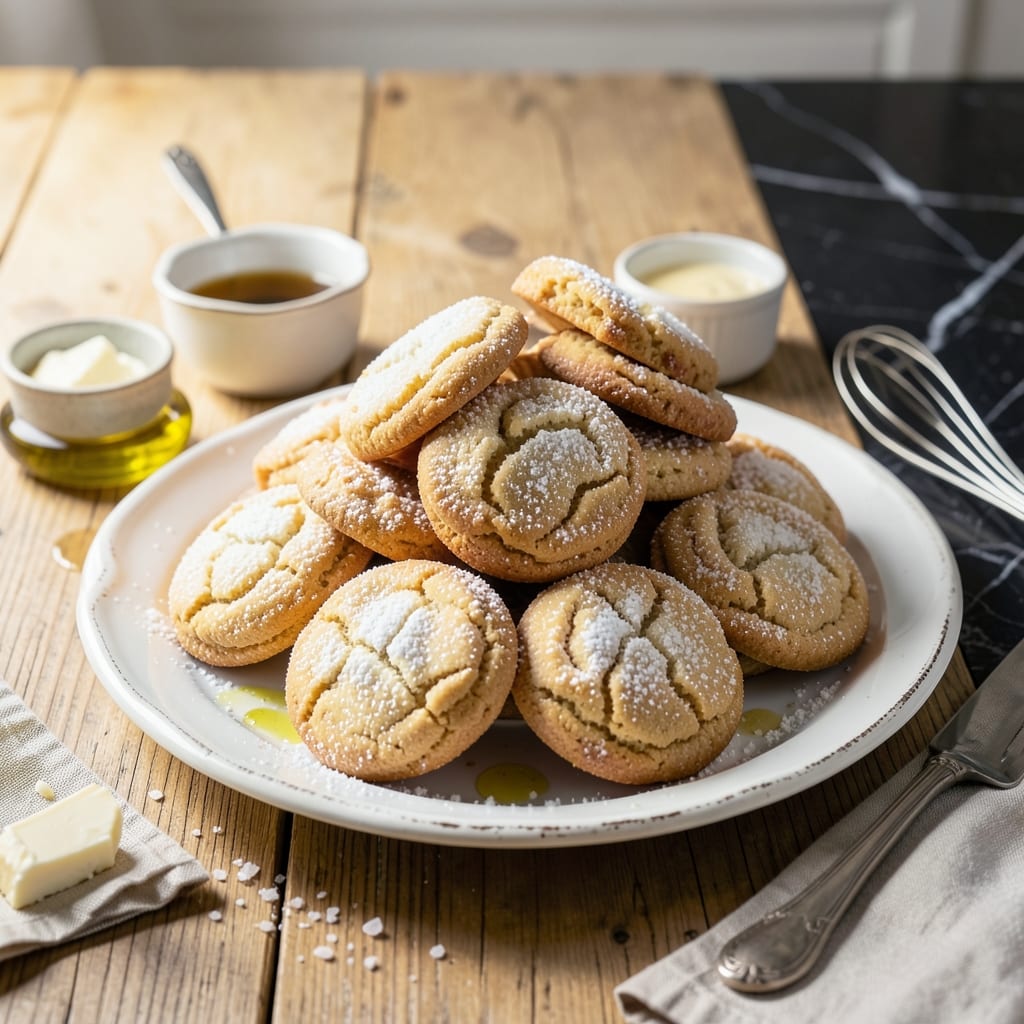
This recipe proves that exceptional cookies don’t require hours of effort. I developed this method after testing countless variations, seeking the perfect balance of soft centers and buttery edges.
Using Bisquick simplifies the process while maintaining a homemade taste. The mix provides the ideal texture without compromising on flavor, making it a reliable shortcut for busy cooks.
The result is a cookie that’s tender yet sturdy, with a golden exterior and a melt-in-your-mouth interior. It’s a proven technique that delivers consistent results every time.
Perfect for holiday baking, weeknight treats, or whenever a sweet craving strikes. Here’s how to achieve it.
Ingredients for Bisquick Sugar Cookie
Bisquick shortcut meets classic sugar cookie ingredients for tender, buttery results every time.
| Ingredient | Amount | Notes |
|---|---|---|
| Bisquick Baking Mix 🥣 | 2 ½ cups | Original or buttermilk variety |
| Granulated Sugar 🍚 | ¾ cup | Fine white sugar preferred |
| Unsalted Butter 🧈 | ½ cup | Softened to room temperature |
| Large Eggs 🥚 | 2 whole | Room temperature for best texture |
| Vanilla Extract 🌿 | 1 tsp | Pure vanilla for best flavor |
| Baking Powder 🧂 | ½ tsp | Fresh for optimal rise |
| Salt 🧂 | ¼ tsp | Fine sea salt recommended |
| All-Purpose Flour 🌾 | ½ cup | For dusting work surface |
| Milk 🥛 | 2 tbsp | Any variety, for dough consistency |
| Powdered Sugar 🍚 | ¼ cup | For optional dusting |
| Sprinkles 🎉 | ¼ cup | Optional for decoration |
[recipe_ingredient_scaler]
The baking mix is the foundation here—Betty Crocker Bisquick is the gold standard (original or buttermilk both work). Use room-temperature butter; cold butter creates uneven texture. For the vanilla, pure extract outperforms imitation. Most grocery stores carry these in the baking aisle, but Costco offers bulk Bisquick at a discount for frequent bakers.
No Bisquick? Homemade baking mix (1 cup flour + 1.5 tsp baking powder + 0.5 tsp salt + 1 tbsp sugar) substitutes cup-for-cup. Short on vanilla? Almond extract at half the amount works in a pinch. For a richer flavor, brown sugar at half the quantity can replace granulated. Milk can be dairy or plant-based—oat milk adds subtle sweetness.
Store Bisquick in an airtight container for up to 6 months (check expiration date). Dough can be refrigerated 2 days or frozen 1 month in an airtight container. Baked cookies keep 5 days in a sealed container at room temperature. Freeze baked cookies for up to 3 months.
Why You’ll Love This Recipe
- 5-Minute Mix: I dump the Bisquick, sugar, butter, eggs and vanilla in one bowl—no sifting, no fuss, just stir and scoop.
- Buttery Vanilla Bliss: The butter and vanilla make these taste like bakery cookies, but with that homemade softness I crave.
- Holiday to Tuesday: I’ve rolled them into balls for parties and pressed them flat for after-school snacks—same dough, zero stress.
- Pantry Hero: Between us, I always have Bisquick and sugar on hand, so these save me from last-minute store runs.
Step-by-Step Instructions for Bisquick Sugar Cookies
This streamlined method delivers tender cookies with crisp edges in minimal time.
Step 1: Cream Butter and Sugars
In a stand mixer with paddle attachment, beat the 0.5 cup Unsalted Butter with 0.75 cup Granulated Sugar on medium speed for 2-3 minutes until light and fluffy. The mixture should visibly pale and increase in volume.
This creaming process incorporates air, creating the foundation for cookies with soft centers. Scrape the bowl midway to ensure even mixing. The butter must be properly softened—if it looks greasy, chill the bowl for 5 minutes before proceeding.
Step 2: Incorporate Eggs and Flavorings
Add the 2 whole Large Eggs one at a time, mixing on low until each is fully emulsified. Then beat in the 1 tsp Vanilla Extract for 15 seconds. The mixture may appear slightly curdled but will smooth out with the dry ingredients.
Use room temperature eggs for better volume and texture. The vanilla should be pure extract for optimal flavor depth. Avoid overmixing at this stage to prevent tough cookies.
Step 3: Combine Dry Ingredients
In a separate bowl, whisk the 2.5 cups Bisquick Baking Mix, 0.5 tsp Baking Powder, and 0.25 tsp Salt to aerate and distribute the leavening evenly. Gradually add this to the wet mixture on low speed until just combined.
The dough will be thick. If it appears crumbly, add the 2 tbsp Milk one tablespoon at a time. The milk ensures proper hydration without making the dough sticky.
Step 4: Roll, Cut, and Bake
Preheat oven to 375°F. On a surface dusted with 0.5 cup All-Purpose Flour, roll the dough to ¼-inch thickness. Cut into shapes and place on parchment-lined sheets, spacing 2 inches apart.
Bake for 8-10 minutes until edges are just beginning to turn golden brown. The centers will still look soft but will set as they cool. Rotate pans halfway through for even baking.
Step 5: Decorate and Serve
Cool cookies on the pan for 2 minutes before transferring to a wire rack. While warm, dust with 0.25 cup Powdered Sugar or decorate with 0.25 cup Sprinkles pressed into the tops.
The cookies will firm up as they cool but remain tender. For best texture, serve within 24 hours or freeze in an airtight container for up to 1 month.
Pro Tips For Making Bisquick Sugar Cookie
- Chill the Dough: Let the dough rest in the fridge for at least 30 minutes before shaping—this prevents the butter from melting too fast and keeps cookies thick. I learned this the hard way after too many flat, sad cookies.
- Soften Butter Right: Use butter that’s soft but not greasy, about 65°F. Press it with your finger—if it leaves a slight indent, it’s ready. Melted butter makes cookies spread too much.
- Measure Bisquick Correctly: Spoon the Bisquick into the measuring cup and level it off—don’t scoop directly from the bag. Packing it in adds too much, and your cookies will turn out dense and dry.
- Rotate the Pans: Swap the baking sheets halfway through baking for even browning. My first few batches had burnt edges on one side until I started doing this.
Wine and Beer Pairings for This Dish
Sweet Wine Partners
A glass of Moscato d’Asti from Italy pairs beautifully with these cookies. Its light effervescence and notes of peach and apricot complement the buttery sweetness without overwhelming the palate. The low alcohol content makes it perfect for afternoon baking sessions. 🍷
Dessert Wine Classic
For a richer option, try Sauternes from France. The honeyed flavors and apricot notes in this wine mirror the caramelized edges of the cookies. Serve chilled in 2-ounce portions as a special treat after dinner.
Creamy Beer Choice
A cream ale like Genesee Cream Ale offers a smooth, slightly sweet profile that enhances the cookie’s vanilla notes. The light body won’t compete with the delicate flavors. I find this pairing works especially well for holiday cookie exchanges. 🍺
Fruity Beer Option
Try a raspberry wheat beer such as New Belgium Raspberry Tripel. The tart berry flavors cut through the richness while the wheat base provides a complementary sweetness. The carbonation cleanses your palate between bites.
Non-Alcoholic Pairing
For those avoiding alcohol, sparkling apple cider from Martinelli’s offers the same effervescent quality as wine. The crisp apple notes work wonderfully with the buttery cookie base. Serve well-chilled for best results.
Nutrition Facts
Frequently Asked Questions
Can I use a different baking mix?
Yes, any multi-purpose baking mix works, but stick to the original or buttermilk variety for best flavor. Other brands may slightly alter texture or taste.
How do I prevent cookies from spreading too much?
Chill the dough for 30 minutes before baking. Also, ensure your butter is softened but not melted. This keeps the edges sharp and centers soft.
Can I make these cookies ahead of time?
Shape and freeze the dough for up to 1 month. Bake straight from frozen, adding 1-2 minutes to the baking time.
Why did my cookies turn out dry?
Overbaking is the most common cause. Pull them out when edges are just golden—8-10 minutes at 375°F. They’ll continue cooking on the pan.

Trained in classic French technique but raised on slow-cooked ribs and spicy rubs, she blends culinary skill with smoke and soul.
- Recipe for Boneless Pork Chops in Cast Iron Skillet: Sear and Baste to Juicy Perfection - October 3, 2026
- Recipe for Boneless Cross Rib Roast: Slow-Roasted Beef with Herb Crust - October 3, 2026
- Hamburgers in Sauce Recipe Crock Pot: Slow-Cooked Savory Delight - October 3, 2026